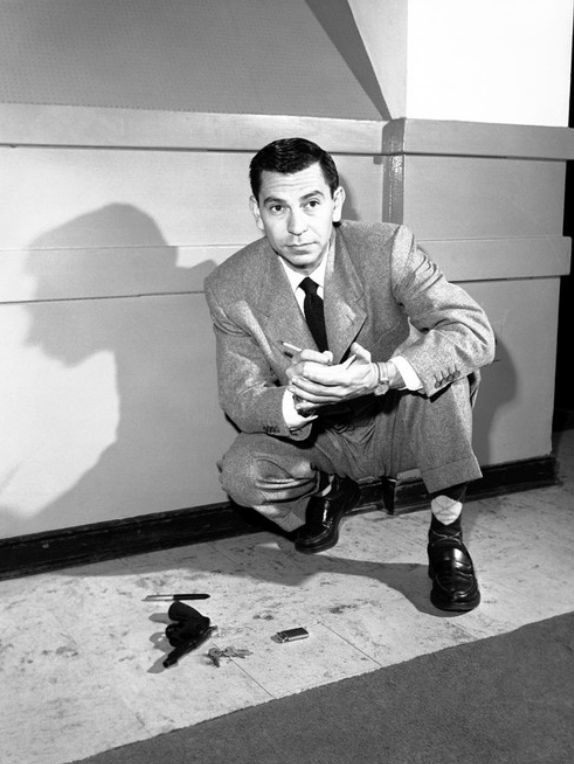
Jack Webb is as important to American television drama as anyone who has ever lived.
Working mostly in the period we might refer to as ‘classic television’ or the golden age, he should be held in as high regard as Rod Serling. Where Serling is (rightly) still hailed as a singular talent and innovator, Jack’s reputation sank into one of parody and ironic ‘enjoyment’. Webb is one of the most influential contributors to television in the medium’s history and yet he is often mainly forgotten these days or considered a curious relic of his time. But the truth is, almost any drama or thriller series that you enjoy now or have enjoyed owes a debt to the framework he established as star, producer and director of the series he is most famous for. In particular this applies to crime dramas and police series, because Webb was the first and is still one of the best.
The television version of Dragnet (1951-1959) and its subsequent incarnations and spin-offs set the template that so many shows chose to follow or to outright kick against. Dragnet started at a time where there was nothing quite like it, and as such is the essential foundation of the development of the police drama. And Webb wasn’t just television either, because his films fit within the oeuvre he created and demonstrate a through-line of creativity that shouldn’t just be consigned to the past or thought of as a ‘relic’. Webb’s work remains vital and incredibly important to the films and shows that followed. He took his inspiration from Frank Capra and the style he developed of rapid, clipped dialogue delivery, extreme close ups and what critic Andre Sarris described in his book The American Cinema (1968) as “visual shouting and verbal whispering” defines his work, marking it as a Jack Webb production.
Born in 1920, Webb was raised by his mother and grandmother and never knew the father who abandoned him before he even entered the world. At only 6 years of age, Webb caught pneumonia and nearly died. He lived, but the resulting serious asthma found him unable to do the running and jumping that other kids his age took for granted. So, Webb became an avid reader first, poring over classic novels and tales of WW1 daring that fired his imagination. Later, Jack discovered the cinema during the Depression-era and found the fantasy these films provided an escape from the harsh reality of being a dirt poor, sickly kid. From school Webb discovered a love of producing and emceeing that would serve him well later on. Jack was also a solid illustrator and came within swinging distance of a Disney career. He found occasional work in local radio and frequented the jazz clubs that were filled with the music he had come to love as a young man.
When World War II became a reality for America, Webb tried to get involved but much to his disappointment he washed out of pilot training and spent his time as a correspondence typist out in Texas. With his mother and grandmother unable to work, he got a discharge on dependency grounds and moved back to L.A. Here, he would try for a proper career in radio and learn as much as he could about all aspects of putting shows on air. A brief dalliance with comedy aside, Webb took part in two private eye dramas and around this time had a part in a film called He Walked by Night (1948, dir. Alfred L. Werker).
This film and his friendship with a real policeman called Marty Wynn sparked an idea in Webb. What if there was a drama that told the stories of cops in the voices they used? Dump all that fanciful nonsense and create something that presented authentic cases of the LAPD for listeners. It was an opportunity to reframe police not as the chaotic idiots or corrupt dangers of the preceding decades.
As the show came together, negotiations were completed with the LAPD to use real cases, the caveat being they must be cases that were concluded, that had gone through court. With this real-life input from the police force, a commitment to realism and reflecting the real laws and processes of crime solving, Dragnet was brought to life. The implication also is that this would not be an unvarnished representation of the LAPD, an organisation frequently mired in allegations of corruption, cruelty and violence. And although it would not shy away from issues that surrounded crime (for example, alcoholism, abuse, poverty) it would not accurately represent the simmering tensions of a sprawling, multicultural Los Angeles. For those interested in the level of research Webb did, it can be found in his non-fiction account The Badge (republished in 2006 by Arrow) which documents the lives of the various different ranks of cops in Los Angeles as well as the crimes too brutal for the show to adapt (including the Black Dahlia murder).

NBC radio wasn’t impressed with the first attempt but a second go around had the show praised for its authenticity and vivid recreation of not only the banality of police work but just how compelling following a case from beginning to end could be. Listeners became cops for the duration of each show, immersed in the mystery and gripped in a way that made the new series a huge hit. The radio series would air 314 original episodes between 1949 and 1955 and finish out its last two years to 1957 with reruns. It was a short time before the idea of transferring the show to television came about. The same things that worked so well in the radio version would be moved directly over.
Foremost, of course, Webb himself who would play Joe Friday for the series (not his actual first preference) and produce and direct. With a huge number of scripts already written for radio the series would make use of most of them for the television version. Across eight seasons from 1951 to 1959 there would be 276 episodes of Dragnet and Jack Webb would direct every single one of them. Viewed today, Dragnet works both as a legitimate time capsule of contemporary police methods and social mores as well as showcasing Webb’s early creative focus on a lack of pretension in writing, performing and directing. It is also inarguably cop propaganda, presenting the police as diligent, fair and moral. Another thing Dragnet helped create is the fantasy of small-screen policing.
Additionally, the show works as a condensed noir thriller for the home or drama in twenty-five minutes. In its earliest days the television version showed Webb’s ambition to stretch the Dragnet format. Although the dialogue retained the clipped delivery and rapid-fire pace of the radio series, and rarely dallied with such luxuries as character development or anything not specifically related to progressing that week’s plot, Webb understood it wasn’t enough to make the show a hit for TV.
He was ambitious and wanted to show he could use the new medium to amplify what made the radio series work. And in doing so he developed a style that he would use throughout every subsequent project. This approach favours tight close-ups of actors faces, methodical cutting between shots that matched the flow of the words, and occasionally vivid and direct action sequences that practically lunged out of TV sets at viewers. Occasional, almost jarring flourishes of camera work, like extended tracking shots, stand out.
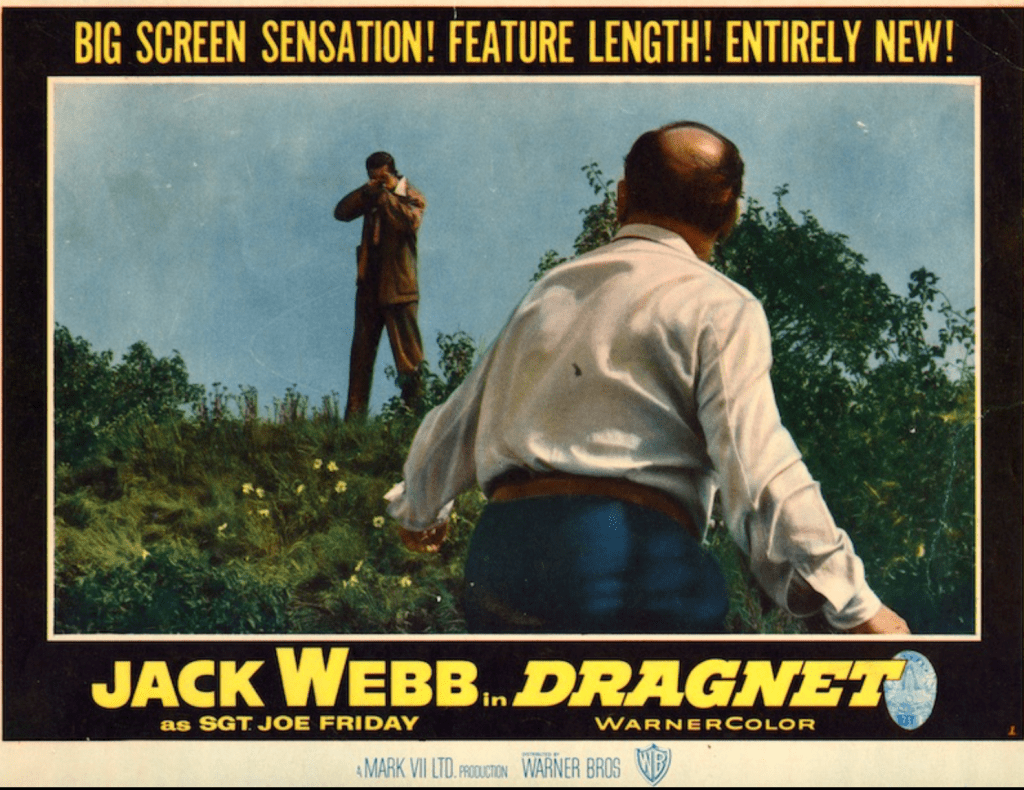
If the shows that follow immediately in the wake of a hit underscore just how popular and influential a series is, Dragnet was inevitably imitated by a number of underwhelming series but could claim that other fine television series like Decoy (1957-1958) or Naked City (1958-1963) wouldn’t exist in the form they did without it. Dragnet the television show would also become the first television series to transfer to the big screen. Webb would take his directorial approach and ramp it up for cinemas. Dragnet (dir. Jack Webb, 1954) was made for Warner Bros and unlike the series could take advantage of being released in bright Technicolor.
The cinema version is one that fully understands it is a film and not simply an extended episode of the show. It’s not just colour that works here to make Dragnet work for the big screen. The opening murder is a vividly shot, often confrontationally framed killing that uses blood and noise to underline this is something different. What follows has all the procedural police rigour that an episode would usually have but uses its extended time to expand the focus of that procedure as well as presenting different elements the series could not. Like an episode of Columbo (1971-2003) we know who did it from the very first scene of the film but that is not the point. The point is for Webb to flex his fascination with the process of investigation and his respect for the men (and women) who do the job. Here as well, Webb allows more shading into the black and white world of Joe Friday, and even though the case progresses from point A to point B as expected, it’s the subtle – and no-so-subtle – commentary that seeps through that distinguishes this further from a standard week’s case. An accusation that has been made before is that Webb and the character of Friday is humourless, but the black humour that threads through the film culminates with a final punch of irony that demolishes that argument.
Webb’s generosity to his stable of performers can be found here too. Virginia Gregg worked with Webb for over two decades in a variety of roles but her performance here as the victim’s alcoholic widow is an example of an actor taking their one scene and giving it their all. And Webb knows this, allowing Gregg to inhabit the character in a scene that is moving and helps provide some of that shading mentioned above, lingering on Gregg at the end and providing the emotional core to the film. As an example of noir meeting the purest police procedural Dragnet still stands as a huge achievement and indicated a move to feature films would be easy for Jack. Although there were some fine films to follow this would not turn out to be the case, but the features he did make all have much to recommend.
Next would be a film version of Pete Kelly’s Blues (1955, dir. Jack Webb) based on the short-lived radio series from 1951. It tells the tale of Prohibition-era jazz band leader Pete Kelly (Webb) as he tries to decide how to respond to a local mobster’s attempt to manage and extort the band. It’s again shot in colour and is filled with fine performances, not least from a magnificent Peggy Lee. Webb’s lifelong love of jazz is evident throughout with the music ever-present, as well as performances from Lee and Ella Fitzgerald. Pete Kelly’s Blues is probably the most off-kilter of Webb’s features. Audiences familiar with Dragnet were likely taken aback by the lack of Joe Friday’s moral absolutism, with Kelly a conflicted and compromised character. That aside, it has many of the hallmarks of Webb’s style, including letting each performer have their moment. But perhaps because it lacks a focus on process or an institution the film finds Webb floundering outside of where he is surest, the music at the movie’s heart. And yet, from the opening sequence that suggests a semi-mythical edge to the story that sadly never comes to anything to the final shoot-out where Kelly ultimately resolves his conflict, both internal and external, there is much to enjoy in the film too.
Webb’s next film would be The D.I. (1957, dir. Jack Webb), written by James Lee Barrett and based on his experiences as a marine recruit. Webb stars as Jim Moore, a marine training instructor putting recruits through their paces. Much of the film focuses on Moore’s attempt to break and rebuild the problematic Private Owens, a young man seemingly hellbent on earning a discharge from training and a way out of the corps. Unlike Pete Kelly’s Blues, Webb is on more solid ground here as the film uses the process of training to explore the relationship between these two men. Barrett expanded his script with a romantic subplot for Moore as well as a late-film appearance by Virginia Gregg (who again is perfect in her one scene) but the meat of the movie is about Moore’s Marine-for-life refusing to let Owens wash out because he sees something in him. It’s a loud film with an incredible amount of shouting in it but Webb knows when to use quiet or silence to amplify the point of all that noise. It’s Webb’s most traditionally directed film but also his most thematically simple and narratively straightforward, even more so than the procedural cop drama of Dragnet. It’s a compelling journey for the characters and the attention to detail of the film plays to Jack’s strengths.
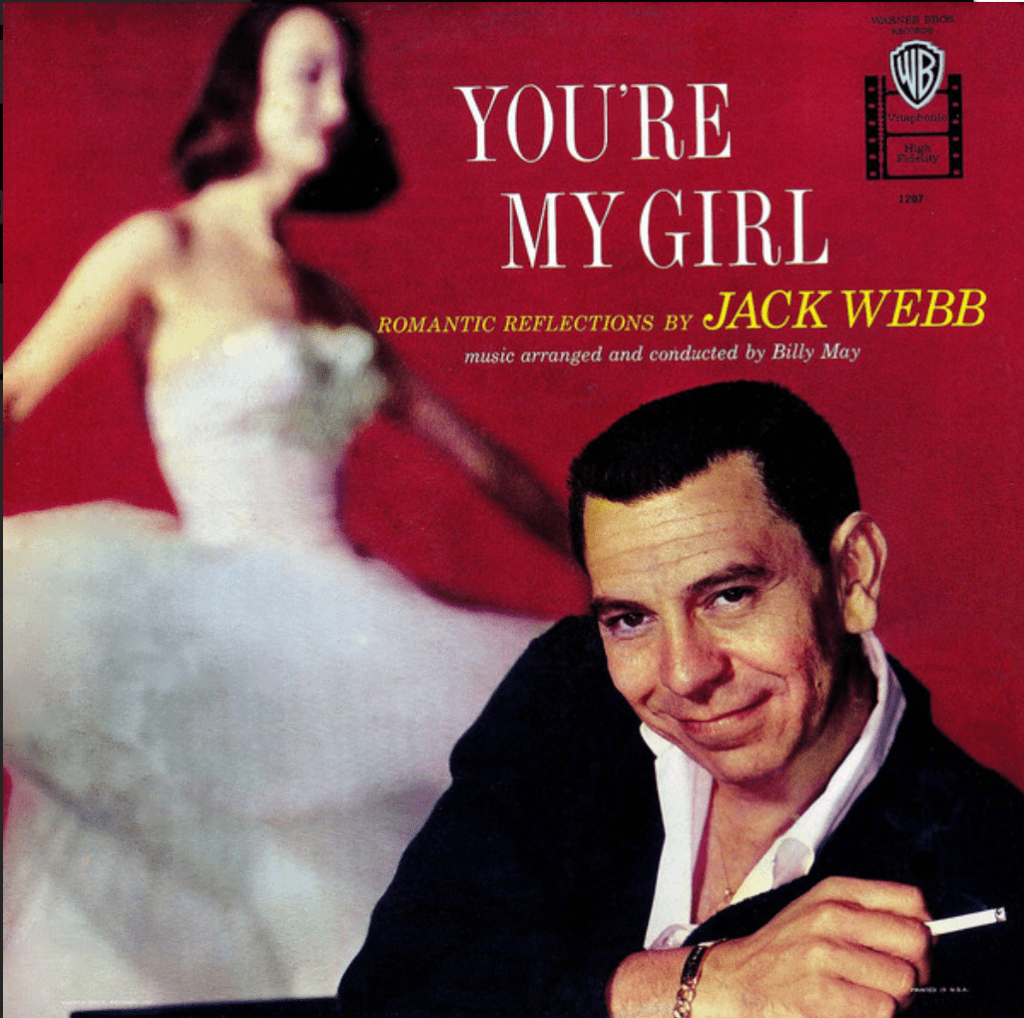
As the decade entered its final years, Dragnet managed another first as a series. It lasted too long and the temptation to continue it despite creativity and commitment waning won out over any artistic arguments. But by 1958 Dragnet had dropped to just a third of its peak audience levels. The show was tired and needed to be put to rest. Webb’s replacement series, shows like The D.A.’s Man (1959) and a version of Pete Kelly’s Blues (also 1959) didn’t work out either. Added to this, the effects of his smoking habit and lifestyle and the production of The D.I. had took their toll on Webb whose previous smooth-voiced sex-symbol status (seriously, check out his pre-Shatner spoken-work ballad album You’re My Girl: Romantic Reflections by Jack Webb from 1958) was now to be cut with a harshness that he couldn’t soften. Webb tried a newspaper drama called The Black Cat but it didn’t make it out of the pilot stage.
This did inspire Jack to star and direct in a film about newspaper production called -30- (1959). The film has all the Webb hallmarks in rapid-fire dialogue, his usual shooting style and commitment to realism with all the action taking place inside a newspaper’s building over one evening, recreated from the Los Angeles Examiner’s real headquarters. But there was a problem.
Although screenwriter William Bowers was an Oscar-nominated writer of some standing, and he was basing the script on his own earlier work experience, he hadn’t done the job for 20 years. Contemporary critics seized on this oversight and cut the film down as an anachronism. But given the considerable distance now from the film’s original release it can be assessed for what it gets right. Webb always front-loaded his series and films with heart and a real sense of feeling and connection. This could be mistaken for simple sentiment but in the respect of something like -30- it comes out in the characters and their interplay. Webb was interested in people and in -30- it shows.
Jack was also a generous director and star and never seemed to want to dominate screen time at the expense of his co-stars and again, in -30- it is clear. Every performer gets their moment and it’s never rushed. Webb gives his performers the space to act and it’s a respect that’s paid back to him. For many others, a potentially scenery-chewing role like Bathgate would be so overwhelming it would likely force anyone sharing scenes to the edges of the frame. But, even though William Conrad has huge fun with the eye-rolling sarcasm of Bathgate’s frequent tirades, he knows just when to dial it back and let others shine and much of this is down to the tight control of Webb’s method. -30- is an undervalued film and probably more than his other cinematic outings contains the essence of the best of Jack’s approach. Sadly, it was more or less ignored by audiences too and Webb ended the decade of his greatest success weathering the blow of a series of failures and the sad sigh of Dragnet’s final episodes.
Webb tried to continue in movies with the wartime comedy The Last Time I Saw Archie (1961) starring Webb and Robert Mitchum. It would be his first comedy and his last theatrical film and the end of his movie career. The flop of the film ultimately moved Webb back to television. This he did as the new head executive in charge of Warner Bros. television, as well as a brief spell as host of an anthology series. Jack’s first major act as head of production was to make radical changes to the previously successful but now faltering private eye drama ’77 Sunset Strip (1958-1964). Retaining only one member of the cast and changing the tone proved disastrous and the show folded. Webb’s next project would fail too (not surprising given Webb and everyone involved would have only four weeks to bring it to air from nothing) and he found himself fired and embroiled in a lawsuit against his former employer, bringing an end to his relationship with Warner Bros for good.
It would eventually be a combination of television and film that would bring Webb back into people’s homes and resurrect his greatest success for a new run. By the mid-sixties the biggest thing on TV was old films. But there wasn’t enough of them to fill the schedules and it was costly to agree the broadcast rights and so Universal came up with the idea of making films specifically for television showings. The first few tries at this (beginning with Don Siegel’s The Killers in 1964) were either too violent or too expensive to show on sets at home and ended up in theatres. By this stage Webb was out of work and getting nowhere with his plans for new series. When Universal came to him with a budget and approved shooting schedule for a Dragnet movie Jack couldn’t have said no even if he wanted to. Webb still had police contacts and went to them for ideas on what sort of case could inspire the new film. It would be the brutal story of serial murderer Harvey Glatman from the late fifties, a man who had posed as a photographer of pulp crime magazines, once through a lonely-hearts club. Glatman tied up, attacked and murdered three women until his last attempt failed when the intended victim struggled with him and this was seen by a patrolman. He tried to deny his guilt until a toolbox full of pictures of the victims and personal effects of theirs was discovered. All of these elements would find their way into Webb’s finished film.
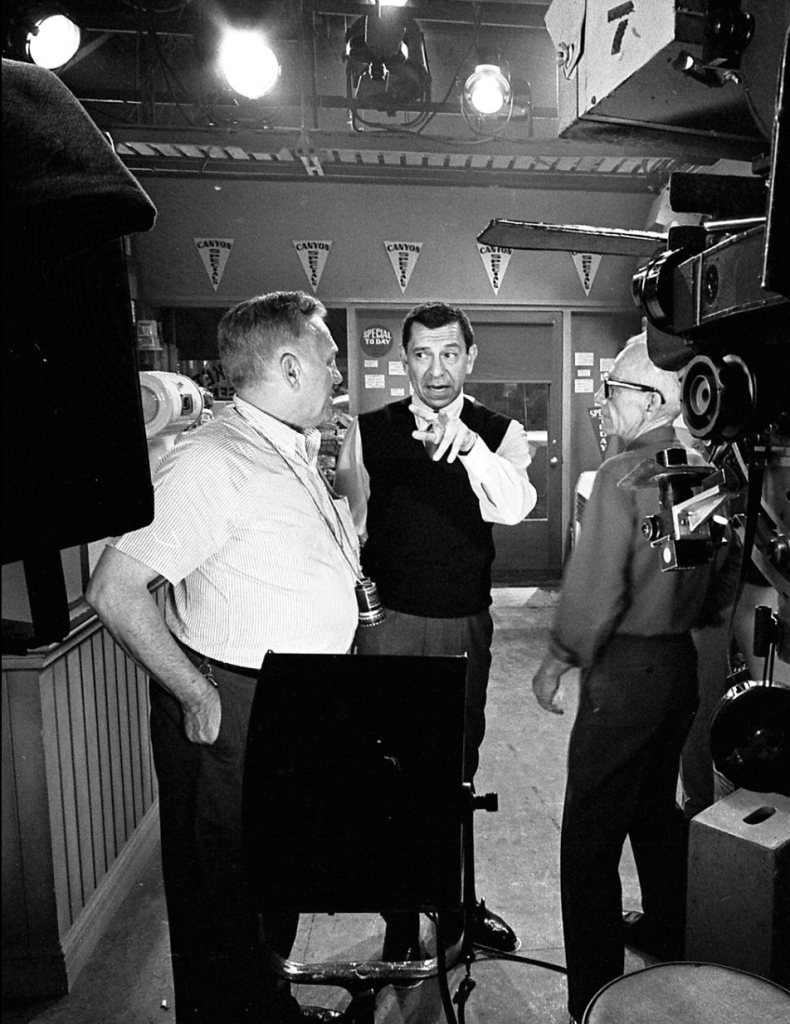
Jack had built loyalty in the actors who he had supported during Dragnet’s first run and the majority of them readily agreed to supporting this new venture when he called on them. He found a new partner in Harry Morgan as Bill Gannon, the two men having known each other for a long time. Richard Breen returned too to write the script for the film. The finished product was considered such a success Webb was invited to bring Dragnet back as a weekly series. But Jack had never really wanted to play Friday again and even though he was now doing that, he envisioned Friday’s return as a series of similar two-hour movies. Webb was also aware that until this film he hadn’t worked for over two years and no one was really interested in his other ideas so with an assurance from Universal and NBC he would have the freedom to develop other projects Webb agreed. After the new Dragnet’s premiere was pulled forward by some 8 months, the film was shelved and wouldn’t be shown for three years. When the series arrived in homes each season would be identified by the year of broadcast and so this version begins as Dragnet 1967 (we’ll refer to it as such from now on). Jack framed his return in the press as not trading on old glories but instead an attempt to bring back respect for authority, a respect that was being lost in the burgeoning youth culture. Webb surrounded himself with talented actors, writers and producers and got to work.
The first show to reach air is also one of the most notorious in Dragnet’s entire run, whatever the incarnation. It’s important too because if anything sows the seed of Dragnet 1967’s never-less-than-interesting unevenness over the next few years or reflects how adrift Webb inarguably was with youth culture (or indeed why shows like Police Story (1973-1978) would establish a new way forward for the police drama), it’s episodes like ‘The LSD Story’. This tale of dealer Blue Boy and the tragic consequences of LSD use plays out like a conversation between a disappointed and uncomprehending father (Friday) and his son (Blue Boy). It’s a fight between Friday’s respect for authority and disdain for self-medicated escapes from reality and Blue Boy’s fatalistic naivety. It establishes Dragnet 1967’s approach to narcotics (they’re all bad and ruining society) and it’s these episodes that are most likely to be cited by critics who accuse this run of being ‘camp’. But the show’s at once ahead-of-its-time and hopelessly out-of-touch approach to drug issues wasn’t all the new series was about. Subsequent episodes find Friday and Gannon coming up against Nazis, kidnappers, bad cops, conmen and murderers.

All of them are shot through with Webb’s later old-school conservative with a small ‘c’ approach to life (something that would mark him out as a borderline progressive these days). In that, in Friday’s world, if you’re a guy (or gal) and you respect authority and play fair, life should play fair with you in return regardless of colour, sex, religion or anything else. A swing from the original incarnation of the show which was made of sharper stuff, this belief that the world can be essentially fair to everyone who worked hard and contributed to society, no matter your background, was not true then, nor is it true now.
Nevertheless, when it diverts away from grumbling moralising, great episodes abound in this series, from ‘The Interrogation’ (a return to the formal experimentation of the first run’s ‘The Big Cast’, except here it’s not serial killer but a potential dirty cop being questioned) to wildly enjoyable episodes like ‘The Fur Job’ that nail a mix of crime-solving and humour. Then there are outstanding episodes like season three opener ‘Public Affairs – DR-07’ that are also genuinely extraordinary television, approaching Friday’s rigid world view from a different perspective. In it, Friday and Gannon appear on a television debate talk show and argue the case for the police against those who would dismantle the force. The arguments are still relevant today, with the duo’s accusers starting with “Property rights are all they care about, not human rights.” That unevenness presents itself just two episodes later in ‘Community Relations – DR-10’ with a deeply misguided story of a Black officer deciding to leave the force after encountering abuse, which Friday attempts to convince him not to do.
The focus of a television programme isn’t (or should never be) on being timeless or forever relevant, it should be to entertain week in and week out, episode after episode and in this Dragnet 1967 remains an outstandingly successful and consistent series, even considering its few episodes that don’t work as well. Alongside the sledgehammer drugs-are-a-bad-trip-man core of the show, Jack used the opportunity to play it differently, including more overt and less nuanced commentary on society’s ills, alongside frequent and always interesting experimentation – within the confines of the Dragnet style – with story and structure. Webb was able to poke fun at his most famous creation, too, such as his appearance on The Tonight Show Starring Johnny Carson in 1968 for The Copper Clapper Caper sketch.
One of the results of Dragnet 1967’s solid critical and substantial ratings success was that a spin-off was created with Webb collaborating with R. A. Cinader. Seeking to represent a different side of the police experience, Adam-12 (1968-1975) was to focus on the beat cops who patrolled Los Angeles. It would follow the shifts of two officers and wouldn’t concern itself with following a crime from beginning to end. Often, Adam-12 episodes follow two or three separate stories, from missing children to being first on a murder to running down escaping felons. It mixes the exciting with the banal to try and present the reality of the patrol officer’s average day. In typical Webb style he would find his two officers in his existing pool of actors. Martin Milner had appeared in a number of Dragnet episodes and as tragic drummer Joey Firestone in Webb’s Pete Kelly’s Blues. More importantly for a show that would find Milner doing a lot of driving (and stopping driving on the right mark) he had been the star of weekly road-movie series Route 66 (1960-1964). Milner’s young, green to the job partner would be found in recent Dragnet 1967 guest star Kent McCord. Milner would school McCord (and us as audience) on the daily grind of being a beat cop, a good cop. It would be a big success with viewers and would be the first addition to the shared universe of Webb’s Mark VII series. Frequently shot out on location, a lot of Adam-12 still resonates and fits in with Webb’s focus on showing the appealing, comforting fantasy of the majority of cops as decent, hard-working people out there to protect us.
As Webb’s main show continued towards the seventies and cultural movements like The Summer of Love occurred, Dragnet 1967’s straight arrow of the law approach was looking even more apart from the zeitgeist. Webb’s commitment to his perception of realism and procedure was marking out Dragnet 1967 as something existing almost within its own reality. It was no longer an accurate reflection of either society or the way it was policed. Adam-12 was more connected with this but it is inarguably earnest in its approach, presenting cops as thorough idealistic but pragmatic professionals who deserve our respect. It would last several years longer than Dragnet 1967 too, and try in some different ways than its parent show to reflect a changing society as it entered the mid-1970s and the end of its production.
Back to Dragnet 1967. A number of other series airing around the time presented an alternative reality of authority, with shows like The Invaders (1967-1968) using science fiction to create and comment on a world where authority was at best frequently incompetent and at worst murderously inclined and not to be trusted, a world where we can only rely on ourselves. People who found Webb’s respect for institutions and those who worked within them inherently sinister, or felt Jack was a stooge of the establishment, had dramas now that more reflected their perception of that world.
Films like Buzz Kulick’s Warning Shot(1967) straddled the line between respect and suspicion of authority and anticipated the later outright mistrust of police and reaction to it that would be found in films like the Dirty Harry series. In it, David Janssen’s honourable cop shoots dead a suspect in self-defence but when no gun can be found he is quickly abandoned by a public and press that easily believe him a violent thug and even by his own colleagues. It reflects a change in the public mood, one that has witnessed violence and corruption in the police and how it has reacted to youth or the civil rights movement and is weary and suspicious of it now. And in fiction a young police officer, Joseph Wambaugh, had turned his experience of being a young cop in this dangerous and unsure new world into a novel that would lead to a film and subsequent television show that helped rewrite the police series in deeper, more purposefully grim shades of grey than any iteration of Dragnet had ever attempted and ultimately leave Webb’s template behind, consigned to the past. Across the next decade events like Watergate would reinforce a wider belief amongst people that government and the institutions of authority no longer had their interests at heart but instead sought to control them and Webb’s fascination and respect for them was more unfashionable than ever.
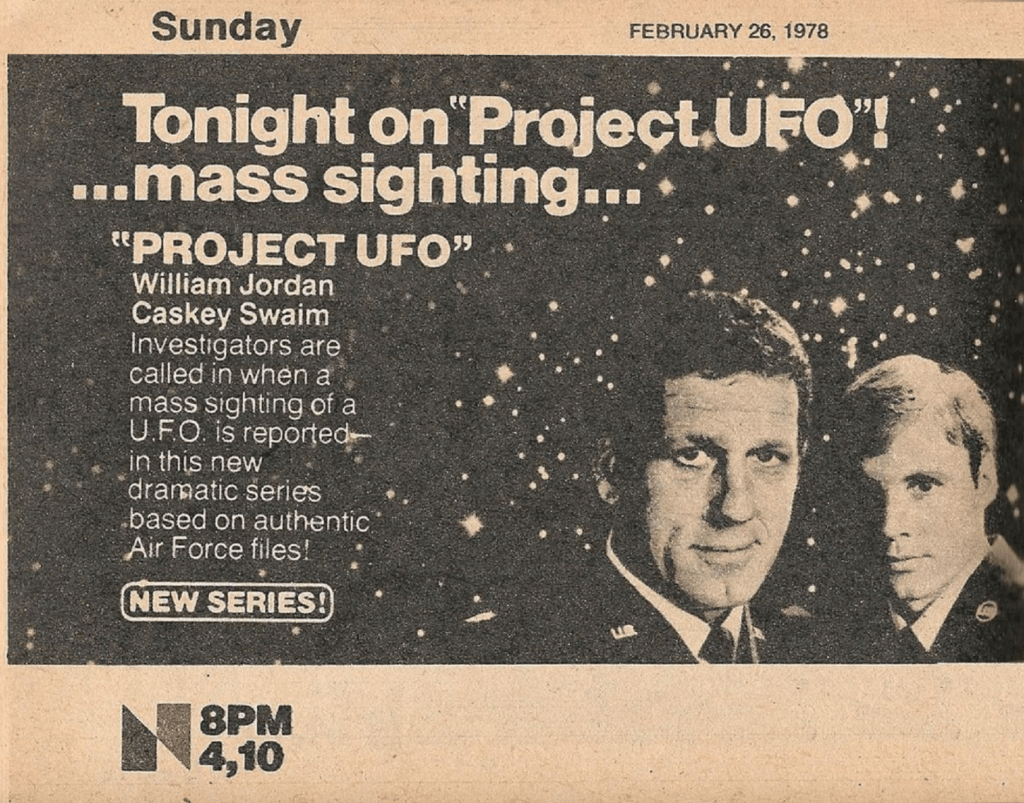
Webb would end Dragnet 1967 in 1970 and turn exclusively to producing and directing. He would have one of his greatest behind-the-scenes successes in the series Emergency! (1972-1977) as well as a number of interesting attempts at something different, including Project U.F.O. (1978-1979), a kind of Project Blue Book Dragnet, before working towards a further resurrection of Dragnet for TV.
Ultimately, he would die early at only 62 years of age, a lifetime of heavy drinking, a two-pack-a-day habit and workaholism helping to bring about a heart attack in December 1982.
Whilst inevitably sad, this spared him the ignominy of his most famous creation being spoofed in Dan Aykroyd’s 1987 cinema version of Dragnet (with Aykroyd playing Friday’s nephew in full-Joe style as a ‘homage’ to Webb). The film certainly has its moments as an action-comedy but fundamentally misunderstands the Joe Friday character, recasting him through his nephew as an uptight and humorous dullard – something Friday never was – who just needs to get laid as much as his new partner Pep Streebek (Tom Hanks) so he can remove the stick from his ass. Adverts for reruns of the sixties version on television purposefully played on this notion that Friday was a square, the show as camp curiosity, and Webb’s reputation was probably here at its most maligned. And yet, Dragnet would circle around again, first in 1989 as The New Dragnet and then again in 2003 with Ed O’Neill as Friday.
Both of these shows underlined if it was needed that the format that Webb had refined didn’t work the same way anymore and just how much series like Hill Street Blues (1981-1987), Law & Order (1990-2010, 2022-present), NYPD Blue (1993-2005) and Homicide: Life on the Street (1993-1999) had pushed the network police drama into forever-changed territory.
None of this diminishes Jack Webb’s achievement in radio, television and film as a pioneer, because none of those series would exist without it. Webb’s work survives as a record of its time and taken within that context plays just as well now as it did then. Dragnet is a genuine classic of both television and film and is an achievement that any actor, producer or director (and Webb was all three) could be justifiably proud of as a life’s work.
As can be the the case, time has been kind to Webb’s work and intent in recent years and his reputation is being thankfully rehabilitated. Being able to assess it years removed from the time it was made in (and commented on) helps to pick out the value in what he achieved, and there is much to enjoy.
Joe Friday is an iconic character and Jack Webb’s style is iconic too with them both intertwined. In the same way as Rod Serling’s work is both of its time and timeless entertainment, we can argue the same for Webb as a true visionary.
A final Webb recommendation: Red Nightmare, from 1962, was made for the Department of Defense and designed to caution against the perils of communism. Produced and narrated by Webb, it is a remarkable piece of paranoid propaganda designed to sway public opinion and well worth seeking out.
 Writing by Jamie Evans
Leave a comment