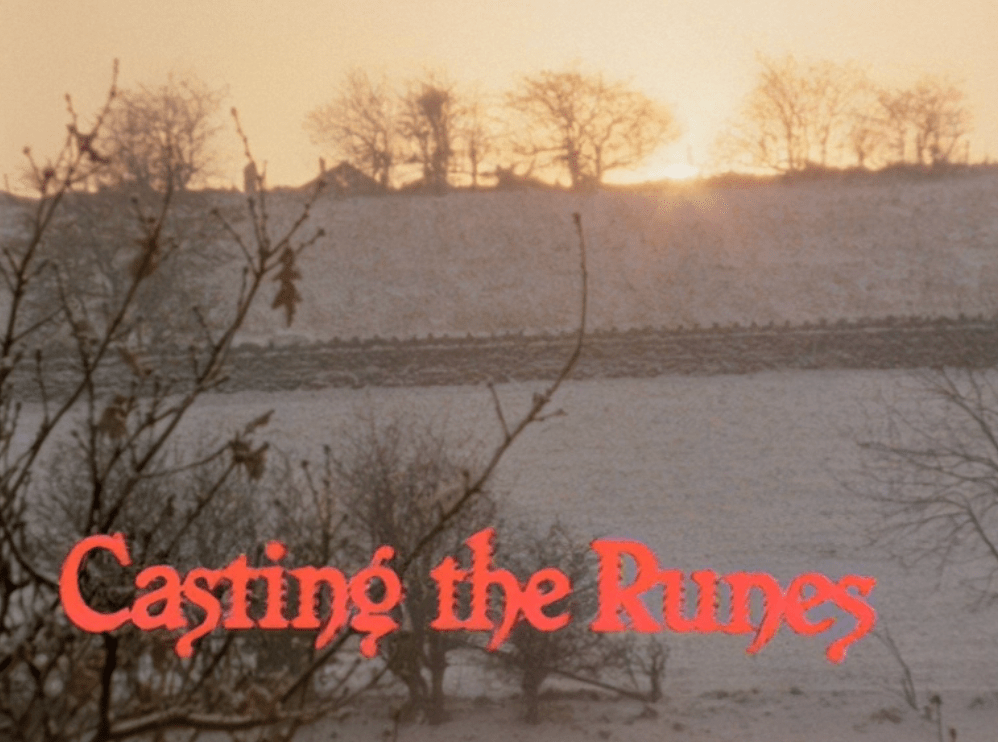
Casting the Runes (1979) and updating M.R. James for the Scarred for Life generation (this article previously published on the now-defunct Horrified website)
The 1970s was a time of wild contrast in Britain. Wealth inequality was at its lowest but the country was beset by industrial action. Music, film and television had entered a period of creative fecundity that would continue Britain’s position as an innovator and leader in culture. Alongside this, the country was afflicted by power cuts, inflation, the rise of the far-right and the beginning of the slow death of that one-generation-only dream of the middle class. Parallels can be drawn with our most recent decade or so, one where it has seemed the good times are over and terminal decline is inevitable.
It is perhaps then not surprising that the horror produced throughout the decade had a peculiar and beguiling bleakness. Stories across books, film and television took us to dark places and often left us there at their conclusion, no happy endings or release. One of the towering achievements of these years was the annual BBC A Ghost Story for Christmas, a mix of filmed adaptations of M.R. James, Dickens and original screenplays (one of which, Stigma, was contributed by the writer of this version of Casting the Runes, Clive Exton). These haunting tales of a genuinely disturbing and dangerous ‘other’ lurking just out of sight are rightly hailed as classics of the genre.
All but one of these were directed by Lawrence Gordon Clark, a talented director with an unerring ability to present creeping dread onscreen. After he had finished with the BBC sequence, Clark wasn’t done with the supernatural. For the ITV Playhouse strand he took on the challenge of providing an updated version of M.R. James’ ‘Casting the Runes’. The story had been adapted some two decades before for the classic Night of the Demon (1957, dir. Jacques Tourneur), one of the great British horror films. A decade later it was adapted again for the anthology series Mystery and Imagination, an episode that is sadly lost to us.
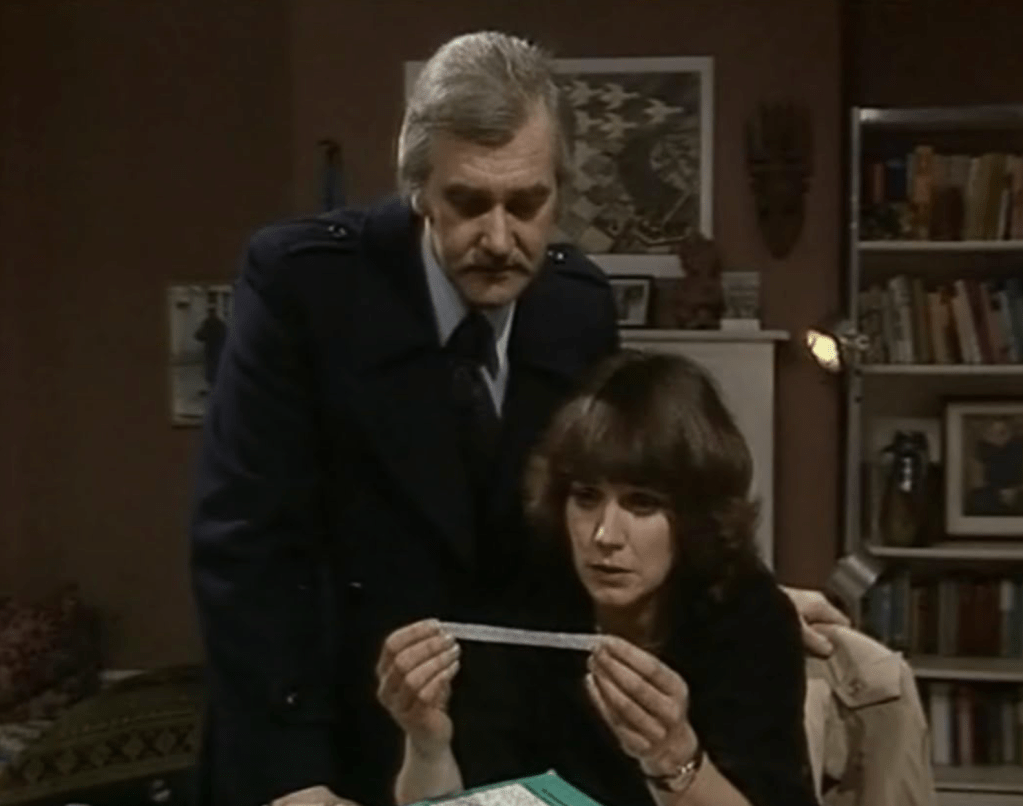
As with Jacques Tourneur’s film, Casting the Runes updates the story to contemporary times. It gives us a female Dunning (played here by Jan Francis) and an American Karswell (Iain Cuthbertson) and adheres loosely to the main beats of James’ chilling short story. It’s a version that isn’t particularly well remembered these days, or seemingly thought of highly, in comparison with its more elegantly mounted BBC relatives, or the 1957 film. We have a tendency to compare needlessly, and a low-budget 50 minute television adaptation shot on a mix of film and video has little chance of equalling the impact of a crisply produced black and white big screen version directed by one of Hollywood’s most skilled psychological horror craftsmen.
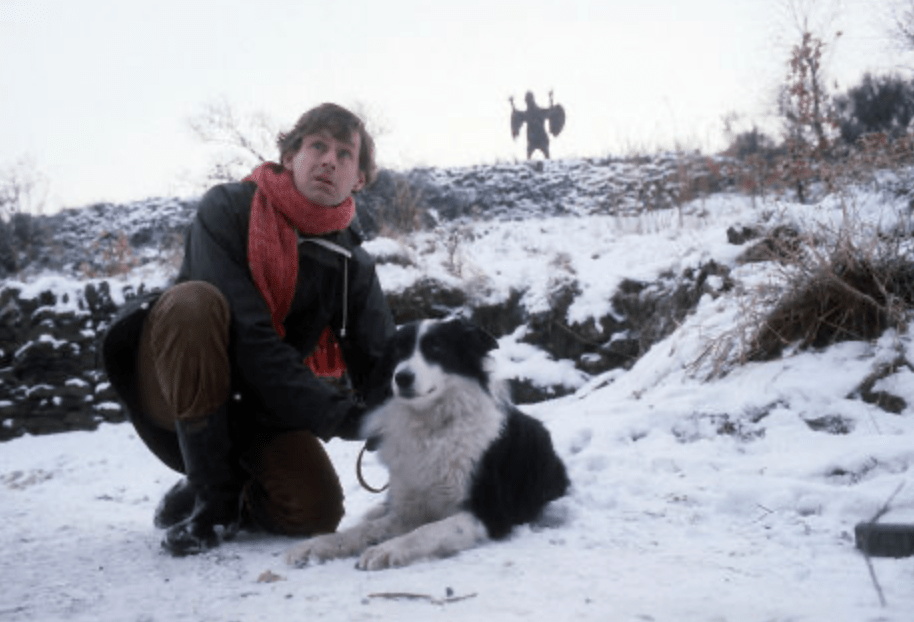
And yet, there is much to enjoy in this production, starting with a glorious opening sequence which took full advantage of the blizzard conditions it was shot in. There’s a clear folk horror influence to this beginning, evoking memories of films like The Blood on Satan’s Claw (1971, dir. Piers Haggard), finding as it does the menace inherent in indifferent nature. As we start, a man we later learn is called John Harrington is out walking his dog in the snowy countryside until the animal becomes unnerved by the presence of something out there with them, something that is slowly, inevitably hunting John. It benefits hugely from the snowy landscape and, in its un-retouched presentation on DVD, a scratchy film print as well as a menacing score.
In this iteration, Karswell is a cult figure, the self-styled Abbot of Lufford, and he has made somewhat of a name for himself as writer of a book called ‘A History of Witchcraft’ and as proponent of a philosophy that would have ‘Vice as the only true virtue, lust as the only true modesty, indecency the only true decorum and evil the only true good’. When Karswell is mocked by a television exposé on ‘mumbo jumbo’ produced by Dunning, he determines to take his revenge on her next. Our introduction to Karswell is the converted rectory where he lives, surrounded by grand gold ornaments. Karswell enacts his curse, manufacturing a meeting with Dunning. When Dunning is attacked in her bed by a creature created from Karswell’s magic, and she learns Harrington had written a scathing report of Karswell’s book and paid for his life with it, Dunning begins to understand her scepticism will not keep her safe.

The remainder of the play, whilst not overtly frightening or aiming to be, is equal parts unnerving and melancholy. Exton and Clark work together to create a world where the characters live in a definably real world that is being intruded by something ancient and unrelenting. There are some great performances, with Francis an anchor to everything as the unravelling Dunning. Cuthbertson has a grand time as the wicked Karswell, here a genuinely malevolent presence, a character who seems to revel in the power he wields. Being a production made in the 1970s and filtering through a decade of that beguiling, bleak approach the play also has a suitably harsh conclusion as it fades out, the wreckage caused by Karswell extending far beyond the final shot of a devastated Dunning.
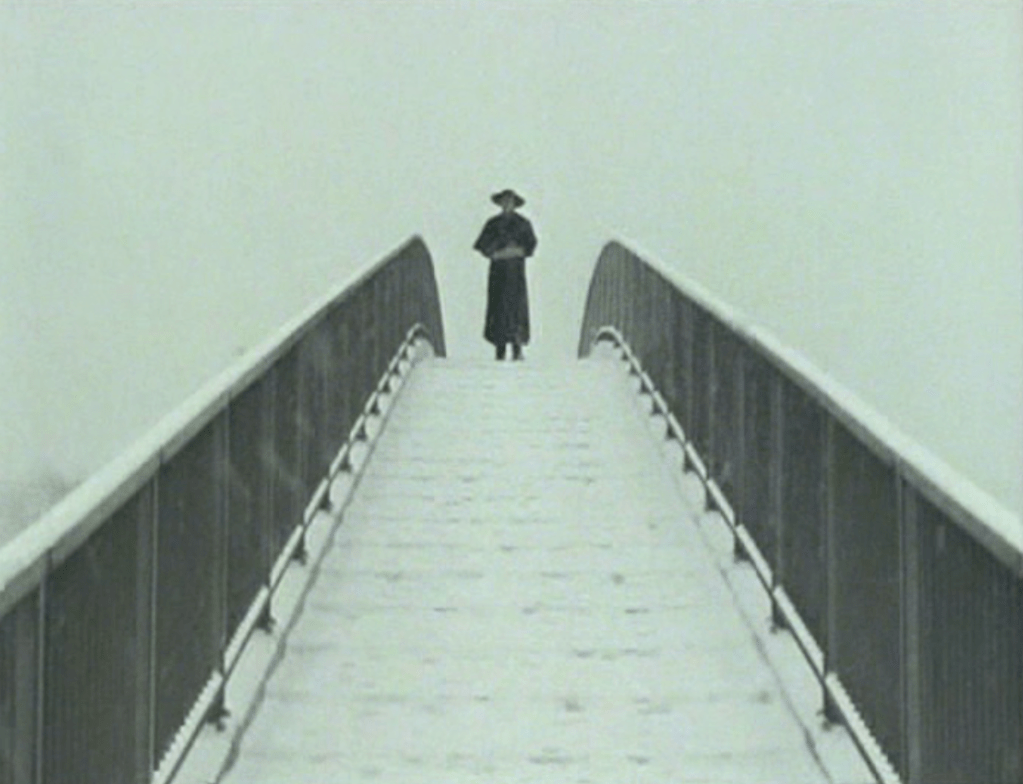
Though not part of the BBC ghost stories, this adaptation of ‘Casting the Runes’ shows Clark learned well what worked for them and has much to recommend for those who appreciate the uniquely chilly, uncompromising horror the 1970s produced and acts as an effective chaser to much of what proceeded it.
(The version referenced throughout is from a now out-of-print Network DVD release, though the episode can be found in other places online)
 Writing by Jamie Evans
Leave a comment