Author: Jamie Evans

  • Ghoulishly Good Times – The Shorts Edition

    We all love a long movie, right? Two hours, three hours, lost in the magic of cinema. Well…maybe not all the time. Fortunately, the art of the short film has been there since the earliest days of the medium. There’s a wealth of funny, moving, weird, creepy, thrilling and adventurous entertainment that won’t numb your arse or sap your will to live. And so, I welcome you to this spooky short (mostly) silent film specific edition of Ghoulishly Good Times.

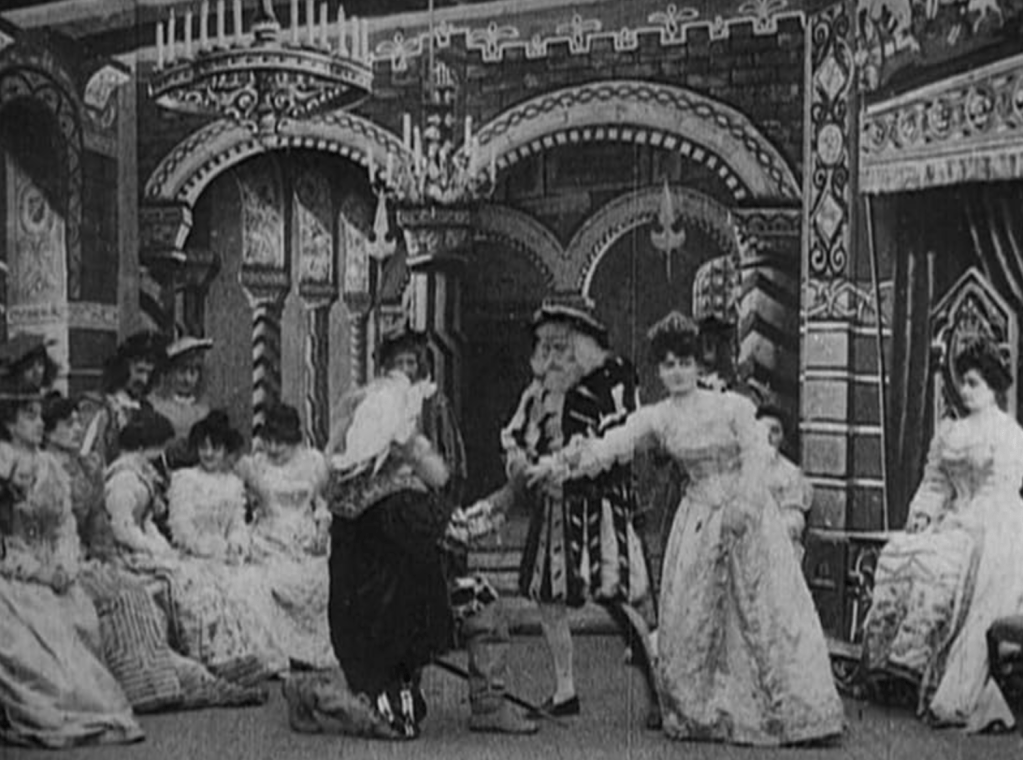
    Bluebeard attempting to woo his entirely – and correctly – unenthusiastic bride to be

    Barbe-bleue (aka Bluebeard, 1901, dir. George Méliès) retells the French legend of a dubious – but very rich – old dodger courting his eighth wife, the seven before her having died ‘in mysterious circumstances’. His new wife is not impressed with being dumped with the danger, nor is she too happy being left bored in his castle while he buggers off. He does leave her, however, with the key to the place and instructions not to get curious, after which she stumbles on the truth of what befell his other wives. What starts as a broad comedy of over gesticulating takes a hard swerve into serious darkness about halfway through. Surreal nightmares, ghosts, a demonic sprite and some deeply unsettling imagery drive it to the reveal of whether wife number eight is destined for the same fate. What we have here, for me, is some of the first flourishing of narrative horror with a bravura shift in tone from ‘oh this is fun’ to ‘holy shit that’s dark’ that became familiar to movie-going horror audiences across the following decades, done here early and in style.

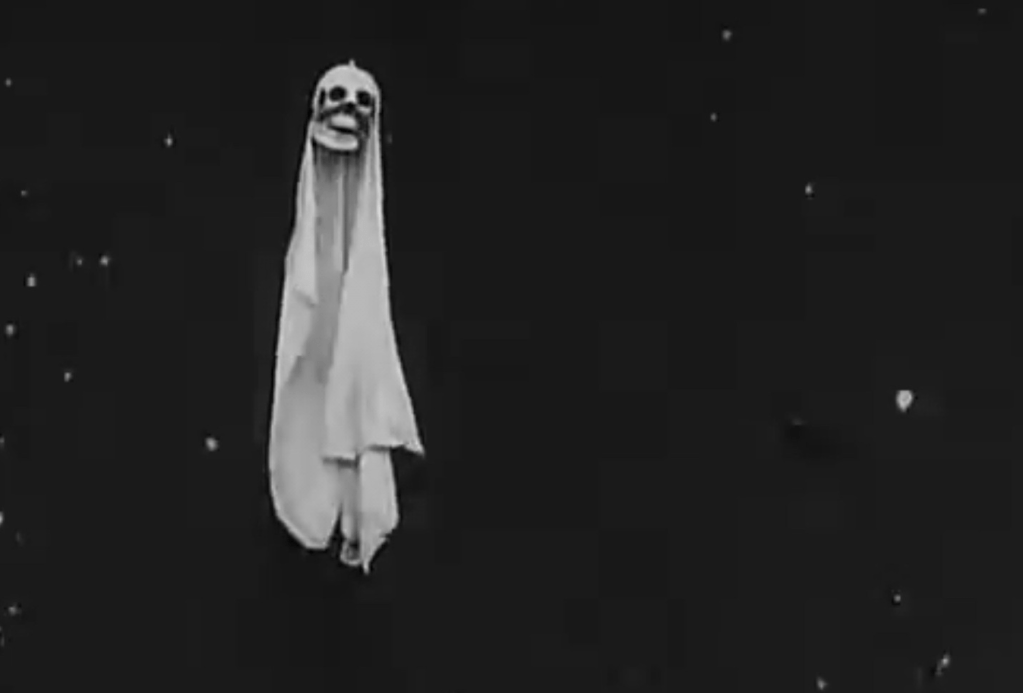
    A totally, absolutely convincing skull with a shroud hanging from it during a séance

    Alongside the development of photography and film and the tantalising prospect of recorded proof (or the lack of it), the end of the 19th century and the start of the 20th continued a pronounced split between people who wanted to believe in an afterlife and that people we had lost could be reached there, and those that saw it as a grift designed to exploit vulnerability and grief. This can be seen in the differing beliefs of Sir Arthur Conan Doyle and Harry Houdini (two men who were nevertheless friends) as fraud and debunking entered into a new phase, and the urgency to believe was shaped by the scale of previously unimaginable loss of life world conflicts inflicted. The UK short Is Spiritualism a Fraud? – The Medium Exposed (1906, dir. J.H. Martin) isn’t really asking a question, but instead presents a couple of con artists getting caught in the act of faking communication with the dead, after which those duped take their revenge in an escalating sequence of slapstick violence. It’s not subtle stuff, but it is a fascinating and entertaining example of the innovation happening in Britain at the time, giving us some startling horror-informed imagery along the way. Enjoyably vicious too, reflecting the way some people felt about the cruelty of offering a bogus way of contact with people lost to them.
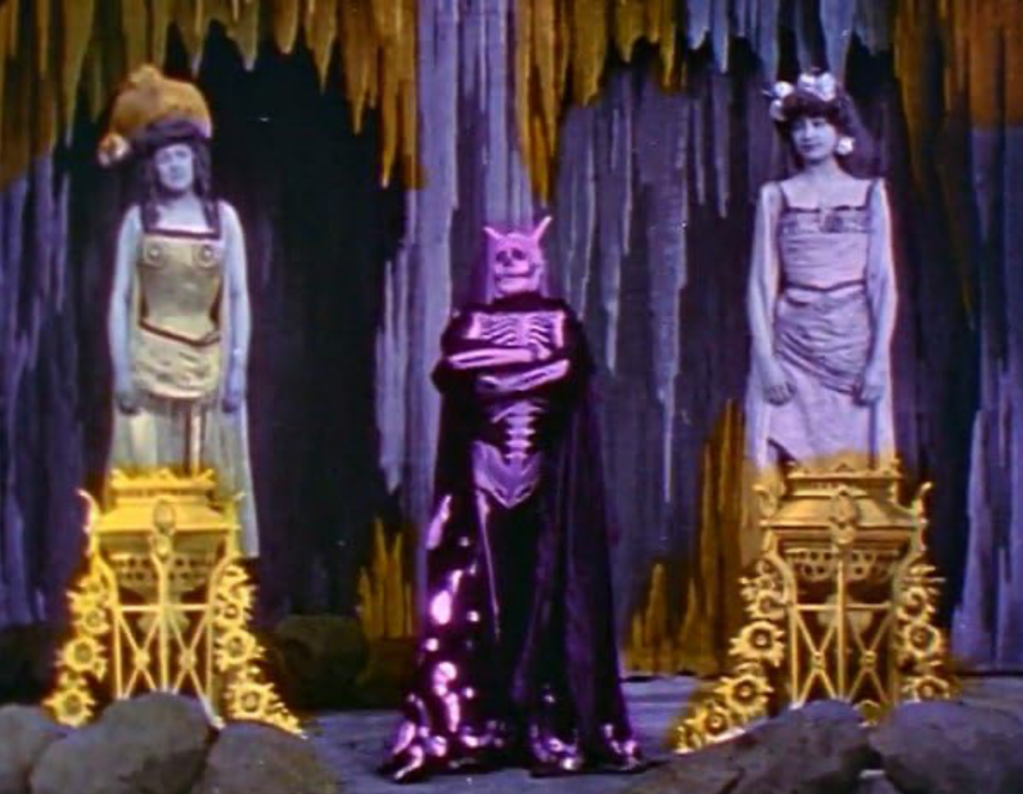
    The spectre of the title in his grotto, using magic to torment people and looking pretty pleased with himself.

    Le Spectre Rouge (aka The Red Spectre, 1907, dirs. Segundo de Chomón, Ferdinand Zecca) is a trick film, ostensibly comparable to the Méliès style. Though it’s easy to say everything followed his work, like D.W. Griffith inventing and perfecting every cinema technique you’ve ever heard of, it’s neither true nor fair. This one is its own thing, and has a demonic magician hanging out in his underground lair, dicking about with tricks that seem largely designed to torment women. His attempts are interrupted by a good sprite who intervenes, stopping or reversing the mischief he has wrought. That’s pretty much it, the premise being an excuse to have fun with tricks and special effects, something the film does well. It’s a frequently beautiful film that plays as an inventively crafted window into another world, full of splashes of vibrant imagination.

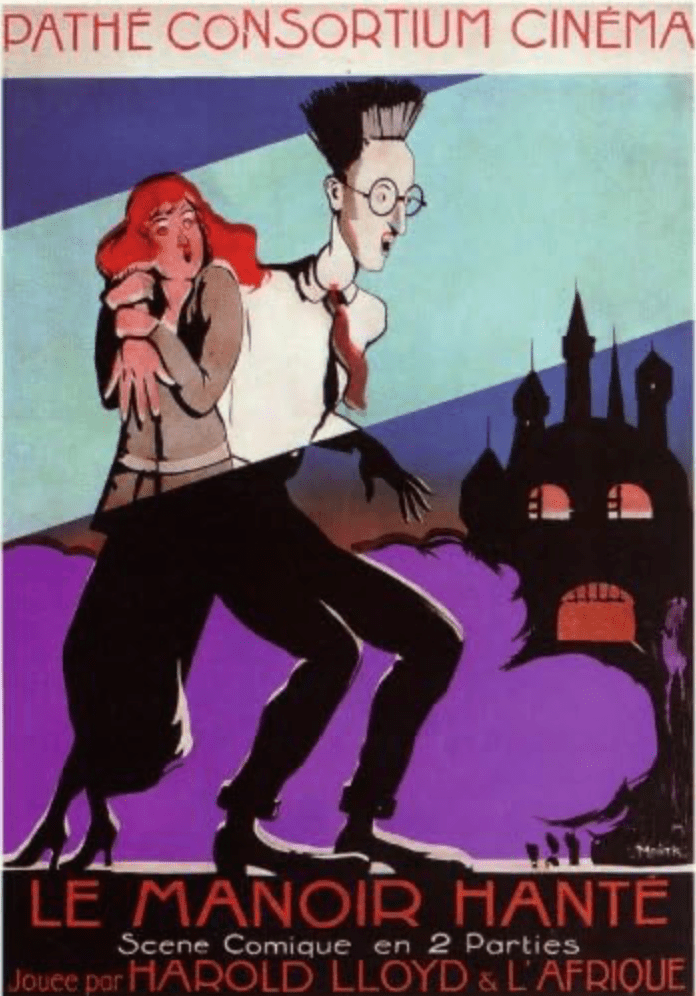
    Delightful French poster for Haunted Spooks

    Haunted house movie (and theatre) tropes were already well known by 1920 and ripe for comedic parody. Haunted Spooks (1920, dirs. Hal Roach, Alfred J. Goulding) does just that. But before we get to the titular spooky abode, the film starts with a remarkable sequence where Harold Lloyd’s would-be suitor fails to secure the affections of the woman he loves. This drives him to decide to <ahem> resolve the problem of life permanently through several failed attempts that escalate in a darkly amusing fashion. He’s distracted from any further tries when he runs into a lawyer working on behalf of a young woman who urgently needs a husband to claim her inheritance from her grandfather. Part of that inheritance is a beautiful house that the woman’s uncle covets, and so he does what any reasonable person would: fakes a haunting in the hope it will scare her off. When the couple arrive, we get another sequence of escalating events as the uncle’s ill-considered scheme unravels. There’s a lot to enjoy in this one, not least an intertitle A-game, which doesn’t only complement the action but enhances it (as the best examples did). Lloyd and co-star Mildred Davis make a winning central couple as things get truly hair-raising (makes sense when you see the film). It’s also fair to note that there are some disappointing, tiresome racial ‘gags’ in the second half, so be advised.

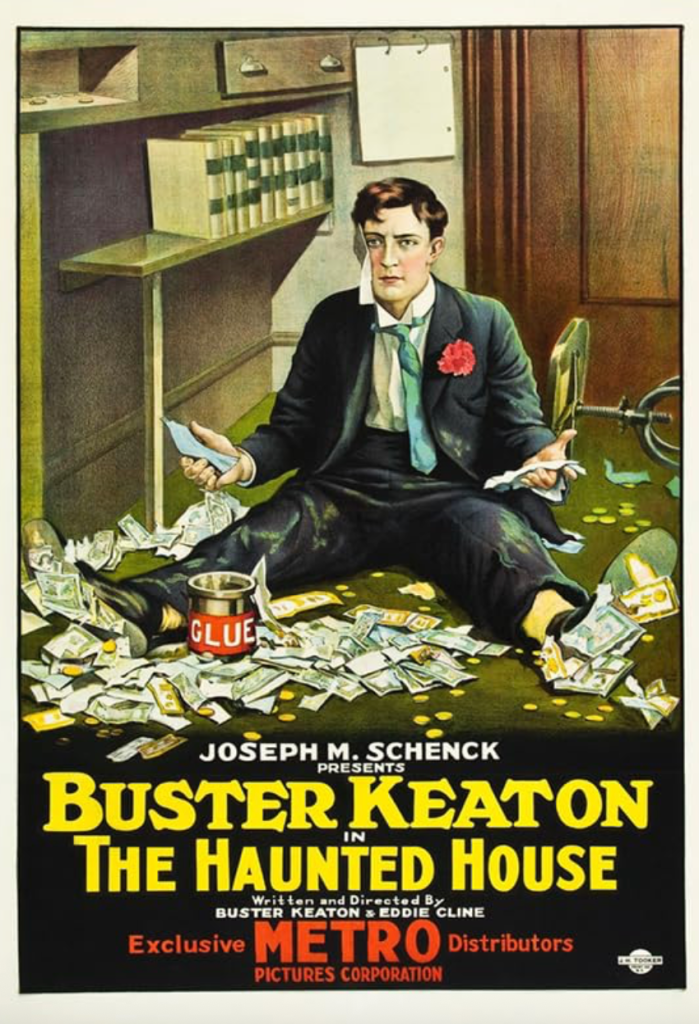
    Poster for The Haunted House, 1921

    Buster Keaton also got in on the haunted house parody gig in the following year’s…uh…The Haunted House (1921, dirs. Buster Keaton and Edward F. Cline). In this one, bank teller Keaton has a day start badly (gluing cash to his hands) and get worse (on the run from the police, hiding out at a ‘haunted’ mansion). It’s not actually haunted, however, but instead the hideout of a gang of thieves using fake ghosts and ghouls to keep people away from their lair. The entire film is a great example of Keaton’s often bizarre, off-kilter humour. When we get to the hideout, it gets increasingly wrapped up in a building run of visual gags and repeated refrains that land in a final sequence that pays off beautifully. There’s one gorgeous frame after another along the way in this gem. I could write more, but I just recommend seeking it out and enjoying it.

    Herbert Stern as Roderick Usher

    The Fall of the House of Usher (dirs. James Sibley Watson & Melville Webber) was one of two adaptations of Poe’s tale in 1928, both of which traded in surreal visuals (the other a feature-length French version). This one was an American production and gives us an avant-garde take on the story, existing for the purposes of experimenting with imagery, mood and technique. It’s a remarkably close approximation of the recognisable feel of a nightmare. The narrative is still straightforward enough to follow but it’s not the point of the film: that is to use images to make you feel unsettled and unbalanced and it does this very well. I wouldn’t say it’s an enjoyable experience, but it certainly qualifies as horrific and, alongside the range of techniques used here, it’s definitely worth seeking out.

    Screenshot of an excellent intertitle from Habeas Corpus

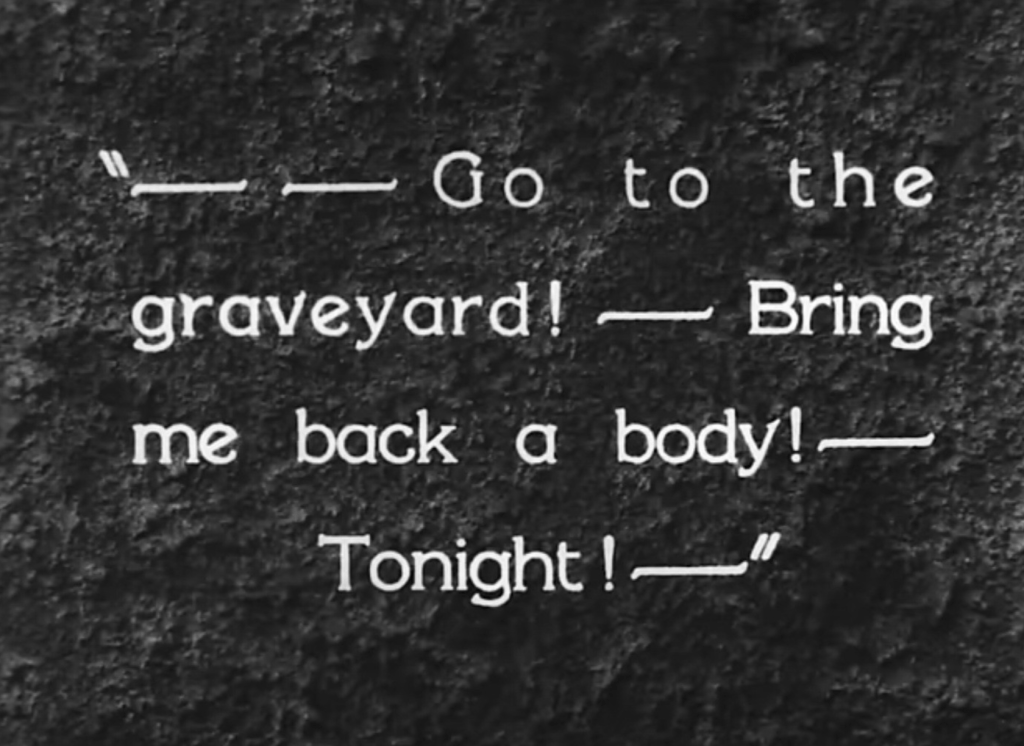
    The first Laurel and Hardy film to be released with synchronised sound (here a musical score with sound effects), Habeas Corpus (1928, dirs. Leo McCaret and James Parrott) has the duo knocking on the door of an insane professor (in the hope of work or money, or in Stan’s case, a slice of buttered toast). He offers them $500 to bring him a body back from the cemetery, and despite their misgivings, they accept. They go down to the graveyard, but unbeknown to them, the police are also aware of the potential crime being committed, and head down there too, aiming to pretend to be a ghost and put the duo off. What follows is a film packed with arguably predictable gags and slapstick somehow, as so often the case with these two great performers, made fresh and appealing by the talent and chemistry of Ollie and Stan. There’s also a wilful drawing out of sequences like them trying to scale the wall into the cemetery that makes that something familiar become something fresh – like a different, more cuddly, less confrontationally weird version of the off-kilter Keaton approach. Again, a Laurel and Hardy hallmark. Great fun.

    Screenshot from The Haunted House (1929)

    At the end of the decade that started with Lloyd and Keaton encountering fake ghosts, Mickey Mouse ran into the real thing in The Haunted House (1929, dir. Walt Disney). During a storm, Mickey seeks refuge in an abandoned house, only to find himself forced to soundtrack (by playing the organ) a delirious dance-off between the skeletal inhabitants. When he tries to escape, things get weirder still. A horror-comedy building on the same year’s The Skeleton Dance* (1929, dir. Walt Disney), this comes from Disney’s emerging days, when it wasn’t tethered to its later image, and it’s pretty wild, nightmarish stuff. For me, much of this has the feel of a Fulci-esque circular nightmare of the seventies or eighties, where if you found out the mouse was dead and trapped in his own private hell, it would need no further explanation. A ‘happy’ conclusion is inevitable (it is a cartoon after all, you know – for the kids) but if it cut off a few seconds earlier, or ended with Mickey lost in the storm again, discovering the house, that could only make it (slightly) better.

    *That one, as the NYT reported in 1931, banned in Denmark for being ‘too macabre’

    A POV shot of the intruder from Suspense. looking up at the woman inside the house

    Though not a horror, a bonus mention for Suspense. (1913, dir. Lois Weber), an excellent home-invasion thriller which finds a woman and her young child in their remote house, abandoned by their maid, and menaced by a passing stranger who finds his way inside. With her husband alerted and racing back from work to try and get there in time, the stranger makes his way through the house, up to her room where she has barricaded herself and her child in. Like several of the above films, the elements are familiar but Weber makes stylish use of technique, frames the story imaginatively, and adds in little shorthand character notes that bring them to life despite the brief running time. An outstandingly good, and perfectly named, film.

  • The Art of the Silent Film Universe

    Whenever I sit down to a silent film or short, I know it’s going to feel like absolutely nothing else in the world of cinema, regardless of whether it’s a comedy, drama, horror, et al. Silent film is something completely unique. It’s long felt to me like a dreamworld of a kind, a doorway into another world of sensory sensation. There’s a fairly obvious difference between silent film and its sound-synced descendant, but it’s much more than just that. Finding a way to articulate this other than just using words like ‘dreamworld’ has been the hard part, because they don’t even begin to do the experience justice.

    Fortunately, for this piece I don’t have to rummage through my trusty bag of adjective clichés, because Ben Model has written what is already, in my opinion, one of the foundational texts for understanding cinema, and in this case, silent film. Model has been a silent film fan since his childhood. He turned this into a career as accompanist to thousands of showings of films and shorts across the world in the last four-plus decades, as well as introducing, lecturing on, and writing about silent film. Model is also a committed preserver of a huge range of silent film, too, with his label Undercrank Productions crowdfunding and producing invaluable releases of restored gems.

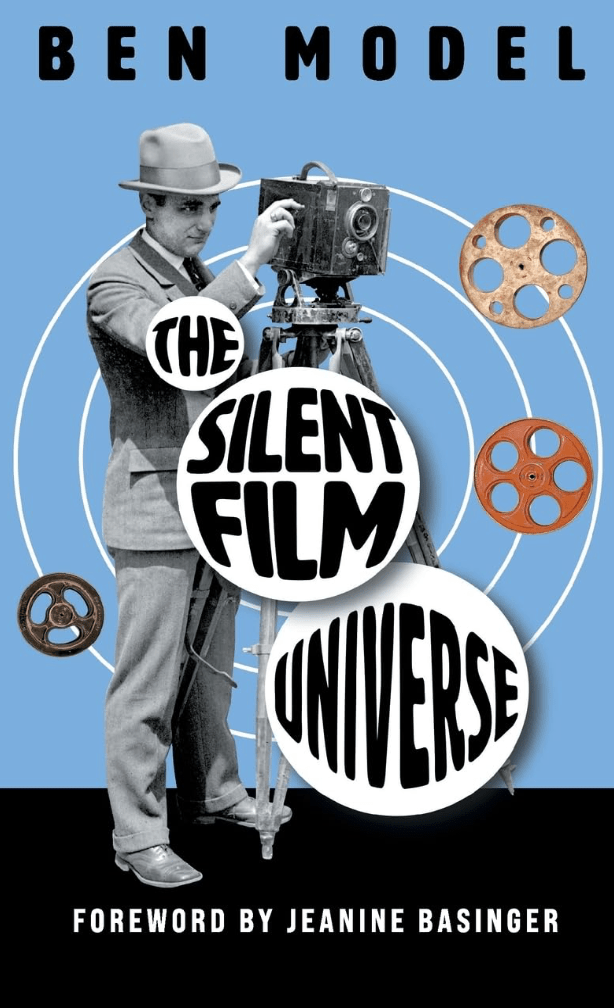
    In his new book, The Silent Film Universe, Model doesn’t want to give us a history of silent film or its performers and directors. After all, there are several classic books already out there on almost any aspect of the first few decades of film, should you want to explore. Instead, Model uses The Silent Film Universe to go into detail on just what it is that makes this form of the moving image so uniquely beguiling and enjoyable. It has been said that you cannot experience silent film in the way you might a talking picture, simply because it requires your full attention. Look away from the screen for a minute or two and you will have missed something vital. There will never be a silent film made for Netflix. It demands our investment.

    Model unpicks this relationship between viewer and film, what it asks of us as an audience, and the way it rewards us. The book covers how the lack of synced sound, the use of intertitles, the style of acting and performing, and the ways in which films are presented are essential elements that create something that stands completely on its own. These are not to be dismissed as just ‘old films’, they are vital and alive a century or more after they were made. Model’s biggest focus throughout is on cranking for shooting and frame speeds for performance and how this created an alchemy that is remarkable and not replicated anywhere else in the world of cinema. It is as deeply thought out and passionately argued a revelation on the process of creating – from production to the experience the audience has – as you will find in writing on film.

    Something that is clear from Model’s career and work is his love of silent film and also his belief that it is no thing of the past, but an art form that offers something to every successive generation that discovers it. It’s because of this that The Silent Film Universe is no dusty dissertation given a nice cover and put out for a narrow audience. Instead, the book is written in a knowledgeable but conversational way, as if Model is sitting across from you in a bar somewhere telling you how exciting and interesting silent film is in a way that sweeps you happily along. He’s also done the experimentation and research to support his theories on how silent film works and why it works. This is a book that expertly balances learning and love for its topic. He wants you to love and appreciate this wonderful universe as much as he does.

    If you have an interest in silent film or film in general and want to learn something revelatory about this beautiful, special art form, get this book. If you just enjoy reading something on a topic by someone who knows and loves what they are writing about, get this book. Ah, just get this book.

    You can buy The Silent Film Universe here: https://undercrankproductions.com/the-silent-film-universe/

  • More Ghoulishly Good Times

    You might think everything is terrible right now. You might believe that part of the suck is that there’s nothing new in culture (from films to television, books, music, theatre, art), that we are drowning in remakes and reboots and reimaginings. You mutter curses as you read of ‘a dark retelling of the Pinnochio story, coming to book stores this year’. Dick Wolf wakes up in a fluster one Sunday morning, an idea for a new ‘franchise’ burning feverishly like so much sloshing jock sweat in his brain. A remake of a film you swear is only three years old is announced. “Doesn’t anybody have an original idea?”, you muse. The answer is no, absolutely fucking not. Where, then, is all the good stuff? It’s still everywhere, thankfully. The people you love, the things that fire your imagination, the world out there. There’s lots to enjoy as we spin in space. Some of it is here, too, in the second instalment of Ghoulishly Good Times. Here’s what I have enjoyed across the last few weeks.

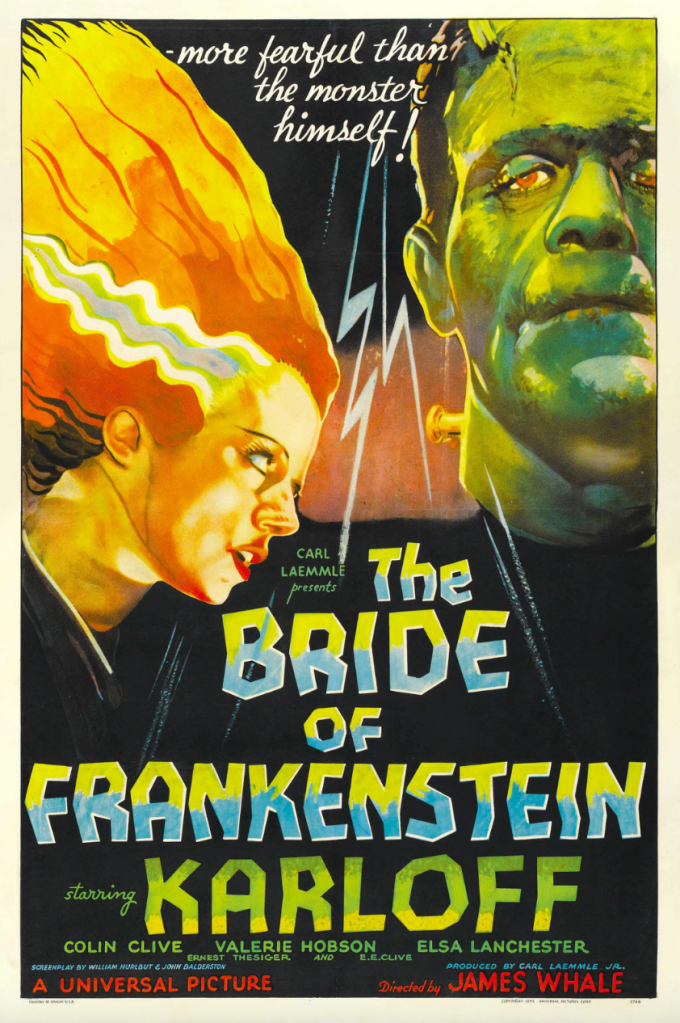
    Poster for The Bride of Frankenstein

    James Whale agreed to take on a sequel to Frankenstein (1931, dir. James Whale) on the condition he could make it a ‘hoot’. And hoot it is, with The Bride of Frankenstein (1935, dir. James Whale) eschewing the gothic gloom of the first film and pitching instead for a dark-hearted fairytale. It carries over the themes of men hungering to play God and brings back Colin Clive as Frankenstein and Boris Karloff as his unloved creation. But otherwise, the film’s messy genesis, going through several scripts and production woes, reshoots and censorship, works to its credit, leaving us with an occasionally coherent series of vignettes that expand the lore, give Karloff more to do, and allow Whale to create something defiantly eccentric. More absurd black comedy-fantasy than horror film, it nevertheless packs in plenty of imagery to compliment the iconic original, and entertains completely.

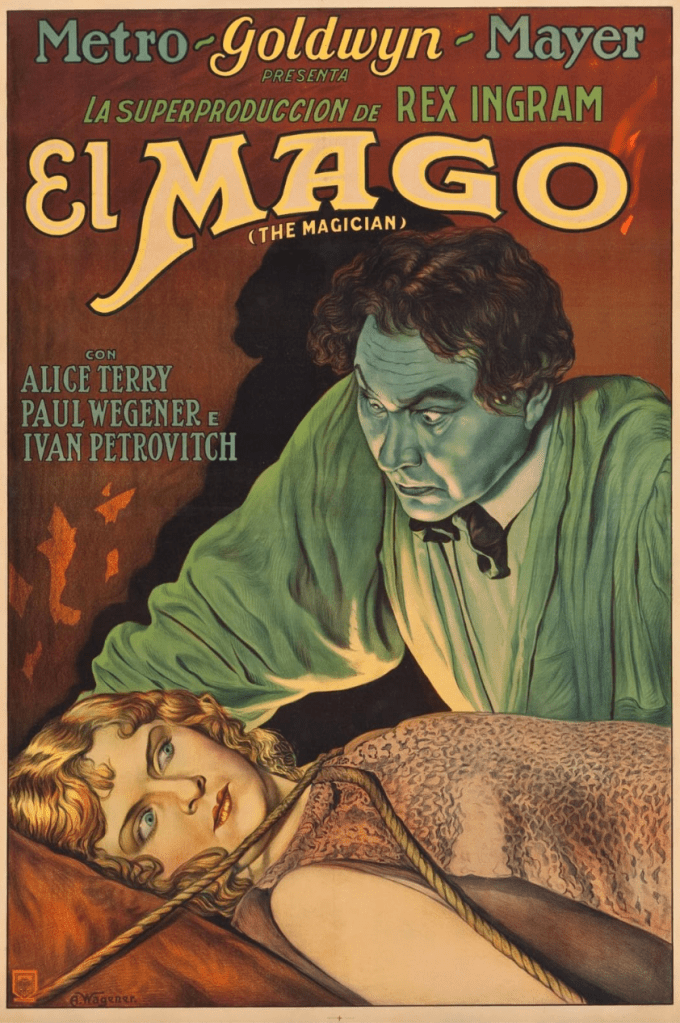
    Spanish release poster for The Magician

    Speaking of Universal’s Frankenstein(s), an acknowledged influence on them both can be found at the end of silent classicThe Magician (1926, dir. Rex Ingram). Gothic laboratories, assistants of a smaller stature, and men playing God. Based on a W. Somerset Maugham novel, the first hour at least finds sculptor Margaret the unwelcome subject of the obsessive Oliver Haddo, hypnotist, magician, student of medicine and all-around bastard (played by real-life bastard Paul Wegener). Haddo is convinced that Margaret is the key to an arcane ritual he has discovered which he believes will give him the power over life and death. Made in France, it’s a beautifully shot, creeping thriller (with some striking location filming) that diverts pleasingly in its final half hour into a gothic horror. Shooting overseas away from studio executive interference certainly helped the film, but at the time, reactions to it criticised it as ‘tasteless’. Take that as a recommendation in my opinion.

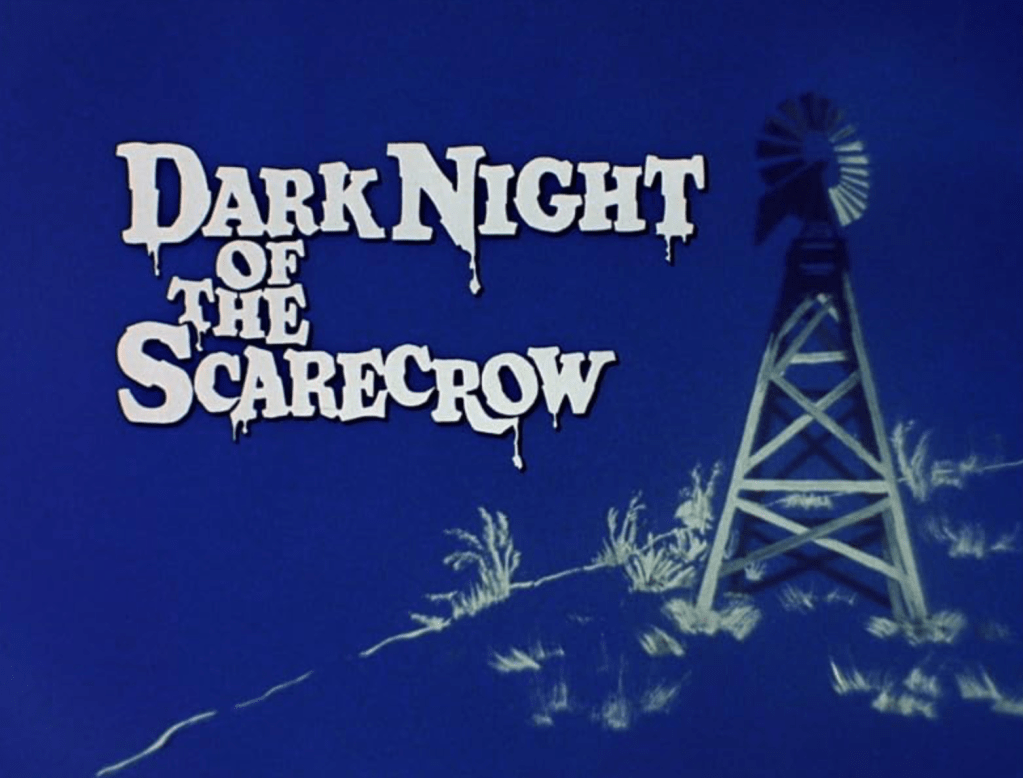
    Title card for Dark Night of the Scarecrow

    Dark Night of the Scarecrow (1981, dir, Frank De Felitta) writer J.D. Feigelson had hoped his supernatural revenge script would have made it to cinemas, but its eventual home on television as a TVM probably gifted the film its legacy. I don’t know what the minor changes made for its new home on CBS were, but there are no edges smoothed. This is a seriously dark, unsettling tale and stands out. A vulnerable man has a friendship with a young girl that upsets local postman and all-round piece of shit Otis Hazelrigg (Charles Durning). He convinces three friends to take matters into their own murderous hands. It’s not long after this that something – some kind of vengeful force – starts causing fatal accidents for the quartet. As events spiral, Hazelrigg moves from disbelief to desperation to protect himself, no matter the cost. There’s lots to love about the film: performances are all great, the atmosphere of creeping dread is nailed from the outset, it’s absurd, blackly funny and shameless about it, and its purposefully slow pace allows director De Felitta and cinematographer Vincent Martinelli space to conjure up some gorgeously unsettling imagery. But the main ticket is Durning, here playing an unrepentant scumbag, a soul black with squalor and hypocrisy, and this film’s dark, festering core.

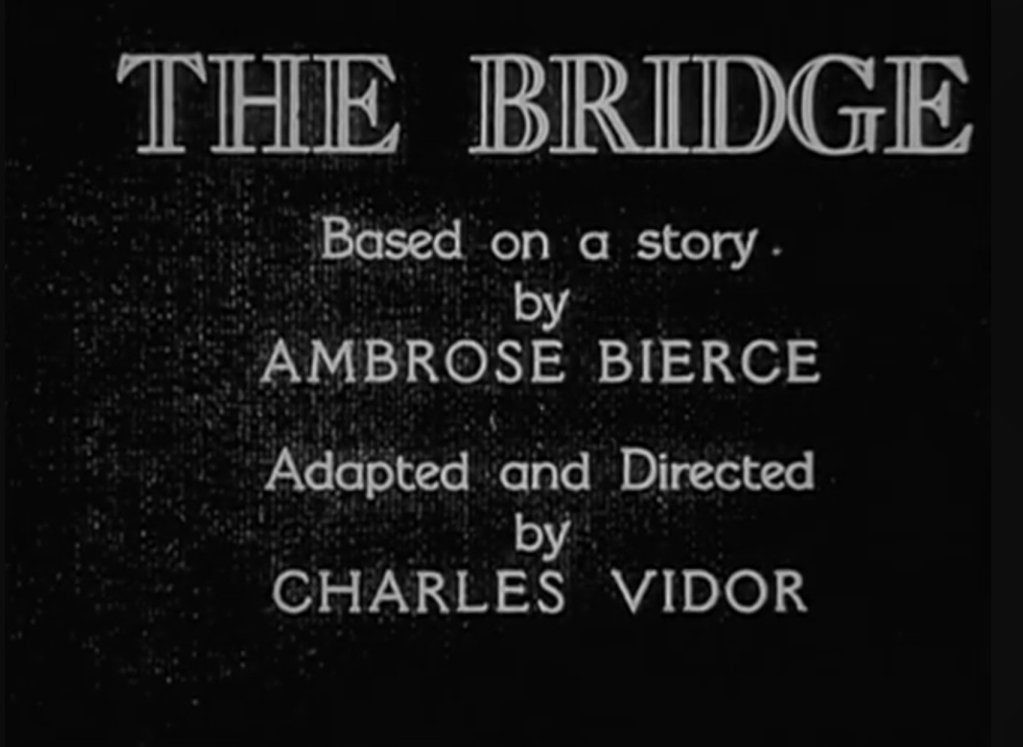
    The Bridge title card

    In 1929, Charles Vidor wrote and directed a short film of ‘An Occurrence at Owl Creek Bridge’, making the first adaptation of the famous Ambrose Bierce story of 1890. It’s only 10ish minutes long but The Bridge (1929, dir. Charles Vidor) plays like a preview to The Twilight Zone (which had its own version of the tale) and similar shows and films. A man escapes his execution on a bridge but his journey to get back to his wife and child is beset by a creeping sense something is not right. Nicholas Bela is outstanding in his role as the man, and Vidor’s version could have been made last week: it experiments with technique and structure in ways that feel familiar to an audience nearly 100 years later. Really very good.

    Newspaper advert for The Ace of Hearts

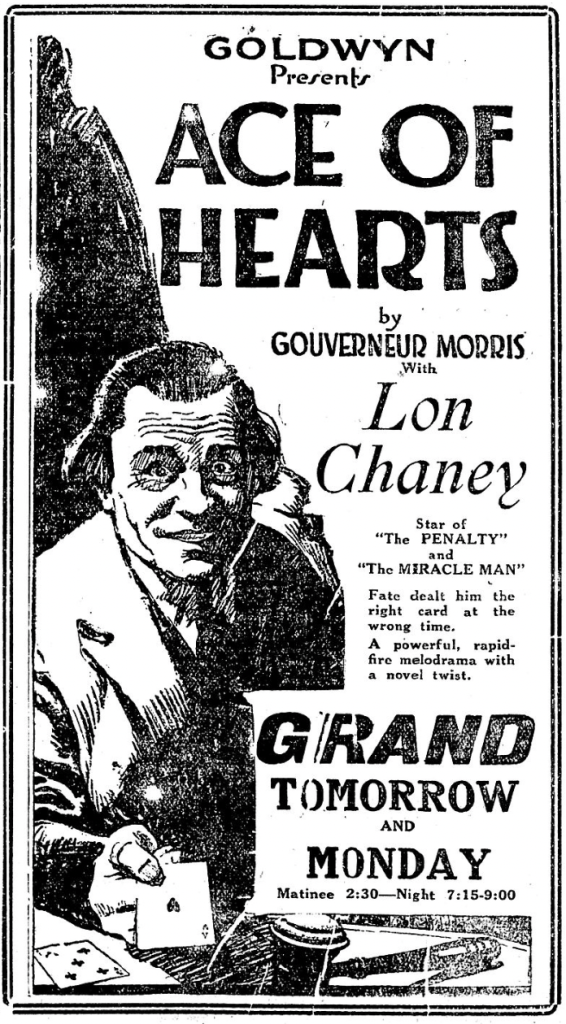
    Director Wallace Worsley and star Lon Chaney reunited after 1920’s wild The Penalty on the following year’s The Ace of Hearts (1921, dir. Wallace Worsley), a thriller about a group of anarchists who, having decreed that a rich piece of shit has lived too long, draw cards to decide which of them gets the honour of killing the wealthy prick. Chaney’s Farallone is besotted with comrade Lilith but when she marries their other comrade Forrest, the mission becomes more complicated. Although the mid-section gets a little bogged down and talky (no mean feat for a silent picture), the opening scenes and the tense and beautifully done final sequences more than make up for it. Lilith and Forrest are the nominal leads, but the show is Chaney’s. He gives it his all, and gifts Farallone a tortured humanity that convinces as the film builds to its ending. The conclusion is at once overdone and yet perfect for the movie (more so than the original, which was reshot – in this case wisely – at studio head Sam Goldwyn’s request). Alongside a great Lon, the film’s themes are still heavily resonant today, almost jarringly so. Highly recommended.

    Promotional trade advert for The Bat

    The last week has been a tale of three Bats, starting with 1926’s first version of the successful Mary Roberts Rinehart and Avery Hopwood play, The Bat (1926, dir. Roland West). A close relation to the following year’s The Cat and the Canary (1927, dir. Paul Leni), Roland West’s first go at adapting the play is a mix of mystery, comedy and horror that works incredibly well, bringing together a dark house, a cast of potential victims/suspects, and a villain who makes a vividly lasting impression. As with Leni’s film, there’s a lot of German Expressionism influence, some outstanding set design and cinematography, and a finely done balance between mystery, comedy and some genuine chills.

    Screenshot from The Bat Whispers

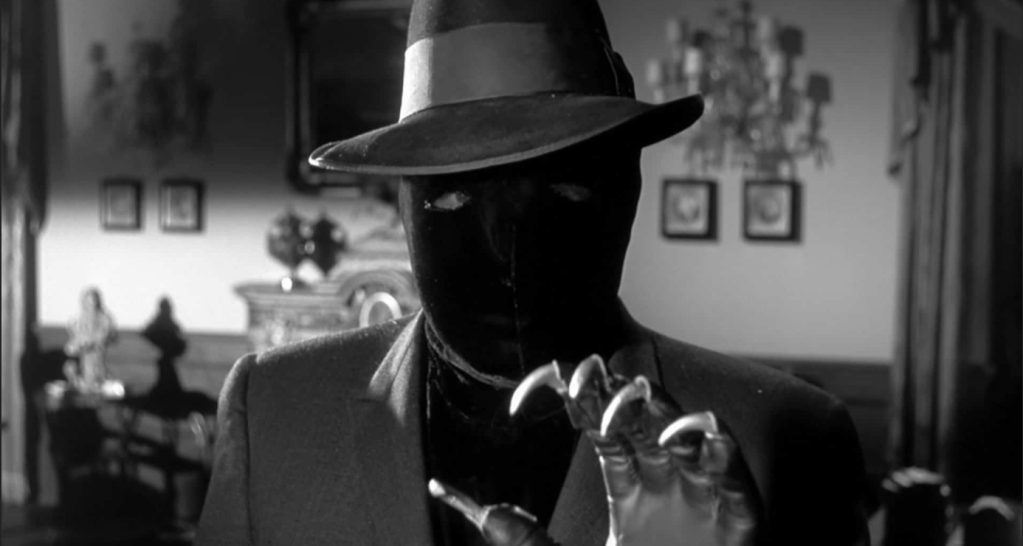
    West’s second go came just a few years later in 1930, sound pictures now the standard, with The Bat Whispers (1930, dir. Roland West). West doesn’t appear interested in retreading ground from the first film, and this version focuses more on the mystery element and dialling up the comedy. The Expressionist style is mostly gone, but that doesn’t mean we lose the horror influence entirely. And again, West doesn’t just rehash the first film’s imagery. Instead we get something much closer to the inspiration for Bob Kane’s early Batman of a few years later. We also get a film shot in early widescreen and some ambitious camera work, making use of panning in particular to create some startling sequences. West didn’t get a third go at the title, his career derailed a few years later by a scandal involving the death of his mistress, Thelma Todd, in 1935, a death West was rumoured to be responsible for, though never charged with anything.

    Screenshot from The Bat (1959)

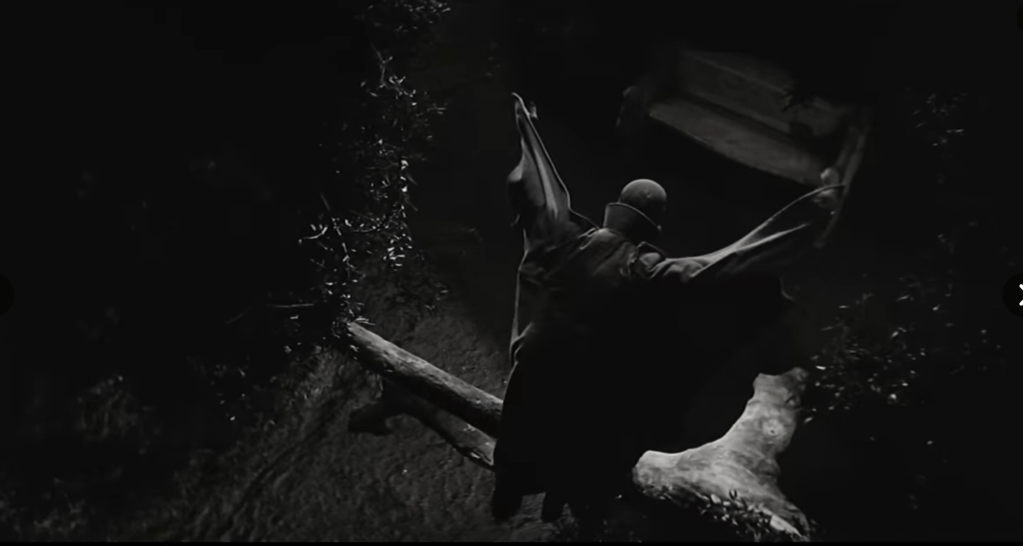
    The last bat is connected to the original in more than the obvious way and also brings us full circle. Crane Wilbur wrote and directed the 1959 version, The Bat (1959, dir. Crane Wilbur). Wilbur was a contemporary of Roland West and Lon Chaney, adapting The Bat and writing his own blackly comic dark house mysteryThe Monster (1925, dir, Roland West), starring Lon Chaney and serving as a comedic critique of the dark house and mad scientists sub genre tropes and acting as an inspiration for Universal’s Frankenstein films. Vincent Price is in the cast for this iteration, although the horror influence is dropped almost entirely, the focus here on the mystery. It plays like an unusually cynical Scooby Doo episode, and that’s a compliment. The fantastic Agnes Moorehead is part of the cast, too, and there’s some enjoyably unsubtle undercurrents that modern audiences will recognise easily enough running throughout that make it feel substantially different to the previous two versions, and very worthwhile in its own right.

  • How did horror dig its claws into you?

    Photographs of dead people, oh my.

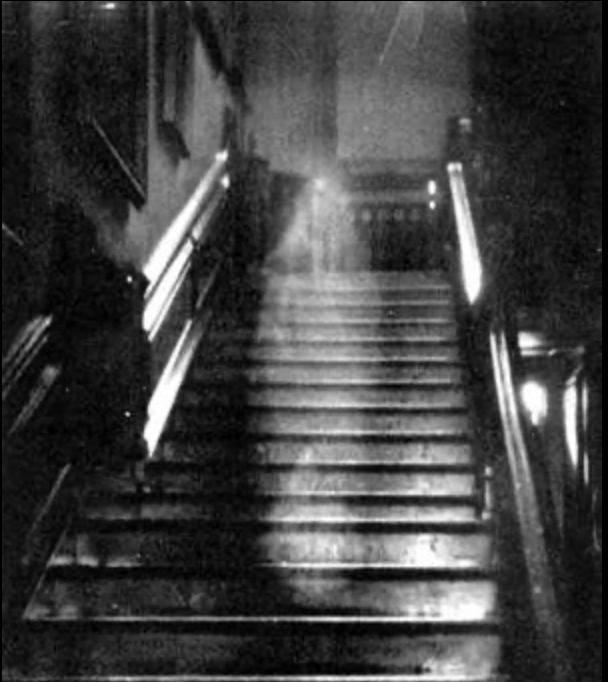
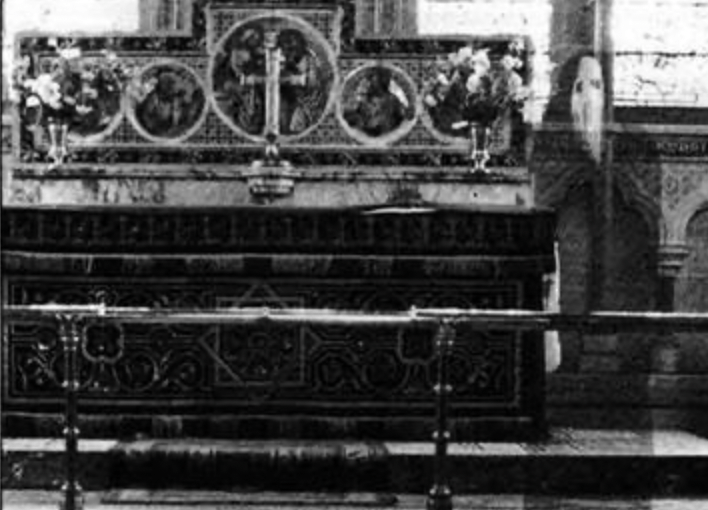
    The Brown Lady of Raynham Hall caught on film. Maybe.

    (This is an update of an old piece written for the now-deceased site Horrified, which opened a column for contributors to share the moments that meant the most to them, the flesh and blood of their horror experience. What chilled blood and warmed hearts. A jolt of electricity or two and, like a shambling patchwork corpse, it’s resurrected for this blog.)

    Horror. It bewitches us, fires our imagination, burns itself into our being. There’s a lot to the genre we love and what connects us with it the most. It’s in the stories, the emotions, the atmosphere, the aesthetics. And it’s in the moments we find and the impact they have, from jarring scare to creeping, lingering dread. Most often it is these moments that stay with us and inform how we feel about a film, or television show or book.

    It’s in that zoom to Christopher Lee’s pitiful creature unravelling its bandages and moving from confusion to murderous rage in The Curse of Frankenstein (1957, dir. Terence Fisher). Or in Peter Vaughan’s desperate and doomed attempt to escape the the curse he has brought on himself in A Warning to the Curious (1972, dir. Lawrence Gordon Clark). Or those final, chilling moments of Ghostwatch (1992, dir. Lesley Manning) when we realise there will be no happy ending. It is moments like these that resonate with us and evoke the most visceral responses.

    My experience will be familiar to anyone who grew up in the seventies, eighties and into the nineties. Back in these pre-internet days, a burgeoning horror fan still had much to choose from. From television showings of classic films in the wee hours to horror running through Baker-era Doctor Who’s DNA to huge hits like The X-Files, and a multitude of books, magazines and comics, these decades were awash with plenty to thrill the spookily-inclined. It was the halcyon days of monster magazines, fanzines, and short-lived but still fondly remembered comic titles like Scream! (1984). As the Scarred for Life team have demonstrated in their multi-volume hymn to what terrified people in the seventies and eighties, horror rippled through these years and continued to captivate more converts as the new millennium approached.

    Despite this, back in those days, we could not look up the history of a film or series or book with a few clicks or taps of a screen. It was the days of mail order, local discovery in your comic shop or newsagent of choice, or shared between friends like niche contraband. And it was not cosy or kind. It was gory film images in copies of Fangoria or latterly The Dark Side. It was sleepy, half-glimpsed nightmares in late night showings. On occasion, these images, these photographs were of something real, too. Magazines would do stories on ghosts ‘caught on film’. Issues of The Unexplained: Mysteries of Mind, Space and Time (Orbis Publishing, 1980-1983) were filled with mind-altering, frequently terrifying stories which were so wild they could only be true. And, in one of his television series devoted to exploring phenomena, Arthur C. Clarke’s World of Strange Powers (Yorkshire Television, 1985), the author focussed on ‘Fairies, Phantoms and Fantastic Photographs’ (Ep 7, 22 May 1985).

    The Reverend K. F. Lord’s photograph of the Spectre of Newby Church. Maybe.

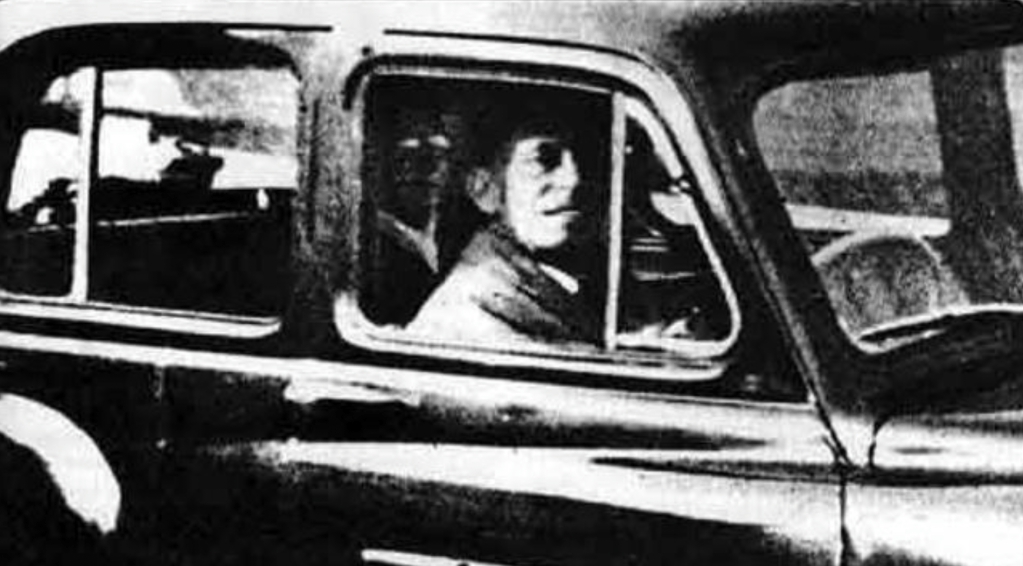
    There is one photo discovery from this era that lingers with me the most. The Spectre of Newby Church was bad enough, but the picture taken of Mrs Ellen Hammell by her daughter was the stuff of beguiling nightmare. In 1959, Mabel Chinnery had taken a photo of her husband sat in their car, but when developed there was a passenger of sorts. Behind her husband sat Ellen, Mabel’s recently departed mother. She had been dead a week. It’s grainy and Mrs Hammell’s straight posture is unnerving enough. But where the eyes should be is only white, like some sort of terrifying gateway into the beyond. When you are young, you don’t know anything about double exposures, trick photography or anything else that would explain it away. And this isn’t a film or show, it’s real. On film. Right there; a ghost. As an adult my rational mind knows there is an explanation for it, that there is (on the balance of available evidence) no ghost ever caught on film. And yet…
    The recently deceased Ellen Hammell catching a lift with her son-in-law. Maybe.

    It would probably be remarkable for Mabel Chinnery to learn that, for me and for others, this image and ones like it opened a door onto other worlds and possibilities in a way films, television and books could not. It frightened me to my very core, and yet I could not look away, because of the possibility of something horrific being actually tangible. Perhaps inescapable. Just like a love of horror. 

  • Some Ghoulishly Good Times

    Recent horrific film and television highlights

    Times are tricky right now, but in amongst everything that might be going on, there’s plenty to enjoy. I get a genuine distraction from the carousel in my head from a good show or film, very often horror, science fiction or mystery. A meditation of sorts. Here’s what I have enjoyed across the past few weeks or so.
    (A warning: There’s no serious, deeply analytical reviews here, so abandon all hope if that’s what you are after. I’m not writing an essay. No spoilers either. You’ll get a brief summary or introduction and one or two things from each I enjoyed.)

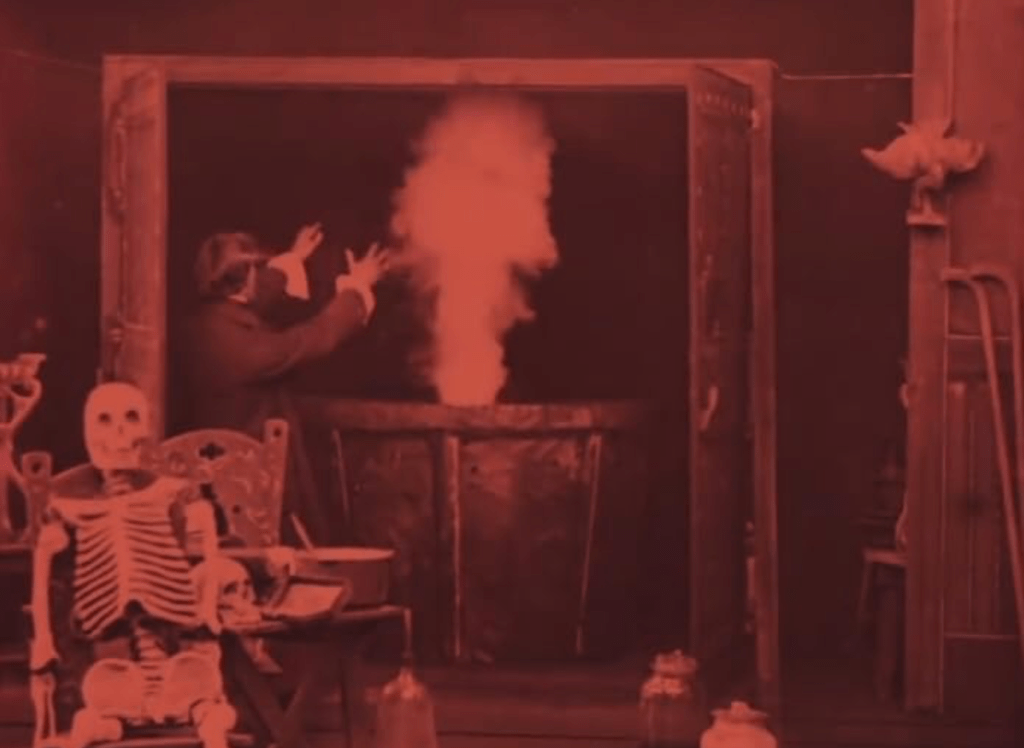
    Frankenstein begins the creation of his ‘monster’ in Frankenstein (1910)

    In 1910, J. Searle Dawley wrote and directed a one-reeler adaptation of Mary Shelley’s Frankenstein. It runs to about 16 minutes, so is only a swift tour through the beats of the story, but manages to generate empathy for the monster, poisoned by Frankenstein’s arrogance and hubris. The birth of twisted life sequence itself is quite a startling example of early cinema’s ingenuity. This monster is formed of fire and potions in a bubbling cauldron in an effect that, while basic, conveys the pain of its forced creation. It’s remarkable, and an enduring example of early filmed horror’s ability to captivate and even appal modern us, with all our ‘sophistication’.

    Newspaper advert for Sweet, Sweet Rachel (1971)

    Sweet, Sweet Rachel (1971, dir. Sutton Roley) was writer Anthony Lawrence’s pilot-film-of-sorts for the following year’s The Sixth Sense (1972), his phenomenal, egregiously short-lived ESP-themed television series that starred Gary Collins. The film follows a similar approach, telling of Rachel, haunted by visions of death. Dr. Lucas Darrow, an ESP expert, tries to help her unravel what is happening to her as her grip on sanity wavers. Like the series, what works so well with Sweet, Sweet Rachel is its absolute lack of fucks given to anything but its own internal logic and its focus on a nightmare flow to events and imagery. The central mystery is nicely loose, and if you enjoy it, I shouldn’t need to do anything else to convince you to seek out The Sixth Sense series, one of television horror’s weirdest, most underrated gems.

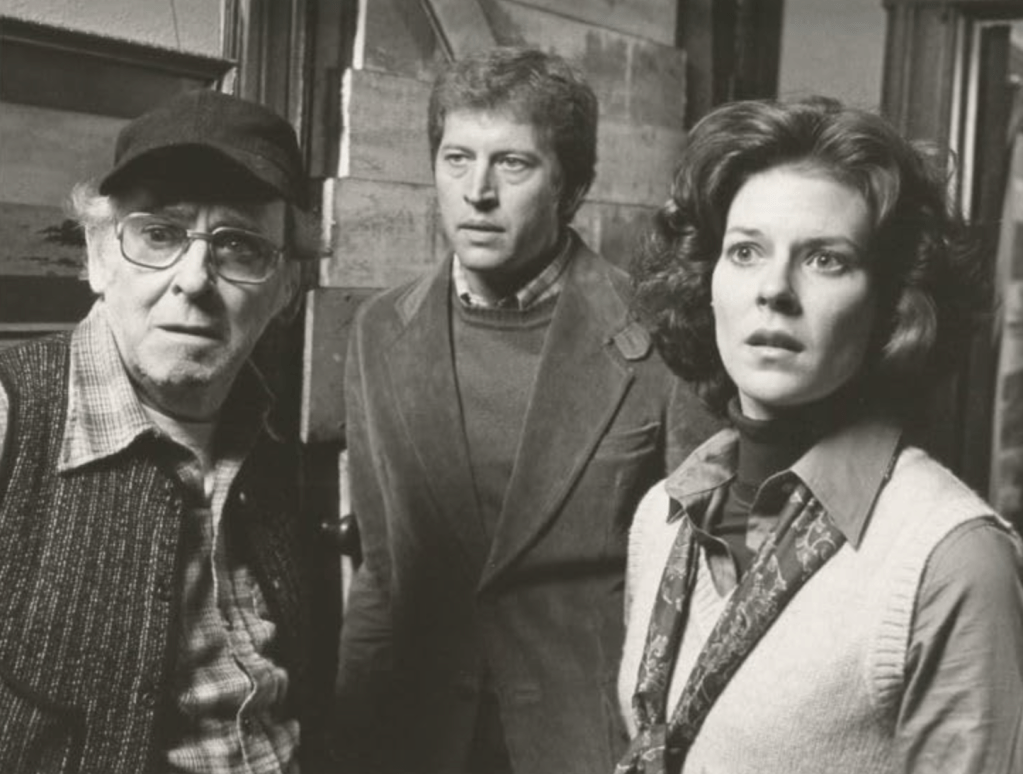
    L to R: Barnard Hughes, Granville van Dusen and JoBeth Williams in The World Beyond (1978)

    Art Wallace is probably most well known as the developer and principal writer of the earliest days of television classic Dark Shadows (1966-1971). A decade or so later, Wallace had two attempts at an occult detective series, with pilot films The World of Darkness (aka ‘Sentence of Death’) in 1977 and The World Beyond (aka ‘The Mud Monster’) in 1978. The magnificently named Granville Van Dusen plays sports journalist Paul Taylor. After dying for two minutes following an accident, Taylor is ‘gifted’ with the ability to see ghosts, who nag him about people in danger he must help but without, you know, any real details or anything that might assist him. In these films, that includes a woman trying to unravel the mysterious deaths afflicting her wealthy, messed-up family, and an island stalked by a golem. There’s nothing new in either, but they’re both so stylishly, sincerely done that doesn’t matter at all. The first film’s elegant, dark chills give way to the second film’s oppressive, relentless focus on visceral experience, but both pack in actual horror and are great fun for people who love ponderous, deliberately paced 1970s television horror (that’s me).

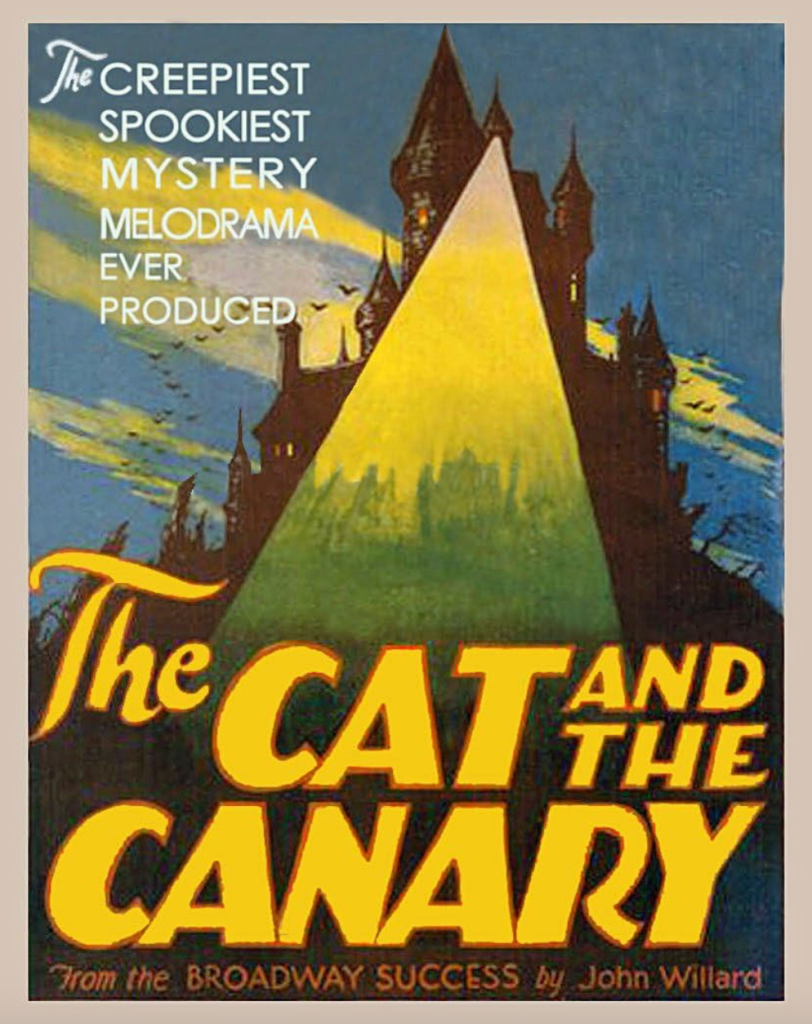
    Poster for The Cat and the Canary (1927)

    The Cat and the Canary (1927, dir. Paul Leni) was one of Universal’s big early horror successes (before the run we have come to associate starting with Dracula in 1931). Like many a film of its time, it was based on a stage play, a darkly humorous thriller by John Willard, but the masterstroke of bringing in the director of Waxworks (1924) means this is no dusty, static retread. Rather, Leni and cinematographer Gilbert Warrenton make a virtue out of its isolated, minimal locations, the lack of dialogue in a silent film (via intertitles), and employ various German Expressionist techniques to create several sequences of gorgeously fluid, alive and confrontational film. A lot of the tricks – sliding panels in walls, disappearing bodies, reappearing corpses – are all too familiar now, but in 1927 they weren’t; this was still fresh to movie theatres. It’s a comedy horror that achieves that rare balance between being genuinely amusing and yet ruthlessly serious in its chills. Really fucking good.

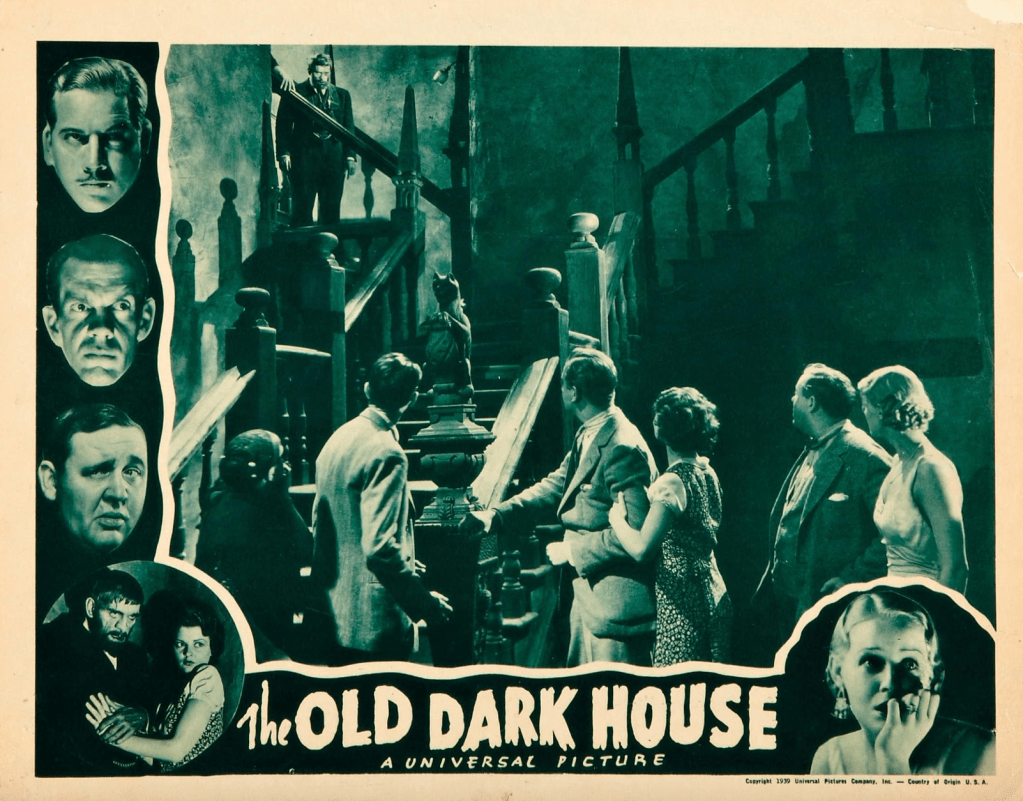
    Lobby card for The Old Dark House (1932)

    James Whale followed the cadaverous, scandalous Frankenstein (1931) (we’re not counting The Impatient Maiden, his intervening drama) with The Old Dark House (1932), a tale of several people stranded by a violent storm and forced to seek refuge in the titular home, its inhabitants very possibly more dangerous than the rain and thunder outside. If you haven’t seen this, you’re really in for a treat, and you should fucking watch it, now. It’s about as good as films get, and has Whale at the peak of his artistry, directing a pitch-perfect cast. A Pre-Code classic,The Old Dark House is as dangerous, raucous, and subversive now as it was nearly a century ago. It’s funny, moving, genuinely unsettling, gleefully out of step and defiantly queer in the more-than-one meaning that word carries.

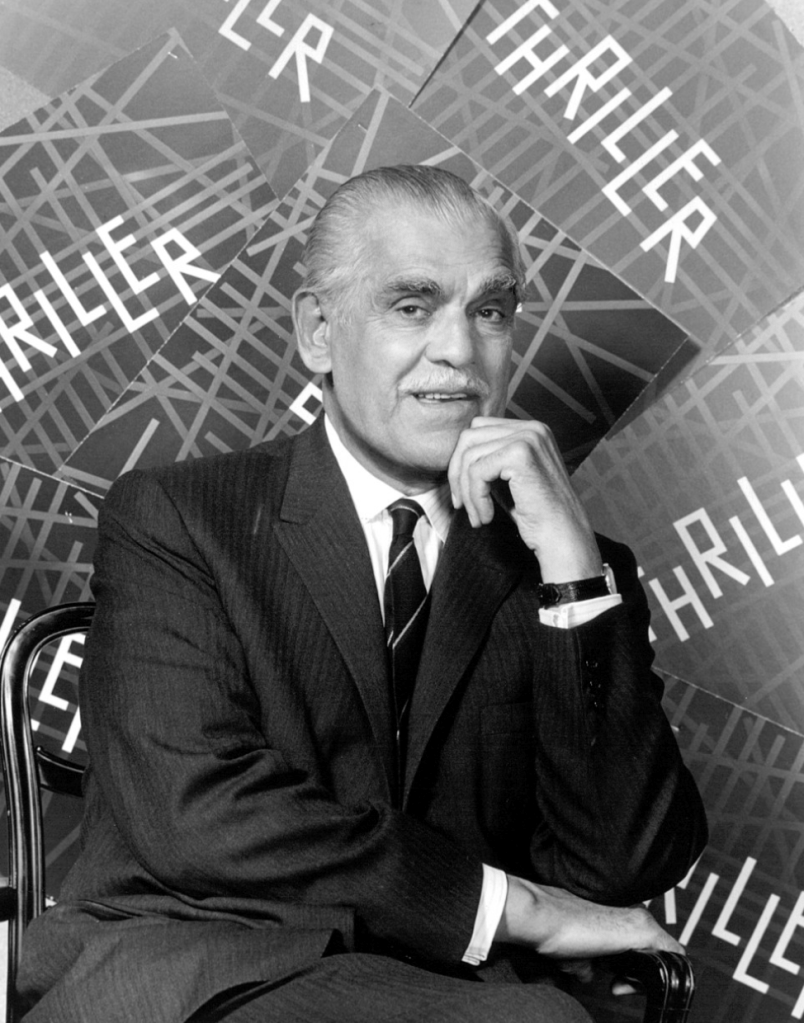
    Promo photo of Boris Karloff as host of Thriller (1960-1962)

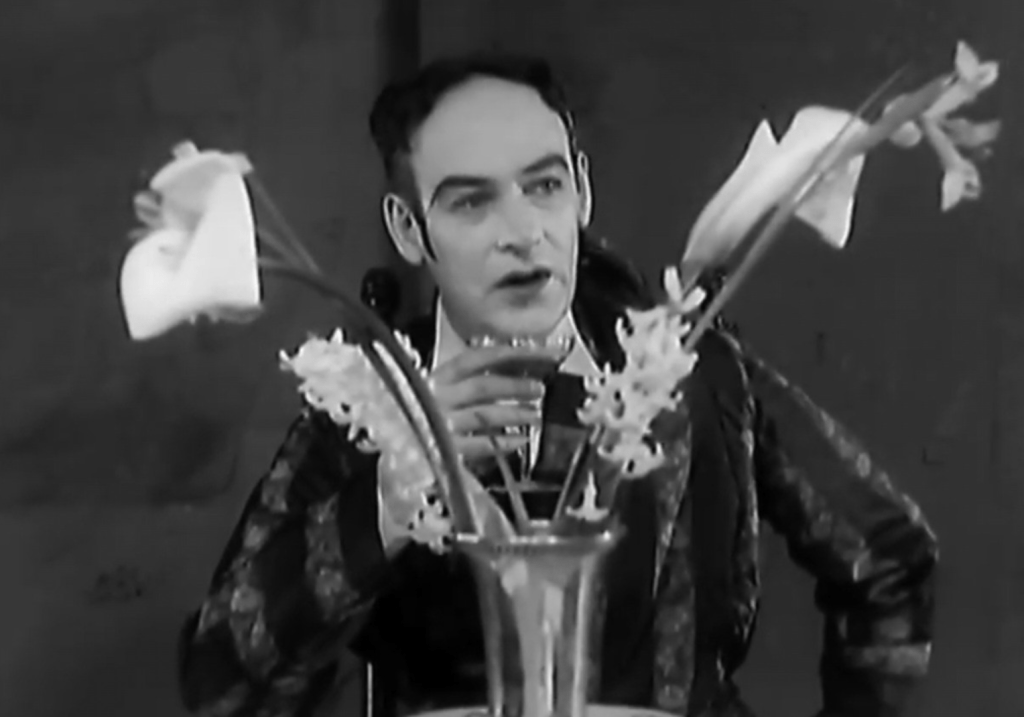
    In Danse Macabre, Stephen King’s 1981 history of horror, he suggests Thriller (1960-1962) was the best spooky series of its kind ever shown on television up to the point he was writing and got theWeird Tales vibe right on. He’s wrong.Thriller was in fact wildly erratic, from its early days of slow-moving crime stories, and still in its later episodes King was referring to. Some episodes were good, some were great, some were boring as shit. When it does nail it, the results are sublime, though often not for everyone. If you have a taste for overripe, camp gothic, then season two, episode twelve (‘The Return of Andrew Bentley’) is one such example. Richard Matheson scripts and John Newland directs and stars in a very silly – but very good – story of death and body snatching. To be clear, I really can’t underscore how much almost every bit of this episode is, objectively, bollocks. The score, the shameless performances, the dialogue. The drawn out ending. It’s an arched eyebrow daring you to take it seriously. But somehow, mix it all in together and you have a knowingly silly cocktail of horror cliche that is a lot of dumb fun.

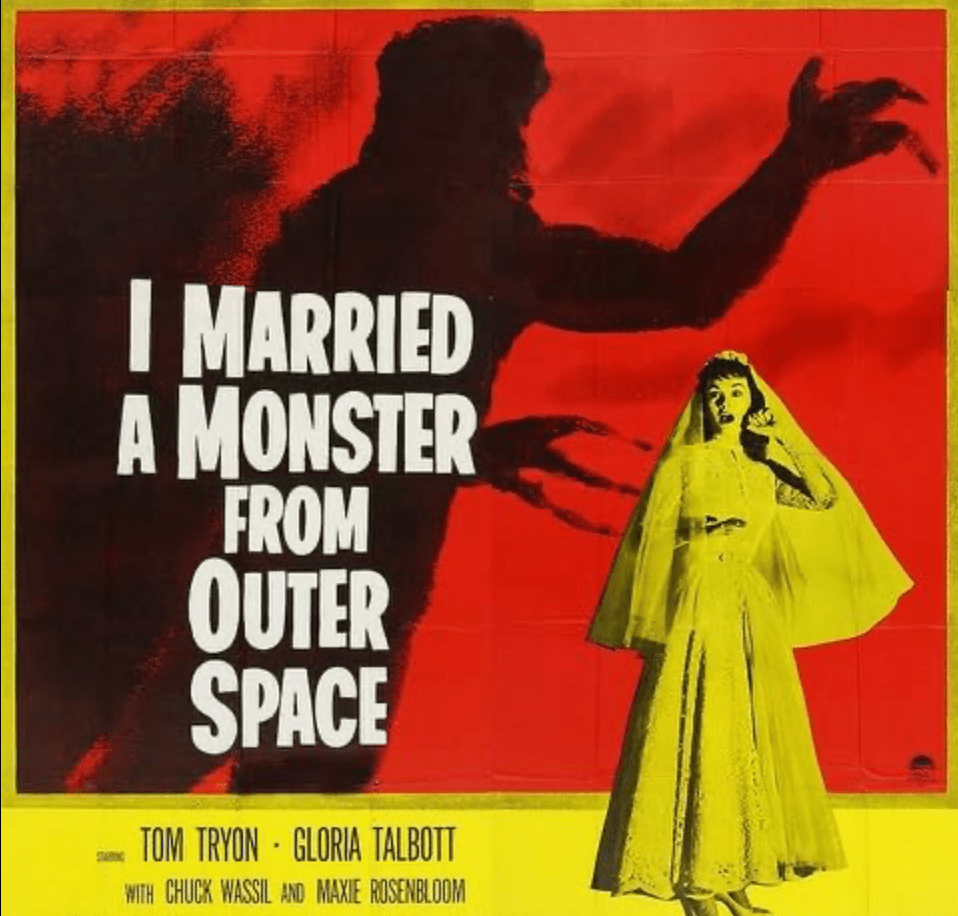
    Poster for I Married a Monster from Outer Space (1958)

    Behind its gloriously garish title, Gene Fowler Jr’s horror-tinged science fiction thriller is a serious movie that plays almost like a lost first attempt atThe Outer Limits (1963-1965), or Invasion of the Body Snatchers (1956, dir. Don Siegel) if that film was much more mean and obsessed with both the promise and threat of sex and the secrets we can and can’t keep. Marge marries the man of her dreams only to find he changes after they wed, almost like he is a different person. That’s because he is. There’s sci-fi thrills here and gloopy special effects, alongside a genuinely tense, pointed narrative only slightly undercut by one element of its ending. All the better then, that the other elements land so well. A sweaty, supple good time.

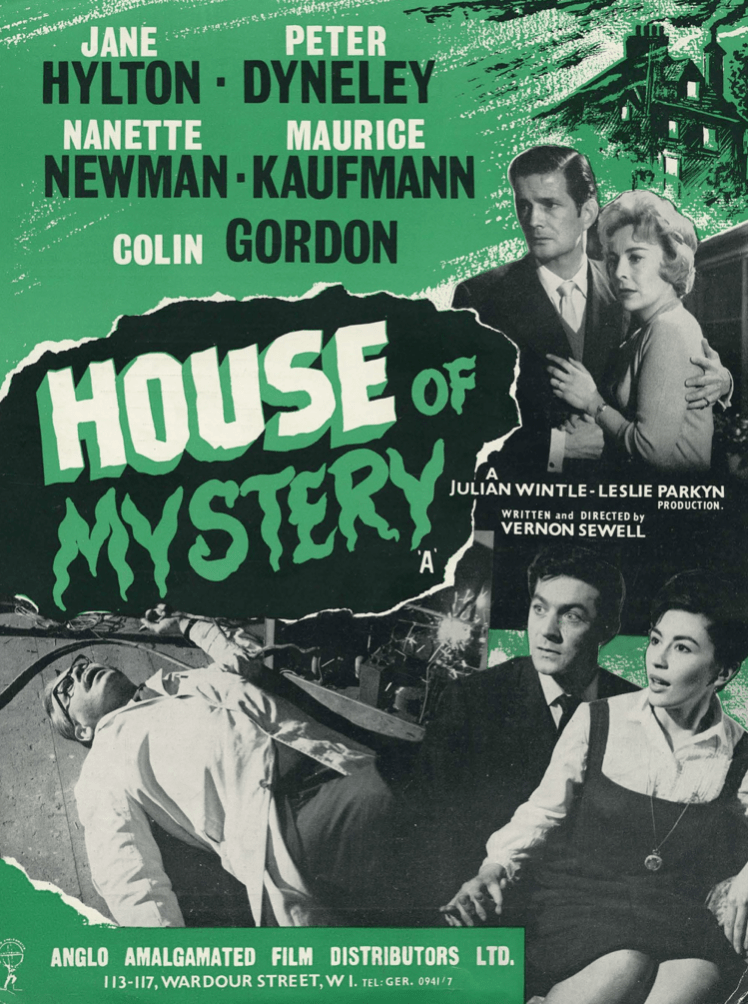
    Poster for House of Mystery (1961)

    Vernon Sewell writes and directs his fourth go at an adaptation of the playThe Medium. A young couple think they have stumbled onto an impossibly cheap bargain of a house. When the melancholy caretaker offers to tell them the history of its ghosts and murder, they realise why it’s on at a bargain price. Comprised of several smoothly done flashbacks, House of Mystery (1961) is a kind of proto-run at the ‘residual haunting’ theory that Nigel Kneale’s The Stone Tape (1972, dir. Peter Sadsy) popularised significantly more loudly a decade later. Sedately paced for a 56-minute long mystery, it nevertheless captures and keeps the attention and squeezes in enough specifically British eccentricity to be plenty of fun. A delightful, creepy curio.

  • Modern horror writing at its best

    I want to write a little bit about two recent book releases that share some thematic crossover and urge you to check them out. Both books are remarkable pieces of writing and deserve a wide audience. A fair warning: the books deal with gnarly subjects and this piece references them throughout, so if you’re put off by mentions of grief, illness, gore and the like… read no further. No spoilers, however.

    In Phengaris, we meet 17-year old Mark, a young man adrift. He is looking after his terminally ill mum, a parent with whom his relationship is conflicted to say the least, his dad disappeared years ago, and all Mark really wants to do is get high and tune out of the relentless noise of his life. He thinks he’s found the perfect spot in nearby Thurstrop Wood and an abandoned workshop yard. Unfortunately for Mark, something no longer human there has seen him and doesn’t want to let him go.

    Phengaris opens with a visceral description of a body mutilated by disease and something disturbingly unnatural. It sets the tone for what follows, as Mark becomes consumed by the mystery of Thurstrop Wood and how it connects to his family, revealing secrets that have been buried for years. There’s other things buried in the woods, too, and they are coming to the surface. Orridge writes with skill and empathy about the burden of youth, and of illness, and about the unforgiving way bodies attack themselves at the same time as the world around us weighs down on us. There’s a thread of ecological awareness, too, and a focus on the nature of parasitical behaviour.

    It’s also concerned with what it means to be human, and how family connections not even escapable by death bond us together for good and for ill. Orridge has a beautiful way with phrasing and illuminates the secondary and minor characters in a way that brings them vividly to life. Sadness and melancholy and loss knot their way through Phengaris, as does a quietly effective rage. It’s ambitious, passionately alive, and makes the personal deeply political.

    Fleischerei by Saoirse Ní Chiaragáin has some complimentary themes but is a radically different experience. In it, we are introduced to Órfhlaith, living in Berlin and working as a content moderator. Órfhlaith is a bloody ball of grief, guilt and self-loathing, punishing and exciting herself with masochistic fantasies. When she moves their focus onto her sickly, compellingly unreadable colleague Arnaud, the wall between her interior darkness and the world around her unravels. As their romance develops, they find in each other a shared yearning for emotional dislocation and physical mutilation. Órfhlaith just wants to know Arnaud, but is it ever really possible to know someone else, no matter how much a part of you they become?

    This is a troubling, affecting work. Intimacy throughout is a transgression that leads to violence and permanent scarring. It’s a confrontingly visceral book and will make you look at the concept of ‘meat’ substantially differently afterwards. It is also fearless about making bodies and consumption and grief defiantly, unapologetically political and challenging us to think about what that means.

    Fleischerei is putrid as it builds its grotesque concoction of smells, tastes, sensations and consumption. It’s about the interior as pungent reflection of what is outside of us, what is done to us. Again, this is a book concerned with what makes us human and what it is to be human, and offers no easy answers, preferring instead challenges to expected narrative conventions. An unrelentingly brave, compassionate work of art.

    Phengaris and Fleischerei are both outstanding, personal, feminine, bleakly beautiful works of modern horror writing at its best. I highly recommend you experience them.

  • Motherfucker

    (A short fiction)

    I have been waiting too long for you to come and pick me up. It’s cold and wet; this mist rain is papercutting my eyes. Getting darker too, and the cars passing by now have their headlights on. The change from day to night usually creeps up on me, so I don’t notice until I look up and everything is shaded with black. But headlights jar my brain into paying attention in a way I don’t care for. 

    Where are you? 

    I don’t want to get into another stranger’s car, but I’ll do it if you’re not coming. 

    If you’re trying to hitch a ride and you’re not pretty, it’s hard fucking work. I stick out my thumb and try to look as pathetic as possible. My shirt jacket is getting soaked through and my hair is getting welded to my forehead. The rain is making me blink, like I’m crying. It’s going to be some fucking psycho that picks me up, but if he’s got a warm heater running, I’ll take my chances.

    Where are you?

    A few cars drive by me, splashing my boots and the bottom of my jeans with water, until a flatbed truck pulls over. I run up to the door and don’t even look in before I open it and slide into the seat, slipping my backpack between my legs. I look over at whatever abomination took pity on me. He’s twice my age, hair growing out of every hole in his head, even his eyes, I swear to God.

    “Not a good road to be thumbing a lift on, buddy,” he says. 

    “I know, I know,” I say, looking down at my hand gripping the bag’s top loop. “I’m just glad someone stopped. Thank you.”

    I look up and catch him giving me a disgusted appraisal. He turns his head to the road and pulls the truck back into the descending night.

    “Been a few people killed along here. I mean, there’s been lots over the years, but more than a few recently.”

    I let his statement hang in the air long enough for both of us to move on.

    “I only need the next town along, if you’re going that way?”

    “I’ll drive through it,” he says, and it sounds like a threat somehow.

    Where are you? 

    I was sick of waiting but I think this is a bad idea.

    This guy isn’t a talker, thankfully, and we slip into silence. The sound of his windscreen wipers scrapes the glass like some doomsday metronome. 

    I sweep my hair back with one hand and rub my palm down my damp jeans like it’ll somehow dry it. I’m starting to get warm now, my clothes still clinging to me, but not enough now I can’t feel I haven’t had a shower or bath in days. Not since we argued. Not since you told me it was done. We were done. You said being with me was like a slow suicide. 

    Do you remember when we were new and I got lost so easily? You told me whatever happened between us and wherever I ended up, you would find me. Come get me.

    Where are you?

    I hear the guy trying to clear his throat like a fist is stuck in it. He can’t do it. It starts to sound like choking. When I look over at him, he’s already going purple. The truck drifts to the side of the road, running over gravel towards the ditch. I feel the lurch in my stomach as we tip into it and grind to a halt, the truck deep enough in to nearly be on its side. 

    Dirty water starts collecting around me. The guy is gone now, slumped towards me, looking down at me like some distended old ventriloquist puppet, only his seatbelt stopping him from crushing me down into the black water that’s filling up the cab, reaching up for my head. I don’t know how I’m going to get out of this one. 

    I have been waiting too long for you to come and pick me up. 

    It’s cold and wet; this mist rain is papercutting my eyes. Getting darker too, and the cars passing by now have their headlights on. The change from day to night usually creeps up on me, so I don’t notice until I look up and everything is shaded in black. But headlights jar my brain into paying attention in a way I don’t care for. 

    Where are you? 

    I don’t want to get into another stranger’s car, but I’ll do it if you’re not coming. 

    (This story inspired in part by Greet Death’s song ‘Motherfucker’)

    https://greetdeath.bandcamp.com/track/motherfucker

  • March Cultural Highlights

    A brief journey through what has been distracting me this month

    Book highlights this month

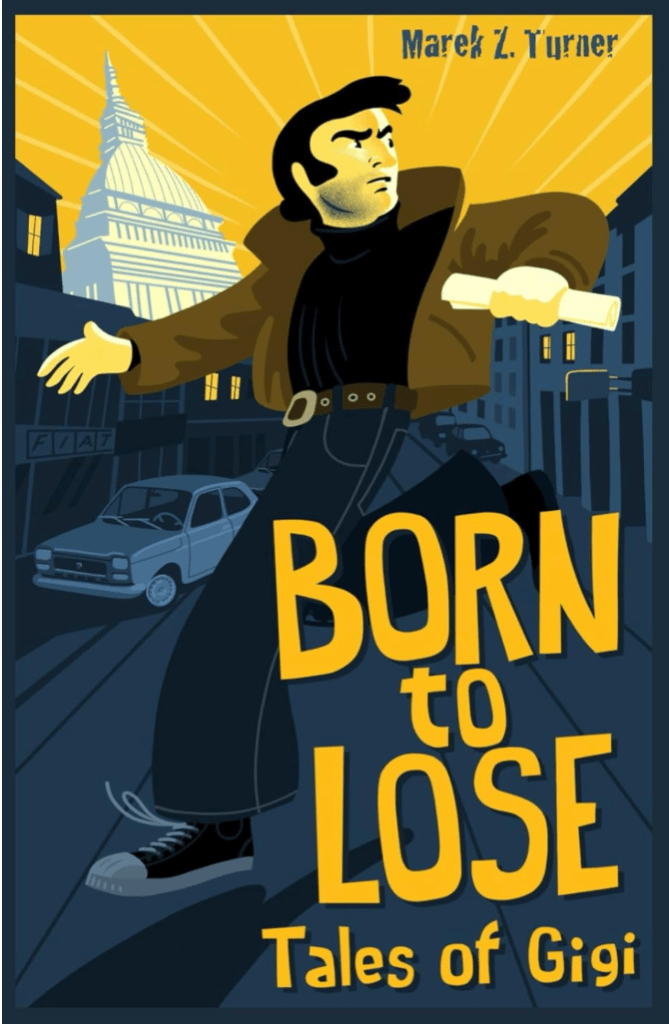
    Cover image of Born to Lose: Tales of Gigi by Marek Z. Turner

    Marek Z. Turner had the inspired idea to take a minor character from a Dario Argento film, Cat O’ Nine Tails, and make him the central focus of a book detailing some of his career as a burglar and minor-league criminal in Turin during the 1970s. Born to Lose: Tales of Gigi is a look into the world of Gianluigi ‘Gigi’ Moretti, a not-untalented burglar frequently derailed by alcohol, and equal parts poor luck and bad judgement.

    Turner finds comedic gold along with pathos as Gigi encounters everything from explosively broken toilets to double crosses and, in the book’s set piece story, a desperate attempt to outwit a deadly assassin. He has done his research and submerged himself in the culture of that decade in Italy, but also layers the stories with details of Turin and the realities of being a petty criminal nobody that add to a feeling of authenticity. The tone weaves with skill between being genuinely amusing, bittersweet with melancholy and escalating in tension, sometimes within the same story. I really enjoyed Born to Lose, and recommend not just it but Marek’s previous two books: another crime story (the brutal thriller The Eighth Hill) and a gory creature-feature horror (Killerpede) that opens with a bravura, grotesque death sequence that enjoyably sets the tone.

    Television highlights this month

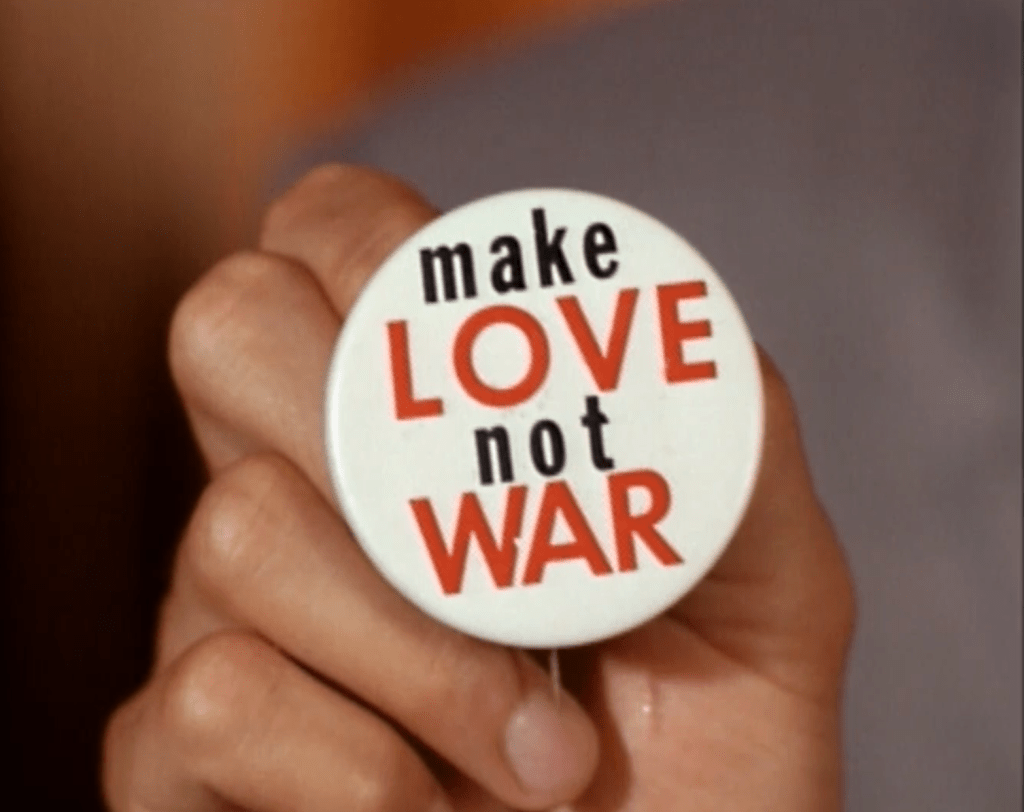
    Close up from Public Affairs – DR-07, of a hand holding a badge that says ‘Make Love Not War’ on it

    Dragnet 1969: After writing about Jack Webb earlier this month it sent me back to what is probably still the defining achievement of his career, the resurrection of Dragnet in the 1960s for television.

    Launched in 1967, each of the four seasons are defined by the year they were broadcast. Dragnet 1969 is the show’s third season and the one where Webb detaches more significantly than in previous years from the template his original series (from the 1950s) had established. There’s only occasional room for the crime-of-the-week format from now on as Webb instead focuses on various functions of the police officer’s role in Los Angeles. I’ve not long reached a mid-season episode where Friday and Gannon are pulling duty at the Business Office (essentially the front desk) and it’s glorious.

    Webb sets out his stall from episode one this season, ‘Public Affairs – DR-07’, in which Friday and Gannon are sent as LAPD representatives to sit on a panel for the show Speak Your Mind. They are up against ‘historian, social critic, and political activist’ Professor Tom Higgins and Jesse Chaplin, ‘editor-publisher of L.A.’s favorite underground newspaper’. Neither are fans of the police. Nor is anyone in the crowd. What follows is 25-ish minutes of fantastic television, as Friday and Gannon respond to charges the police are a state goon squad solely there to protect property, to oppress Black people, and that a “man of conscience (has) the obligation do disobey outmoded laws“, including the police.

    Dragnet 1969 (and its other seasons) is a fascinating record of television and society changing to reflect the momentous events of the decade. It’s also simply very entertaining, directed in Webb’s clipped, easily parodied style, and as individual a series as you’re likely to find. Revisiting Dragnet 1969 also led me back to Suzy Dragnet’s wonderful blog ‘Everyone Nods: The Dragnet Style Files, a work of art in and of itself.

    Poster image for The Remarkable 20th Century

    The Remarkable 20th Century: I’ve also been taking a slow meander through a documentary series from 2000, The Remarkable 20th Century, presented by Howard K. Smith, one of the Murrow Boys and well positioned to host as someone who spent six decades of his life reporting on the events of the day. It’s a mix of talking heads and substantial footage from news reels and programmes, some of it potently shocking in its intensity. Each episode romps at speed through a decade and as such, it touches on events before moving on to the next big thing, but the fascination of what is unfolding prompts you to explore more after. Given the state of the world today – and its leaders – it’s clear we have learned little from history. Those leaders could certainly do with even this swift gallop through the best and the worst of last century.

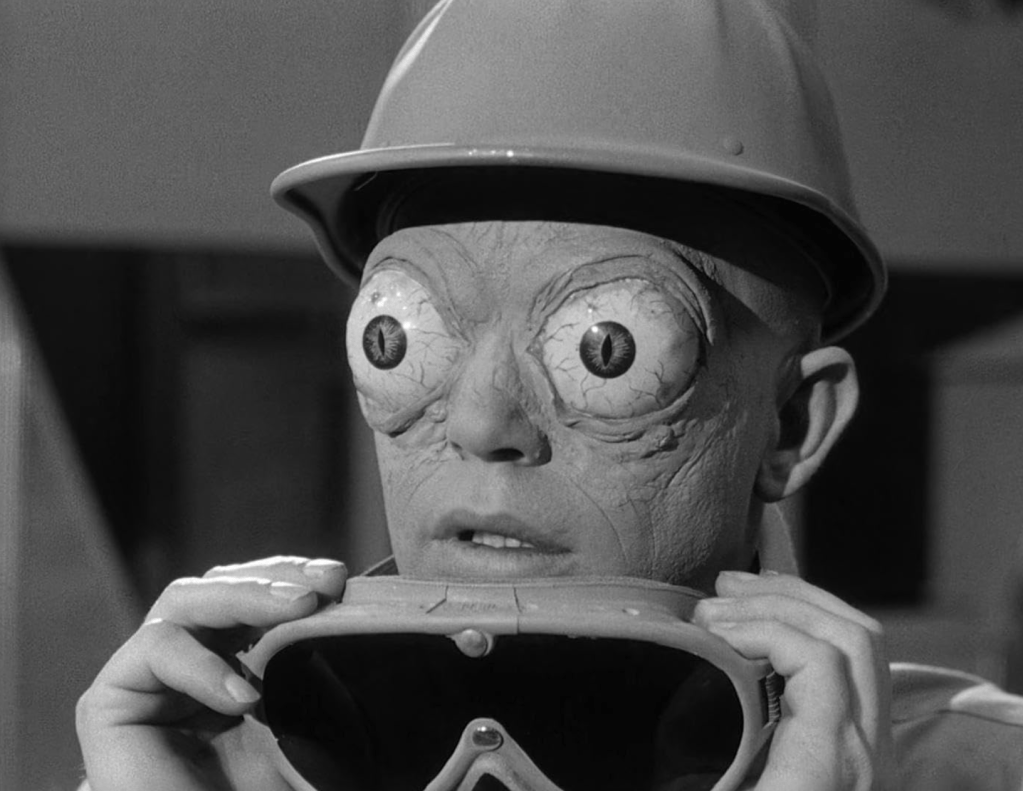
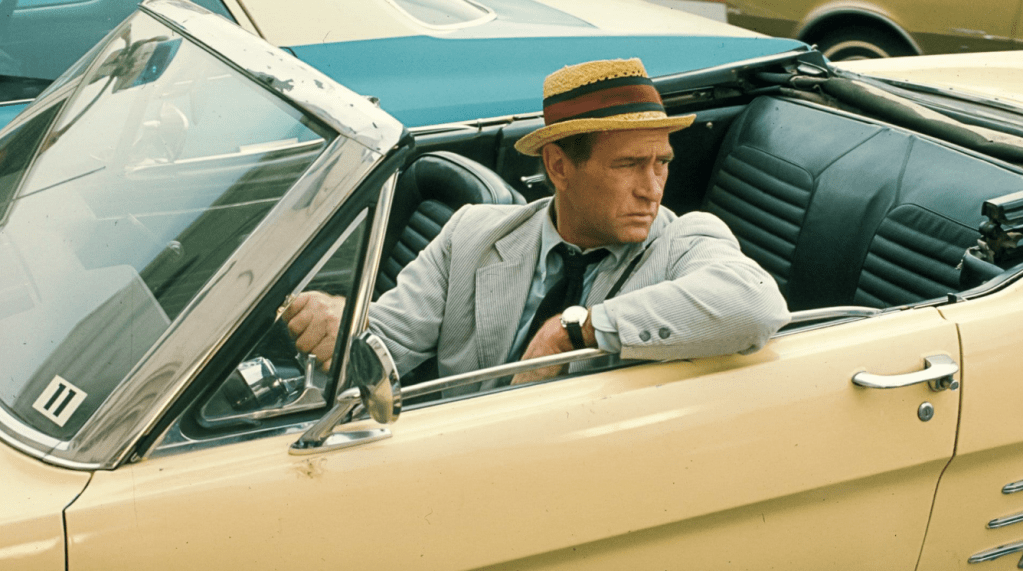
    Warren Oates with GIANT EYES in The Mutant, episode 25 of The Outer Limits’ first season

    The Outer Limits: I am currently back to a run through The Outer Limits and up to ‘The Mutant’, the 25th episode of the first season. This has one of the most iconic ‘bears’* of the series, Warren Oates’ bug-eyed telepathic mutant Reese. It benefits immensely from Oates’ off-kilter rhythms and strange charm as he makes Reese feel genuinely ‘other’. Reese would likely be strange even if he didn’t have giant eyes and the ability to think people out of existence. It’s a good episode of a great show that twisted noir and fantasy, science fiction and horror into something uniquely queasy.

    *’Bear’ was the name given to the monster of the week, displayed prominently and quickly (usually in a pre-credits tease)

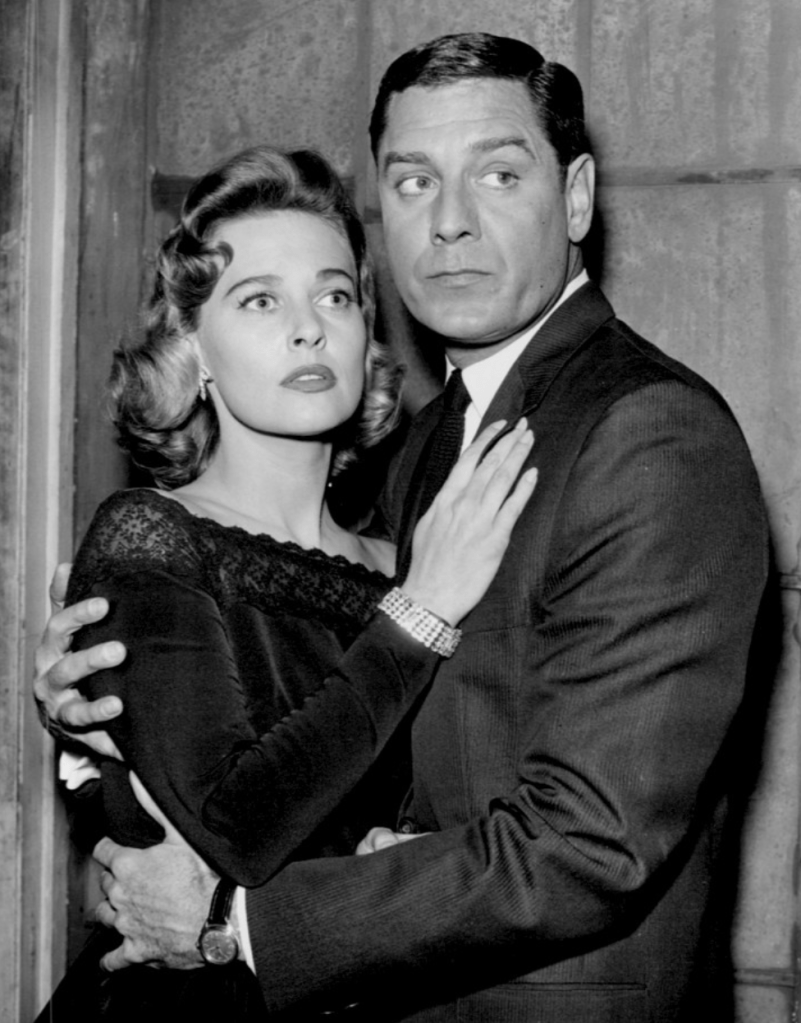
    Lola Albright and Craig Stevens in Peter Gunn

    Peter Gunn: I’m also back to Peter Gunn, a private investigator series created by Blake Edwards in the late 1950s. It has a jazzy score and instantly recognisable theme by Henry Mancini, and each week finds Gunn taking on a case that frequently gets him beaten up and/or nearly killed. Gunn is a good guy and that gets him into trouble as he comes up against gangsters, duplicitous dames and other unsavoury types. It’s a little slice of noir each episode, gorgeously shot and usually dependably entertaining. A lot of fun, and very much recommended.

    Music highlights this month

    Cover of Lonely People with Power by Deafheaven

    I quite like a lot of music, but it’s rare there will be a music highlight, given I only love two bands, listen to one band more than anyone else by far, and am generally otherwise indifferent to a lot of what gets released.

    But… this month, that one band I listen to the most by far released their first album in nearly four years, and it’s a beautiful record that distills everything that makes them special. Lonely People with Power by Deafheaven is a joyous listen from beginning to end. That might sound unlikely for a band that have mostly returned to their dense, overwhelming signature sound after a segue into lighter territory. It might also seem unlikely for a record that runs to just over an hour and keeps up a sustained mood of furious apocalyptic melancholy. But, we are where we are.

    Unlike lots of heavy music that trades in tedious machismo or bludgeoning anger, Deafheaven, and Lonely People with Power, takes darker emotions and fashions them into something else entirely. Blastbeats and giant riffs mix in with influences that vary from nineties British rock to ambient soundtracks. It’s the soundtrack to the end of the world, sure, but it’s a beautiful end. This might be their best apocalypse yet.

  • The Reptile – Bile and Self-Loathing in Hammer’s Cornwall

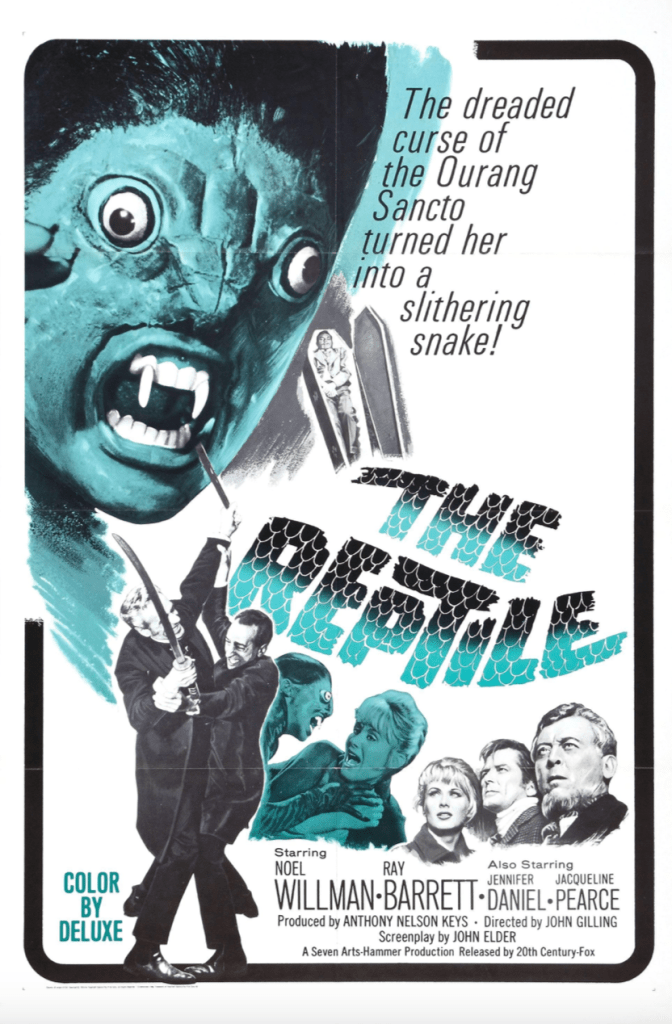
    Poster for The Reptile (1966)

    Returning soldier Harry Spalding is determined to uncover how his brother died in the remote Cornish village of Clagmoor Heath. Was it the Black Death, as the locals fear, or a more melancholy and human evil?

    Generations separate us as people and families and communities. Sometimes were decades, centuries or even millennia removed from other humans that walked and talked, loved and felt deeply, bled and lived and died. I contend we’re not so different in what we want, despite the years and the different focuses of each successive generation, the cruelty and petty prejudices that threaten to consume us. We want happiness, however fleeting, human connection, status, safety, love. Those who reached adulthood in the most recent two decades can easily be forgiven for feeling as though the doom and gloom of these years is unprecedented. Growing up in the shadow of a global financial crisis, austerity, a monstrous pandemic and institutions run by the very worst of us is enough for anyone. It’s not that long ago however, that people grew up in wartime or in the feverishly imagined ever-present shadow of a mushroom cloud, or the devastation wrought by AIDS. No, we’re really not so different. And so it is with the art that touches us. The methods may differ, but the intent is similar. To connect, to inspire, to share what it is to be human in all its failures and glories.

    My main aim here is to explore how this unusual Hammer classic offers commentary and a caution on the ways we can be toxic and poisonous if we stew in the unspoken, choosing to live in darkness, letting fear control us. The characters in this film are from a time older still than when the film itself was made, but the connection is universal. There are other readings of the film and I recommend you seek those out, too. But first, some context. 

    Part of Hammer’s fascinating 1965 four-film cost cutting exercise, The Reptile (UK, John Gilling, 1966) was shot on the same sets as The Plague of the Zombies (UK, John Gilling, 1966) and the only one that actually came in under budget. These films are close siblings in other ways, from mood to intent. Both are Hammer chillers that don’t rely on the tropes of traditional monsters or previously filmed titles. Each is unsettling and compelling in its own way, a mix of mystery and for-its-time grisly and grotesque horror. Gilling, who had a reputation as someone who did not suffer fools, was a tight craftsperson, in charge of the material, pacing and clarity throughout the majority of his work and yet who also includes flourishes of artistry in almost everything he made. And so it is with The Reptile, a film which retains control of its central mystery and also loads it with sinister atmosphere, disturbing imagery and an understanding of the mechanics of what horrifies in sometimes startling ways.

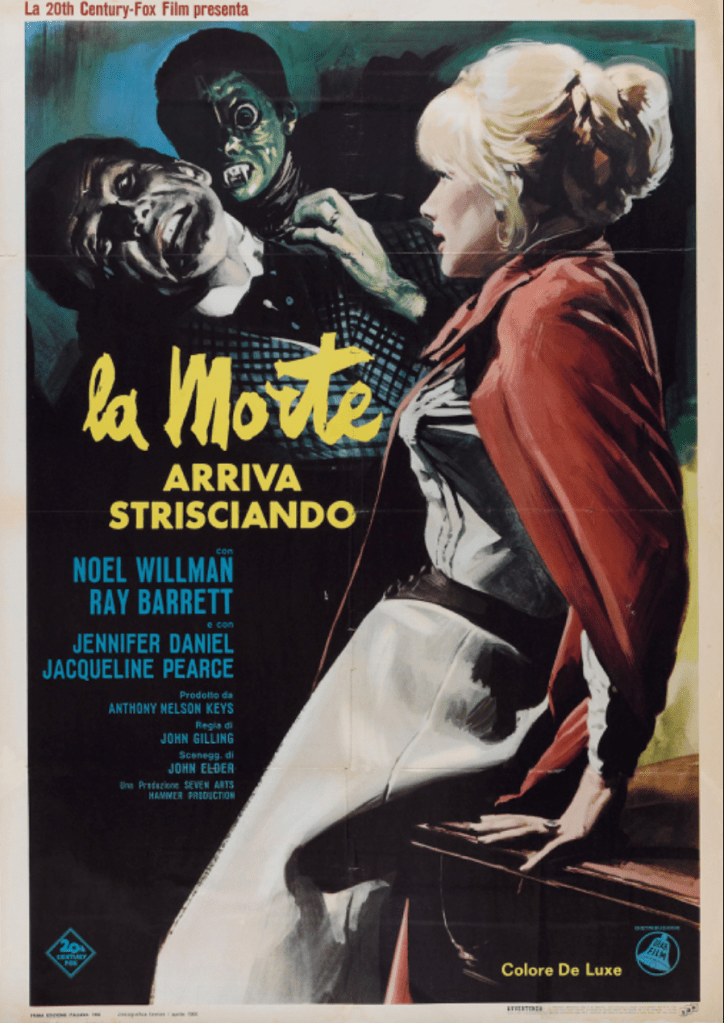
    Italian poster for The Reptile (1966)

    We have no bloodsuckers or traditional monsters here. The horror is not overtly sexualised like Hammer’s vampire films, nor is there anything murderous or of human malevolence in what transpires. Instead, we have a tragedy of family played out where the monster is us. And the deaths are grim in a way Hammer rarely was, to some degree prefiguring the following decade’s obsession with body horror. It’s partly this which provides The Reptile with a remarkably oppressive atmosphere. Much of Hammer’s output of the decade revolved around things rational people can easily discount, from vampirism to monstrous doctors building people out of body parts to zombies, ancient curses and Satanism. These now frequently come as a cosy, distanced horror, one that can be resolved in under 90 minutes and pose no real threat to us. And while the ending of The Reptile doesn’t stray too far from this template, the majority of the film is something else. The deaths in the film are, well, disgusting. Each victim starts frothing at the mouth, turning black, their bodies dying from poison. Still recent world events have only underlined the fear that can be generated by something invading us, free from any moral underpinning, indiscriminate. This is how events first appear in Clagmoor Heath with people dying and the community circling in on itself in fear. And fear and poison are key themes of the film, both viscerally and brutally swift in the deaths and achingly sad in the central relationship between Dr. Franklyn and his daughter. A fear and poison that affects not just them but spreads out into the community they live within. 

    Harry’s brother Charles dies as the film begins, the prowling camera showing him stalked by something through the countryside until he is cut down and left blackened, rotted to his core. Harry meanwhile has a new wife and nowhere to stay. It’s partly this that brings him to the village, inheriting his brother’s house and giving the new couple somewhere to live. But there are also unanswered questions about his brother’s death and Harry has decided he will find out what really happened. It’s not long before Harry has artlessly alienated the suspicious villagers even further and only friendly(ish) publican Tom remains (played in an expanded role by Hammer cameo master Michael Ripper). In the course of his investigation, Harry comes into contact with the profoundly unfriendly Dr. Franklyn, who has more reason than any to seek the solitude that comes from living on the heath. That Franklyn leaves flowers on Charles’ grave underlines to us there is something rotting the doctor too, a poison of a different kind, one that has destroyed the generations that should have followed him.

    The Reptile has many fine qualities, making it one of Hammer’s very best films. It has an unusual (for Hammer) cast, beautiful use of sets and another melancholy and haunted turn from the estimable Jacqueline Pearce. We have John Laurie as a twisted and ultimately deeper and tragic riff on the comic relief character. Gilling does wonders with his budget, producing a frequently handsome film that succeeds as chilling horror including at least one great jump scare. The core mystery is at once obvious and complicated. Don Banks’ score is a wonderful mix of the melancholy, the brash and the inventive. Anthony Hinds’ screenplay (writing here under the name John Elder) is unforgiving and, combined with Gilling’s skill as director, a bold approach for Hammer. The Reptile is a stirring and remarkable tale of curses, disturbed graves, death and desire. 

    For the rest of this piece however, I’m going to explore that key theme of the film which, for me, keeps it ever-relevant to the now and can resonate with us personally, through its mournful atmosphere, heavy with guilt, to its focus on the damage wrought by those who act without integrity or passion or courage. From here there be both spoilers and commentary you may wish to avoid.

    In The Reptile, Dr. Franklyn has returned to England after time overseas with his daughter, Anna. Franklyn and Anna are attended by a servant, known only as The Malay. Franklyn presents a harsh front, rude and dismissive of attempts to converse or connect with him. He is contemptuous of his daughter, cruel and unkind to her. Despite his protests to Harry that he is not a doctor in the way the village needs, no surgeon but instead a doctor of divinity, Franklyn also shows no interest in discovering more about what is killing people. This is because, as the film reveals, Franklyn knows ‘it’ is Anna. In his time overseas, Franklyn took a colonialist’s approach to the secrets of the religions he encountered and one such ‘cult’, of which The Malay is a member, took extreme umbrage at his methods and disregard for what they considered holy. Kidnapping Anna, they placed a curse upon her which sees her turn into a snake creature with a poisonous bite. Franklyn has retreated with Anna to somewhere remote, surrounded by the empty collected trophies of his work and travels, watched over by The Malay, to endure his suffering. And suffering it is, with Anna the victim of his hubris and arrogance, condemned to live not even half a life, no joy in her future. When Franklyn lays those flowers on the grave it is symbolic of the regret, loathing and guilt that is his life now. He has destroyed the life of his daughter, Anna turned literally into a monster to punish him. In Franklyn’s distorted world, those flowers are for him more than anyone else.

    Dr Franklyn looking tired, The Malay looking invigorated

    As touched on earlier, The Reptile is not a traditional Hammer horror film. Although not new to themes of tragic monsters, notably in pictures like The Curse of the Werewolf (UK, Terence Fisher, 1961), Hammer arguably had its greatest success with the villainy of its Dracula and vampire series. The Brides of Dracula (UK, Terence Fisher, 1960) presents a somewhat more nuanced evil and it’s there in Van Helsing’s mix of pity and disgust at the close of Fisher’s first Count film as Lee’s king of the vampires crumbles to dust, but ultimately there’s no quarter given to wickedness that inarguably must die, must be purged, and in the context of desire, must be contained. Helen Kent’s animalistic panic at her demise in Dracula: Prince of Darkness (UK, Terence Fisher, 1966) followed by the beatific expression on her face after being staked to death makes it clear to us, Dracula and his ilk are no misunderstood monsters, but evil in a pure, defiling form. After all, it’s part of the enduring appeal of certain horror stories, as with the police procedural, where equilibrium is disrupted by evil only to be restored at the end. But there is no restoration at the end of The Reptile. Undeserved tragedy begets yet more tragedy and no one is left untouched. Fire is so often used at the conclusion of a film as symbolic of a cleansing, the world being reset. Here it just covers the truth, burying everything unspoken in ashes, cleansing nothing.

    This then is a key theme of The Reptile for me. How recoiling from acknowledging and confronting ourselves, our personal guilt and regret, if left denied, often reaches out beyond us to others, impacts on the lives of people we care about, usually first and most profoundly those we share blood or bonds with. About how our actions reverberate down the years, how that poison infects others and spreads like a death that consumes. Franklyn tries to hide, to disappear, to run from and ineffectively reduce the damage his actions have caused but not try to fix it, to refuse the help he is desperate for. Instead, he acquiesces to self-inflicted punishment, wallows in his misery, gives up on his daughter and anything she might want from her life. And yet the guilt will not leave him be. It dismantles everything around him, even as he tries to stumble on and blank it, unravelling anything he touches. He lives in fear of himself, what he has done, and what will come next as a result of his inability to act.

    Poor John Laurie, doomed for sure

    This can be found in The Reptile in its approach to fear, from fear of ourselves, or feelings for each other and more widely of those we meet and subject to fear of the other. The Reptile is uncommon in its time in that its fear of the other is not presented through overt racism or xenophobia. The Malay is not a cartoon villain here, but instead an agent of revenge without comment as to whether that revenge was earned or justified. Hinds’ writing is thoughtful and subtle here when compared with some contemporaries. The curse placed upon Anna is not The Malay and his people acting with eye-bulging, moustache-twirling malevolence. It is, for him and his people, simply a matter of justice. Instead, the other presented here is a different kind of fear, a fear of ourselves and the people, even in our own immediate family, that we know and love but can never really know but also in how we choose not to acknowledge who we are and what we have wrought. It’s presented in how Franklyn is at once appalled by and desperate to protect his daughter, but only really to hide his shame.

    Anna is a victim, cursed through something she did not bring upon herself, by the action of one who should have been building a world she could find her place in. Here she is confused and lonely and unable to explore her dreams or desires. This is all instead directed at her uncomprehending father who it seems would be equally uncomfortable with the idea of his daughter maturing sexually as he would be her turning into a snake monster. It’s both symptomatic of the time it is set in, but particular to Anna and the life Franklyn knows he has doomed her to. We can imagine Anna’s wants and her desires have never matter to Franklyn until he was confronted by them. Franklyn’s cowardice as a human-being swirls at the centre of The Reptile, as much as his self-involved guilt and grief that she has no real future. These are the layers here to unravel how it remains so devastating nearly sixty years later. In that respect, this is as potent a metaphor for the fears of the parent about what the child may become and learning to love who they are as The Exorcist (US, William Friedkin, 1973). Except here, Franklyn knows what Anna is and why and there is nothing to love for him, a mirror showing him his failings.

    Jacqueline Pearce as Anna

    For Franklyn, the poison is of his own making. Anna is a mirror too, to his crumbled hubris and it is fitting, for him at least, that he dies at her kiss, a kiss as poisonous as he deserves. And there is The Reptile as cautionary tale against our hubris, selfishness, disinterest, arrogance and living in fear. We might want to, but we can’t hide from that which will consume us, and sometimes those we care about. If we really do care, we must force ourselves to confront the darkness, if not for us, for those who, like Anna and the people of Clagmoor Heath, don’t deserve to share in desperate things not of their making.

  • Rod Serling doesn’t want you to be a piece of shit, and neither do I

    Contemplating the panic of the inevitable in ‘The Cemetery’ and the choices we make

    Rod Serling posing in a graveyard setting for a promotional photo

    For several reasons, I’ve been thinking more in recent years about who I understand myself to be and what legacy I want to leave in my wake. Legacy might sound overly grand, but that’s really what it is to be thought of and remembered and talked about, whether it’s by millions or by whatever nucleus of immediate people you hold to be family. A worldwide pandemic will get you to thinking about the impact we all leave on each other, and that’s not even the sum total of an at times challenging, rewarding and enlightening few years that have followed to process. Largely for me it’s about the impact of leaving the people and places you find along the way better than you found them, or at least not worse for your presence. But life makes that hard. Communicating with each other with kindness and empathy and consistency is a journey that doesn’t end. Trying to be good to the planet that hosts us while just a handful of companies continue to be the biggest polluters in the world provokes wild cognitive dissonance. Capitalism swirling the drain and dragging us with it, bloody-knuckled and exhausted, into the slop. Social media a distracting feedback loop where we play out status games and performative emoting while the literal and figurative world around us burns. The worst people clinging ruthlessly to positions of power and scapegoating the most vulnerable as cause of the world’s ills. It is easy to lose focus. 

    What has this got to do with Roddy McDowall and the Night Gallery pilot film (NBC, 1969) you may ask? Well, firstly Rod Serling and his writing has been one of the primary influences in my life on my own personal philosophy about how I treat people and how my own personal code developed, and I come back to his work regularly for course correction as much as entertainment. And in ‘The Cemetery’ and McDowall’s phenomenal performance we have humanity in crisis in microcosm, in all its sadness and rage and selfishness and dread and pathetic hope. Just as much as any episode of The Twilight Zone (CBS, 1959-1964), this play provokes in me considerations of consequence and personal choice. A warning in a world gone wrong, embodied here by McDowall’s performance and Serling’s writing. 

    Ten years after the launch of The Twilight Zone, Rod Serling was ready to revisit anthology television. In the intervening years since his beloved fantasy show had ended, Serling had kept busy with a variety of different projects, even though he was no longer the celebrated angry young man of the golden age of television. These projects ranged from a modern television movie adaptation of Charles Dickens’ A Christmas Carol (1843) reformed as a nightmare of nuclear Armageddon and a plea for cooperation between nations before mutually assured destruction, to The Loner (CBS, 1965-1966), a contemplative Western set in a this-time only figuratively haunted post-civil war America, and co-writing The Planet of the Apes (USA, Franklin J. Schaffner, 1968) amongst other films. For his new television project, this time however, Serling would move beyond fantasy and science fiction and go deep into the dark waters of horror.

    The painting of the cemetery used in the segment

    Night Gallery premiered as a television movie on November 8th, 1969. It took the form of three separate stories, linked by Serling’s narration. He presented these tales from the titular dimly lit gallery, offering us a trio of stories that all suggest not an indifferent universe, but instead one where the immoral might be able to run from their wickedness, but not, eventually, from consequences. And it’s the first of these plays we are considering today, ‘The Cemetery’, as well as the delicate and bruising performance at its centre from Roddy McDowall. Directed by Boris Sagal, it is thirty minutes of television that distills everything that makes Serling such a great writer: emotionally literate, atmospheric, wittily loquacious and unyieldingly moral. Interestingly, the British-born and raised McDowall plays his role with a lyrical Southern-tinged accent that will just as frequently tip into British pronunciation. Similarly, Serling’s tale could just as easily be set in a country house at the edge of a small English village and nothing would need to be changed to accommodate this meeting of a tradition of Southern USA and British gothic, where the older ghosts of the past, both real and imagined, leave their graves to haunt us. It could be set here, there, or anywhere.

    Introducing the segment, Serling begins: “Good evening, and welcome to a private showing of three paintings, displayed here for the first time. Each is a collector’s item in its own way—not because of any special artistic quality, but because each captures on a canvas, suspends in time and space, a frozen moment of a nightmare. Our initial offering: a small gothic item in blacks and grays, a piece of the past known as the family crypt. This one we call, simply, “The Cemetery.” Offered to you now, six feet of earth and all that it contains. Ladies and gentlemen, this is the Night Gallery…”

    William Hendricks is old and in poor health. A series of strokes have left him largely incapacitated and housebound in the family mansion. He is attended to only by his loyal butler Osmond Portifoy, with the family burial plot the view from his window and the last thing he painted. Hendricks is wealthy and had only a sister to leave his money to, or so he thought. But with his sister dead, the inheritance will now pass to her son, Jeremy, a thoroughly disreputable man. Jeremy has moved into the home and is impatiently waiting for his uncle to die, so much so that he takes matters into his own hands to make sure William relocates to his place in the cemetery sooner rather than later. After this, Portifoy learns that a miserable stipend of $80 a month is his reward for decades of faithful service. And so, it seems, Jeremy finally has the means to support the lifestyle he is accustomed to. But then Jeremy notices that painting of the house and graves hanging at the bottom of the staircase keeps changing and suggesting his uncle is not at all at rest. 

    What follows is a beautifully paced and executed Gothic tale of vengeance that for me is some of Serling’s finest writing. One of my favourite themes in his work is that of a moral universe and our choices within it. The idea that our reality is not passive, that we can make better choices but also that there are consequences for our cruelty, selfishness and inaction. Serling was frequently concerned with equality, the impact of racism and, as his wife Carol once explained, the ‘ultimate obscenity of not caring’. In The Twilight Zone, this could be a positive exploration, if we take for example the compassion and sacrifice of Lew Bookman or the universe indulging the sentimentality of Henry Corwin. But in Night Gallery it was frequently the other side of this coin. That moral universe is unrelenting in ‘Escape Route’ (the third segment in the pilot film), ‘Lone Survivor’, ‘The Doll’ or perhaps most memorably in ‘The Caterpillar’. In all of these, bad people do bad things and, perhaps not immediately but certainly inevitably, the universe revisits this on them manyfold. Serling was always a champion of the best in humanity and what we could achieve, alone and most importantly together, and believed in the next generation and their capacity to do and be better. But he was also acutely aware of our frailties and disappointments as a species, from his experiences as a far-too-young man at war, to his own personal failings, and to the impacts of racism and isolationism in the decade that birthed Night Gallery. Perhaps this is why Night Gallery largely trades in the hope and optimism found in The Twilight Zone for more of the cosmic justice seen in that show’s ‘Deaths-Head Revisited’. 

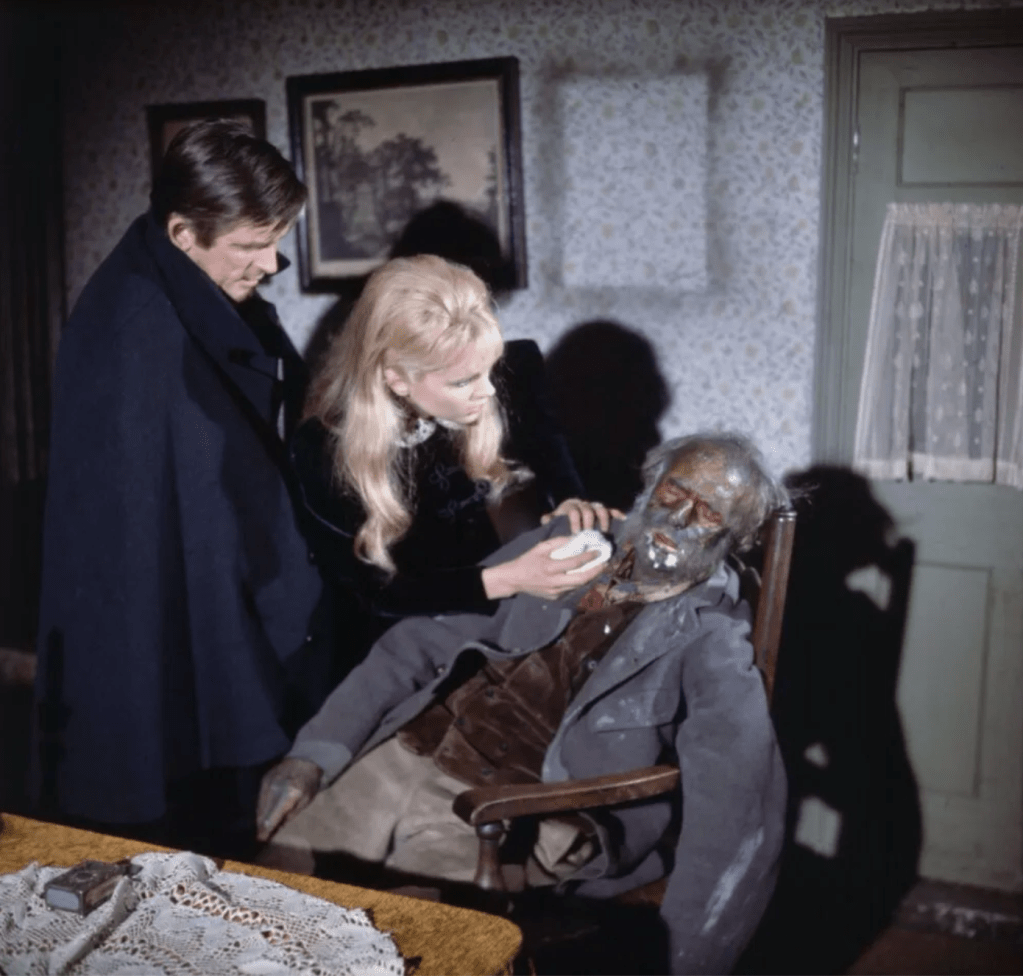
    Roddy McDowall stood next to the painting looking unsettled. In this version of the painting, a grave can be seen open, a figure lurching towards the house

    Despite this, ‘The Cemetery’ never stoops to being cruel. Enraged perhaps, and unforgiving, but not cruel. Instead, it is human and sad, much of this found in Roddy McDowall’s performance. Jeremy at first is cruel as he taunts his uncle and brings about the old man’s death. An unremarkable and embittered would-be conman, Jeremy thinks himself destined for a life of luxury he possesses neither the means nor the character for. And in his uncle, he has found the chance to fulfil this destiny. He revels in verbose cruelty, not just to his uncle but also to Portifoy, whose name he allows to roll regularly from his tongue with contempt, for the man and for the role he plays in Hendrick’s life. There’s disgust here at a man who could be a servant but also envy. After all, Jeremy has never succeeded at anything, let alone three decades at one thing. After his uncle dies and is buried, Jeremy wastes no time in having the will executed and becoming master of the house. All through this however, McDowall uses flashes of expression or a sadness in his eyes to give Jeremy inner life. There’s part of him behind the facade that is perhaps regretful, or even himself disgusted momentarily by the brutality he is capable of. But he overrides this, pushes it down, makes his choice. 

    It is soon after his uncle has died that Jeremy notices that final painting he did of the house and cemetery has changed. Something new has been added. William’s freshly dug grave has appeared on it. Jeremy asks Portifoy but Osmond says he can see nothing different. It is the beginning of the end for Jeremy. As the painting continues to alter, different each time he sees it, Jeremy has two frightening conclusions to draw. The first is unthinkable, that his uncle is not at rest and is making his way from the grave to the house to exact revenge. The second is that he is losing his mind. As he diminishes from the swaggering, arrogant swine at the segment’s opening towards an imitation of his deathly ill uncle, abandoning the fancy shirts and sharp jackets and taking on William’s wardrobe of dressing gown and blanket, McDowall invites us into Jeremy’s confusion, where both he and us can believe both at once. Pushing Portifoy too far, the butler resigns and goes to stay at a hotel in town. It is now that Jeremy is alone in the house with no one to turn to. Devolving into panic and rage and overwhelmed by fear, Jeremy has dropped all bravado, clinging to the hope Portifoy will save him. It’s a name he no longer says with contempt, but instead with desperation. 

    Jeremy’s supposedly dead uncle come to ‘life’ again in the painting

    There are many elements that for me make up why ‘The Cemetery’ is so successful at what it sets out to achieve: Serling’s words, Sagal’s assured and controlled direction, the set design and presentation, the supporting performances, the stirring and oppressive Billy Goldenberg score that mixes traditional instrumentation with atonal electronic noise. But at its core and what brings Serling’s writing to life is the complicated, human villainy in Roddy McDowall’s performance. At the start of this journey, Jeremy repulses us. At the end of it, we still despise him but pity him too and perhaps recognise ourselves more. Night Gallery may have traded hope and optimism for the finality of cosmic justice, but particularly in Serling’s work for the series, it doesn’t lose his focus on humanity. If The Twilight Zone could often be a call to arms to be better before the worst happens, Night Gallery is a warning that to be better is a journey of choice that never ends, particularly – especially – if the worst is happening now. In McDowall’s panic, fear and anger as seemingly unrelenting consequence approaches, and in that final coda sting in this tale, that warning is clear to me: it is too late for Jeremy and William and Portifoy, but not too late for us. 

    And so, I think about ‘The Cemetery’ and how art like it influences our real lives. I think about legacy and the imprints we leave on each other both while we’re here and when we’re gone. Let’s not be Jeremy, or Portifoy or Hendricks. Let’s be better. Rod Serling thought we could be, and McDowall shows us ourselves if we don’t at least try.