I don’t actually have an armchair, but never mind about that. In between being distracted by work, life, and so on, I usually keep a rolling programme of television going, but not of the live broadcast category. In fact, many of the creators, crew and stars of the programmes are very much dead. What, I hear you cry, has been on rotation? Let me keep you in suspense no longer.
A Dan Curtis Production
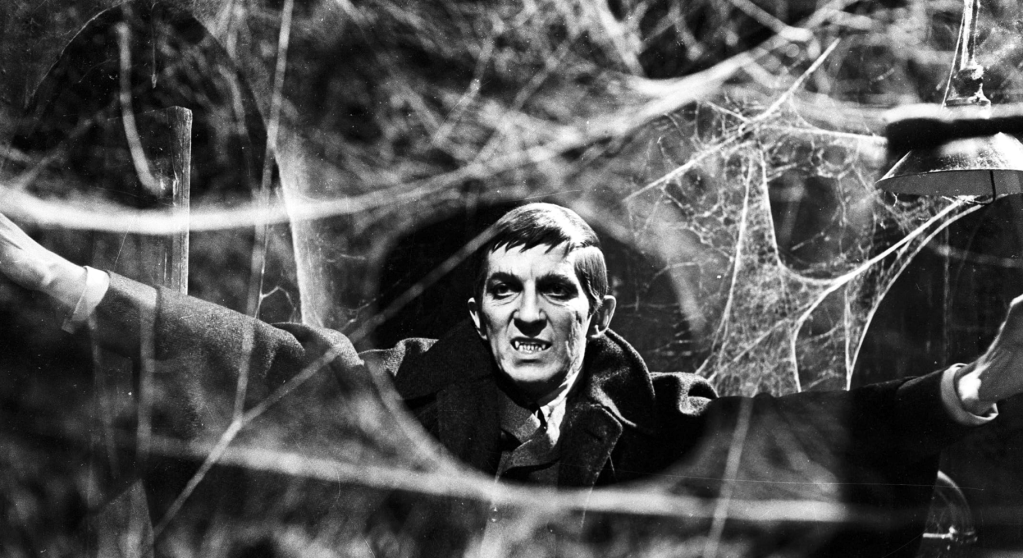
Pretty much always in play is Dark Shadows (1966-1971), the daytime Gothic drama that turned sixty this year. At the moment, I’m into the aftermath of Barnabas’ kidnap of Maggie Evans, with recent episode 265 finding Joe and Sam visiting her at the sanitarium. We’re introduced to Dr Julia Hoffman (“Doc-tor Hoff-man, Doc-tor Hoff-man”), played by the incredible, Oscar-nominated, Grayson Hall and her fearsome range of expressions. So begins a new chapter for the show, and one of maybe-possibly-definitely the strangest, most beguiling, wildest performances in television history. The episode itself is great, the series – still a daytime show, so still often people talking – on newly firm Gothic footing. A thousand-plus episodes is a huge commitment but if you haven’t yet enjoyed Dark Shadows, I do recommend it unreservedly.
Tangentially Curtis
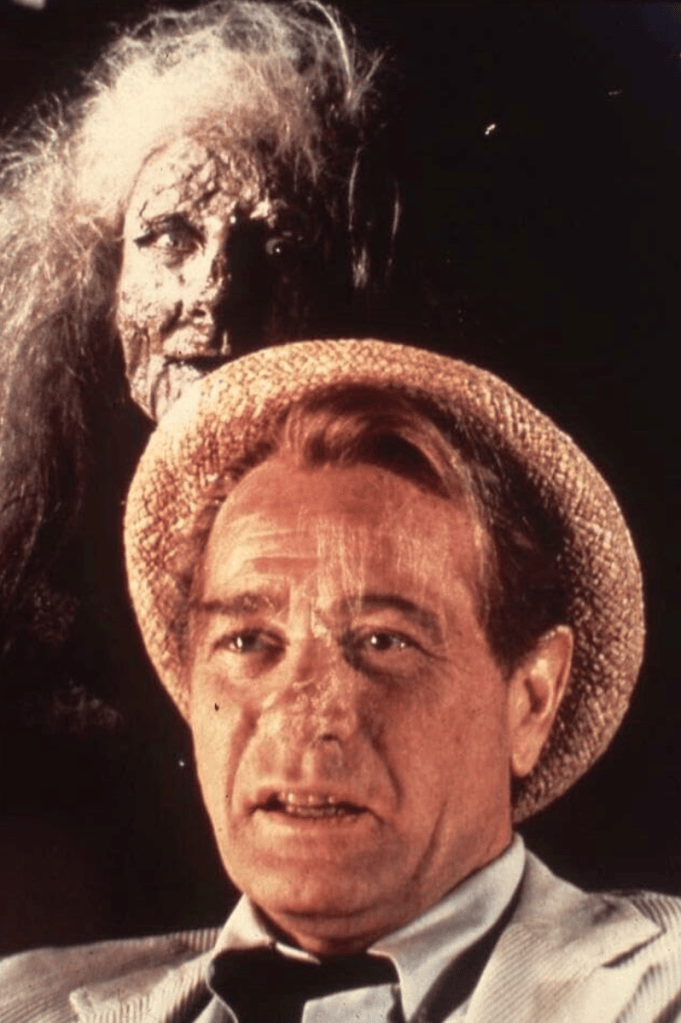
I’ve written elsewhere about how Darren McGavin as Carl Kolchak is one of the great marriages of actor and character. Compared to his first two outings in the Curtis-produced television movies, the series that followed (Kolchak: The Night Stalker, 1974-1975) is a mess. Low budgets, late rewrites, McGavin’s fatigue and dissatisfaction, and a punishing schedule did it no favours. And yet, as we know from its influence on Chris Carter and it’s continuing popularity through books, graphic novels, recent-ish Blu-ray releases, and rumours of reboots, something worked about it, and it was not only McGavin. For me, the monster-of-the-week format doesn’t rely on the same old ‘classic’ threats, with imaginative creatures, the writing is – perhaps against the odds – reliably solid, and the feel of the show is consistent. ‘Demon in Lace’ (episode 16 of 20) finds a succubus possessing recently deceased women and feeding on college students. It’s fun, as is the series, and though by no means the best horror television you’ll see, a reliably good time.
A Circular Hell
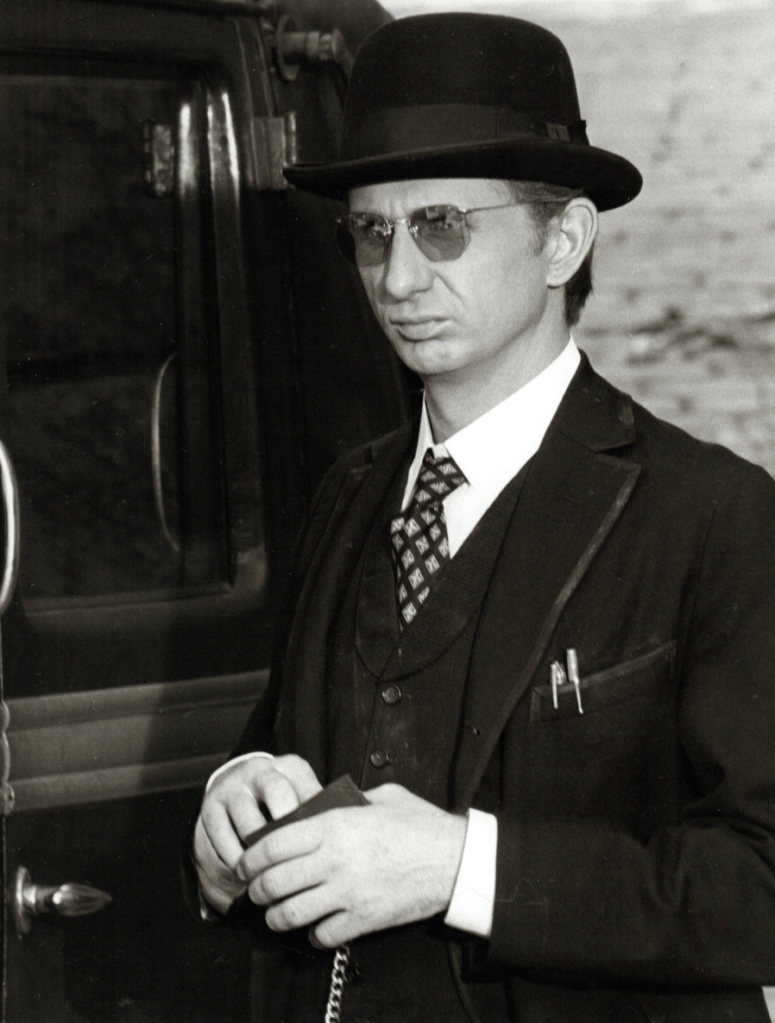
When speaking of erratically successful horror television plagued by production problems, Night Gallery (1970-1973) is never far away. But when this series is successful, it soars. This brings us to the Rod Serling-written and John Badham-directed adaptation of Basil Copper’s short story ‘Camera Obscura’, from season two. It tells of a moneylender, Sharsted, played superbly well by Rene Auberjonois, lured to the home of a ‘client’, Mr Gingold, played with a strange menace by Ross Martin. Gingold is furious that Sharsted’s unrelenting business has driven a friend of his to an early grave. He also has a camera he’d like to show Sharsted, a very special camera, that can see the past, and can see into other hidden places. Auberjonois’ repeated, sneering use of “Mr Gingold!” reminds of the pilot film and Roddy McDowall’s “Portifoy!” and its low budget works as an advantage, the chilly, half-empty final sequence a remarkable, unsettling exploration of a very personal hell.
One More Step Into The Beyond, Dear Friends
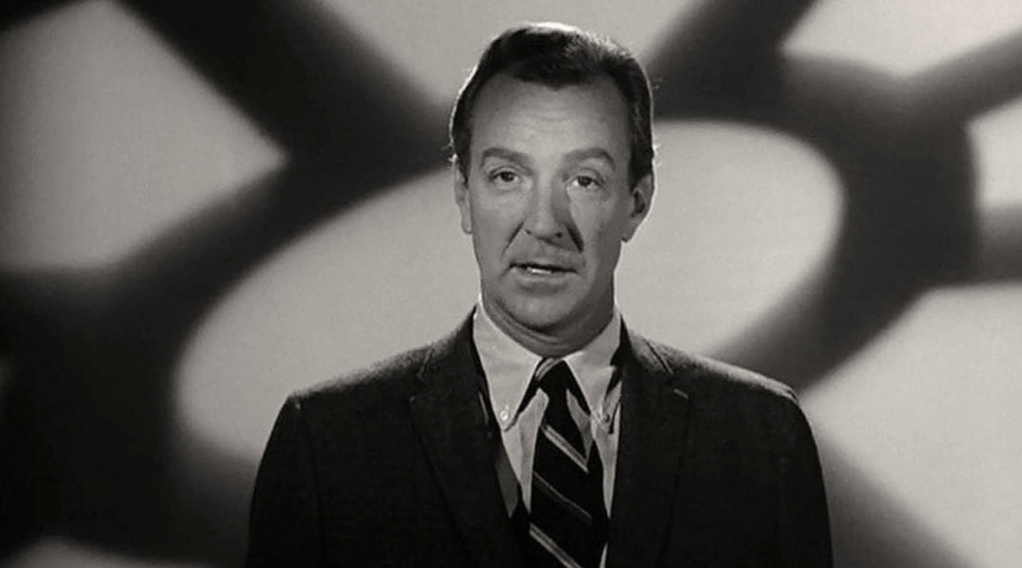
By most of the way through season two, my beloved John Newland’s One Step Beyond (1959-1961) answers the question of just how many times can there be an episode where a psychic connection may reveal or prevent a murder. That answer is never enough, and episode 35, ‘Contact’, finds the gift of a pocket watch tormenting a mild-mannered, loving husband with misogynistic thoughts of murdering his wife. Only, it’s not his wife, nor are they his thoughts. Can he figure out who the watch originally belonged to in time to stop the crime happening? It’s a familiar theme and story for the show, but as always, Newland’s steady hand creatively, as director, and as presenter means this was a good episode. As for mixing things up, in the third season, a late run of episodes produced at MGM Studios in Borehamwood brings us the likes of Roger Delgado, André Morell, and Christopher Lee as guest stars (that’s after the Charles Bronson episode).
Seeing Seeing Things
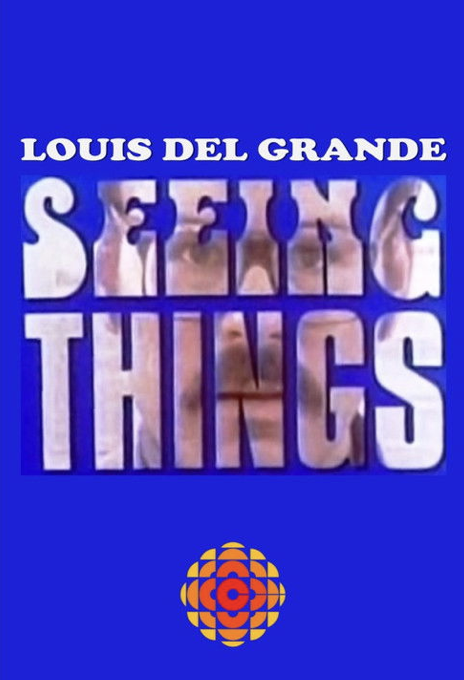
I’ve also enjoyed the start of Seeing Things (1981-1987), a comedy-thriller series with a supernatural twist from Canada in which grumpy and pushy but not without charm news reporter Louis (played by co-creator Louis Del Grande) starts receiving visions of crimes, often at odds with what the police or courts say are the facts of a case. Being a bit of an asshole but also, importantly, a good journalist, Louis is compelled to uncover the truth and reveal the real guilty party. Louis has some crossover with Kolchak, in that neither spends much time questioning the why or wherefore of their supernatural experiences, instead doggedly chasing the truth even when it puts them in danger. It’s so far a fun, entertaining series with some good writing, believable characters and solid storytelling.
Law & Order: Oh Boy That’s Bleak
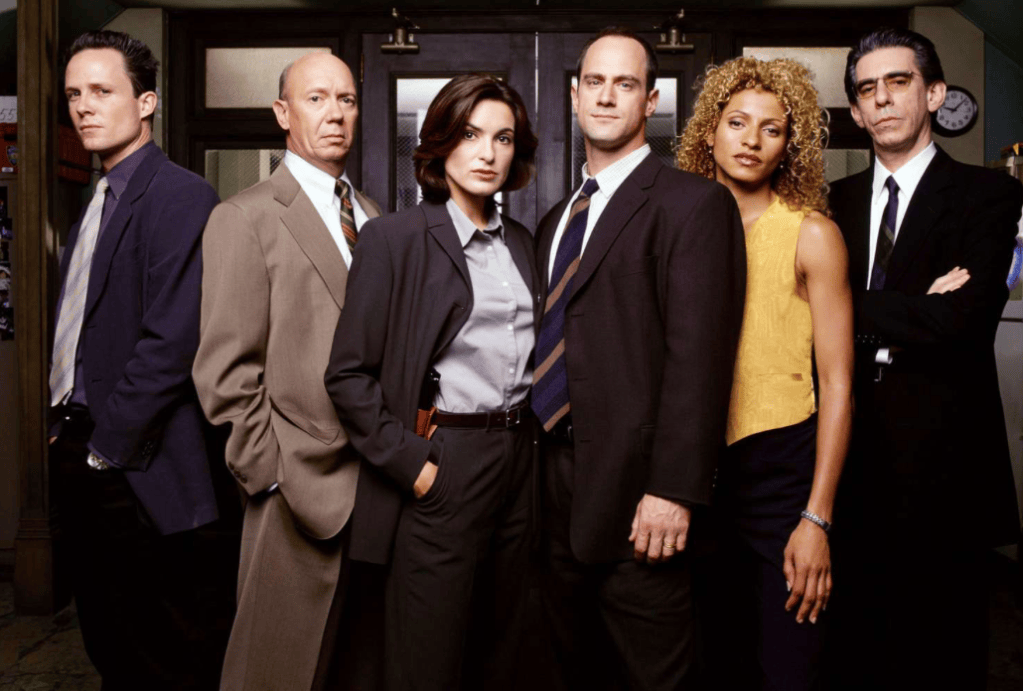
I’ve been revisiting the first season of Law & Order: Special Victims Unit (1999-present, shortened to SVU) alongside the current season, because apparently, I want to be confronted with deeply unpleasant cases and a team of detectives most often found circling the drain of unrecoverable moral injury. Now, the original ripped-from-the-headlines Law & Order was never anyone’s idea of a good time, despite being compelling. Given SVU is still a current series, into its 27th season at the time of writing, and approaching 600 episodes, you would be forgiven for thinking perhaps it has settled into a comfortable rut. However, it started out miserable and confrontational and continues in that fashion today. The largest difference is that Mariska Hargitay and the various production teams have over the years ensured it is grounded in some of the theories and support that guide the real life work of police doing this job. Season one, meanwhile, was scrappier, and more blunt in its treatment of the cases and the detectives investigating the crimes. Both versions are compelling and often gripping, and also interesting simply because how many times do we get to compare a series, and a central character and performance, separated by more than a quarter of a century.
Farscaping, Across the Universe
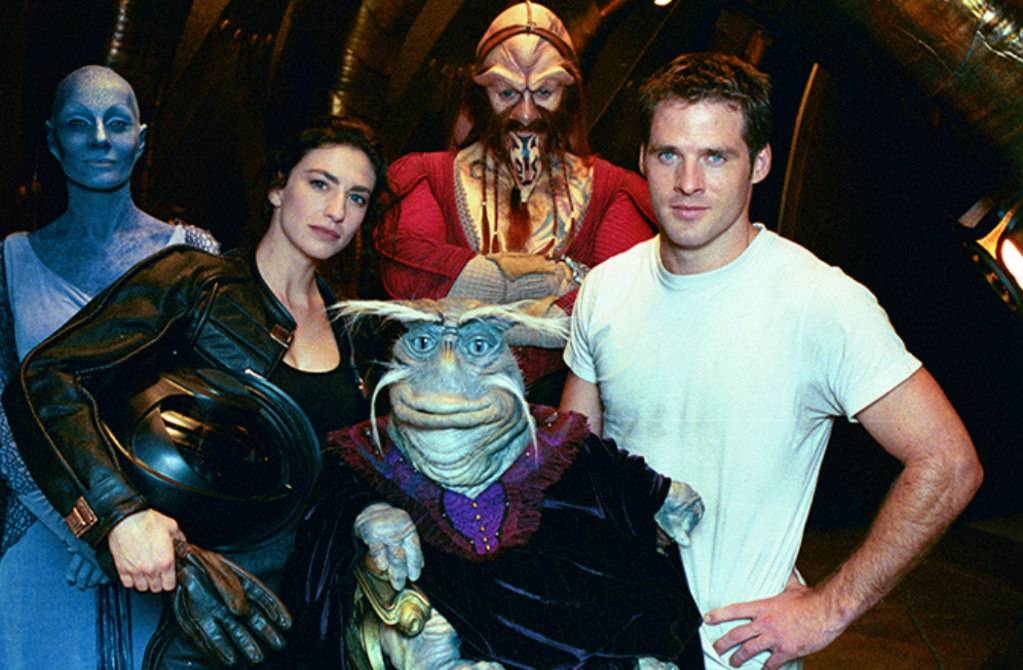
Magnitudes more actual fun has been a revisit to the first season of Farscape (1999-2004). Plots-wise, it’s the usual television science-fiction stuff, hopping from planet to planet via stories that had been broadly seen before on the likes of various iterations of Star Trek. Set-up and character-wise, however, it is very different. An American-Australian co-production, it follows a US astronaut who, after travelling through a wormhole, finds himself impossibly far away from home. He finds himself on a living ship, on the run from a fascist-vibes space army and vengeful captain, home to other escaped prisoners, forming an accidental and untrusting crew. Also involved with the production is Brian Henson and The Jim Henson Company, so unlike other shows that put a ridged nose and swipe of blue paint on an actor’s face and call them an ‘alien’, Farscape is full of imaginative muppet-adjacent creatures, not least Rygel, one of the central characters, who becomes as real as anyone else. As the show progresses, its sense of anarchy, both in humour and drama, takes it to some very dark places. In its early days however, it’s an agreeably weird, offbeat science-fiction series that tries something different.
But Wait, Don’t You Watch ANYTHING Made This Century?
Yes, I do, on occasion. We’ll quickly step over Widow’s Bay (2026-present), a series I was pleased to observe many people fall in love with. I, however, did not, finding it worked well as a comedy but very much did not as a horror. Still, I am glad to hear it will be coming back, so maybe next time, I will also become smitten. A horror series with hefty doses of black comedy that does work for me that I am nearly through with is Evil (2019-2024), which – similarly to Farscape – becomes more throughly unhinged with each new season. Series I have Quite Enjoyed include Best Medicine (2026-present, the US adaptation of Doc Martin) and CIA (2026-present, generic FBI spin-off from the Dick Wolf stable of ‘what if we used different letters for the title but broadly made the same show over and over again’). And after a third season that often circled being A Bit Shit, the fourth go round for Reacher (2022-present) has rediscovered everything that made the series good, and keeps giving Alan Ritchson lots of things to hit and get hit by.
Like a good sitcom, or a lovingly made soap opera, one of television – and life’s – joys is a good procedural/detective show done well. There’s a reason these types of series get commissioned again and again. They may not be the most creative or satisfying meal you ever have, but they are reliably satiating.
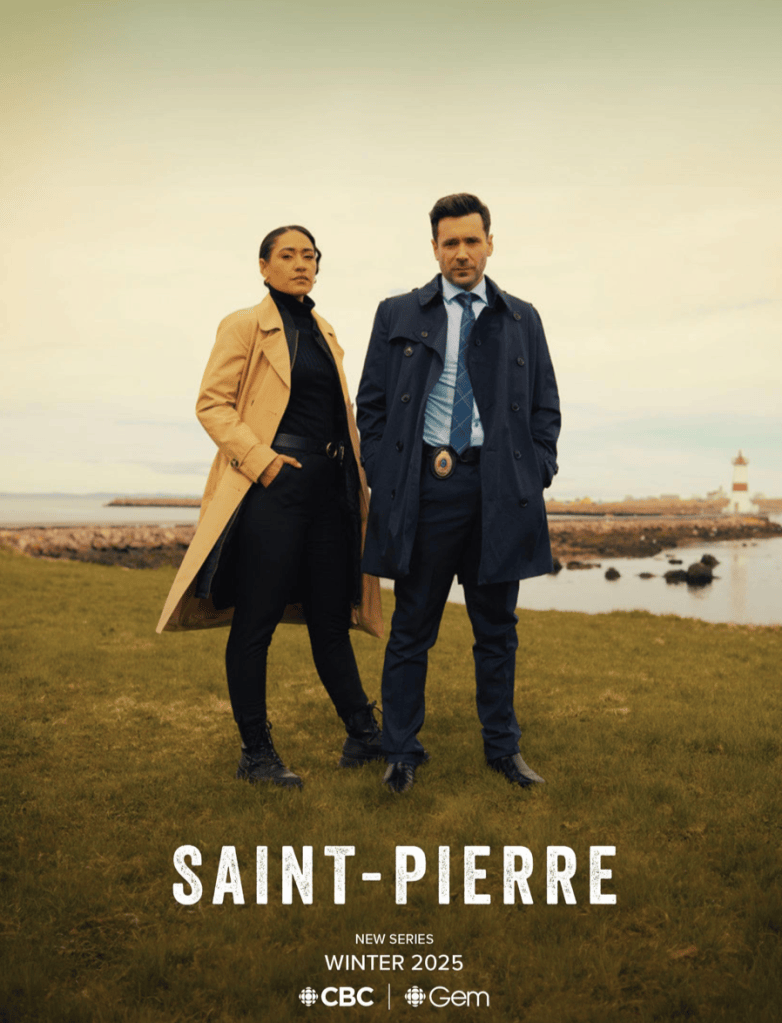
One such series is Saint-Pierre (2025-present), a Canadian detective drama about a big-city police officer, Fitz, (Allan Hawco, a kind of modern Paul Gross, a one-person Canadian creative cottage industry) banished for indiscretion to the titular French collectivity of Saint-Pierre and Miquelon. There’s no quiet licking of wounds however, as with new partner Arch he is soon dealing with a number of crimes, ranging from murder to James Purefoy’s mind-boggling Irish ‘accent’ as series one villain Sean Gallagher. It’s a beautiful part of the world, so the series dresses itself, and ticks along as an unambitious but entertaining diversion.
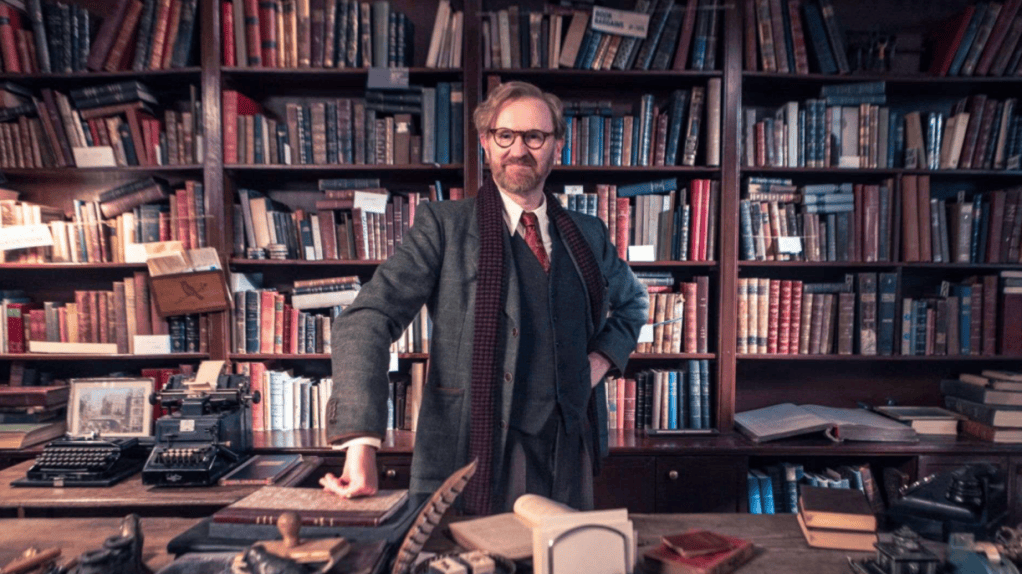
Recent weeks witnessed the return of Mark Gatiss and Matthew Sweet’s Bookish (2025-present). I wasn’t the biggest fan of its first season. An old friend once described their frustration with something that ‘went around the houses to cross the street’ and that was my feeling on its opening season, which had its charms but also lingered too long in its missteps. While its second season still gives way too often to some of the worst instincts of Gatiss, et al (but fortunately never as much as his instalments of A Ghost Story for Christmas) this run of episodes has tighter writing, a solid, settled and appealing central group of characters, and enough intrigue in each case and its continuing plot lines to qualify as a big step forward. While it might appear ‘cosy crime’ at first, it also has a flinty, brave edge to characters and stories that is well done. And it’s got Polly Walker in a lead role, which is always a good thing. I’m glad it came back stronger, and that there will be a Christmas special and third season to follow.
There’s other shows that I haven’t even mentioned in the rotation, from The Andy Griffith Show and The Dick Van Dyke Show to Upstairs, Downstairs, to Take the High Road being added episode by episode to YouTube (!!), but we can save them for another time.

