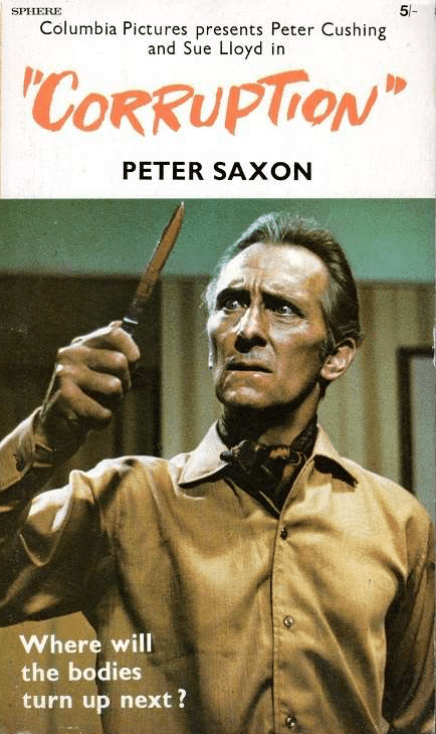
Revisiting Peter’s Cushing’s agreeably grubby exploitation flick, Corruption
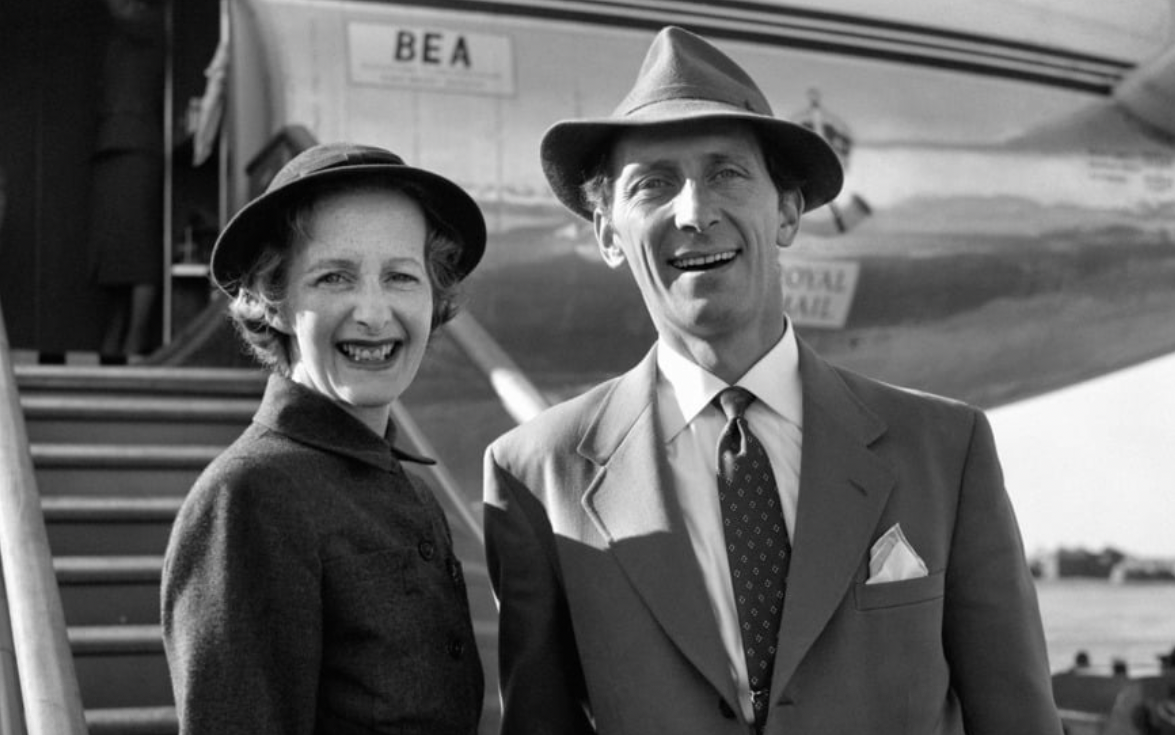
Peter Cushing brought a certain dignity to all of his roles, and a commitment to performance that marks him out as one of Britain’s greatest ever actors. In his career prime throughout the fifties, sixties and seventies, Cushing became inextricably linked with the horror boom that followed Hammer’s first colour forays into the genre. A practical sort with a fearsome work ethic, he knew here was a way to bring in the money he felt necessary to support his beloved wife Helen as her health deteriorated. Cushing also seemed incapable of giving a poor performance and even in the depths of his grief after Helen’s passing (notably 1972’s Horror Express), he always gave everything on screen.
As a result, we have a remarkable catalogue of great work to explore, from his leading roles as the Baron in Hammer’s Frankenstein series, to his cameo spots and his beautifully done running gag on The Morecambe & Wise Show. There’s also the more offbeat path to consider, where Cushing was the best thing about the film or series, or where the film doesn’t have the cultural impact of his appearances as Van Helsing.
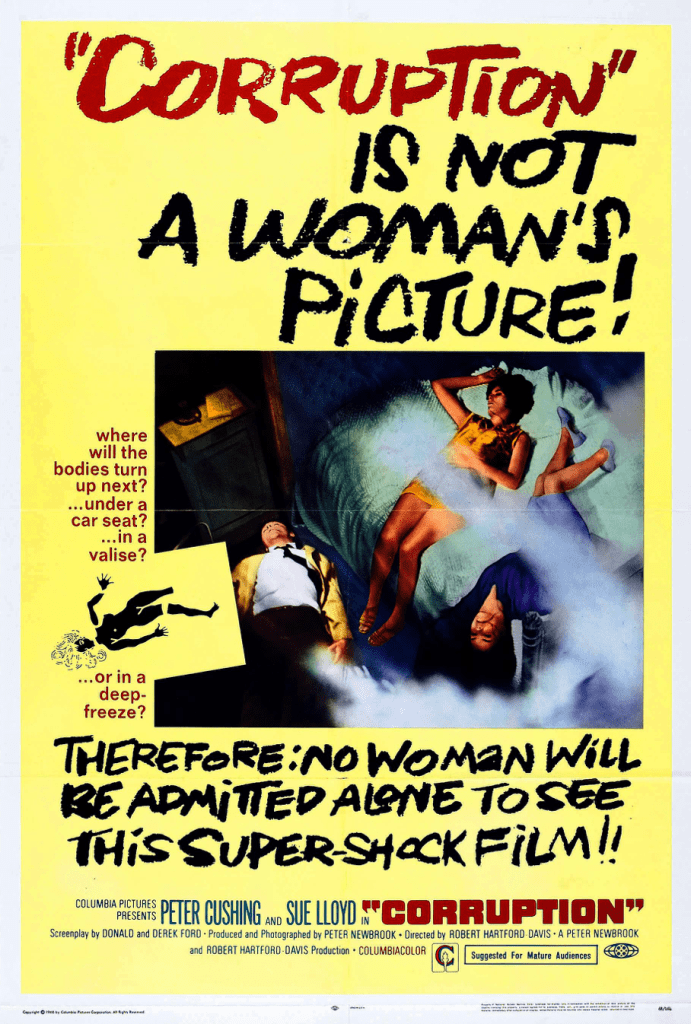
Which brings us to his role in Corruption from 1968 (dir. Robert Hartford-Davis), an agreeably grubby exploitation riff on the comparatively refined Eyes Without a Face (1960) that qualifies in both the above categories. Is it a great film? Not really. Is in interesting and often entertaining? Definitely. Some spoilers now, even though most of the following takes place in roughly the first half hour of a 90-minute film that ultimately takes a left turn in a different direction altogether.
Corruption pushes the dignified Cushing into a frequently hysterically-pitched cartoon of carnage as the wealthy doctor Sir John Rowan. Rowan is a pioneering plastic surgeon which proves immediately helpful when he accompanies his young, beautiful fiancée, the fashion model Lynn (Sue Lloyd), to a swinging party. John is uncomfortable around the hip kids of London as they ‘freak out’. When he tries to convince Lynn to leave early, a confrontation with the slimy photographer trying to convince her to undress for pictures in front of everyone else gets violent and she takes a hot lamp to the face.
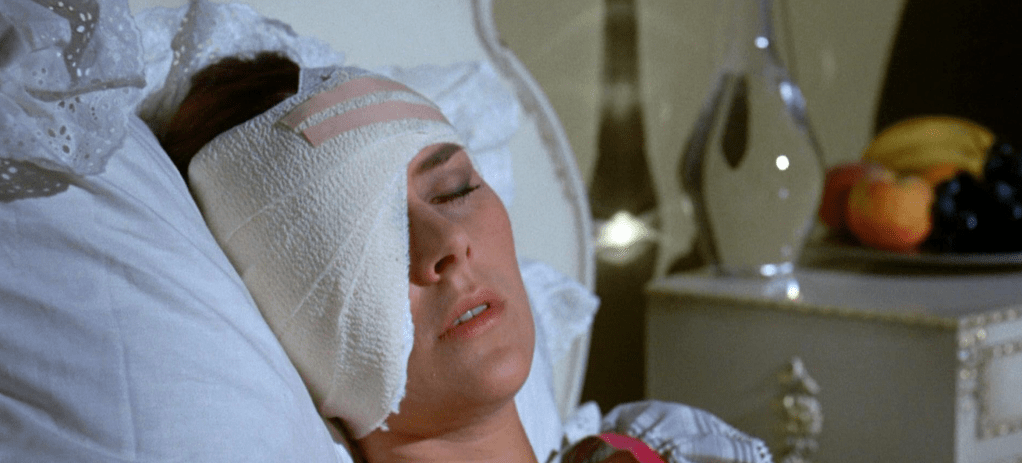
Rowan can’t fix her disfigurement with his conventional methods so decides to experiments of the dangerous kind with the pituitary gland of a corpse and a mix of ancient theories and modern science. It’s a success and the previously despondent Lynn is back on her feet hosting dinners and planning holidays. But wait! It doesn’t last and soon Lynn’s face has deteriorated and Rowan is desperately trying to refine the process.
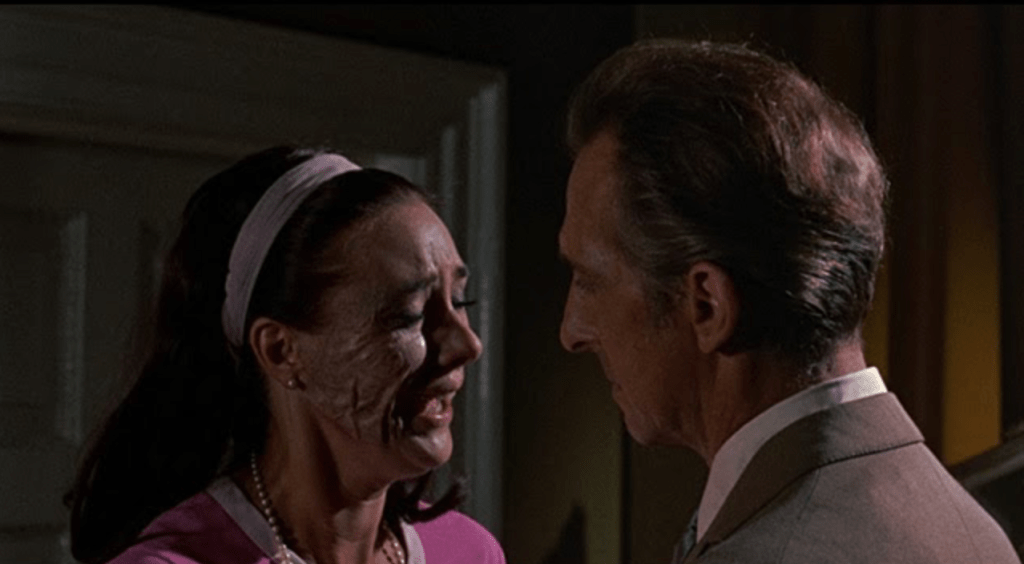
With the spotlight on Rowan from colleagues and his experiments in no way ethical, corpses being chopped up are out of the question so John takes what we can clearly all agree is the only other logical choice and takes up a parallel career as a modern-day Jack the Ripper, stealing the necessary gland from a sex worker he brutally murders (in significantly more unpleasant style in the alternative international cut).
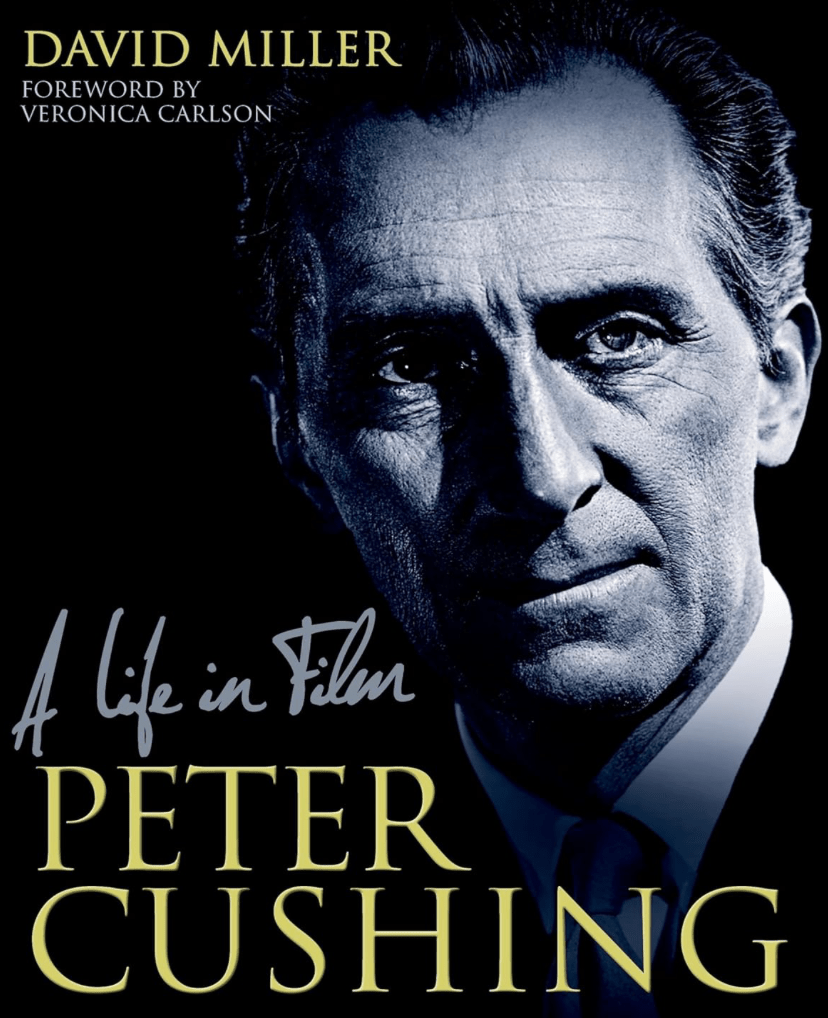
In David Miller’s book Peter Cushing: A Life in Film, Cushing gave his take on the finished film: “It was gratuitously violent, fearfully sick. But it was a good script, which just goes to show how important the presentation is. With any film you participate in, the company, if they so wish, can destroy your original interpretation of the role.” This comment says a lot about what makes Cushing special.
There’s an oft-told anecdote about how Cushing would carry around props that he thought his character would have in his pockets, even though they wouldn’t be seen onscreen. Cushing thought deeply about his characters, trying to understand their motivations. He never looked down on the work as beneath him, even while critics of the time largely sniffed haughtily at how silly the horror game was.
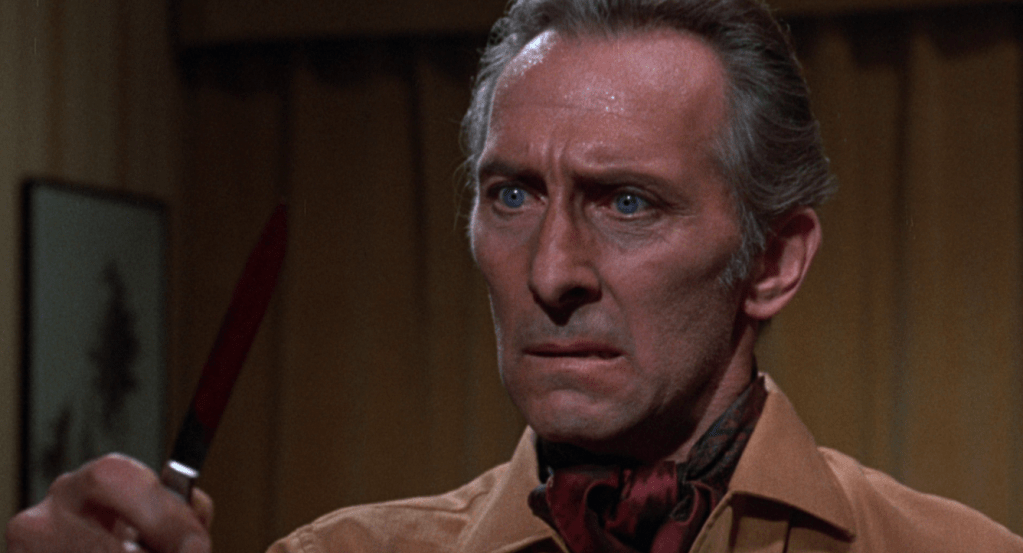
If we compare Sir John to another of Cushing’s ‘good men doing bad things’ roles from just three years later, we get a picture of just how varied and nuanced he was in presenting this kind of complicated character. Rowan is inarguably a villain, just as Gustav Weil is in Twins of Evil (1971, dir. John Hough) but both do what they do because they believe it is their only choice. Where the steely, cold Weil uses moral superiority to underwrite as necessary the wickedness of his choices, Rowan kills out of love and guilt. It’s in his face during the murder of the sex worker, it’s in his cold stare on the train as drains his humanity to prepare himself to the task at hand, it’s in the small pause at the bedroom door of his cottage, knife in hand, as it hits him again what he has become.
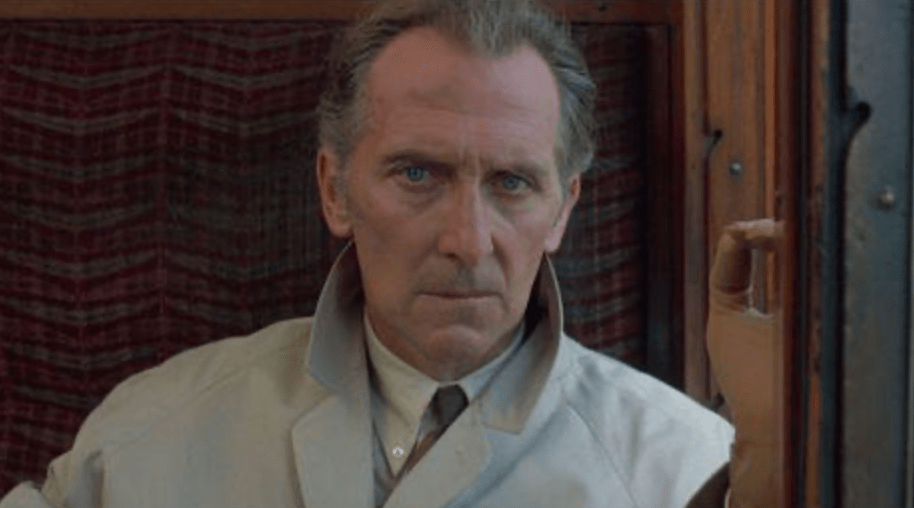
As we’ve seen, Cushing was not kind to the finished film. It does everything to undermine the subtly of his performance, or the escalating panic that layers Lloyd’s unravelling Lynn. Largely for this writer, it’s due to an appropriate-for-the-swinging-times but nevertheless wildly misjudged jazz score from Bill McGuffie.
This is at its most egregious during a late-in-film argument between Rowan and Lynn, Sir John drowning in guilt and no longer able to justify his crimes and Lynn desperate for another chance to get the treatment right. Stripped of the score, this would be a beautiful, quiet moment between these two characters as they come to understand they have lost each other despite everything.
That this still comes across, and that these two damaged people still compel us, is down to those two actors. Sir John Rowan is a villain. Peter Cushing made him human. It’s a fine example of what one of Britain’s most capable, most compelling, most powerful actors could achieve, whatever the quality of the film.