The horror show that dug its way out of the grave
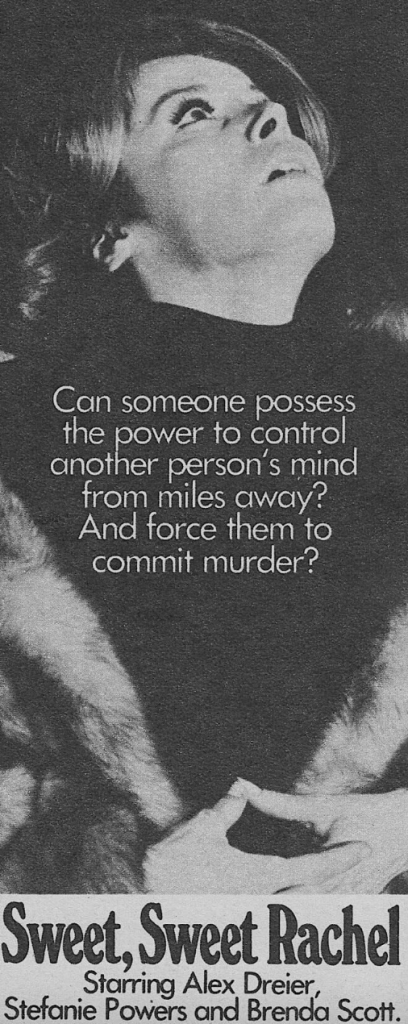
The ignominious fate of The Sixth Sense (1972) television series – butchered, derided and ultimately forgotten – is undeserved. I’m going to spend some time exploring the show and what makes it a candidate for rediscovery and love for fans of paranormal and supernaturally-themed titles. The series has its basis in the 1971 made-for-TV movie Sweet, Sweet Rachel (dir. Sutton Roley). A number of other television films of the time, like The House That Wouldn’t Die (1970) and A Taste of Evil (1971) – both directed by John Llewellyn Moxey and Something Evil (1972, dir. Steven Spielberg) – had popularised themes of hauntings and psychological horror.
Roley’s film features Stephanie Powers as the titular Rachel, grieving for the husband who killed himself and worrying that her uncontrolled psychic abilities drove him to it. But she’s not the only one in the family with such ESP powers as Dr. Darrow (Alex Dreier) will find out in this psychic-murder-mystery. As he investigates what actually happened he must also use his own abilities to stay alive long enough to discover the truth. The film was written by Anthony Lawrence, a well-established writer who had previously worked on shows like Naked City (1959-1963), The Outer Limits (1963-1965), Medical Center (1969-1976) and many others. It’s weird and creepy and even amongst the films mentioned above, stands out as something special.
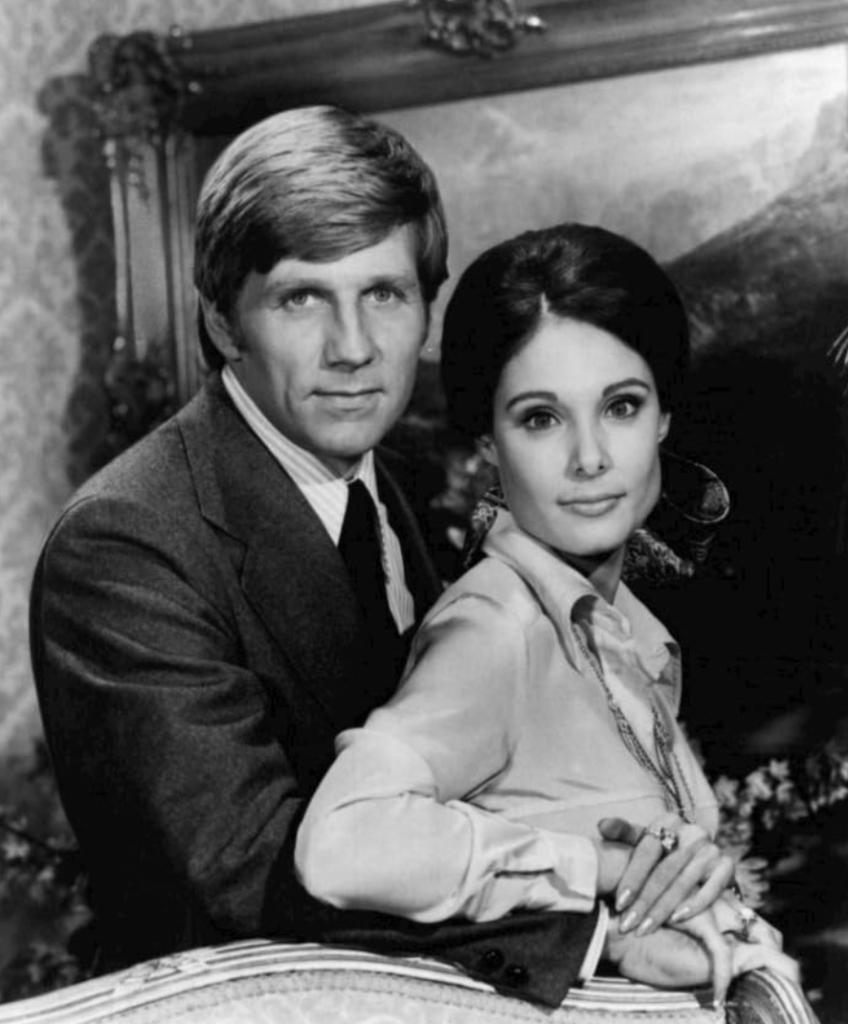
Lawrence would go on to use the central concept of a doctor of parapsychology investigating cases of apparent hauntings, psychic attacks and murder to create a weekly series. The main doctor for the show would be Dr. Michael Rhodes, played by Gary Collins, and Rhodes would similarly have his own ESP powers and frequently use this ability to solve the case. Collins was a well-established television actor who would go on to his greatest success as a talk-show host in the ‘80s, and it’s this unusual otherness he has (convincing as both) that brings Rhodes to life.
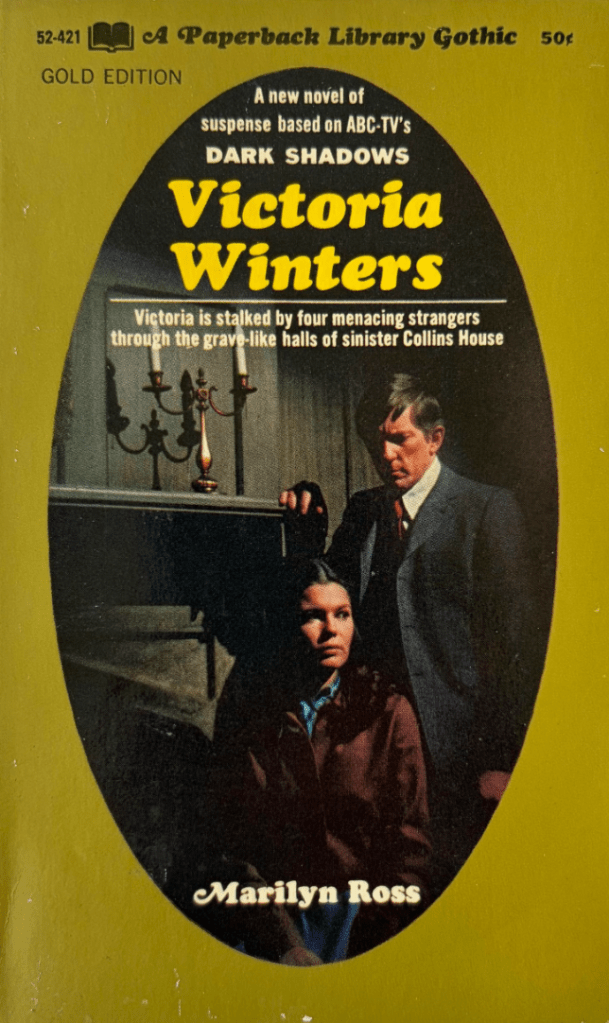
The Sixth Sense also has its roots in a popular subset of paperbacks of the time, that of the women-in-paranormal-danger and house-of-evil kind. Only a year before, that great gothic-romance-horror-science fiction soap Dark Shadows (1966-1971) had finished its run (as well as producing two feature films). Marilyn Ross (a pseudonym for author Dan Ross) had written a series of novels that separated from the show’s ongoing arcs, usually involving Barnabas and Quentin solving a supernatural mystery that frequently involved a damsel-in-distress.
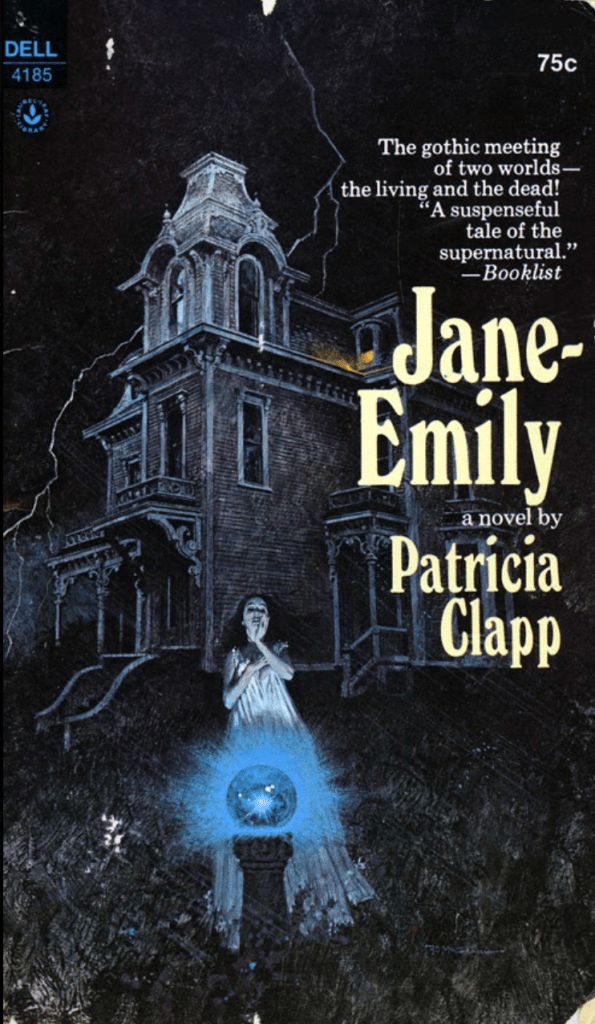
Many of the ‘women running from houses’ subgenre titles featured a woman arriving at a large house for some reason or other and finding love and supernatural danger within. Or it would feature a house with a dark and violent history and sinister intent for its new, often temporary inhabitants, as can be found in titles like Richard Matheson’s Hell House (1971). Around this time we also got novels like Robert Marasco’s Burnt Offerings (1973) which were, like Matheson’s tale, quickly adapted into films. It’s a trend that would continue on for some years, with authors like Bernard Taylor, Michael McDowell and V.C Andrews twisting these basics into ever more threatening directions in their novels, entwining sex and death and horror.
(If you want to know more, there’s more on this era of writing in Paperbacks from Hell: The Twisted History of ‘70s and ‘80s Horror Fiction (2017, Quirk Books) by Grady Hendrix and Will Errickson).
So it’s easy to understand how The Sixth Sense could have been considered a dead cert for success. Its core elements – paranormal mystery and women-in-danger – were those staples of many television movies and popular novels hitting big at the time. As much as the series was inarguably a paranormal show (with that element of the plots never being in question) it was also designed around the standard procedural template of many other hit shows. Imagine that Rhodes is essentially another uniquely brilliant television detective solving a crime and it’s not substantially different in format.
A few things made it stand out at the time, however. Firstly, although recent series Night Gallery (1970-1973) had found some moderate success with television horror, it was part of a number of anthology shows that had used the tools of the paranormal and horror for its stories, and was not a continuing series. Though it is strictly horror as compared to The Twilight Zone (1959-1964), Thriller (1960-1962), The Outer Limits et al which used the genre occasionally, Night Gallery was different for each week’s instalments.
The Sixth Sense’s closest anthology relative is one of the first that specialised in such themes, Alcoa Presents: One Step Beyond (1959-1961). The John Newland-hosted series told stories of possessions, hauntings and other such unlikely events and presented them to viewers as documents of truth about the unexplainable. Again, as an anthology every story was different and featured no reoccurring characters or situations.
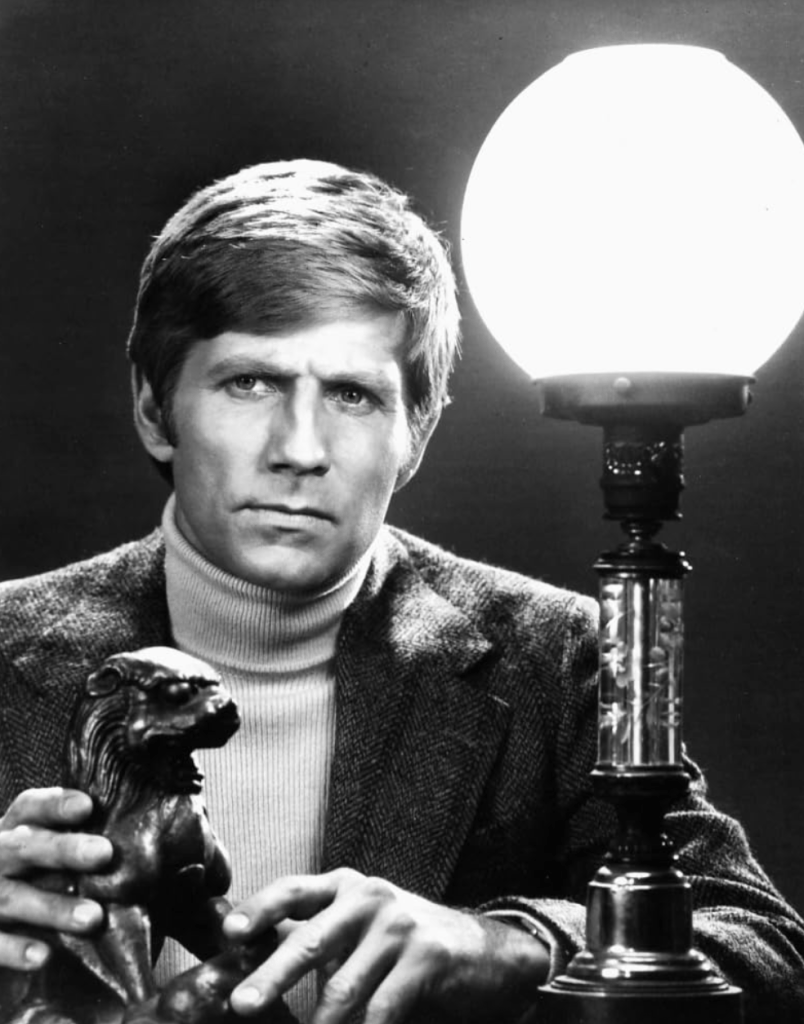
So in this respect, The Sixth Sense is one of the earliest paranormal-themed American series that featured the same characters involved in different plots each episode. The show also takes its premise completely seriously. There’s no late-60s style camp or arched eyebrow in delivery and unlike contemporary entertainment like the Carl Kolchak movies and the later Kolchak: The Night Stalker (1974-1975) series it rarely uses humour to cut the tension. It is sincere, and expects its audience to completely buy in as well. There’s no cynicism involved and although the series regularly involves characters who refuse to believe or doubt Rhodes, they usually end up converted through the evidence of that week’s events they see with their own eyes.
The third element that separates out The Sixth Sense from simply being a procedural in different clothing is how the paranormal is presented. For an early 1970s show, it often goes out of its way with stylised jump-cutting, use of surprise, shadow, slow-motion and atmosphere-building to make the frequent paranormal events, deaths and attempted murders genuinely unsettling. And in this, the show does not make allowances for people – it’s actually out to unnerve. By today’s standards this is now tame of course, but the show was at the time using what often made one-off weekly movies scary for home audiences and attempting to utilise it on something that was also inviting you back each week for more.
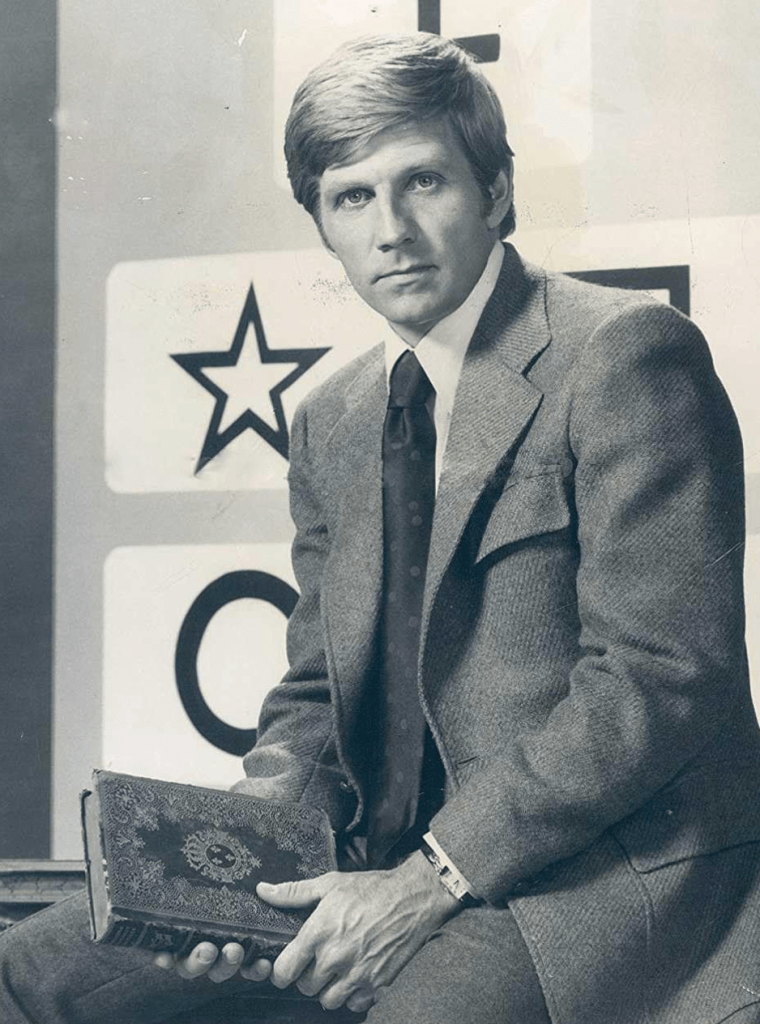
There’s much to appreciate and enjoy in this show, especially if you’re a fan of the aforementioned anthologies and series or of subsequent shows like The X-Files (1993-2018) that deal in tales of the paranormal and the unexplainable. Not least in that The Sixth Sense had some outstanding episode titles: ‘I Do Not Belong to the Human World’, ‘Dear Joan, We Are Going to Scare You to Death’ and ‘I Did Not Mean to Slay Thee’ amongst many others through a 25-episode run.
As it’s a ‘70s series there is also a great list of guest stars who appeared in the run, including John Saxon, William Shatner, Joan Crawford (what an odd, format-twisting episode that one is), Henry Silva and many others. It took plots and inspirations from classic and contemporary films and novels and tried to do something at the time different with them. Though many of the plots are now familiar versions of common tropes from the paranormal the series was genuinely interesting in how it approached them.
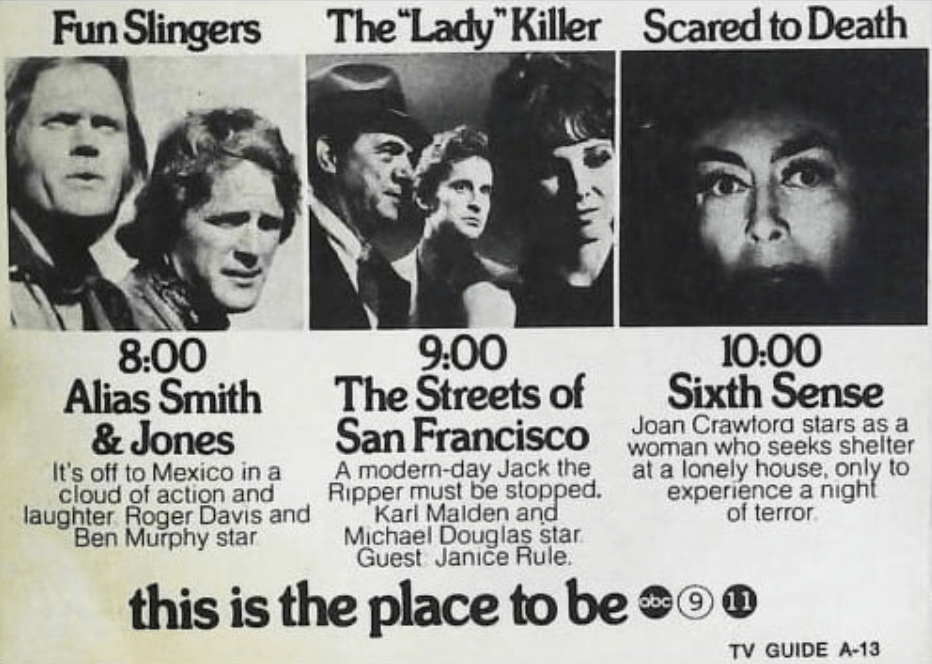
Sadly, the series is either not considered at all or remembered as part of the syndication butchery that affected Night Gallery. Both shows didn’t run for long enough for the syndication sweet spot (usually considered four full seasons or ideally a hundred or more episodes). The Sixth Sense had initially completed a short run of 13 episodes in the early part of 1972 and despite ratings that did not exactly scream hit it would come back for a final run of 12 more later in the year.
It didn’t fare well enough in the ratings against the likes of Mission: Impossible (1966-1973), itself nearing the end of its run and dipping in viewers, and so would not return for a third season. To make use of both Serling’s show and the total run of the Collins series, a thoroughly ridiculous idea was agreed: edit episodes of Night Gallery and The Sixth Sense together into half hour-long episodes and make Serling suffer shooting new introductions for the segments from a show he had nothing to do with. You could imagine that by cutting down two near-50 minute shows (at least in Gallery’s first two seasons) to 25 minutes and editing it into something totally unrelated it would cause problems, and so it did. Both the Night Gallery segments – often also edited down – and The Sixth Sense episodes became an unintelligible mess that benefited neither.
And this is how most people came to rememberThe Sixth Sense – a mess of a series that for decades after blighted Serling’s show. Its reputation became one of ruiner and failed in its own right and perhaps that is why the series has rarely been shown in its full form since the initial broadcast. That assessment of it, as a poor show that made worse a better show, is unfair. A French release in 2014 of the complete show on DVD, in its unedited and original sequence, was the first time that allowed us to rediscover a series that has much to offer (it had another DVD release in 2025 through Via Vision).
It’s spooky, unsettling (those second season credits, damn), scary, often gripping and imaginative and absolutely entertaining fun. Seek it out, it is time very well spent. I fucking love it.
 Writing by Jamie Evans