Tag: Horror

  • Some Ghoulishly Good Times

    Recent horrific film and television highlights

    Times are tricky right now, but in amongst everything that might be going on, there’s plenty to enjoy. I get a genuine distraction from the carousel in my head from a good show or film, very often horror, science fiction or mystery. A meditation of sorts. Here’s what I have enjoyed across the past few weeks or so.

    (A warning: There’s no serious, deeply analytical reviews here, so abandon all hope if that’s what you are after. I’m not writing an essay. No spoilers either. You’ll get a brief summary or introduction and one or two things from each I enjoyed.)

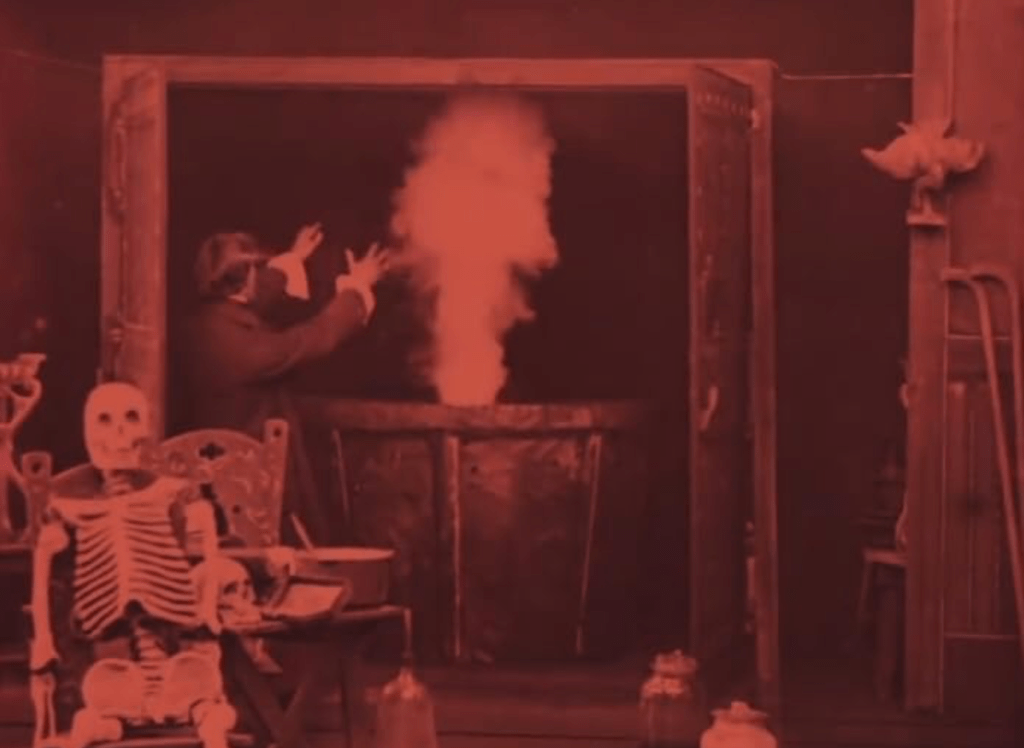
    Frankenstein begins the creation of his ‘monster’ in Frankenstein (1910)

    In 1910, J. Searle Dawley wrote and directed a one-reeler adaptation of Mary Shelley’s Frankenstein. It runs to about 16 minutes, so is only a swift tour through the beats of the story, but manages to generate empathy for the monster, poisoned by Frankenstein’s arrogance and hubris. The birth of twisted life sequence itself is quite a startling example of early cinema’s ingenuity. This monster is formed of fire and potions in a bubbling cauldron in an effect that, while basic, conveys the pain of its forced creation. It’s remarkable, and an enduring example of early filmed horror’s ability to captivate and even appal modern us, with all our ‘sophistication’.

    Newspaper advert for Sweet, Sweet Rachel (1971)

    Sweet, Sweet Rachel (1971, dir. Sutton Roley) was writer Anthony Lawrence’s pilot-film-of-sorts for the following year’s The Sixth Sense (1972), his phenomenal, egregiously short-lived ESP-themed television series that starred Gary Collins. The film follows a similar approach, telling of Rachel, haunted by visions of death. Dr. Lucas Darrow, an ESP expert, tries to help her unravel what is happening to her as her grip on sanity wavers. Like the series, what works so well with Sweet, Sweet Rachel is its absolute lack of fucks given to anything but its own internal logic and its focus on a nightmare flow to events and imagery. The central mystery is nicely loose, and if you enjoy it, I shouldn’t need to do anything else to convince you to seek out The Sixth Sense series, one of television horror’s weirdest, most underrated gems.

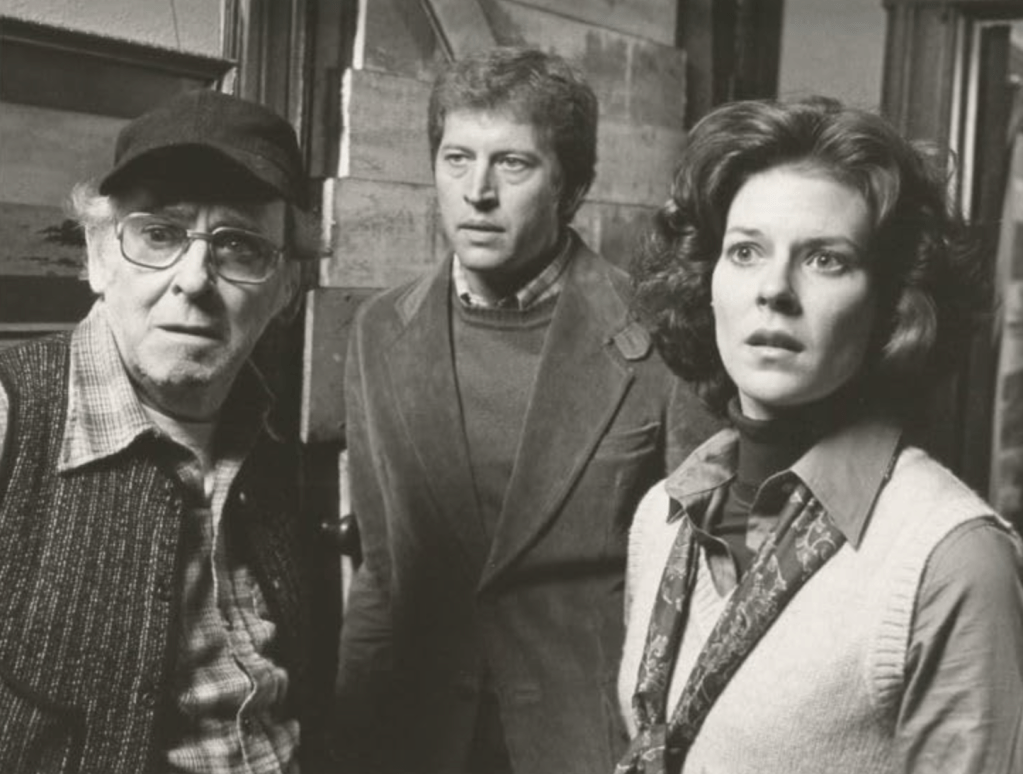
    L to R: Barnard Hughes, Granville van Dusen and JoBeth Williams in The World Beyond (1978)

    Art Wallace is probably most well known as the developer and principal writer of the earliest days of television classic Dark Shadows (1966-1971). A decade or so later, Wallace had two attempts at an occult detective series, with pilot films The World of Darkness (aka ‘Sentence of Death’) in 1977 and The World Beyond (aka ‘The Mud Monster’) in 1978. The magnificently named Granville Van Dusen plays sports journalist Paul Taylor. After dying for two minutes following an accident, Taylor is ‘gifted’ with the ability to see ghosts, who nag him about people in danger he must help but without, you know, any real details or anything that might assist him. In these films, that includes a woman trying to unravel the mysterious deaths afflicting her wealthy, messed-up family, and an island stalked by a golem. There’s nothing new in either, but they’re both so stylishly, sincerely done that doesn’t matter at all. The first film’s elegant, dark chills give way to the second film’s oppressive, relentless focus on visceral experience, but both pack in actual horror and are great fun for people who love ponderous, deliberately paced 1970s television horror (that’s me).

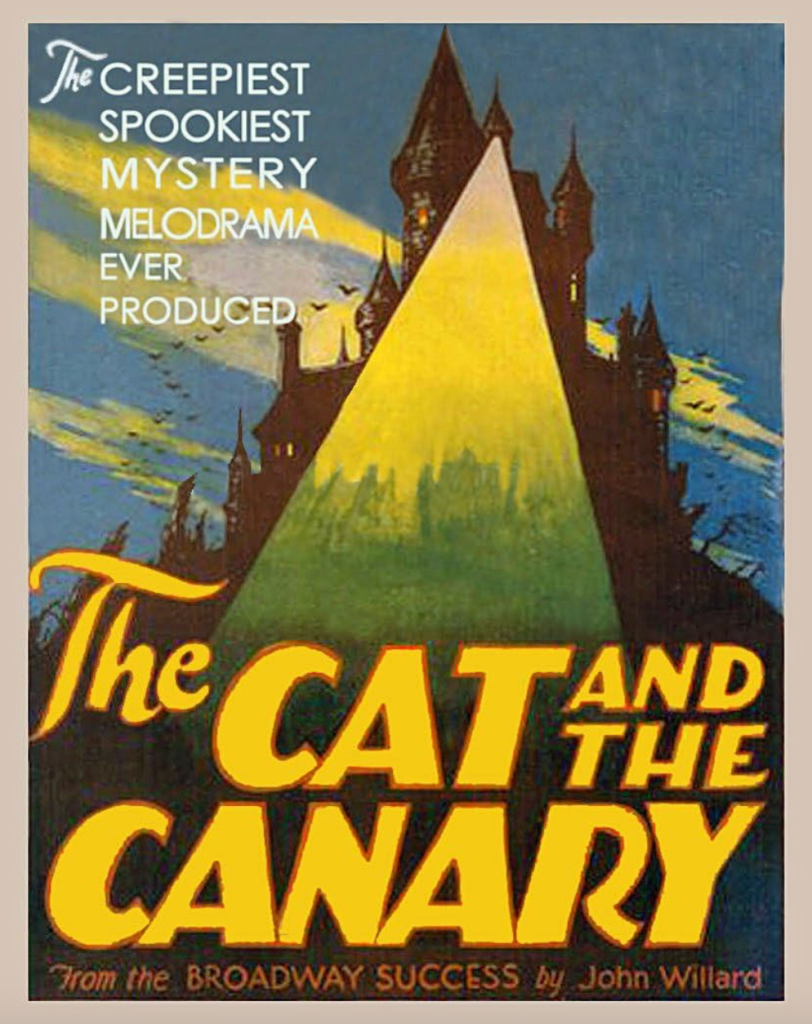
    Poster for The Cat and the Canary (1927)

    The Cat and the Canary (1927, dir. Paul Leni) was one of Universal’s big early horror successes (before the run we have come to associate starting with Dracula in 1931). Like many a film of its time, it was based on a stage play, a darkly humorous thriller by John Willard, but the masterstroke of bringing in the director of Waxworks (1924) means this is no dusty, static retread. Rather, Leni and cinematographer Gilbert Warrenton make a virtue out of its isolated, minimal locations, the lack of dialogue in a silent film (via intertitles), and employ various German Expressionist techniques to create several sequences of gorgeously fluid, alive and confrontational film. A lot of the tricks – sliding panels in walls, disappearing bodies, reappearing corpses – are all too familiar now, but in 1927 they weren’t; this was still fresh to movie theatres. It’s a comedy horror that achieves that rare balance between being genuinely amusing and yet ruthlessly serious in its chills. Really fucking good.

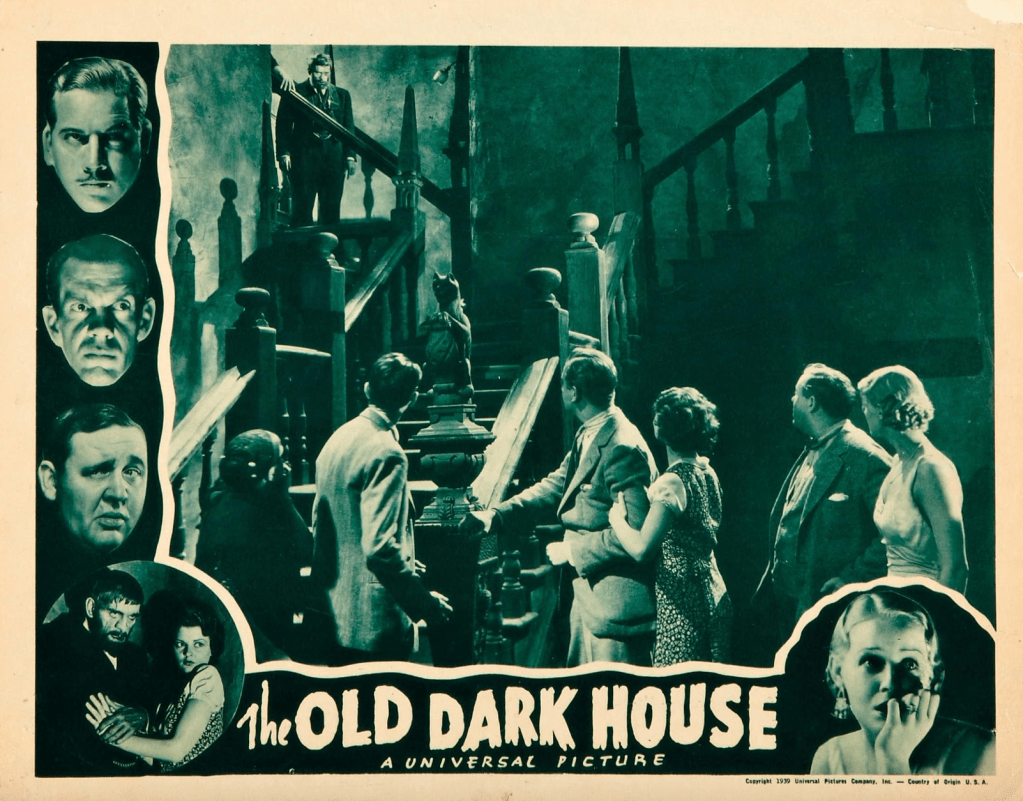
    Lobby card for The Old Dark House (1932)

    James Whale followed the cadaverous, scandalous Frankenstein (1931) (we’re not counting The Impatient Maiden, his intervening drama) with The Old Dark House (1932), a tale of several people stranded by a violent storm and forced to seek refuge in the titular home, its inhabitants very possibly more dangerous than the rain and thunder outside. If you haven’t seen this, you’re really in for a treat, and you should fucking watch it, now. It’s about as good as films get, and has Whale at the peak of his artistry, directing a pitch-perfect cast. A Pre-Code classic,The Old Dark House is as dangerous, raucous, and subversive now as it was nearly a century ago. It’s funny, moving, genuinely unsettling, gleefully out of step and defiantly queer in the more-than-one meaning that word carries.

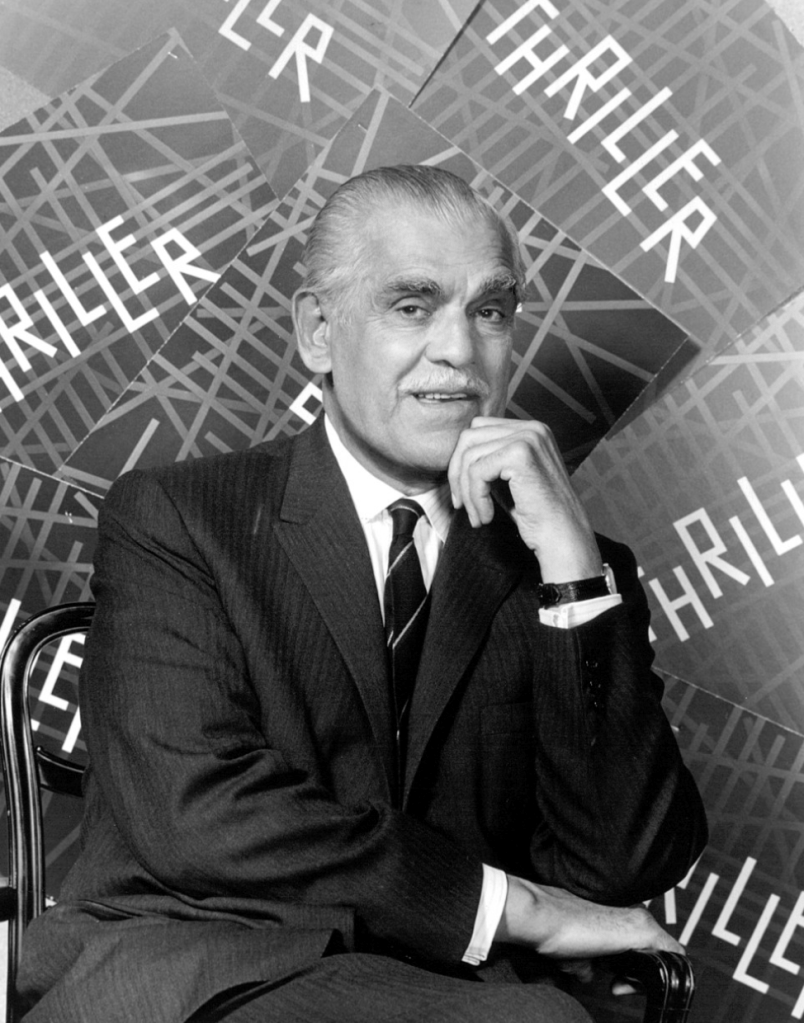
    Promo photo of Boris Karloff as host of Thriller (1960-1962)

    In Danse Macabre, Stephen King’s 1981 history of horror, he suggests Thriller (1960-1962) was the best spooky series of its kind ever shown on television up to the point he was writing and got theWeird Tales vibe right on. He’s wrong.Thriller was in fact wildly erratic, from its early days of slow-moving crime stories, and still in its later episodes King was referring to. Some episodes were good, some were great, some were boring as shit. When it does nail it, the results are sublime, though often not for everyone. If you have a taste for overripe, camp gothic, then season two, episode twelve (‘The Return of Andrew Bentley’) is one such example. Richard Matheson scripts and John Newland directs and stars in a very silly – but very good – story of death and body snatching. To be clear, I really can’t underscore how much almost every bit of this episode is, objectively, bollocks. The score, the shameless performances, the dialogue. The drawn out ending. It’s an arched eyebrow daring you to take it seriously. But somehow, mix it all in together and you have a knowingly silly cocktail of horror cliche that is a lot of dumb fun.

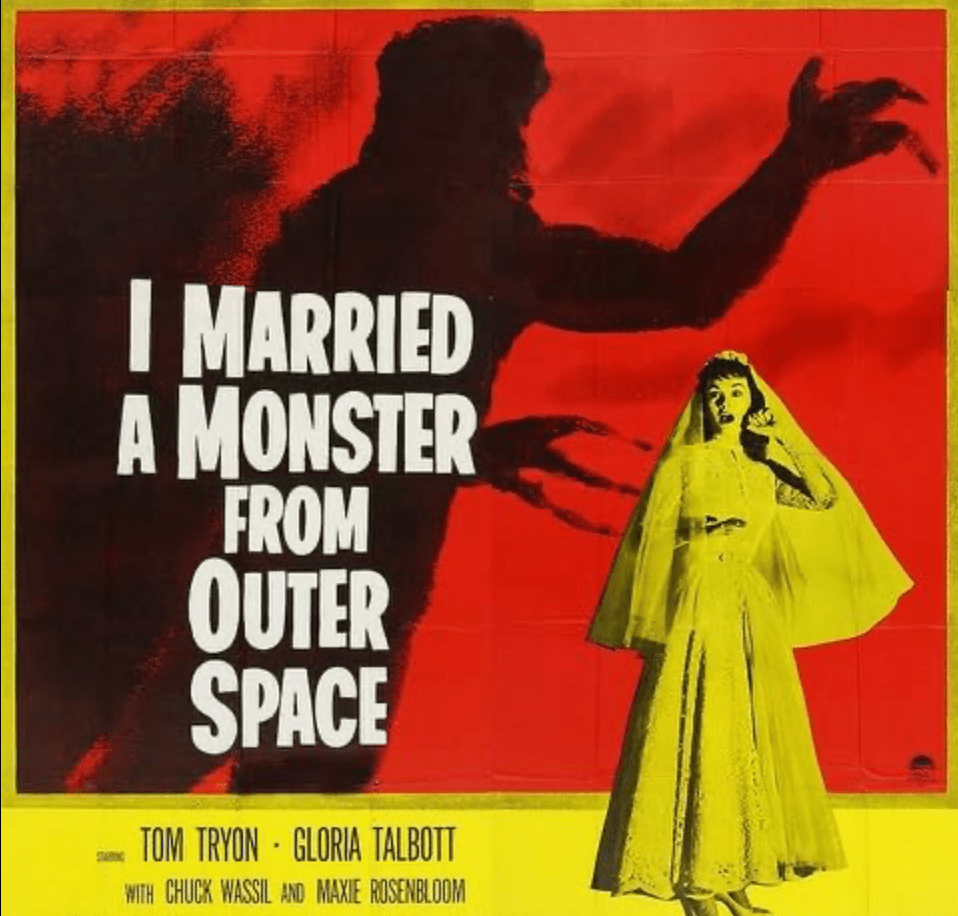
    Poster for I Married a Monster from Outer Space (1958)

    Behind its gloriously garish title, Gene Fowler Jr’s horror-tinged science fiction thriller is a serious movie that plays almost like a lost first attempt atThe Outer Limits (1963-1965), or Invasion of the Body Snatchers (1956, dir. Don Siegel) if that film was much more mean and obsessed with both the promise and threat of sex and the secrets we can and can’t keep. Marge marries the man of her dreams only to find he changes after they wed, almost like he is a different person. That’s because he is. There’s sci-fi thrills here and gloopy special effects, alongside a genuinely tense, pointed narrative only slightly undercut by one element of its ending. All the better then, that the other elements land so well. A sweaty, supple good time.

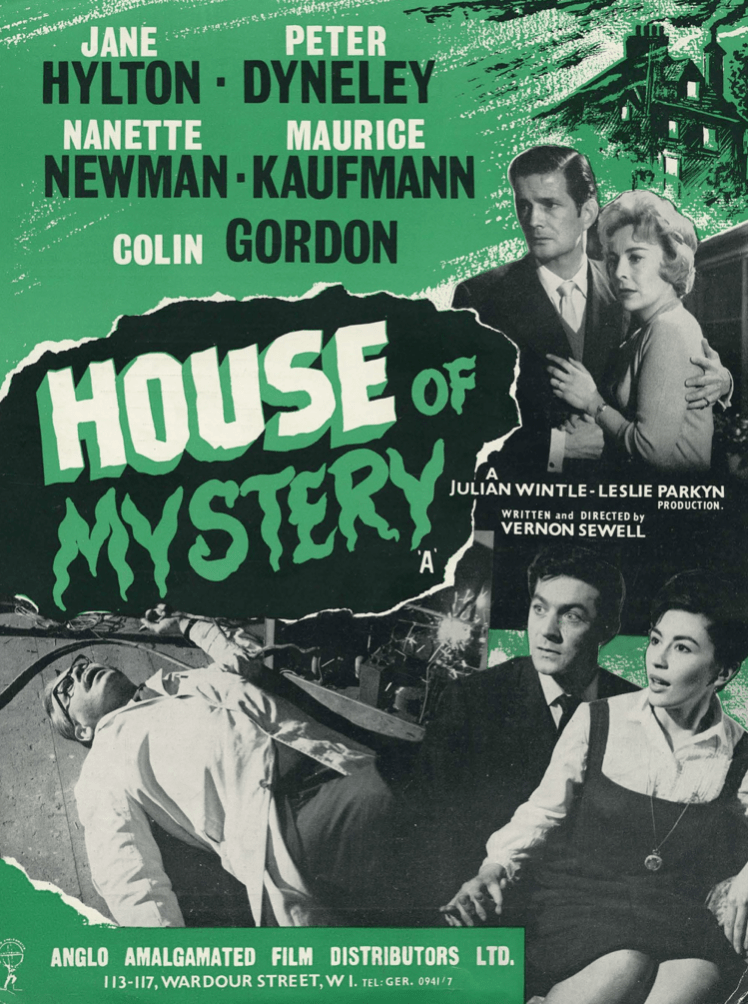
    Poster for House of Mystery (1961)

    Vernon Sewell writes and directs his fourth go at an adaptation of the playThe Medium. A young couple think they have stumbled onto an impossibly cheap bargain of a house. When the melancholy caretaker offers to tell them the history of its ghosts and murder, they realise why it’s on at a bargain price. Comprised of several smoothly done flashbacks, House of Mystery (1961) is a kind of proto-run at the ‘residual haunting’ theory that Nigel Kneale’s The Stone Tape (1972, dir. Peter Sadsy) popularised significantly more loudly a decade later. Sedately paced for a 56-minute long mystery, it nevertheless captures and keeps the attention and squeezes in enough specifically British eccentricity to be plenty of fun. A delightful, creepy curio.

  • Modern horror writing at its best

    I want to write a little bit about two recent book releases that share some thematic crossover and urge you to check them out. Both books are remarkable pieces of writing and deserve a wide audience. A fair warning: the books deal with gnarly subjects and this piece references them throughout, so if you’re put off by mentions of grief, illness, gore and the like… read no further. No spoilers, however.

    In Phengaris, we meet 17-year old Mark, a young man adrift. He is looking after his terminally ill mum, a parent with whom his relationship is conflicted to say the least, his dad disappeared years ago, and all Mark really wants to do is get high and tune out of the relentless noise of his life. He thinks he’s found the perfect spot in nearby Thurstrop Wood and an abandoned workshop yard. Unfortunately for Mark, something no longer human there has seen him and doesn’t want to let him go.

    Phengaris opens with a visceral description of a body mutilated by disease and something disturbingly unnatural. It sets the tone for what follows, as Mark becomes consumed by the mystery of Thurstrop Wood and how it connects to his family, revealing secrets that have been buried for years. There’s other things buried in the woods, too, and they are coming to the surface. Orridge writes with skill and empathy about the burden of youth, and of illness, and about the unforgiving way bodies attack themselves at the same time as the world around us weighs down on us. There’s a thread of ecological awareness, too, and a focus on the nature of parasitical behaviour.

    It’s also concerned with what it means to be human, and how family connections not even escapable by death bond us together for good and for ill. Orridge has a beautiful way with phrasing and illuminates the secondary and minor characters in a way that brings them vividly to life. Sadness and melancholy and loss knot their way through Phengaris, as does a quietly effective rage. It’s ambitious, passionately alive, and makes the personal deeply political.

    Fleischerei by Saoirse Ní Chiaragáin has some complimentary themes but is a radically different experience. In it, we are introduced to Órfhlaith, living in Berlin and working as a content moderator. Órfhlaith is a bloody ball of grief, guilt and self-loathing, punishing and exciting herself with masochistic fantasies. When she moves their focus onto her sickly, compellingly unreadable colleague Arnaud, the wall between her interior darkness and the world around her unravels. As their romance develops, they find in each other a shared yearning for emotional dislocation and physical mutilation. Órfhlaith just wants to know Arnaud, but is it ever really possible to know someone else, no matter how much a part of you they become?

    This is a troubling, affecting work. Intimacy throughout is a transgression that leads to violence and permanent scarring. It’s a confrontingly visceral book and will make you look at the concept of ‘meat’ substantially differently afterwards. It is also fearless about making bodies and consumption and grief defiantly, unapologetically political and challenging us to think about what that means.

    Fleischerei is putrid as it builds its grotesque concoction of smells, tastes, sensations and consumption. It’s about the interior as pungent reflection of what is outside of us, what is done to us. Again, this is a book concerned with what makes us human and what it is to be human, and offers no easy answers, preferring instead challenges to expected narrative conventions. An unrelentingly brave, compassionate work of art.

    Phengaris and Fleischerei are both outstanding, personal, feminine, bleakly beautiful works of modern horror writing at its best. I highly recommend you experience them.

  • The Reptile – Bile and Self-Loathing in Hammer’s Cornwall

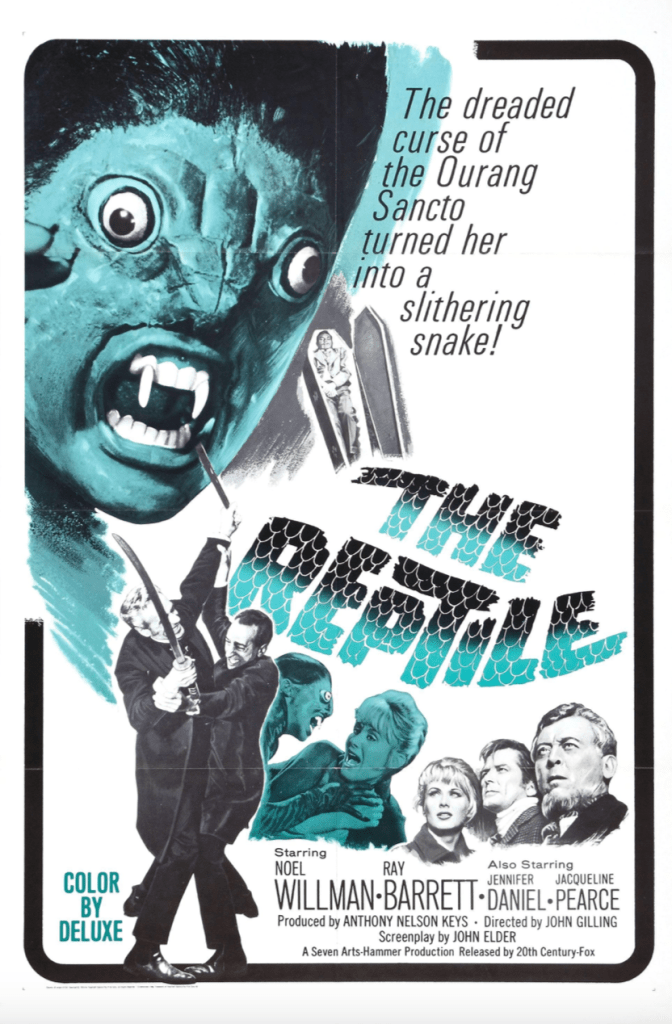
    Poster for The Reptile (1966)

    Returning soldier Harry Spalding is determined to uncover how his brother died in the remote Cornish village of Clagmoor Heath. Was it the Black Death, as the locals fear, or a more melancholy and human evil?

    Generations separate us as people and families and communities. Sometimes were decades, centuries or even millennia removed from other humans that walked and talked, loved and felt deeply, bled and lived and died. I contend we’re not so different in what we want, despite the years and the different focuses of each successive generation, the cruelty and petty prejudices that threaten to consume us. We want happiness, however fleeting, human connection, status, safety, love. Those who reached adulthood in the most recent two decades can easily be forgiven for feeling as though the doom and gloom of these years is unprecedented. Growing up in the shadow of a global financial crisis, austerity, a monstrous pandemic and institutions run by the very worst of us is enough for anyone. It’s not that long ago however, that people grew up in wartime or in the feverishly imagined ever-present shadow of a mushroom cloud, or the devastation wrought by AIDS. No, we’re really not so different. And so it is with the art that touches us. The methods may differ, but the intent is similar. To connect, to inspire, to share what it is to be human in all its failures and glories.

    My main aim here is to explore how this unusual Hammer classic offers commentary and a caution on the ways we can be toxic and poisonous if we stew in the unspoken, choosing to live in darkness, letting fear control us. The characters in this film are from a time older still than when the film itself was made, but the connection is universal. There are other readings of the film and I recommend you seek those out, too. But first, some context. 

    Part of Hammer’s fascinating 1965 four-film cost cutting exercise, The Reptile (UK, John Gilling, 1966) was shot on the same sets as The Plague of the Zombies (UK, John Gilling, 1966) and the only one that actually came in under budget. These films are close siblings in other ways, from mood to intent. Both are Hammer chillers that don’t rely on the tropes of traditional monsters or previously filmed titles. Each is unsettling and compelling in its own way, a mix of mystery and for-its-time grisly and grotesque horror. Gilling, who had a reputation as someone who did not suffer fools, was a tight craftsperson, in charge of the material, pacing and clarity throughout the majority of his work and yet who also includes flourishes of artistry in almost everything he made. And so it is with The Reptile, a film which retains control of its central mystery and also loads it with sinister atmosphere, disturbing imagery and an understanding of the mechanics of what horrifies in sometimes startling ways.

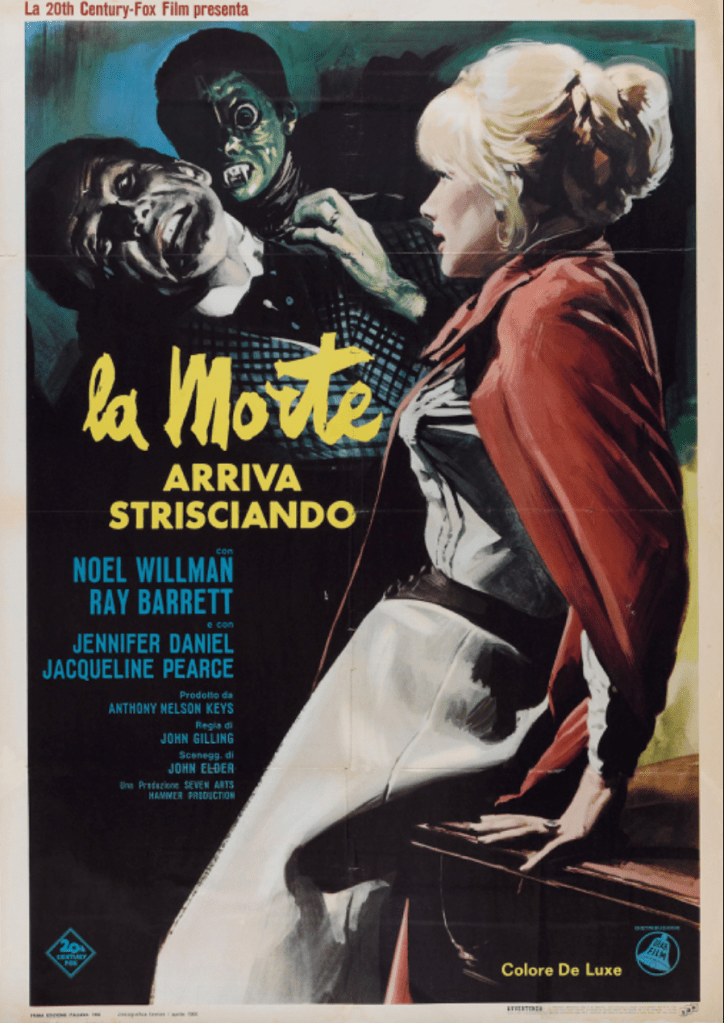
    Italian poster for The Reptile (1966)

    We have no bloodsuckers or traditional monsters here. The horror is not overtly sexualised like Hammer’s vampire films, nor is there anything murderous or of human malevolence in what transpires. Instead, we have a tragedy of family played out where the monster is us. And the deaths are grim in a way Hammer rarely was, to some degree prefiguring the following decade’s obsession with body horror. It’s partly this which provides The Reptile with a remarkably oppressive atmosphere. Much of Hammer’s output of the decade revolved around things rational people can easily discount, from vampirism to monstrous doctors building people out of body parts to zombies, ancient curses and Satanism. These now frequently come as a cosy, distanced horror, one that can be resolved in under 90 minutes and pose no real threat to us. And while the ending of The Reptile doesn’t stray too far from this template, the majority of the film is something else. The deaths in the film are, well, disgusting. Each victim starts frothing at the mouth, turning black, their bodies dying from poison. Still recent world events have only underlined the fear that can be generated by something invading us, free from any moral underpinning, indiscriminate. This is how events first appear in Clagmoor Heath with people dying and the community circling in on itself in fear. And fear and poison are key themes of the film, both viscerally and brutally swift in the deaths and achingly sad in the central relationship between Dr. Franklyn and his daughter. A fear and poison that affects not just them but spreads out into the community they live within. 

    Harry’s brother Charles dies as the film begins, the prowling camera showing him stalked by something through the countryside until he is cut down and left blackened, rotted to his core. Harry meanwhile has a new wife and nowhere to stay. It’s partly this that brings him to the village, inheriting his brother’s house and giving the new couple somewhere to live. But there are also unanswered questions about his brother’s death and Harry has decided he will find out what really happened. It’s not long before Harry has artlessly alienated the suspicious villagers even further and only friendly(ish) publican Tom remains (played in an expanded role by Hammer cameo master Michael Ripper). In the course of his investigation, Harry comes into contact with the profoundly unfriendly Dr. Franklyn, who has more reason than any to seek the solitude that comes from living on the heath. That Franklyn leaves flowers on Charles’ grave underlines to us there is something rotting the doctor too, a poison of a different kind, one that has destroyed the generations that should have followed him.

    The Reptile has many fine qualities, making it one of Hammer’s very best films. It has an unusual (for Hammer) cast, beautiful use of sets and another melancholy and haunted turn from the estimable Jacqueline Pearce. We have John Laurie as a twisted and ultimately deeper and tragic riff on the comic relief character. Gilling does wonders with his budget, producing a frequently handsome film that succeeds as chilling horror including at least one great jump scare. The core mystery is at once obvious and complicated. Don Banks’ score is a wonderful mix of the melancholy, the brash and the inventive. Anthony Hinds’ screenplay (writing here under the name John Elder) is unforgiving and, combined with Gilling’s skill as director, a bold approach for Hammer. The Reptile is a stirring and remarkable tale of curses, disturbed graves, death and desire. 

    For the rest of this piece however, I’m going to explore that key theme of the film which, for me, keeps it ever-relevant to the now and can resonate with us personally, through its mournful atmosphere, heavy with guilt, to its focus on the damage wrought by those who act without integrity or passion or courage. From here there be both spoilers and commentary you may wish to avoid.

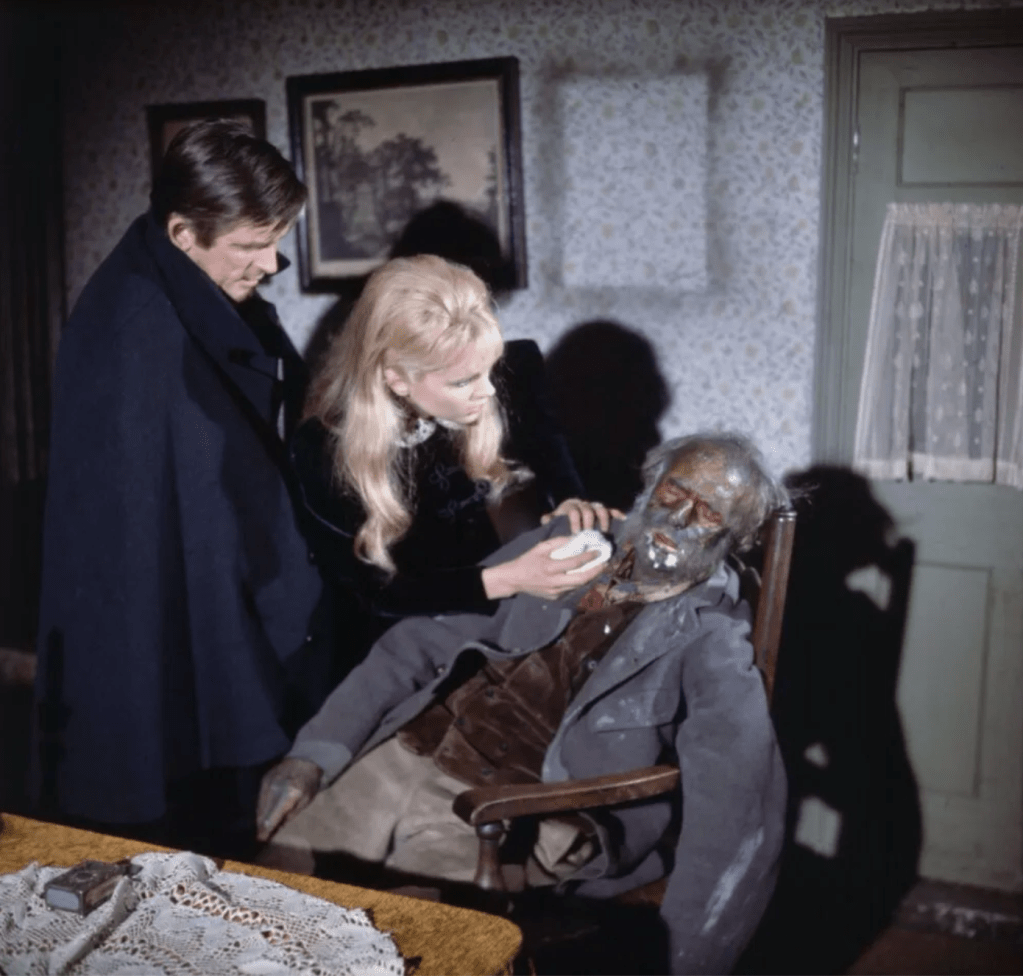
    In The Reptile, Dr. Franklyn has returned to England after time overseas with his daughter, Anna. Franklyn and Anna are attended by a servant, known only as The Malay. Franklyn presents a harsh front, rude and dismissive of attempts to converse or connect with him. He is contemptuous of his daughter, cruel and unkind to her. Despite his protests to Harry that he is not a doctor in the way the village needs, no surgeon but instead a doctor of divinity, Franklyn also shows no interest in discovering more about what is killing people. This is because, as the film reveals, Franklyn knows ‘it’ is Anna. In his time overseas, Franklyn took a colonialist’s approach to the secrets of the religions he encountered and one such ‘cult’, of which The Malay is a member, took extreme umbrage at his methods and disregard for what they considered holy. Kidnapping Anna, they placed a curse upon her which sees her turn into a snake creature with a poisonous bite. Franklyn has retreated with Anna to somewhere remote, surrounded by the empty collected trophies of his work and travels, watched over by The Malay, to endure his suffering. And suffering it is, with Anna the victim of his hubris and arrogance, condemned to live not even half a life, no joy in her future. When Franklyn lays those flowers on the grave it is symbolic of the regret, loathing and guilt that is his life now. He has destroyed the life of his daughter, Anna turned literally into a monster to punish him. In Franklyn’s distorted world, those flowers are for him more than anyone else.

    Dr Franklyn looking tired, The Malay looking invigorated

    As touched on earlier, The Reptile is not a traditional Hammer horror film. Although not new to themes of tragic monsters, notably in pictures like The Curse of the Werewolf (UK, Terence Fisher, 1961), Hammer arguably had its greatest success with the villainy of its Dracula and vampire series. The Brides of Dracula (UK, Terence Fisher, 1960) presents a somewhat more nuanced evil and it’s there in Van Helsing’s mix of pity and disgust at the close of Fisher’s first Count film as Lee’s king of the vampires crumbles to dust, but ultimately there’s no quarter given to wickedness that inarguably must die, must be purged, and in the context of desire, must be contained. Helen Kent’s animalistic panic at her demise in Dracula: Prince of Darkness (UK, Terence Fisher, 1966) followed by the beatific expression on her face after being staked to death makes it clear to us, Dracula and his ilk are no misunderstood monsters, but evil in a pure, defiling form. After all, it’s part of the enduring appeal of certain horror stories, as with the police procedural, where equilibrium is disrupted by evil only to be restored at the end. But there is no restoration at the end of The Reptile. Undeserved tragedy begets yet more tragedy and no one is left untouched. Fire is so often used at the conclusion of a film as symbolic of a cleansing, the world being reset. Here it just covers the truth, burying everything unspoken in ashes, cleansing nothing.

    This then is a key theme of The Reptile for me. How recoiling from acknowledging and confronting ourselves, our personal guilt and regret, if left denied, often reaches out beyond us to others, impacts on the lives of people we care about, usually first and most profoundly those we share blood or bonds with. About how our actions reverberate down the years, how that poison infects others and spreads like a death that consumes. Franklyn tries to hide, to disappear, to run from and ineffectively reduce the damage his actions have caused but not try to fix it, to refuse the help he is desperate for. Instead, he acquiesces to self-inflicted punishment, wallows in his misery, gives up on his daughter and anything she might want from her life. And yet the guilt will not leave him be. It dismantles everything around him, even as he tries to stumble on and blank it, unravelling anything he touches. He lives in fear of himself, what he has done, and what will come next as a result of his inability to act.

    Poor John Laurie, doomed for sure

    This can be found in The Reptile in its approach to fear, from fear of ourselves, or feelings for each other and more widely of those we meet and subject to fear of the other. The Reptile is uncommon in its time in that its fear of the other is not presented through overt racism or xenophobia. The Malay is not a cartoon villain here, but instead an agent of revenge without comment as to whether that revenge was earned or justified. Hinds’ writing is thoughtful and subtle here when compared with some contemporaries. The curse placed upon Anna is not The Malay and his people acting with eye-bulging, moustache-twirling malevolence. It is, for him and his people, simply a matter of justice. Instead, the other presented here is a different kind of fear, a fear of ourselves and the people, even in our own immediate family, that we know and love but can never really know but also in how we choose not to acknowledge who we are and what we have wrought. It’s presented in how Franklyn is at once appalled by and desperate to protect his daughter, but only really to hide his shame.

    Anna is a victim, cursed through something she did not bring upon herself, by the action of one who should have been building a world she could find her place in. Here she is confused and lonely and unable to explore her dreams or desires. This is all instead directed at her uncomprehending father who it seems would be equally uncomfortable with the idea of his daughter maturing sexually as he would be her turning into a snake monster. It’s both symptomatic of the time it is set in, but particular to Anna and the life Franklyn knows he has doomed her to. We can imagine Anna’s wants and her desires have never matter to Franklyn until he was confronted by them. Franklyn’s cowardice as a human-being swirls at the centre of The Reptile, as much as his self-involved guilt and grief that she has no real future. These are the layers here to unravel how it remains so devastating nearly sixty years later. In that respect, this is as potent a metaphor for the fears of the parent about what the child may become and learning to love who they are as The Exorcist (US, William Friedkin, 1973). Except here, Franklyn knows what Anna is and why and there is nothing to love for him, a mirror showing him his failings.

    Jacqueline Pearce as Anna

    For Franklyn, the poison is of his own making. Anna is a mirror too, to his crumbled hubris and it is fitting, for him at least, that he dies at her kiss, a kiss as poisonous as he deserves. And there is The Reptile as cautionary tale against our hubris, selfishness, disinterest, arrogance and living in fear. We might want to, but we can’t hide from that which will consume us, and sometimes those we care about. If we really do care, we must force ourselves to confront the darkness, if not for us, for those who, like Anna and the people of Clagmoor Heath, don’t deserve to share in desperate things not of their making.