Tag: Kolchak The Night Stalker

  • Stuff I Have Been Enjoying: The Armchair Edition

    I don’t actually have an armchair, but never mind about that. In between being distracted by work, life, and so on, I usually keep a rolling programme of television going, but not of the live broadcast category. In fact, many of the creators, crew and stars of the programmes are very much dead. What, I hear you cry, has been on rotation? Let me keep you in suspense no longer.

    A Dan Curtis Production
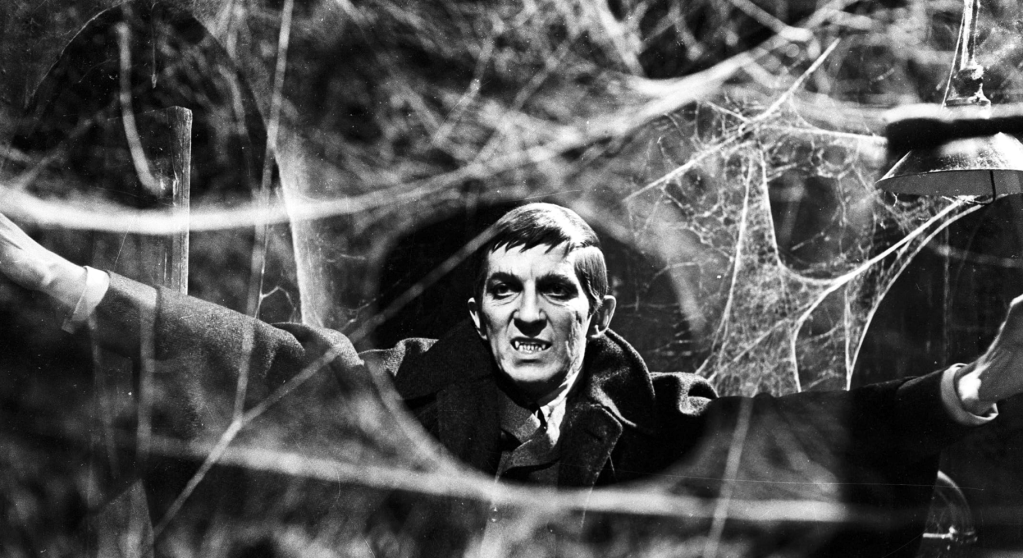
    Barnabas Collins and cobwebs in a Dark Shadows promo shot

    Pretty much always in play is Dark Shadows (1966-1971), the daytime Gothic drama that turned sixty this year. At the moment, I’m into the aftermath of Barnabas’ kidnap of Maggie Evans, with recent episode 265 finding Joe and Sam visiting her at the sanitarium. We’re introduced to Dr Julia Hoffman (“Doc-tor Hoff-man, Doc-tor Hoff-man”), played by the incredible, Oscar-nominated, Grayson Hall and her fearsome range of expressions. So begins a new chapter for the show, and one of maybe-possibly-definitely the strangest, most beguiling, wildest performances in television history. The episode itself is great, the series – still a daytime show, so still often people talking – on newly firm Gothic footing. A thousand-plus episodes is a huge commitment but if you haven’t yet enjoyed Dark Shadows, I do recommend it unreservedly.

    Tangentially Curtis
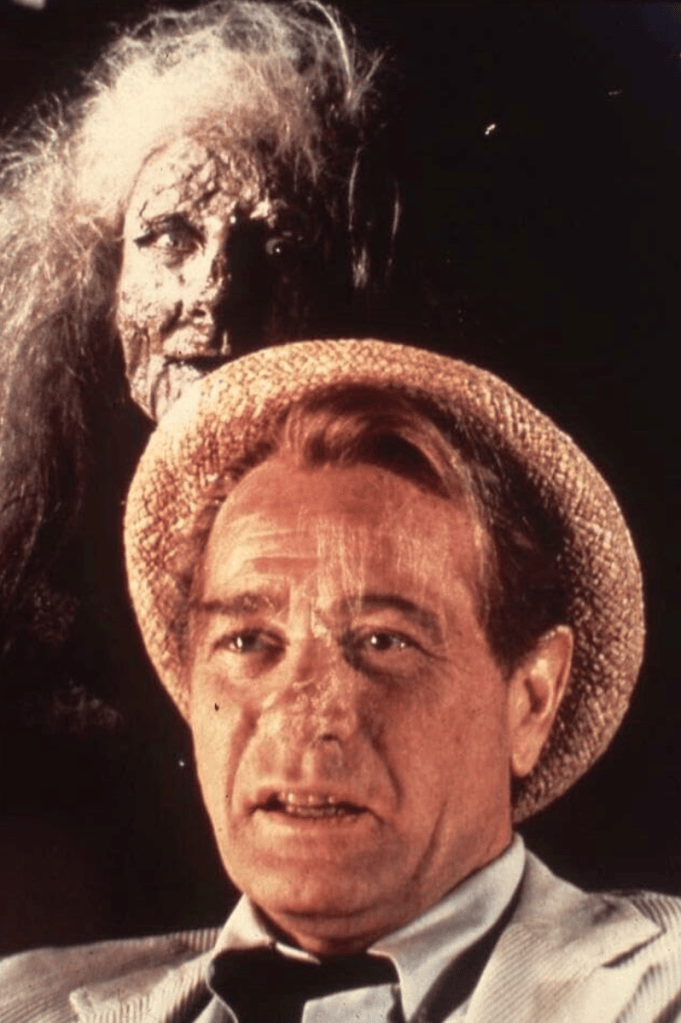
    Kolchak and grizzly chum

    I’ve written elsewhere about how Darren McGavin as Carl Kolchak is one of the great marriages of actor and character. Compared to his first two outings in the Curtis-produced television movies, the series that followed (Kolchak: The Night Stalker, 1974-1975) is a mess. Low budgets, late rewrites, McGavin’s fatigue and dissatisfaction, and a punishing schedule did it no favours. And yet, as we know from its influence on Chris Carter and it’s continuing popularity through books, graphic novels, recent-ish Blu-ray releases, and rumours of reboots, something worked about it, and it was not only McGavin. For me, the monster-of-the-week format doesn’t rely on the same old ‘classic’ threats, with imaginative creatures, the writing is – perhaps against the odds – reliably solid, and the feel of the show is consistent. ‘Demon in Lace’ (episode 16 of 20) finds a succubus possessing recently deceased women and feeding on college students. It’s fun, as is the series, and though by no means the best horror television you’ll see, a reliably good time.

    A Circular Hell
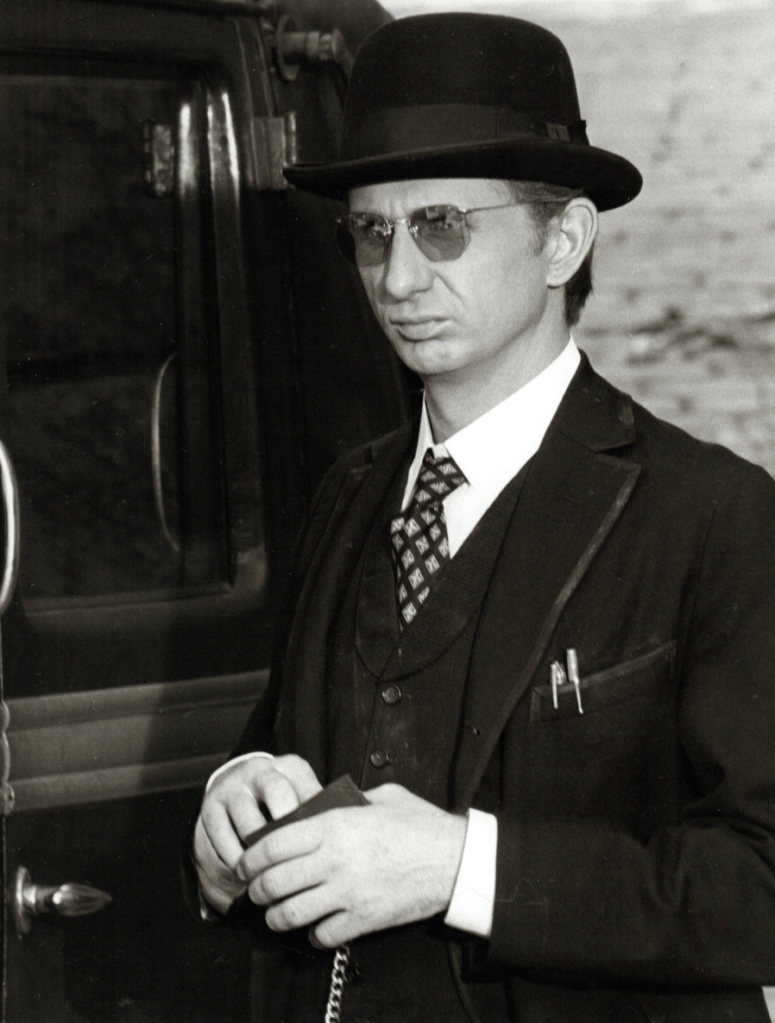
    Rene Auberjonois as Sharsted

    When speaking of erratically successful horror television plagued by production problems, Night Gallery (1970-1973) is never far away. But when this series is successful, it soars. This brings us to the Rod Serling-written and John Badham-directed adaptation of Basil Copper’s short story ‘Camera Obscura’, from season two. It tells of a moneylender, Sharsted, played superbly well by Rene Auberjonois, lured to the home of a ‘client’, Mr Gingold, played with a strange menace by Ross Martin. Gingold is furious that Sharsted’s unrelenting business has driven a friend of his to an early grave. He also has a camera he’d like to show Sharsted, a very special camera, that can see the past, and can see into other hidden places. Auberjonois’ repeated, sneering use of “Mr Gingold!” reminds of the pilot film and Roddy McDowall’s “Portifoy!” and its low budget works as an advantage, the chilly, half-empty final sequence a remarkable, unsettling exploration of a very personal hell.

    One More Step Into The Beyond, Dear Friends
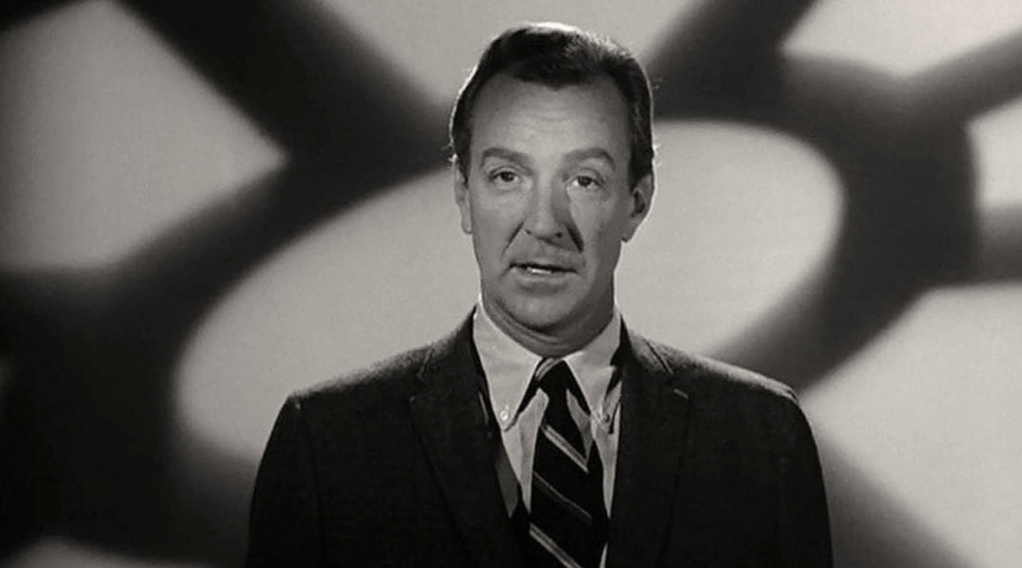
    John Newland introducing One Step Beyond

    By most of the way through season two, my beloved John Newland’s One Step Beyond (1959-1961) answers the question of just how many times can there be an episode where a psychic connection may reveal or prevent a murder. That answer is never enough, and episode 35, ‘Contact’, finds the gift of a pocket watch tormenting a mild-mannered, loving husband with misogynistic thoughts of murdering his wife. Only, it’s not his wife, nor are they his thoughts. Can he figure out who the watch originally belonged to in time to stop the crime happening? It’s a familiar theme and story for the show, but as always, Newland’s steady hand creatively, as director, and as presenter means this was a good episode. As for mixing things up, in the third season, a late run of episodes produced at MGM Studios in Borehamwood brings us the likes of Roger Delgado, André Morell, and Christopher Lee as guest stars (that’s after the Charles Bronson episode).

    Seeing Seeing Things
    A screen grab of a shitty Seeing Things ‘poster’ because there’s almost nothing proper out there

    I’ve also enjoyed the start of Seeing Things (1981-1987), a comedy-thriller series with a supernatural twist from Canada in which grumpy and pushy but not without charm news reporter Louis (played by co-creator Louis Del Grande) starts receiving visions of crimes, often at odds with what the police or courts say are the facts of a case. Being a bit of an asshole but also, importantly, a good journalist, Louis is compelled to uncover the truth and reveal the real guilty party. Louis has some crossover with Kolchak, in that neither spends much time questioning the why or wherefore of their supernatural experiences, instead doggedly chasing the truth even when it puts them in danger. It’s so far a fun, entertaining series with some good writing, believable characters and solid storytelling.

    Law & Order: Oh Boy That’s Bleak
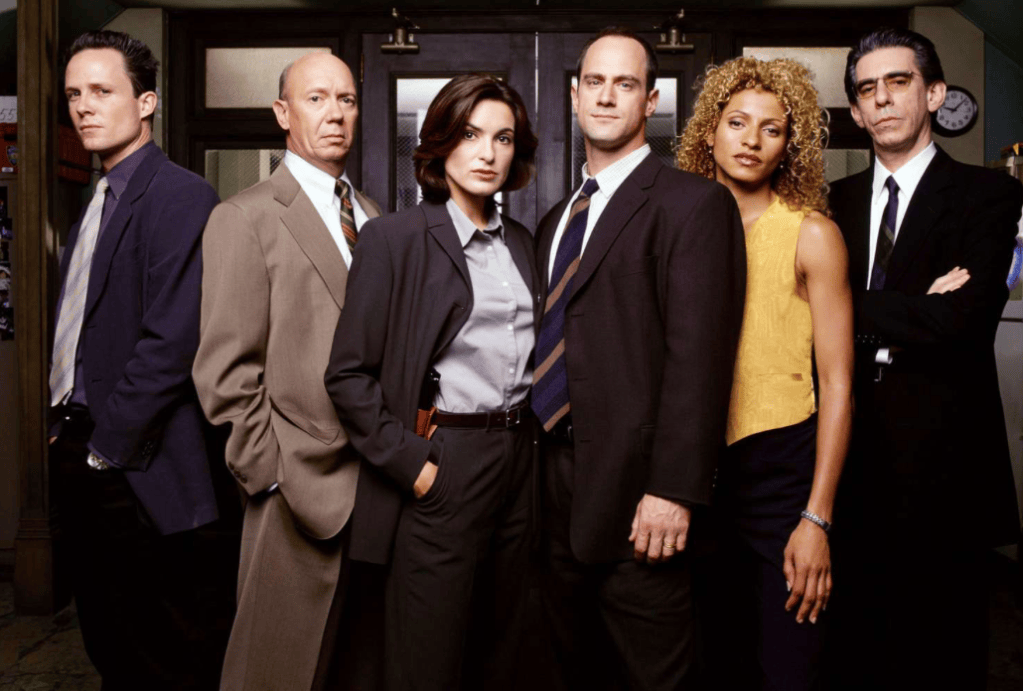
    The season one cast of Law & Order: Special Victims Unit looking chipper and upbeat

    I’ve been revisiting the first season of Law & Order: Special Victims Unit (1999-present, shortened to SVU) alongside the current season, because apparently, I want to be confronted with deeply unpleasant cases and a team of detectives most often found circling the drain of unrecoverable moral injury. Now, the original ripped-from-the-headlines Law & Order was never anyone’s idea of a good time, despite being compelling. Given SVU is still a current series, into its 27th season at the time of writing, and approaching 600 episodes, you would be forgiven for thinking perhaps it has settled into a comfortable rut. However, it started out miserable and confrontational and continues in that fashion today. The largest difference is that Mariska Hargitay and the various production teams have over the years ensured it is grounded in some of the theories and support that guide the real life work of police doing this job. Season one, meanwhile, was scrappier, and more blunt in its treatment of the cases and the detectives investigating the crimes. Both versions are compelling and often gripping, and also interesting simply because how many times do we get to compare a series, and a central character and performance, separated by more than a quarter of a century.

    Farscaping, Across the Universe
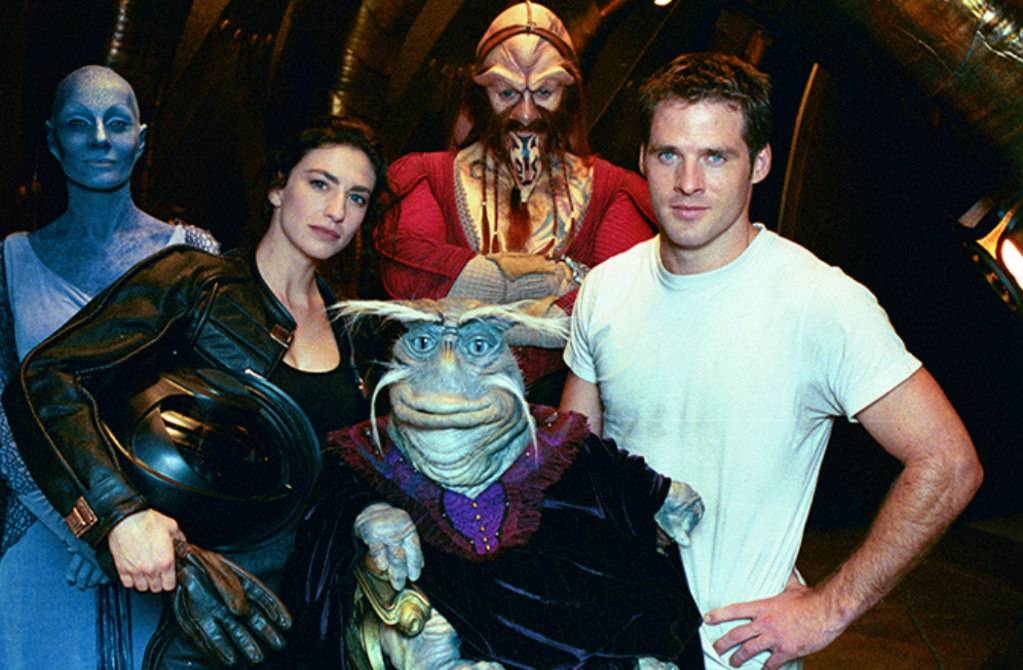
    The season one Farscape cast looking miserable…oh no wait, they’re chipper and upbeat.

    Magnitudes more actual fun has been a revisit to the first season of Farscape (1999-2004). Plots-wise, it’s the usual television science-fiction stuff, hopping from planet to planet via stories that had been broadly seen before on the likes of various iterations of Star Trek. Set-up and character-wise, however, it is very different. An American-Australian co-production, it follows a US astronaut who, after travelling through a wormhole, finds himself impossibly far away from home. He finds himself on a living ship, on the run from a fascist-vibes space army and vengeful captain, home to other escaped prisoners, forming an accidental and untrusting crew. Also involved with the production is Brian Henson and The Jim Henson Company, so unlike other shows that put a ridged nose and swipe of blue paint on an actor’s face and call them an ‘alien’, Farscape is full of imaginative muppet-adjacent creatures, not least Rygel, one of the central characters, who becomes as real as anyone else. As the show progresses, its sense of anarchy, both in humour and drama, takes it to some very dark places. In its early days however, it’s an agreeably weird, offbeat science-fiction series that tries something different.

    But Wait, Don’t You Watch ANYTHING Made This Century?

    Yes, I do, on occasion. We’ll quickly step over Widow’s Bay (2026-present), a series I was pleased to observe many people fall in love with. I, however, did not, finding it worked well as a comedy but very much did not as a horror. Still, I am glad to hear it will be coming back, so maybe next time, I will also become smitten. A horror series with hefty doses of black comedy that does work for me that I am nearly through with is Evil (2019-2024), which – similarly to Farscape – becomes more throughly unhinged with each new season. Series I have Quite Enjoyed include Best Medicine (2026-present, the US adaptation of Doc Martin) and CIA (2026-present, generic FBI spin-off from the Dick Wolf stable of ‘what if we used different letters for the title but broadly made the same show over and over again’). And after a third season that often circled being A Bit Shit, the fourth go round for Reacher (2022-present) has rediscovered everything that made the series good, and keeps giving Alan Ritchson lots of things to hit and get hit by.

    Like a good sitcom, or a lovingly made soap opera, one of television – and life’s – joys is a good procedural/detective show done well. There’s a reason these types of series get commissioned again and again. They may not be the most creative or satisfying meal you ever have, but they are reliably satiating.
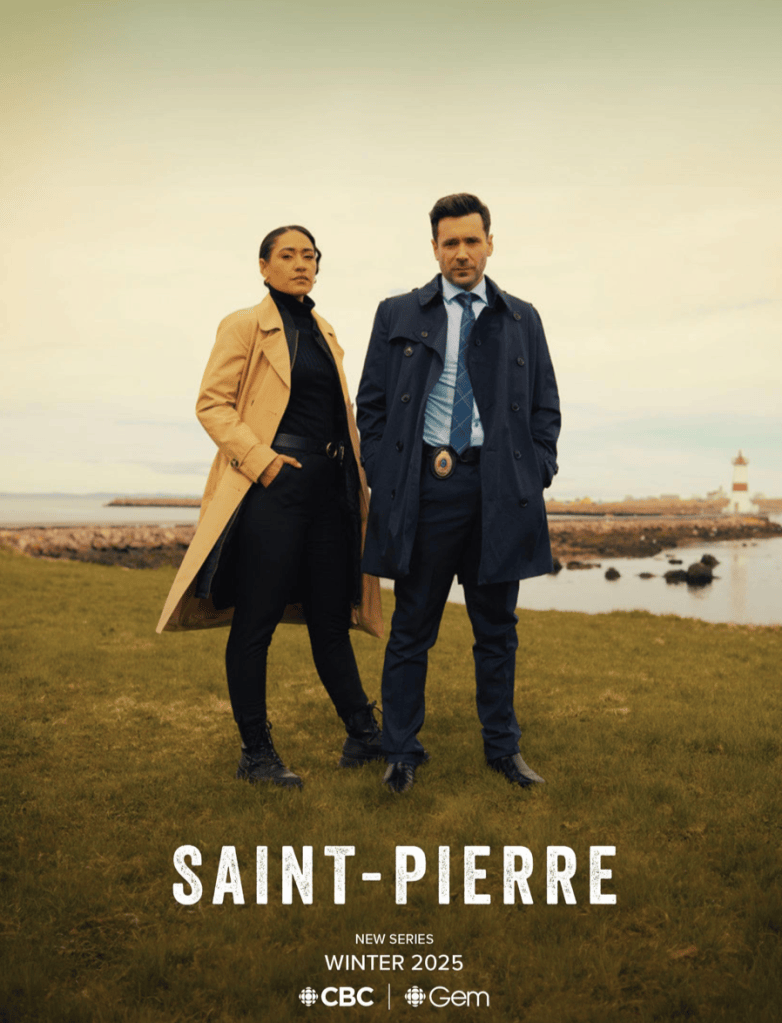
    Promo image for Saint-Pierre

    One such series is Saint-Pierre (2025-present), a Canadian detective drama about a big-city police officer, Fitz, (Allan Hawco, a kind of modern Paul Gross, a one-person Canadian creative cottage industry) banished for indiscretion to the titular French collectivity of Saint-Pierre and Miquelon. There’s no quiet licking of wounds however, as with new partner Arch he is soon dealing with a number of crimes, ranging from murder to James Purefoy’s mind-boggling Irish ‘accent’ as series one villain Sean Gallagher. It’s a beautiful part of the world, so the series dresses itself, and ticks along as an unambitious but entertaining diversion.
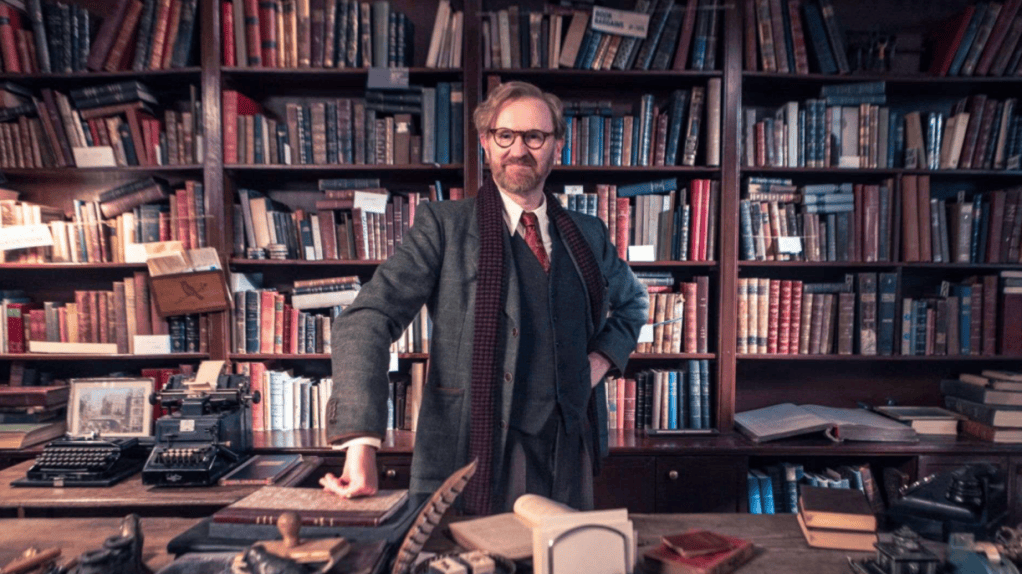
    Mark Gatiss as Mr Book in his book store surrounded by books, because Bookish, get it?

    Recent weeks witnessed the return of Mark Gatiss and Matthew Sweet’s Bookish (2025-present). I wasn’t the biggest fan of its first season. An old friend once described their frustration with something that ‘went around the houses to cross the street’ and that was my feeling on its opening season, which had its charms but also lingered too long in its missteps. While its second season still gives way too often to some of the worst instincts of Gatiss, et al (but fortunately never as much as his instalments of A Ghost Story for Christmas) this run of episodes has tighter writing, a solid, settled and appealing central group of characters, and enough intrigue in each case and its continuing plot lines to qualify as a big step forward. While it might appear ‘cosy crime’ at first, it also has a flinty, brave edge to characters and stories that is well done. And it’s got Polly Walker in a lead role, which is always a good thing. I’m glad it came back stronger, and that there will be a Christmas special and third season to follow.

    There’s other shows that I haven’t even mentioned in the rotation, from The Andy Griffith Show and The Dick Van Dyke Show to Upstairs, Downstairs, to Take the High Road being added episode by episode to YouTube (!!), but we can save them for another time.
  • Carl Kolchak: An Appreciation

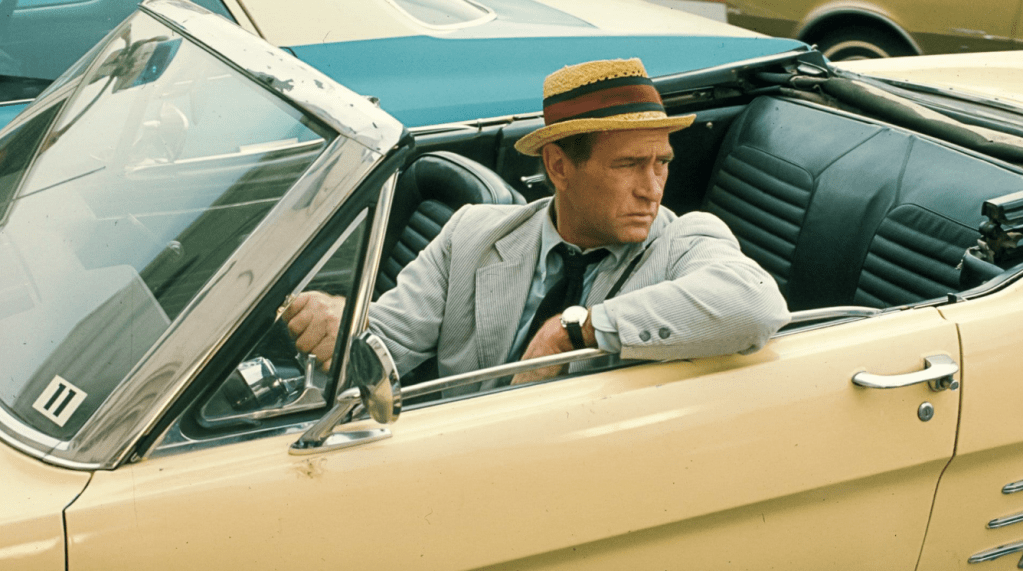
    Darren McGavin as Carl Kolchak

    It’s my esteemed and correct opinion that Carl Kolchak is one of popular culture’s greatest characters. As brought to life by Darren McGavin in a shabby seersucker suit and straw hat, he’s a lovably shambolic, rough-edged crusader for the truth. The reporter started out life as the main focus of Jeff Rice’s novel The Kolchak Papers. It tells of a foul-mouthed drunk who had a remarkable story to tell about a vampire loose in Las Vegas, who used Rice to get his story out. As he was working unsuccessfully to get the book published Rice was also inking deals with those who could put his story on the screen. This was the early 70s and television movies were a huge deal, bringing in massive audiences. So when ABC optioned the book you can imagine Rice’s excitement at the prospect of bringing Kolchak to homes all across America. Ultimately it would be the hugely talented Richard Matheson who would write the script, slightly softening Carl’s gruff edges but keeping the humour and commentary that pops off the pages of Rice’s book (I don’t think Stephen King was a fan, however).

    Dan Curtis was onboard as producer and it might be hard to get just how big now, but Curtis’ previous project Dark Shadows which had finished in 1971 was huge. It turned the reluctant Jonathan Frid into an unlikely middle-aged sex symbol and had a generation of monsters kids running home from school to follow plots of vampires, werewolves and all sorts of supernatural chicanery taking place.

    Title card for The Night Stalker (1972)

    John Llewellyn Moxey was brought in to direct and in early January 1972 Carl made his screen debut. It was a smash hit and brought in the biggest ever audience for a TV movie at the time.  There’s a reason it was a hit: it’s near perfect, a mix of serious scares and humour centred around McGavin’s effortlessly charming performance, ably supported by Simon Oakland as his suffering editor Tony Vincenzo. At first here Kolchak is a beat reporter, using his police scanner to show up as quickly as possible at crime scenes and generally making himself a nuisance to the powers that be.

    When young women start turning up murdered, Kolchak thinks he’s got a killer on the rampage, but soon he finds out this killer might not even be human. Carl’s the type of guy who goes where the leads take him and so when the pieces start to fit that it’s a vampire that is killing these women, Carl thinks something must be done. Those powers that be aren’t buying it and they set about making Kolchak’s life even harder work. But that’s not going to stop him getting to the truth and doing what it takes to stop the bloodsucker from getting away with it. The thing about Carl is that he believes the people have a right to know and he’ll protect that right no matter the cost to himself. It’s not that he’s particularly noble, it’s more a compulsion that truths hidden should be revealed. If you haven’t ever enjoyed this classic go and find it now.

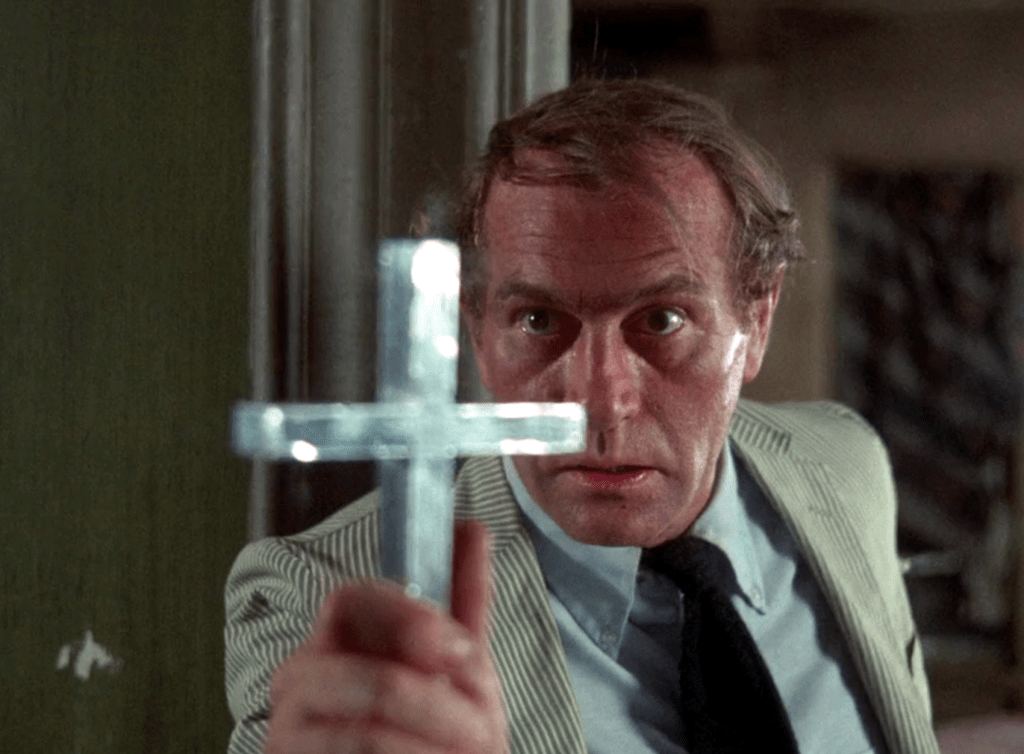
    Carl holding a cross up to repel something nasty

    When The Night Stalker was a huge hit, inevitably talk of a sequel followed. That talk turned to action in double time and in 1973 The Night Strangler followed this time directed by Curtis. In this one Kolchak has relocated (not through choice) to Seattle and comes into contact once again with a despondent Vincenzo. At the same time another killer is murdering people by strangling them (but of course) and using their blood to stay alive, something they have been doing for over a 100 years. Kolchak discovers the truth but again narrowly avoids getting killed for his troubles and is railroaded out of town for good.

    The same year Rice finally got his novel published as a tie-in to the first film. A reverse of the first film’s process next year found Rice adapting Matheson’s Strangler script for a tie-in book that would be published in 1974, the same year the series started. Before that Kolchak had nearly made it into a third film, in a script by Matheson and William F. Nolan called The Night Killers which would have had Carl in conflict with android replicas. McGavin was tiring of the formula and didn’t want to do it. Curtis wasn’t apparently impressed either and things cooled for a while, during which Curtis and Nolan went off to do spooky TV movie The Norliss Tapes, which could easily have been a Kolchak case. 

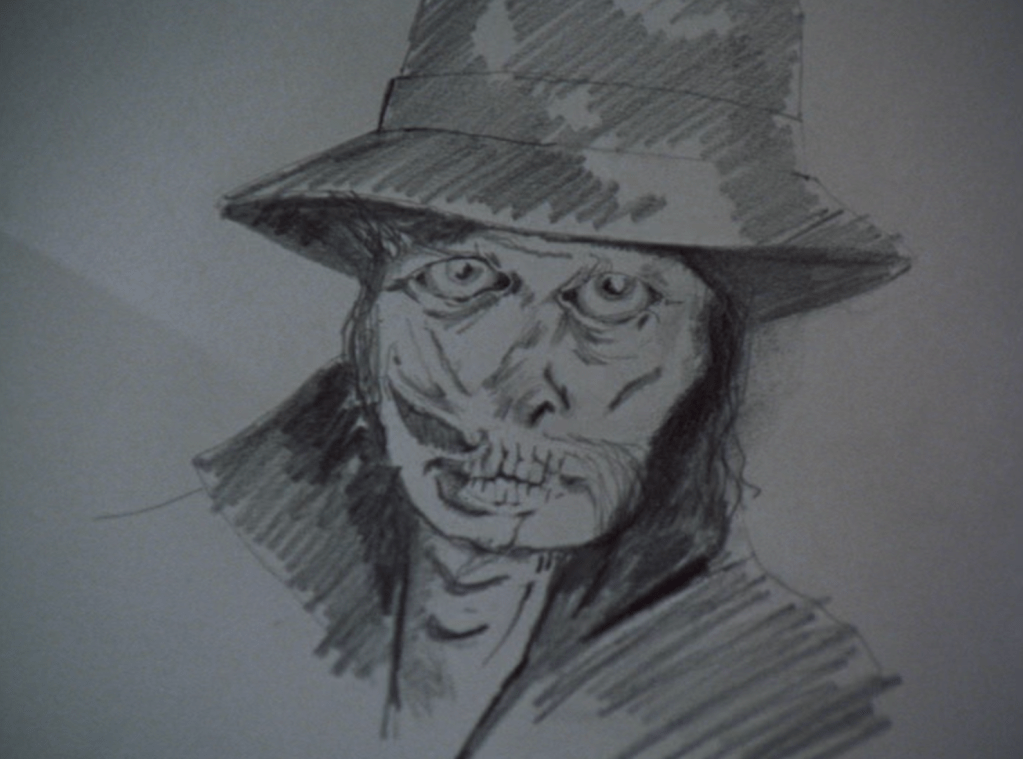
    A police sketch of the undead killer in The Night Strangler (1973)

    Eventually after negotiation, McGavin was tempted back for a weekly series which he could produce, although Curtis was finished with it and opted out. In September 1974, after multiple protracted negotiations and fallouts, and in a season ABC desperately needed success in, Kolchak: The Night Stalker hit small screens as a weekly show. The first episode was ‘The Ripper’, and it finds Carl now set up in Chicago, still working for Vincenzo. It’s almost a remake of sorts of the two films with its story of a madman killing people off who turns out to be THE Ripper, a maniac of unusual longevity.

    Like many an episode of Kolchak it has its good and bad elements. Plotting in the episodes is frequently perfunctory, low budget monster-of-the-week stuff that holds few surprises. But the series still had it’s star in McGavin and he’s reliably excellent no matter if he’s being chased around a cruise ship by a ‘werewolf’ who resembles more a guy who fell face first into some hair-restorer as opposed to a beastly lycanthrope, or sowing a zombie’s mouth shut and hoping it’s not going to wake up while he’s doing it. There’s many reasons to love McGavin but there’s a great little moment in ‘The Ripper’ where you just know he’s doing it the way you would too. Trapped in the Ripper’s room all Kolchak has to do is stay quiet and he’ll make it out unseen. But when the Ripper gets too close Kolchak lets out a yelp and makes a run for it, blowing his cover. By grounding Carl in recognisable flaws and humour, he became more real to us. Not an impervious hero but instead a dude who’s scared shitless but can’t turn away from the truth or doing what needs to be done.  

    Carl with microphone and puzzled expression

    When you go back to the series now one of its strengths is just how infrequently it chose to stick with the usual screen horror villains. Sure, there’s the Ripper and a werewolf and another zombie. There’s even another vampire but it links in with The Night Stalker in an interesting way and is one of the best episodes. But others included witches, prehistoric monsters, a haunted knight’s armour, robots, aliens and demonic spirits. This level of creativity always fought against the network drive to make every week’s entertainment broadly the same as the week before and is representative of what eventually brought the series down before it’s first season had finished, with a few scripts un-produced. Ratings were never massive and as the series went on McGavin got restless and the network could see it was not the hit they hoped for, with the various attempts at meddling causing friction between star and studio. In 1975 the episode order was cut by two and Kolchak limped to a sad end. But it was not the end really.  

    Reruns of the series would find more receptive viewers in the late 70s and this would continue through the 1980s until the series found a new home on the cable Sci-Fi Channel at roughly the same time a new series called The X-Files on Fox was moving from cult hit to mainstream sensation. Chris Carter has spoken before of his memories of Kolchak in part inspiring Fox Mulder and Dana Scully’s adventures and this helped continue to build an interest for newer viewers as to who this Carl Kolchak was. Home video releases of the first film and series started to surface too, along with the reruns allowing people to get to know McGavin’s intrepid reporter again. Mark Dawidziak, a critic for an American newspaper, wrote a guide book on Kolchak that arrived in 1991 called Night Stalking: A 20th Anniversary Kolchak Companion. This led in turn to a new deal between Rice and the same book’s publisher for new Kolchak novels. To kick it off Dawidziak was tasked with writing the third book (to follow on from the films and series) and Grave Secrets duly arrived in 1994. The deal for more faltered when the publisher was unable to actually get anything else in print and nothing more would arrive for some years. But thanks to Dark Shadows actor Kathryn Leigh-Scott’s publishing company Pomegranate Press an updated and now illustrated 25th anniversary edition of Dawidziak’s definitive book would arrive in 1997. (Updated: It has recently been republished and greatly expanded for a new 2026 release through Commonwealth Book Company)

    Cover for Jeff Rice’s The Night Stalker novel

    After this, the new century found Carl in surprisingly good health. Universal released a (sadly totally extras-free) box set of the entire series. The two TV movies came out on a dual film release.  A book with Matheson’s three scripts (including The Night Killers) was released with introductions by Dawidziak. Moonstone Books began publishing comics based on the character in 2003 and these became almost an industry in their own right, covering Kolchak through comics (with adaptations of the first film and unfilled scripts), novels and short story compilations. More comic adventures have followed.

    In 2005, a short-lived revival series aired starring Stuart Townsend as Carl in an updated version taking in modern TV’s story-arc concerns. Low ratings and inevitable but unfair comparisons to The X-Files did for Night Stalker after only 6 episodes were aired, but it’s a remarkably good and interesting series in its own right. Frank Spotnitz was show runner and took influences from the original but filtered it through a style more influenced by Michael Mann that left us with an unfinished show that is significantly more interesting than its reputation suggests. It’s not all been good news. Back in 2012 Disney announced a film adaptation was in the early stages with Johnny Depp as Kolchak and Edgar Wright directing.  This (with or without Depp and Wright) turned out to be just an idea and so far Kolchak has yet to return to the screen. Perhaps this is for the best, given the debacle of Depp’s Dark Shadows film and…you know…everything else.

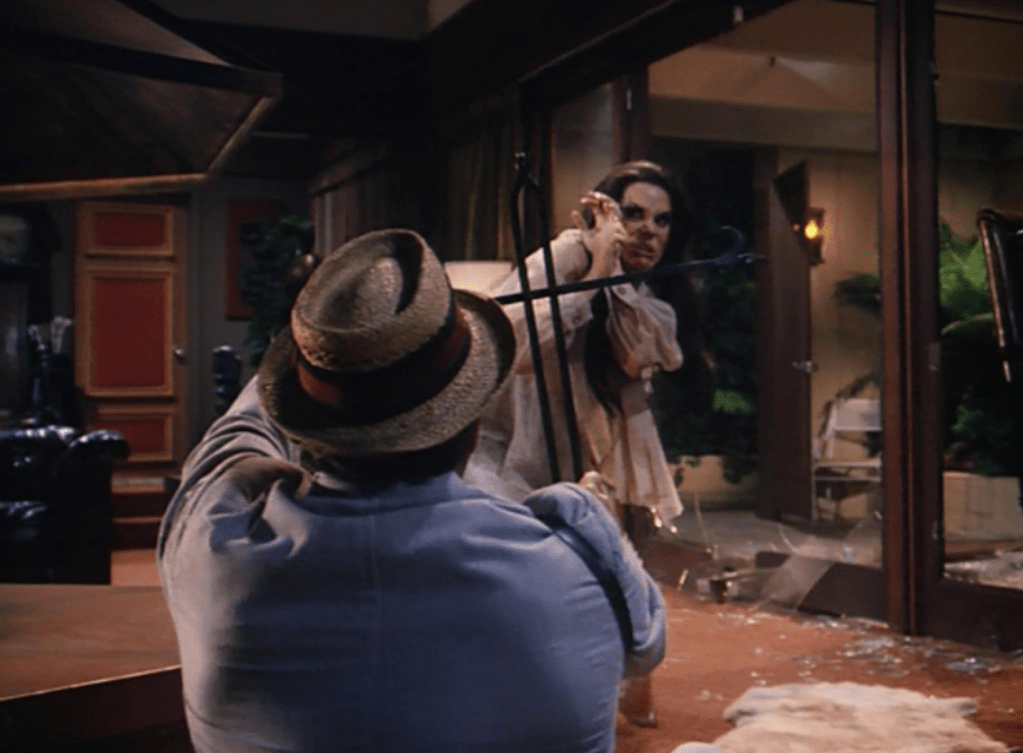
    Carl with a makeshift cross and an angry looking vampire

    But if his history has taught us anything it’s that Carl is a tenacious sonofabitch and it’s likely we’ll have him back on the screen someway, somehow. For now though, if you haven’t yet had the pleasure, go find The Night Stalker and get introduced.

    (Recent years also found the original films and series getting American Blu-ray releases, another resurrection for Carl)

    Further suggested reading:

    The Night Stalker and The Night Strangler by Jeff Rice (published variously as separate books and a one-volume compilation)

    The Kolchak Companion: 50 Years of Night Stalking by Mark Dawidziak (Commonwealth Book Company, Inc., 2026)

    The Kolchak Papers: Grave Secrets by Mark Dawidziak (Cinemaker Press, 1994)

    The Moonstone Books various comics, graphic novels, short story compilations and full-length novels.  

    Progeny of the Adder by Les Whitten (Doubleday, 1965).  This is a book at some points rumoured to have ‘inspired’ Rice as it tells the story of a modern vampire terrorising a city (in this case Washington DC) and the desperate attempts to stop the killings. Similarities are superficial at most, but still, a good book is a good book, so read it anyway.