Tag: Night Gallery

  • Stuff I Have Been Enjoying: The Armchair Edition

    I don’t actually have an armchair, but never mind about that. In between being distracted by work, life, and so on, I usually keep a rolling programme of television going, but not of the live broadcast category. In fact, many of the creators, crew and stars of the programmes are very much dead. What, I hear you cry, has been on rotation? Let me keep you in suspense no longer.

    A Dan Curtis Production
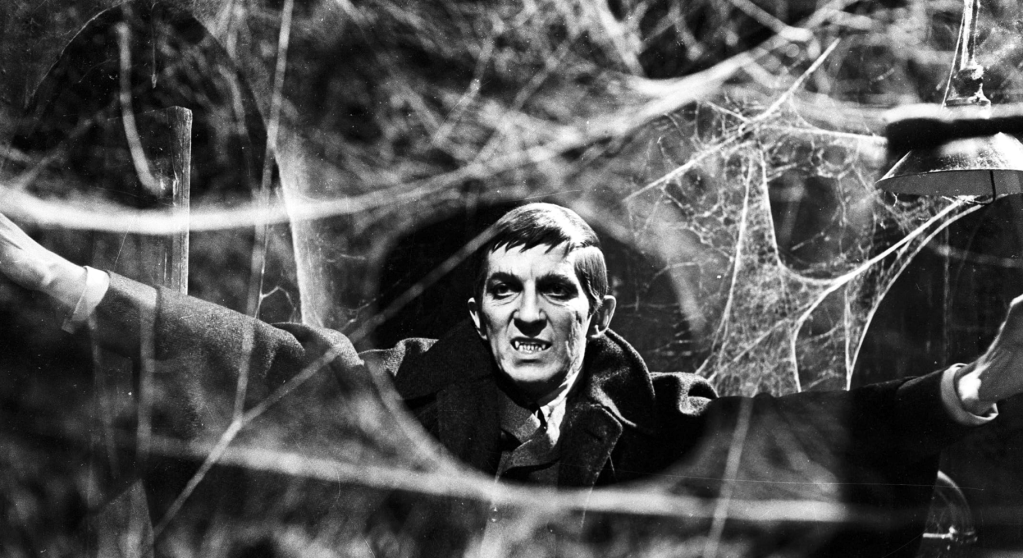
    Barnabas Collins and cobwebs in a Dark Shadows promo shot

    Pretty much always in play is Dark Shadows (1966-1971), the daytime Gothic drama that turned sixty this year. At the moment, I’m into the aftermath of Barnabas’ kidnap of Maggie Evans, with recent episode 265 finding Joe and Sam visiting her at the sanitarium. We’re introduced to Dr Julia Hoffman (“Doc-tor Hoff-man, Doc-tor Hoff-man”), played by the incredible, Oscar-nominated, Grayson Hall and her fearsome range of expressions. So begins a new chapter for the show, and one of maybe-possibly-definitely the strangest, most beguiling, wildest performances in television history. The episode itself is great, the series – still a daytime show, so still often people talking – on newly firm Gothic footing. A thousand-plus episodes is a huge commitment but if you haven’t yet enjoyed Dark Shadows, I do recommend it unreservedly.

    Tangentially Curtis
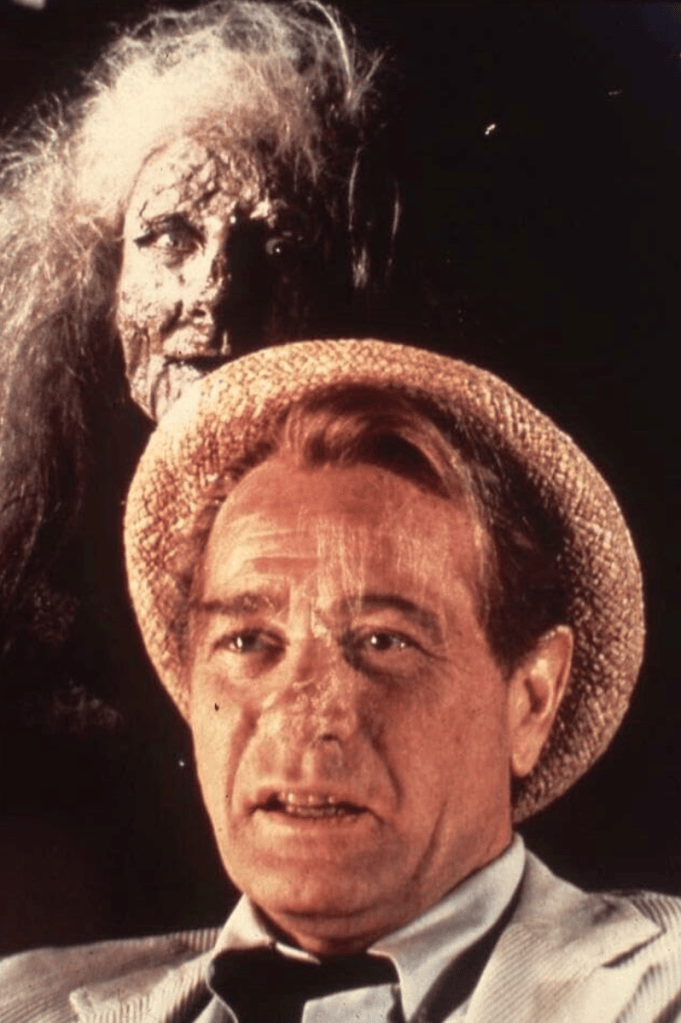
    Kolchak and grizzly chum

    I’ve written elsewhere about how Darren McGavin as Carl Kolchak is one of the great marriages of actor and character. Compared to his first two outings in the Curtis-produced television movies, the series that followed (Kolchak: The Night Stalker, 1974-1975) is a mess. Low budgets, late rewrites, McGavin’s fatigue and dissatisfaction, and a punishing schedule did it no favours. And yet, as we know from its influence on Chris Carter and it’s continuing popularity through books, graphic novels, recent-ish Blu-ray releases, and rumours of reboots, something worked about it, and it was not only McGavin. For me, the monster-of-the-week format doesn’t rely on the same old ‘classic’ threats, with imaginative creatures, the writing is – perhaps against the odds – reliably solid, and the feel of the show is consistent. ‘Demon in Lace’ (episode 16 of 20) finds a succubus possessing recently deceased women and feeding on college students. It’s fun, as is the series, and though by no means the best horror television you’ll see, a reliably good time.

    A Circular Hell
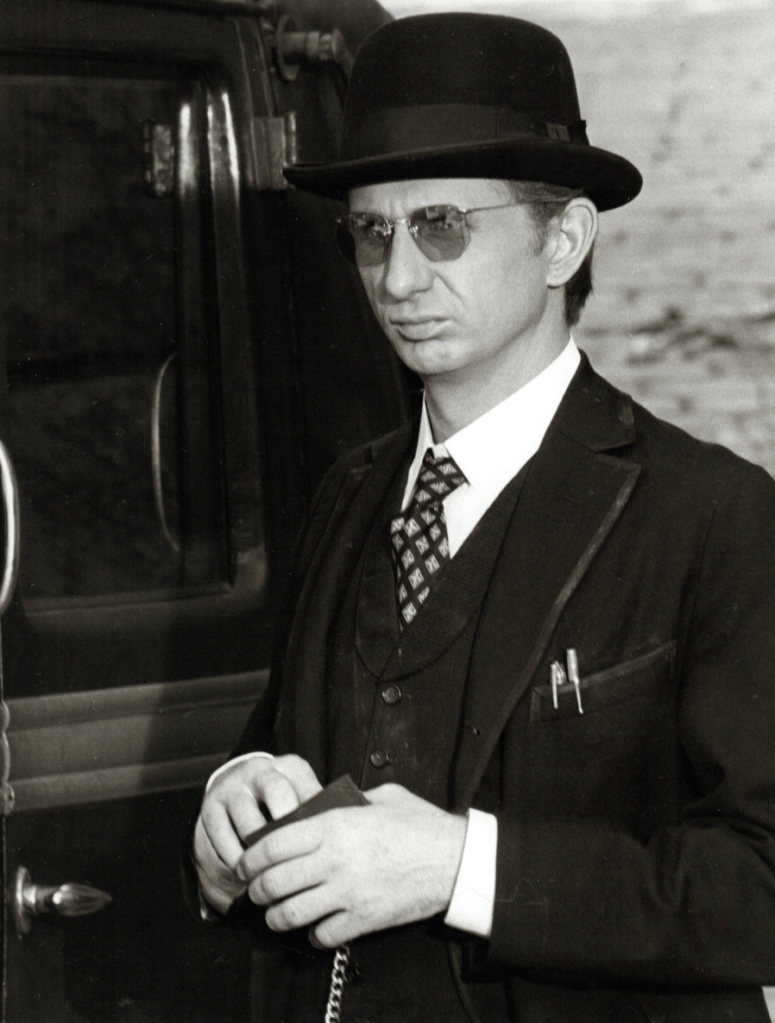
    Rene Auberjonois as Sharsted

    When speaking of erratically successful horror television plagued by production problems, Night Gallery (1970-1973) is never far away. But when this series is successful, it soars. This brings us to the Rod Serling-written and John Badham-directed adaptation of Basil Copper’s short story ‘Camera Obscura’, from season two. It tells of a moneylender, Sharsted, played superbly well by Rene Auberjonois, lured to the home of a ‘client’, Mr Gingold, played with a strange menace by Ross Martin. Gingold is furious that Sharsted’s unrelenting business has driven a friend of his to an early grave. He also has a camera he’d like to show Sharsted, a very special camera, that can see the past, and can see into other hidden places. Auberjonois’ repeated, sneering use of “Mr Gingold!” reminds of the pilot film and Roddy McDowall’s “Portifoy!” and its low budget works as an advantage, the chilly, half-empty final sequence a remarkable, unsettling exploration of a very personal hell.

    One More Step Into The Beyond, Dear Friends
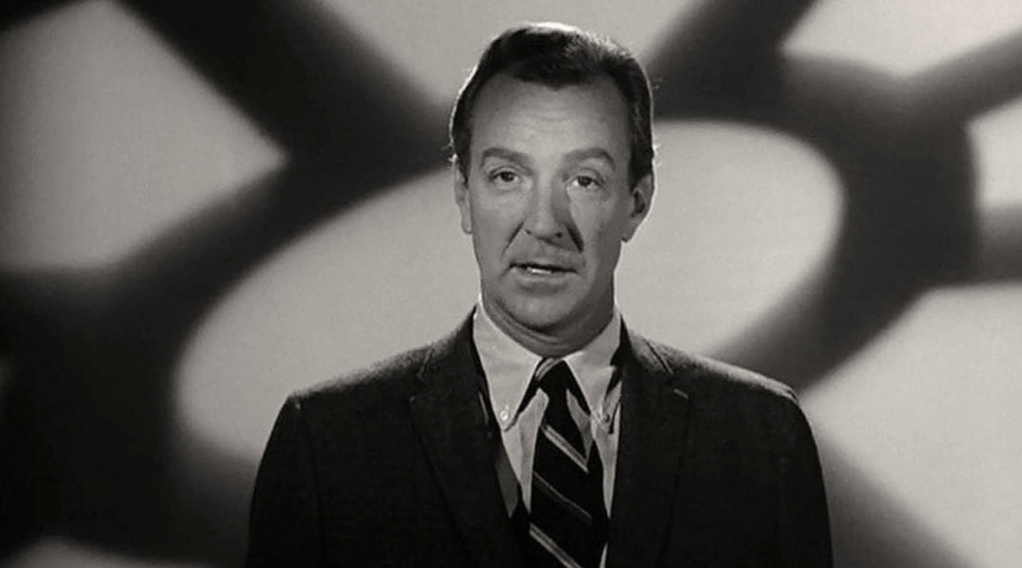
    John Newland introducing One Step Beyond

    By most of the way through season two, my beloved John Newland’s One Step Beyond (1959-1961) answers the question of just how many times can there be an episode where a psychic connection may reveal or prevent a murder. That answer is never enough, and episode 35, ‘Contact’, finds the gift of a pocket watch tormenting a mild-mannered, loving husband with misogynistic thoughts of murdering his wife. Only, it’s not his wife, nor are they his thoughts. Can he figure out who the watch originally belonged to in time to stop the crime happening? It’s a familiar theme and story for the show, but as always, Newland’s steady hand creatively, as director, and as presenter means this was a good episode. As for mixing things up, in the third season, a late run of episodes produced at MGM Studios in Borehamwood brings us the likes of Roger Delgado, André Morell, and Christopher Lee as guest stars (that’s after the Charles Bronson episode).

    Seeing Seeing Things
    A screen grab of a shitty Seeing Things ‘poster’ because there’s almost nothing proper out there

    I’ve also enjoyed the start of Seeing Things (1981-1987), a comedy-thriller series with a supernatural twist from Canada in which grumpy and pushy but not without charm news reporter Louis (played by co-creator Louis Del Grande) starts receiving visions of crimes, often at odds with what the police or courts say are the facts of a case. Being a bit of an asshole but also, importantly, a good journalist, Louis is compelled to uncover the truth and reveal the real guilty party. Louis has some crossover with Kolchak, in that neither spends much time questioning the why or wherefore of their supernatural experiences, instead doggedly chasing the truth even when it puts them in danger. It’s so far a fun, entertaining series with some good writing, believable characters and solid storytelling.

    Law & Order: Oh Boy That’s Bleak
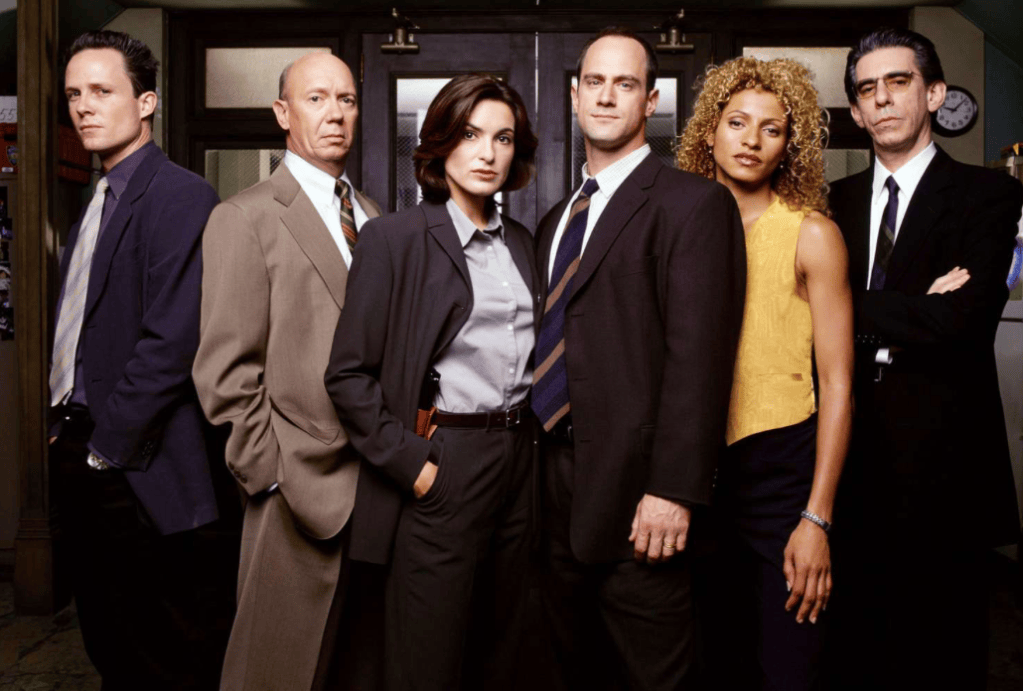
    The season one cast of Law & Order: Special Victims Unit looking chipper and upbeat

    I’ve been revisiting the first season of Law & Order: Special Victims Unit (1999-present, shortened to SVU) alongside the current season, because apparently, I want to be confronted with deeply unpleasant cases and a team of detectives most often found circling the drain of unrecoverable moral injury. Now, the original ripped-from-the-headlines Law & Order was never anyone’s idea of a good time, despite being compelling. Given SVU is still a current series, into its 27th season at the time of writing, and approaching 600 episodes, you would be forgiven for thinking perhaps it has settled into a comfortable rut. However, it started out miserable and confrontational and continues in that fashion today. The largest difference is that Mariska Hargitay and the various production teams have over the years ensured it is grounded in some of the theories and support that guide the real life work of police doing this job. Season one, meanwhile, was scrappier, and more blunt in its treatment of the cases and the detectives investigating the crimes. Both versions are compelling and often gripping, and also interesting simply because how many times do we get to compare a series, and a central character and performance, separated by more than a quarter of a century.

    Farscaping, Across the Universe
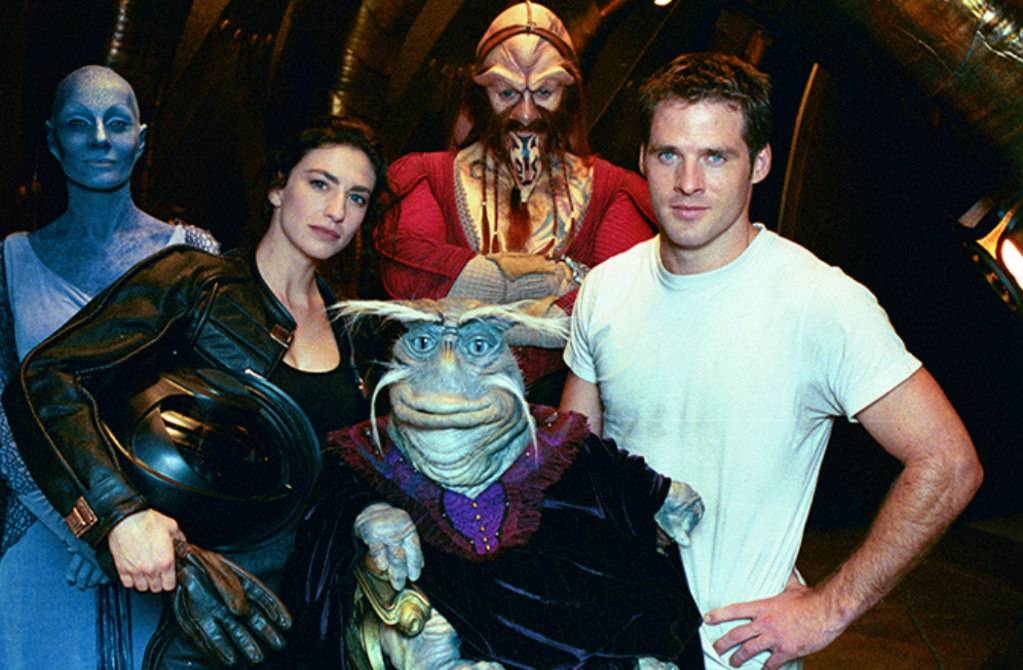
    The season one Farscape cast looking miserable…oh no wait, they’re chipper and upbeat.

    Magnitudes more actual fun has been a revisit to the first season of Farscape (1999-2004). Plots-wise, it’s the usual television science-fiction stuff, hopping from planet to planet via stories that had been broadly seen before on the likes of various iterations of Star Trek. Set-up and character-wise, however, it is very different. An American-Australian co-production, it follows a US astronaut who, after travelling through a wormhole, finds himself impossibly far away from home. He finds himself on a living ship, on the run from a fascist-vibes space army and vengeful captain, home to other escaped prisoners, forming an accidental and untrusting crew. Also involved with the production is Brian Henson and The Jim Henson Company, so unlike other shows that put a ridged nose and swipe of blue paint on an actor’s face and call them an ‘alien’, Farscape is full of imaginative muppet-adjacent creatures, not least Rygel, one of the central characters, who becomes as real as anyone else. As the show progresses, its sense of anarchy, both in humour and drama, takes it to some very dark places. In its early days however, it’s an agreeably weird, offbeat science-fiction series that tries something different.

    But Wait, Don’t You Watch ANYTHING Made This Century?

    Yes, I do, on occasion. We’ll quickly step over Widow’s Bay (2026-present), a series I was pleased to observe many people fall in love with. I, however, did not, finding it worked well as a comedy but very much did not as a horror. Still, I am glad to hear it will be coming back, so maybe next time, I will also become smitten. A horror series with hefty doses of black comedy that does work for me that I am nearly through with is Evil (2019-2024), which – similarly to Farscape – becomes more throughly unhinged with each new season. Series I have Quite Enjoyed include Best Medicine (2026-present, the US adaptation of Doc Martin) and CIA (2026-present, generic FBI spin-off from the Dick Wolf stable of ‘what if we used different letters for the title but broadly made the same show over and over again’). And after a third season that often circled being A Bit Shit, the fourth go round for Reacher (2022-present) has rediscovered everything that made the series good, and keeps giving Alan Ritchson lots of things to hit and get hit by.

    Like a good sitcom, or a lovingly made soap opera, one of television – and life’s – joys is a good procedural/detective show done well. There’s a reason these types of series get commissioned again and again. They may not be the most creative or satisfying meal you ever have, but they are reliably satiating.
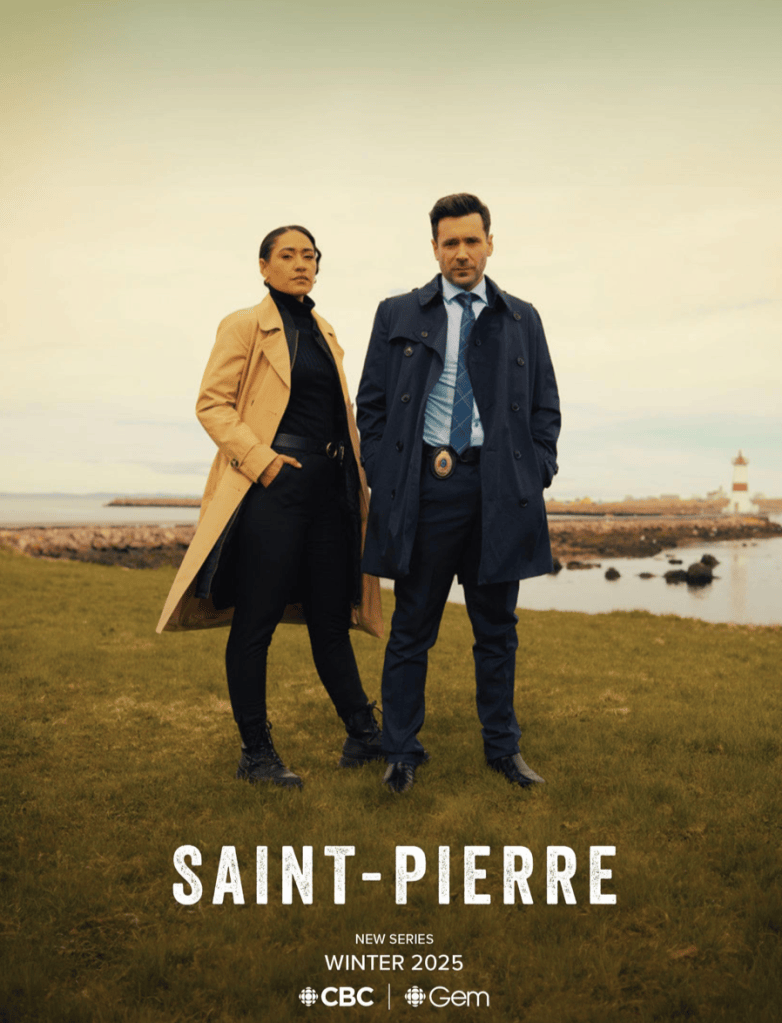
    Promo image for Saint-Pierre

    One such series is Saint-Pierre (2025-present), a Canadian detective drama about a big-city police officer, Fitz, (Allan Hawco, a kind of modern Paul Gross, a one-person Canadian creative cottage industry) banished for indiscretion to the titular French collectivity of Saint-Pierre and Miquelon. There’s no quiet licking of wounds however, as with new partner Arch he is soon dealing with a number of crimes, ranging from murder to James Purefoy’s mind-boggling Irish ‘accent’ as series one villain Sean Gallagher. It’s a beautiful part of the world, so the series dresses itself, and ticks along as an unambitious but entertaining diversion.
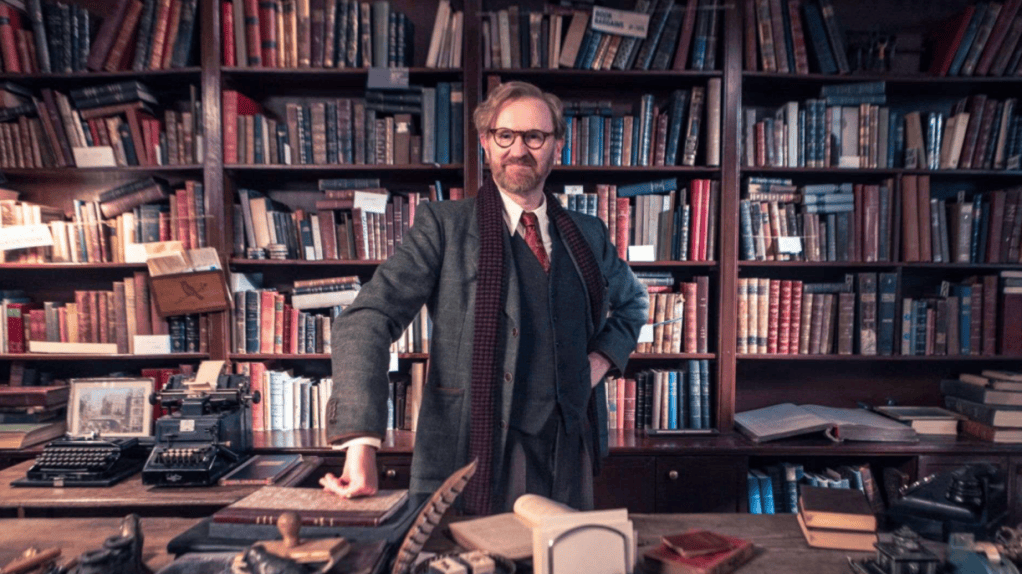
    Mark Gatiss as Mr Book in his book store surrounded by books, because Bookish, get it?

    Recent weeks witnessed the return of Mark Gatiss and Matthew Sweet’s Bookish (2025-present). I wasn’t the biggest fan of its first season. An old friend once described their frustration with something that ‘went around the houses to cross the street’ and that was my feeling on its opening season, which had its charms but also lingered too long in its missteps. While its second season still gives way too often to some of the worst instincts of Gatiss, et al (but fortunately never as much as his instalments of A Ghost Story for Christmas) this run of episodes has tighter writing, a solid, settled and appealing central group of characters, and enough intrigue in each case and its continuing plot lines to qualify as a big step forward. While it might appear ‘cosy crime’ at first, it also has a flinty, brave edge to characters and stories that is well done. And it’s got Polly Walker in a lead role, which is always a good thing. I’m glad it came back stronger, and that there will be a Christmas special and third season to follow.

    There’s other shows that I haven’t even mentioned in the rotation, from The Andy Griffith Show and The Dick Van Dyke Show to Upstairs, Downstairs, to Take the High Road being added episode by episode to YouTube (!!), but we can save them for another time.
  • Rod Serling doesn’t want you to be a piece of shit, and neither do I

    Contemplating the panic of the inevitable in ‘The Cemetery’ and the choices we make

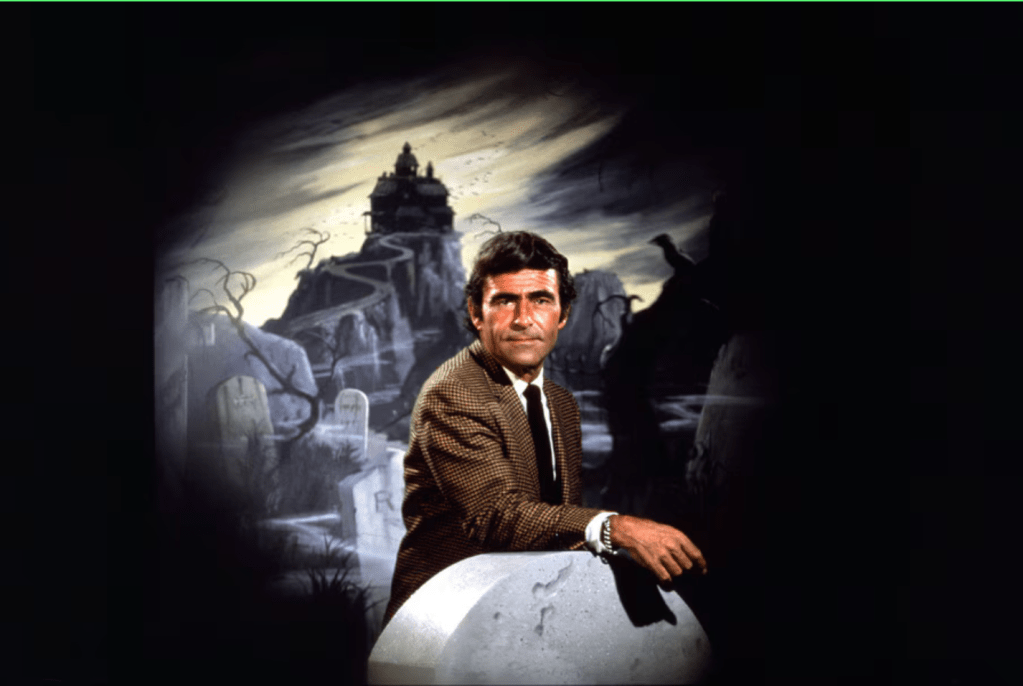
    Rod Serling posing in a graveyard setting for a promotional photo

    For several reasons, I’ve been thinking more in recent years about who I understand myself to be and what legacy I want to leave in my wake. Legacy might sound overly grand, but that’s really what it is to be thought of and remembered and talked about, whether it’s by millions or by whatever nucleus of immediate people you hold to be family. A worldwide pandemic will get you to thinking about the impact we all leave on each other, and that’s not even the sum total of an at times challenging, rewarding and enlightening few years that have followed to process. Largely for me it’s about the impact of leaving the people and places you find along the way better than you found them, or at least not worse for your presence. But life makes that hard. Communicating with each other with kindness and empathy and consistency is a journey that doesn’t end. Trying to be good to the planet that hosts us while just a handful of companies continue to be the biggest polluters in the world provokes wild cognitive dissonance. Capitalism swirling the drain and dragging us with it, bloody-knuckled and exhausted, into the slop. Social media a distracting feedback loop where we play out status games and performative emoting while the literal and figurative world around us burns. The worst people clinging ruthlessly to positions of power and scapegoating the most vulnerable as cause of the world’s ills. It is easy to lose focus. 

    What has this got to do with Roddy McDowall and the Night Gallery pilot film (NBC, 1969) you may ask? Well, firstly Rod Serling and his writing has been one of the primary influences in my life on my own personal philosophy about how I treat people and how my own personal code developed, and I come back to his work regularly for course correction as much as entertainment. And in ‘The Cemetery’ and McDowall’s phenomenal performance we have humanity in crisis in microcosm, in all its sadness and rage and selfishness and dread and pathetic hope. Just as much as any episode of The Twilight Zone (CBS, 1959-1964), this play provokes in me considerations of consequence and personal choice. A warning in a world gone wrong, embodied here by McDowall’s performance and Serling’s writing. 

    Ten years after the launch of The Twilight Zone, Rod Serling was ready to revisit anthology television. In the intervening years since his beloved fantasy show had ended, Serling had kept busy with a variety of different projects, even though he was no longer the celebrated angry young man of the golden age of television. These projects ranged from a modern television movie adaptation of Charles Dickens’ A Christmas Carol (1843) reformed as a nightmare of nuclear Armageddon and a plea for cooperation between nations before mutually assured destruction, to The Loner (CBS, 1965-1966), a contemplative Western set in a this-time only figuratively haunted post-civil war America, and co-writing The Planet of the Apes (USA, Franklin J. Schaffner, 1968) amongst other films. For his new television project, this time however, Serling would move beyond fantasy and science fiction and go deep into the dark waters of horror.

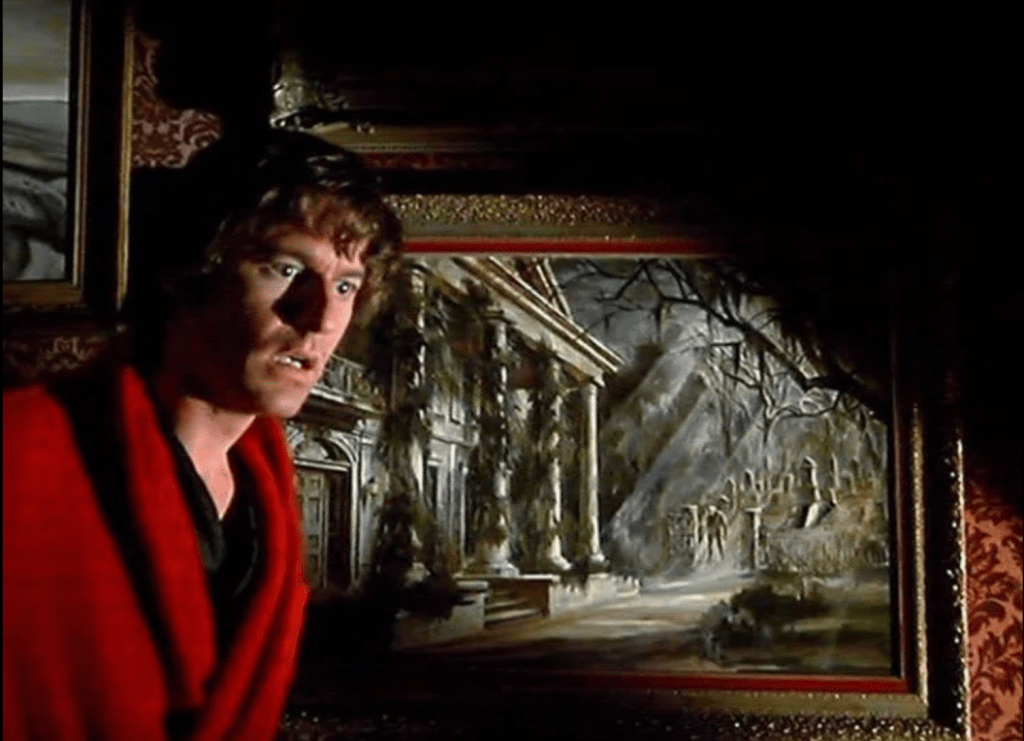
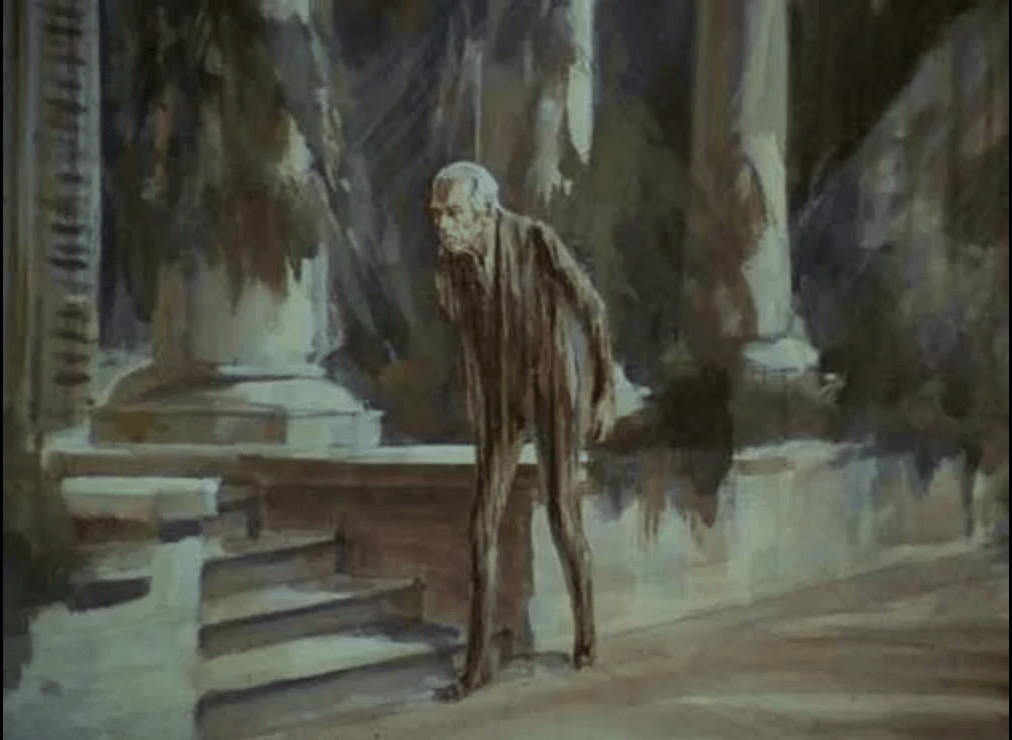
    The painting of the cemetery used in the segment

    Night Gallery premiered as a television movie on November 8th, 1969. It took the form of three separate stories, linked by Serling’s narration. He presented these tales from the titular dimly lit gallery, offering us a trio of stories that all suggest not an indifferent universe, but instead one where the immoral might be able to run from their wickedness, but not, eventually, from consequences. And it’s the first of these plays we are considering today, ‘The Cemetery’, as well as the delicate and bruising performance at its centre from Roddy McDowall. Directed by Boris Sagal, it is thirty minutes of television that distills everything that makes Serling such a great writer: emotionally literate, atmospheric, wittily loquacious and unyieldingly moral. Interestingly, the British-born and raised McDowall plays his role with a lyrical Southern-tinged accent that will just as frequently tip into British pronunciation. Similarly, Serling’s tale could just as easily be set in a country house at the edge of a small English village and nothing would need to be changed to accommodate this meeting of a tradition of Southern USA and British gothic, where the older ghosts of the past, both real and imagined, leave their graves to haunt us. It could be set here, there, or anywhere.

    Introducing the segment, Serling begins: “Good evening, and welcome to a private showing of three paintings, displayed here for the first time. Each is a collector’s item in its own way—not because of any special artistic quality, but because each captures on a canvas, suspends in time and space, a frozen moment of a nightmare. Our initial offering: a small gothic item in blacks and grays, a piece of the past known as the family crypt. This one we call, simply, “The Cemetery.” Offered to you now, six feet of earth and all that it contains. Ladies and gentlemen, this is the Night Gallery…”

    William Hendricks is old and in poor health. A series of strokes have left him largely incapacitated and housebound in the family mansion. He is attended to only by his loyal butler Osmond Portifoy, with the family burial plot the view from his window and the last thing he painted. Hendricks is wealthy and had only a sister to leave his money to, or so he thought. But with his sister dead, the inheritance will now pass to her son, Jeremy, a thoroughly disreputable man. Jeremy has moved into the home and is impatiently waiting for his uncle to die, so much so that he takes matters into his own hands to make sure William relocates to his place in the cemetery sooner rather than later. After this, Portifoy learns that a miserable stipend of $80 a month is his reward for decades of faithful service. And so, it seems, Jeremy finally has the means to support the lifestyle he is accustomed to. But then Jeremy notices that painting of the house and graves hanging at the bottom of the staircase keeps changing and suggesting his uncle is not at all at rest. 

    What follows is a beautifully paced and executed Gothic tale of vengeance that for me is some of Serling’s finest writing. One of my favourite themes in his work is that of a moral universe and our choices within it. The idea that our reality is not passive, that we can make better choices but also that there are consequences for our cruelty, selfishness and inaction. Serling was frequently concerned with equality, the impact of racism and, as his wife Carol once explained, the ‘ultimate obscenity of not caring’. In The Twilight Zone, this could be a positive exploration, if we take for example the compassion and sacrifice of Lew Bookman or the universe indulging the sentimentality of Henry Corwin. But in Night Gallery it was frequently the other side of this coin. That moral universe is unrelenting in ‘Escape Route’ (the third segment in the pilot film), ‘Lone Survivor’, ‘The Doll’ or perhaps most memorably in ‘The Caterpillar’. In all of these, bad people do bad things and, perhaps not immediately but certainly inevitably, the universe revisits this on them manyfold. Serling was always a champion of the best in humanity and what we could achieve, alone and most importantly together, and believed in the next generation and their capacity to do and be better. But he was also acutely aware of our frailties and disappointments as a species, from his experiences as a far-too-young man at war, to his own personal failings, and to the impacts of racism and isolationism in the decade that birthed Night Gallery. Perhaps this is why Night Gallery largely trades in the hope and optimism found in The Twilight Zone for more of the cosmic justice seen in that show’s ‘Deaths-Head Revisited’. 

    Roddy McDowall stood next to the painting looking unsettled. In this version of the painting, a grave can be seen open, a figure lurching towards the house

    Despite this, ‘The Cemetery’ never stoops to being cruel. Enraged perhaps, and unforgiving, but not cruel. Instead, it is human and sad, much of this found in Roddy McDowall’s performance. Jeremy at first is cruel as he taunts his uncle and brings about the old man’s death. An unremarkable and embittered would-be conman, Jeremy thinks himself destined for a life of luxury he possesses neither the means nor the character for. And in his uncle, he has found the chance to fulfil this destiny. He revels in verbose cruelty, not just to his uncle but also to Portifoy, whose name he allows to roll regularly from his tongue with contempt, for the man and for the role he plays in Hendrick’s life. There’s disgust here at a man who could be a servant but also envy. After all, Jeremy has never succeeded at anything, let alone three decades at one thing. After his uncle dies and is buried, Jeremy wastes no time in having the will executed and becoming master of the house. All through this however, McDowall uses flashes of expression or a sadness in his eyes to give Jeremy inner life. There’s part of him behind the facade that is perhaps regretful, or even himself disgusted momentarily by the brutality he is capable of. But he overrides this, pushes it down, makes his choice. 

    It is soon after his uncle has died that Jeremy notices that final painting he did of the house and cemetery has changed. Something new has been added. William’s freshly dug grave has appeared on it. Jeremy asks Portifoy but Osmond says he can see nothing different. It is the beginning of the end for Jeremy. As the painting continues to alter, different each time he sees it, Jeremy has two frightening conclusions to draw. The first is unthinkable, that his uncle is not at rest and is making his way from the grave to the house to exact revenge. The second is that he is losing his mind. As he diminishes from the swaggering, arrogant swine at the segment’s opening towards an imitation of his deathly ill uncle, abandoning the fancy shirts and sharp jackets and taking on William’s wardrobe of dressing gown and blanket, McDowall invites us into Jeremy’s confusion, where both he and us can believe both at once. Pushing Portifoy too far, the butler resigns and goes to stay at a hotel in town. It is now that Jeremy is alone in the house with no one to turn to. Devolving into panic and rage and overwhelmed by fear, Jeremy has dropped all bravado, clinging to the hope Portifoy will save him. It’s a name he no longer says with contempt, but instead with desperation. 

    Jeremy’s supposedly dead uncle come to ‘life’ again in the painting

    There are many elements that for me make up why ‘The Cemetery’ is so successful at what it sets out to achieve: Serling’s words, Sagal’s assured and controlled direction, the set design and presentation, the supporting performances, the stirring and oppressive Billy Goldenberg score that mixes traditional instrumentation with atonal electronic noise. But at its core and what brings Serling’s writing to life is the complicated, human villainy in Roddy McDowall’s performance. At the start of this journey, Jeremy repulses us. At the end of it, we still despise him but pity him too and perhaps recognise ourselves more. Night Gallery may have traded hope and optimism for the finality of cosmic justice, but particularly in Serling’s work for the series, it doesn’t lose his focus on humanity. If The Twilight Zone could often be a call to arms to be better before the worst happens, Night Gallery is a warning that to be better is a journey of choice that never ends, particularly – especially – if the worst is happening now. In McDowall’s panic, fear and anger as seemingly unrelenting consequence approaches, and in that final coda sting in this tale, that warning is clear to me: it is too late for Jeremy and William and Portifoy, but not too late for us. 

    And so, I think about ‘The Cemetery’ and how art like it influences our real lives. I think about legacy and the imprints we leave on each other both while we’re here and when we’re gone. Let’s not be Jeremy, or Portifoy or Hendricks. Let’s be better. Rod Serling thought we could be, and McDowall shows us ourselves if we don’t at least try.