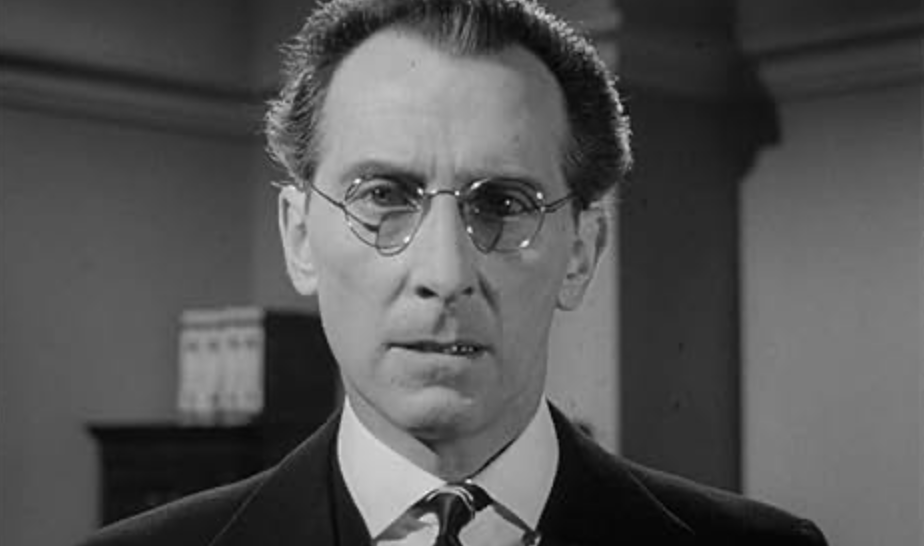
Tag: Peter Cushing

  • Gratuitously violent, fearfully sick

    Revisiting Peter’s Cushing’s agreeably grubby exploitation flick, Corruption
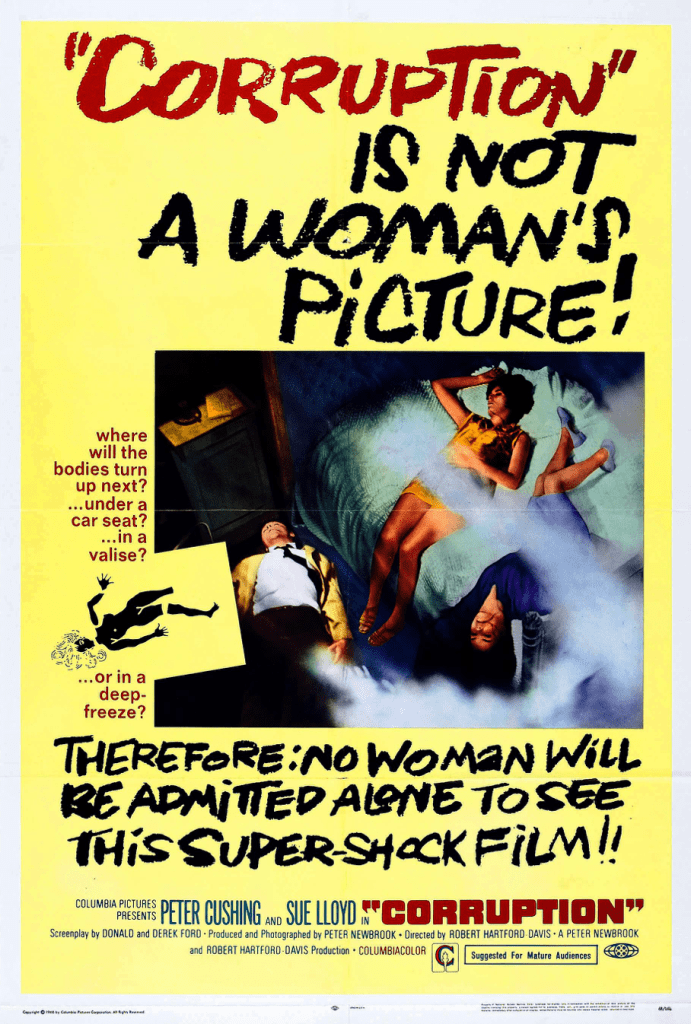
    Poster for Corruption (1968) which is NOT FOR WOMEN in case you thought it might be

    Peter Cushing brought a certain dignity to all of his roles, and a commitment to performance that marks him out as one of Britain’s greatest ever actors. In his career prime throughout the fifties, sixties and seventies, Cushing became inextricably linked with the horror boom that followed Hammer’s first colour forays into the genre. A practical sort with a fearsome work ethic, he knew here was a way to bring in the money he felt necessary to support his beloved wife Helen as her health deteriorated. Cushing also seemed incapable of giving a poor performance and even in the depths of his grief after Helen’s passing (notably 1972’s Horror Express), he always gave everything on screen.
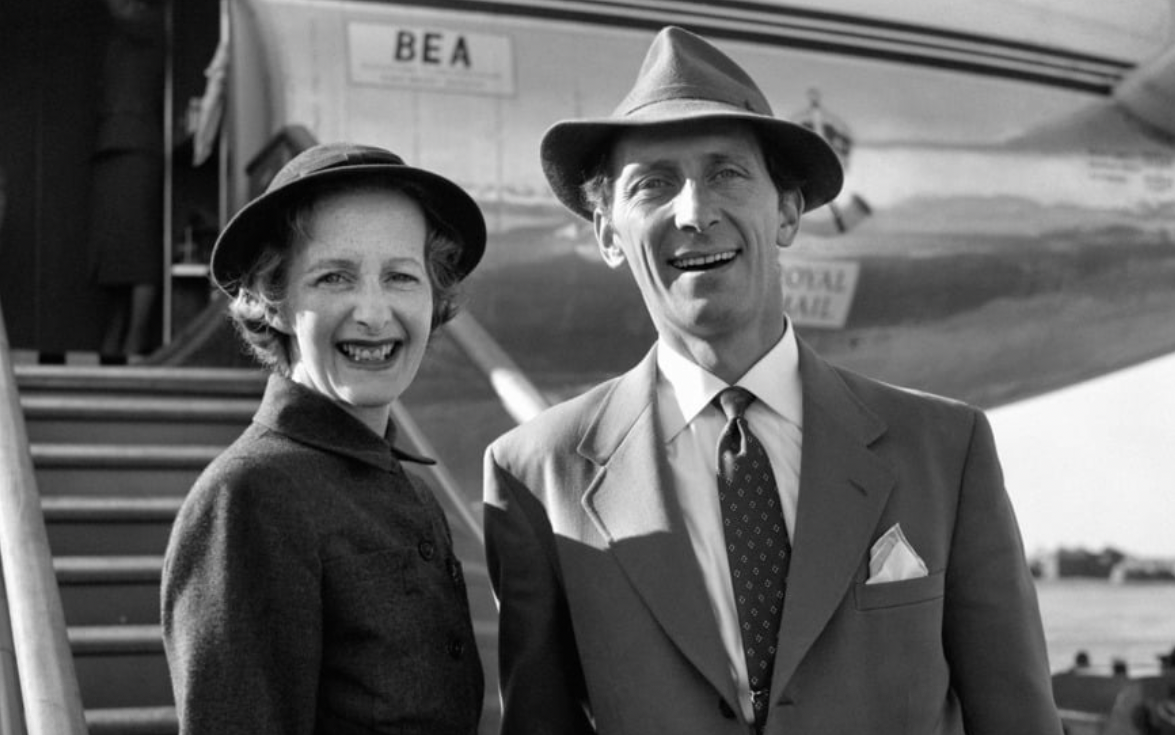
    Helen and Peter Cushing looking smartly put together and happy

    As a result, we have a remarkable catalogue of great work to explore, from his leading roles as the Baron in Hammer’s Frankenstein series, to his cameo spots and his beautifully done running gag on The Morecambe & Wise Show. There’s also the more offbeat path to consider, where Cushing was the best thing about the film or series, or where the film doesn’t have the cultural impact of his appearances as Van Helsing. 
    Title card for Corruption

    Which brings us to his role in Corruption from 1968 (dir. Robert Hartford-Davis), an agreeably grubby exploitation riff on the comparatively refined Eyes Without a Face (1960) that qualifies in both the above categories. Is it a great film? Not really. Is in interesting and often entertaining? Definitely. Some spoilers now, even though most of the following takes place in roughly the first half hour of a 90-minute film that ultimately takes a left turn in a different direction altogether.

    Corruption pushes the dignified Cushing into a frequently hysterically-pitched cartoon of carnage as the wealthy doctor Sir John Rowan. Rowan is a pioneering plastic surgeon which proves immediately helpful when he accompanies his young, beautiful fiancée, the fashion model Lynn (Sue Lloyd), to a swinging party. John is uncomfortable around the hip kids of London as they ‘freak out’. When he tries to convince Lynn to leave early, a confrontation with the slimy photographer trying to convince her to undress for pictures in front of everyone else gets violent and she takes a hot lamp to the face.
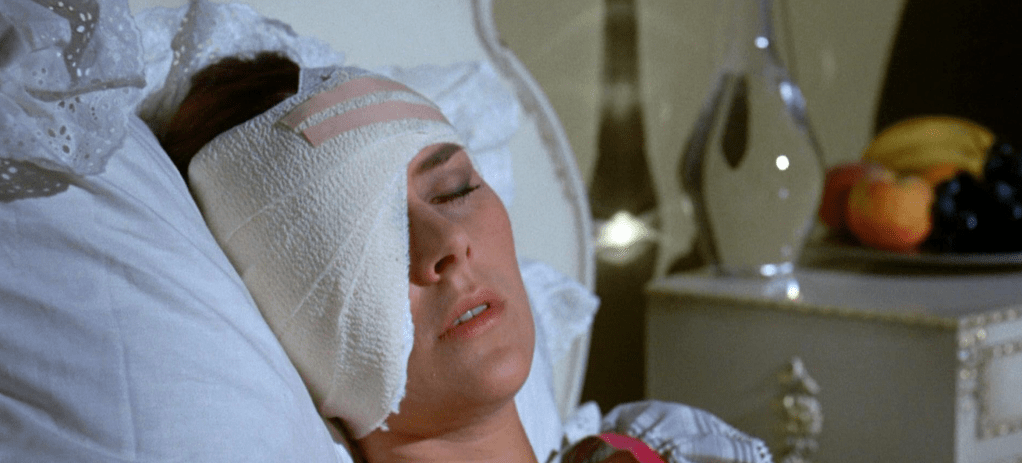
    Sue Lloyd’s Lynn, in bed with half her face covered in bandages

    Rowan can’t fix her disfigurement with his conventional methods so decides to experiments of the dangerous kind with the pituitary gland of a corpse and a mix of ancient theories and modern science. It’s a success and the previously despondent Lynn is back on her feet hosting dinners and planning holidays. But wait! It doesn’t last and soon Lynn’s face has deteriorated and Rowan is desperately trying to refine the process.
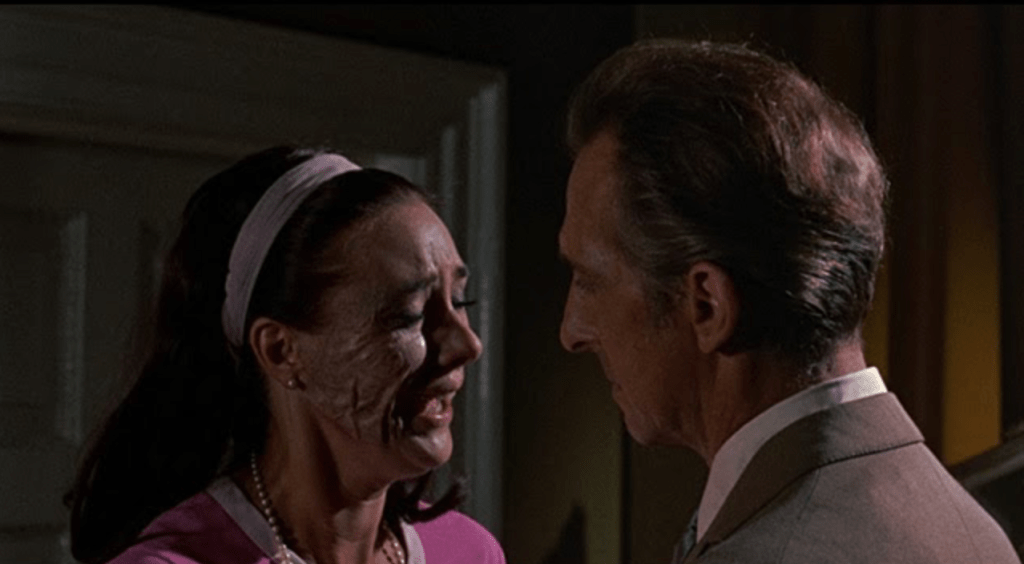
    A frantic Lynn with Sir John as his handiwork unravels

    With the spotlight on Rowan from colleagues and his experiments in no way ethical, corpses being chopped up are out of the question so John takes what we can clearly all agree is the only other logical choice and takes up a parallel career as a modern-day Jack the Ripper, stealing the necessary gland from a sex worker he brutally murders (in significantly more unpleasant style in the alternative international cut).

    In David Miller’s book Peter Cushing: A Life in Film, Cushing gave his take on the finished film: “It was gratuitously violent, fearfully sick. But it was a good script, which just goes to show how important the presentation is. With any film you participate in, the company, if they so wish, can destroy your original interpretation of the role.” This comment says a lot about what makes Cushing special.
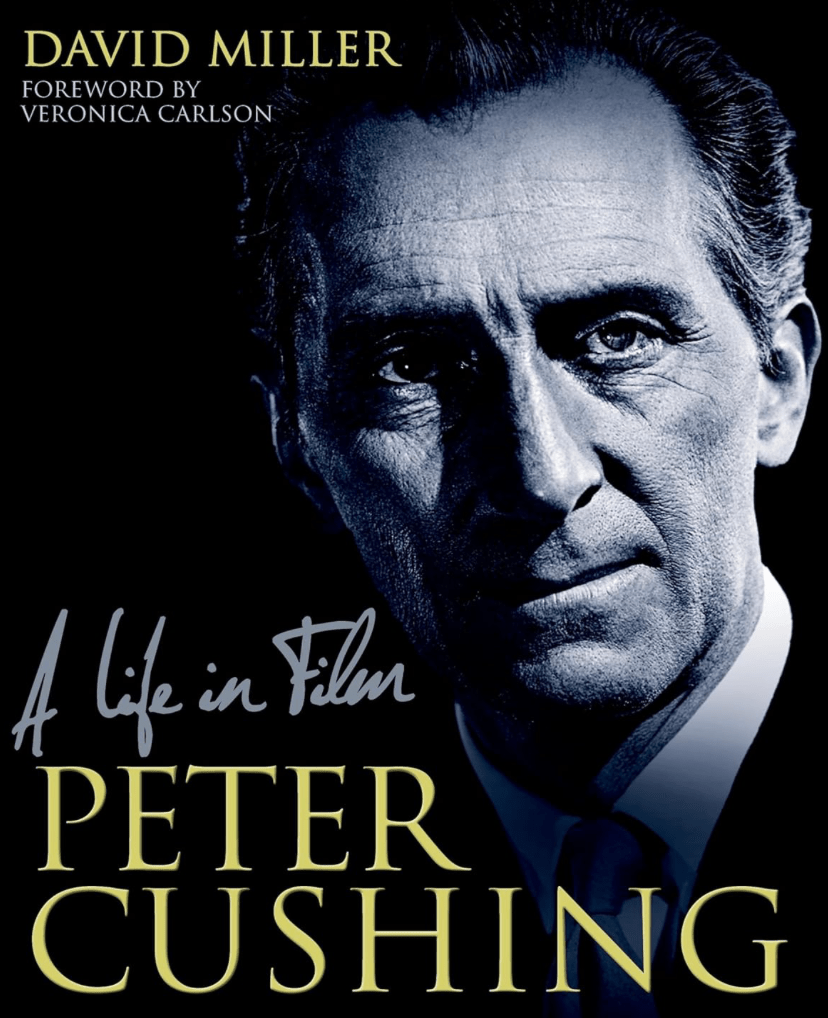
    Cover for the book Peter Cushing: A Life in Film by David Miller

    There’s an oft-told anecdote about how Cushing would carry around props that he thought his character would have in his pockets, even though they wouldn’t be seen onscreen. Cushing thought deeply about his characters, trying to understand their motivations. He never looked down on the work as beneath him, even while critics of the time largely sniffed haughtily at how silly the horror game was.
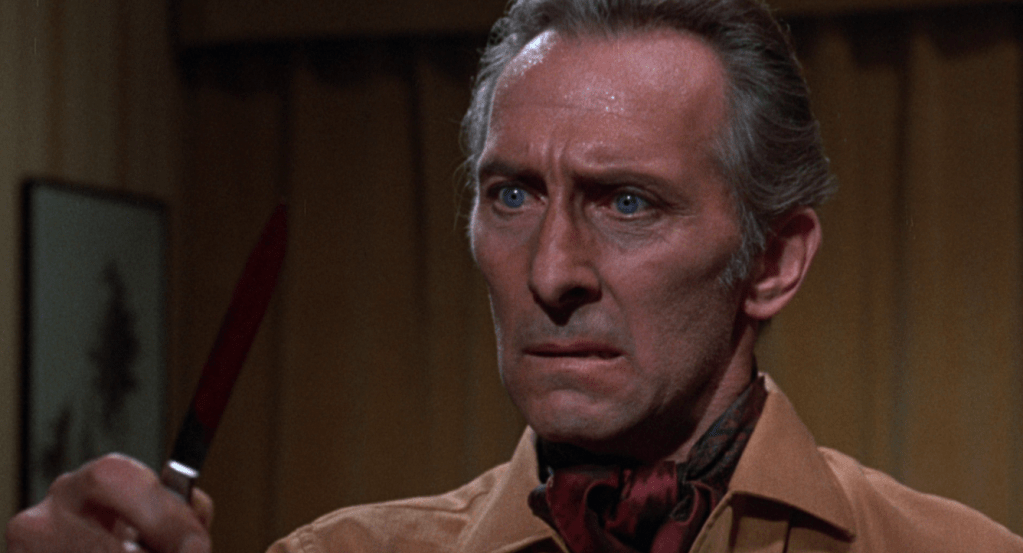
    Sir John staring in fear, panic and disgust at a knife he is holding

    If we compare Sir John to another of Cushing’s ‘good men doing bad things’ roles from just three years later, we get a picture of just how varied and nuanced he was in presenting this kind of complicated character. Rowan is inarguably a villain, just as Gustav Weil is in Twins of Evil (1971, dir. John Hough) but both do what they do because they believe it is their only choice. Where the steely, cold Weil uses moral superiority to underwrite as necessary the wickedness of his choices, Rowan kills out of love and guilt. It’s in his face during the murder of the sex worker, it’s in his cold stare on the train as drains his humanity to prepare himself to the task at hand, it’s in the small pause at the bedroom door of his cottage, knife in hand, as it hits him again what he has become. 
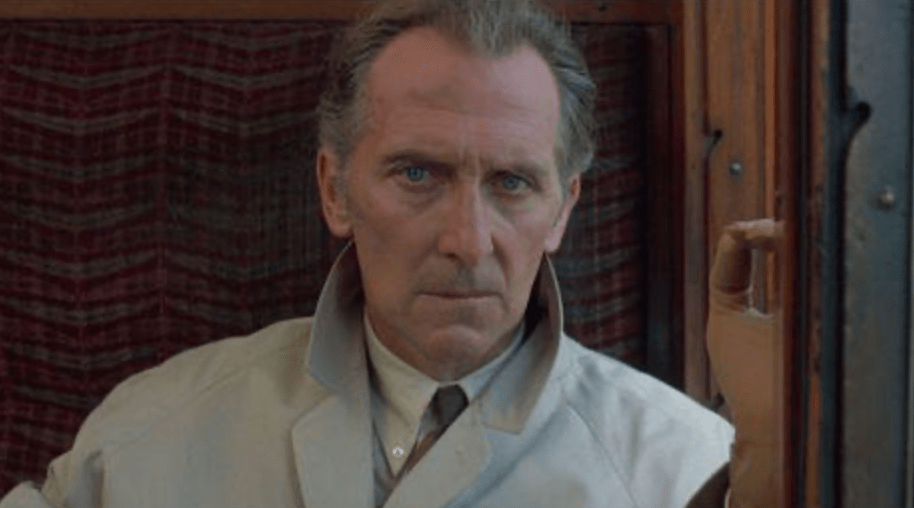
    Sir John on a train, preparing himself to kill

    As we’ve seen, Cushing was not kind to the finished film. It does everything to undermine the subtly of his performance, or the escalating panic that layers Lloyd’s unravelling Lynn. Largely  for this writer, it’s due to an appropriate-for-the-swinging-times but nevertheless wildly misjudged jazz score from Bill McGuffie.

    This is at its most egregious during a late-in-film argument between Rowan and Lynn, Sir John drowning in guilt and no longer able to justify his crimes and Lynn desperate for another chance to get the treatment right. Stripped of the score, this would be a beautiful, quiet moment between these two characters as they come to understand they have lost each other despite everything.

    That this still comes across, and that these two damaged people still compel us, is down to those two actors. Sir John Rowan is a villain. Peter Cushing made him human. It’s a fine example of what one of Britain’s most capable, most compelling, most powerful actors could achieve, whatever the quality of the film.
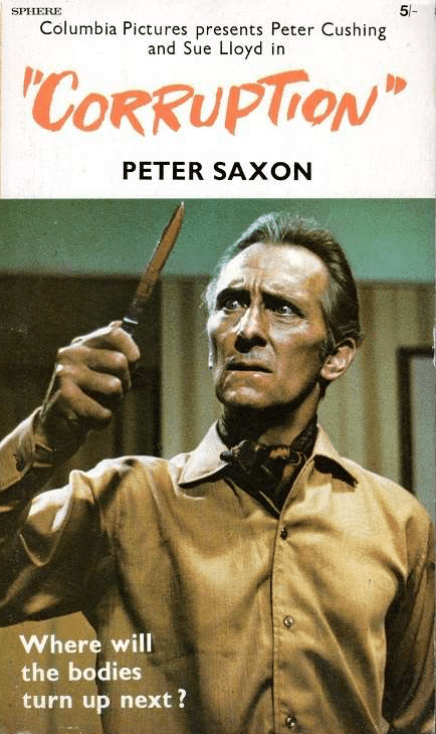
    The cover of the novelisation of Corruption by the pseudonymous Peter Saxon
  • A Wondrous Magic to Christmas

    Finding redemption with the festive spirit (and Rod Serling and Peter Cushing)

    ” The Night of the Meek” (The Twilight Zone Season 2, Episode 11)

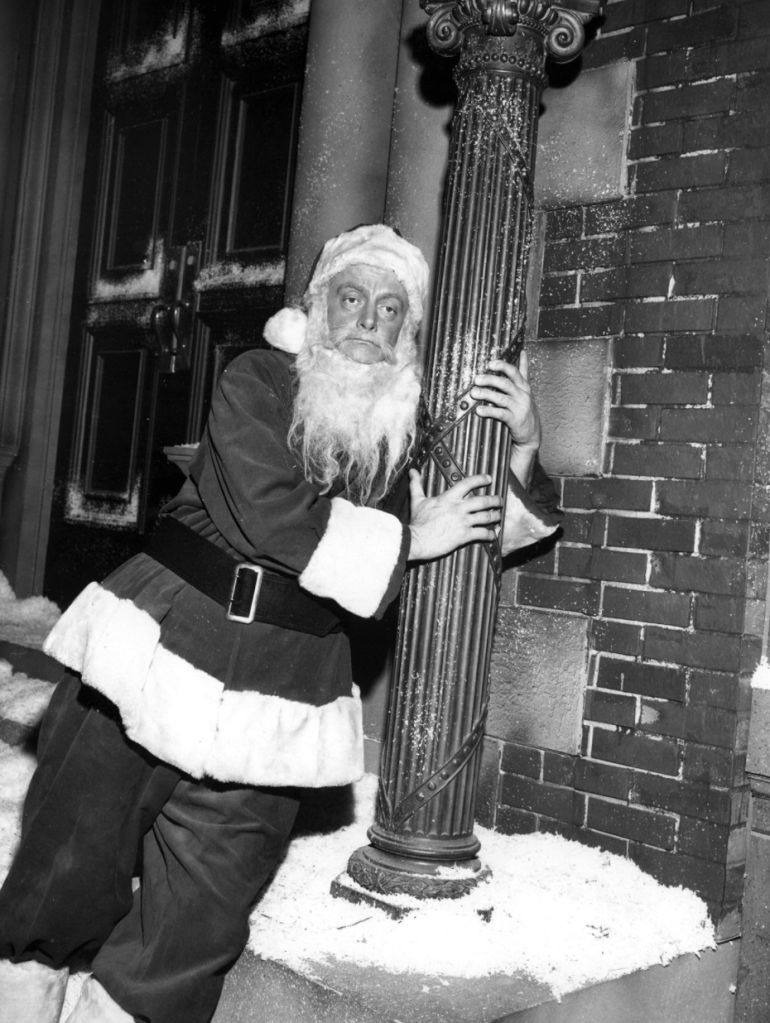
    Henry Corwin in Santa costume, looking the worse for self-inflicted wear

    The Twilight Zone is inarguably one of television’s truly great series. For an anthology show it has a remarkable hit rate. Every such series had its duds but for this show, they are few and far between. Even the weakest episodes have something to them, a line of dialogue or a moment that sparkles. For this writer, Rod Serling is one of the most gifted writers the medium has ever had, and in addition to that was a compassionate person who used his work to connect audiences with their fellow humans, to illuminate the human condition, to encourage us to be better, to do better, to try again. The Twilight Zone often traded in stinging or stirring tales of fantasy, science fiction and sometimes horror. As with many shows, it also had its Christmas-themed episodes and it is one of them, “The Night of the Meek”, covered here.

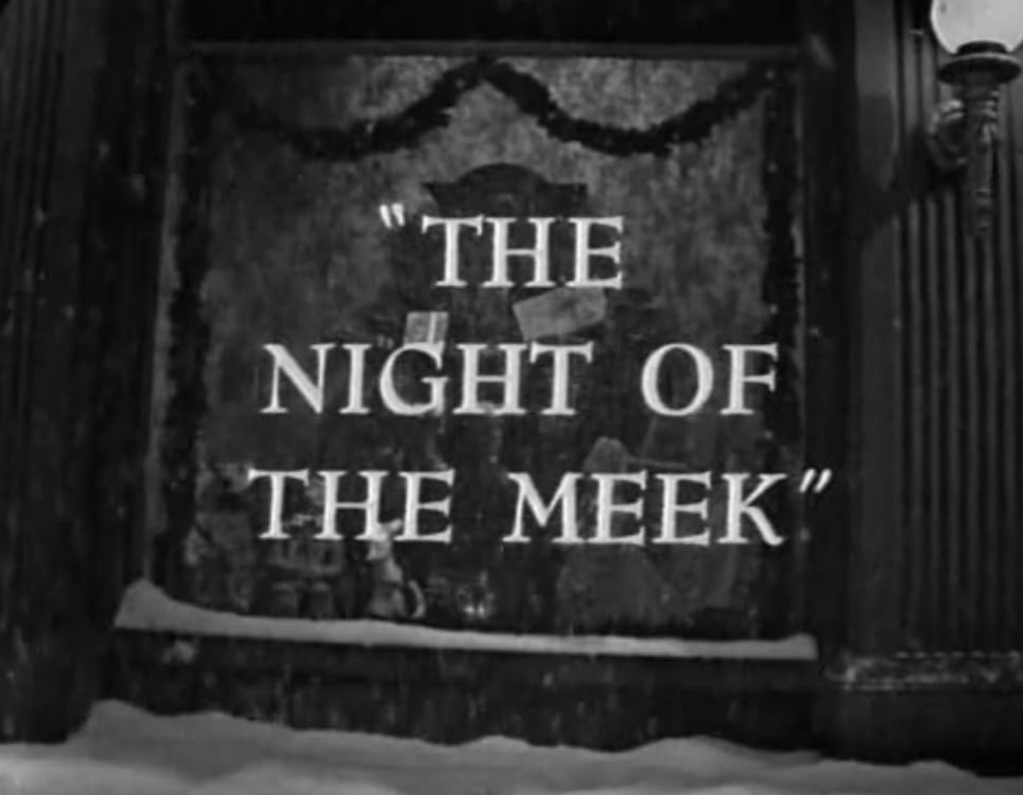
    Title card for The Night of the Meek

    The macabre in Meek is people. The set up in the episode is following department store Santa and general sad sack Henry Corwin. Corwin doesn’t have much to look forward to other than his next drink. He lives in a ‘dirty rooming house’ and his world is one of hungry children and other ‘shabby’ people just like him. Corwin lives for his Santa routine but the shine has gone out of it.  His suit is old and worn and when he shows up too late and drunk with it for his gig, it’s over – he’s fired and ordered out of the store. Despite all of his woes, Corwin muses if he had one wish, it would be for the meek to actually see some rewards. When Corwin can’t even get back into the bar he frequents, he stumbles down an alleyway where the sound of sleigh bells are heard. 

    Corwin in his Santa costume in the department store, being berated by his boss

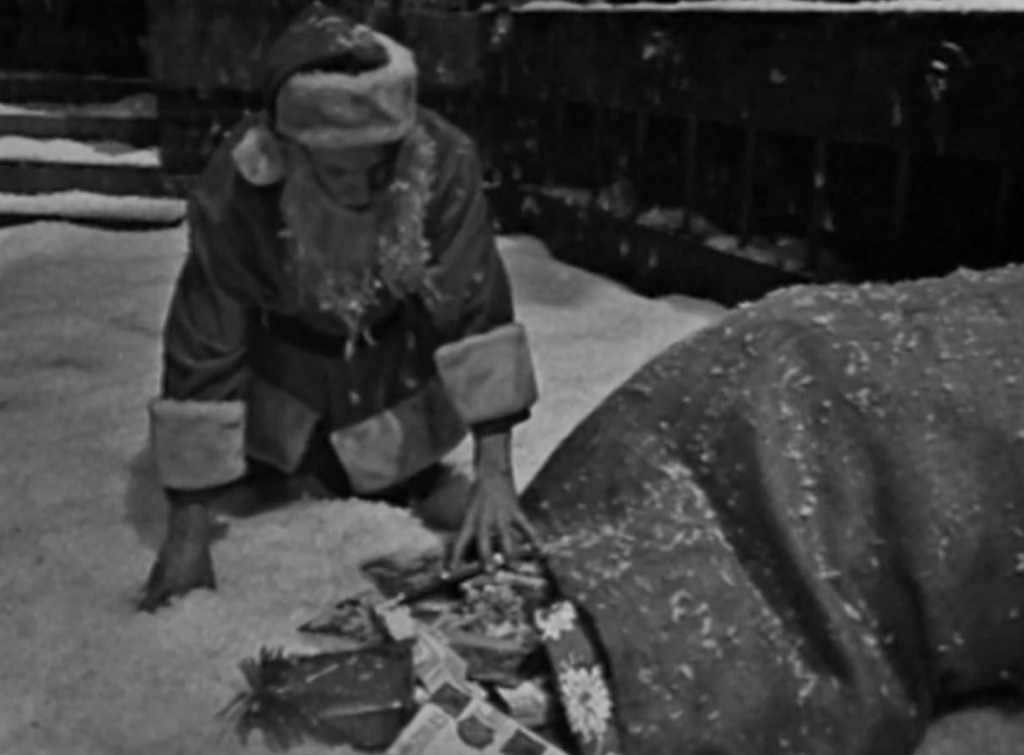
    In the alley, Corwin comes across a sack that he quickly discovers appears to have magical properties. It produces a seemingly never-ending stream of gifts. Whatever someone asks for, they get. His dream coming true, Corwin starts handing out gifts to the poor kids and down and out men nearby. The episode continues with this mix of melancholic reality and fantastical whimsy towards its hopeful conclusion.

    Corwin discovering a sack full of presents in a snowy alley

    In the episode, people are the worst. Everyone expects and looks for the worst in Corwin because that’s the type of guy they think he is. It’s the type of guy Corwin has come to think he is too, and it’s pretty obvious his idealism and hope is frayed and being drowned in a puddle of cheap booze.  Corwin is us – we want to believe in the best of people, but people make it pretty damn hard. Now, Serling had around 25 minutes an episode to do set-up, delivery and conclusion of his stories and so subtlety was not always the prime concern. The characters, Corwin included, are mostly broad sketches, with people like the shop manager Dundee being not much more than functional cliché. They’re ciphers for the point Serling is making about what Christmas can represent. 

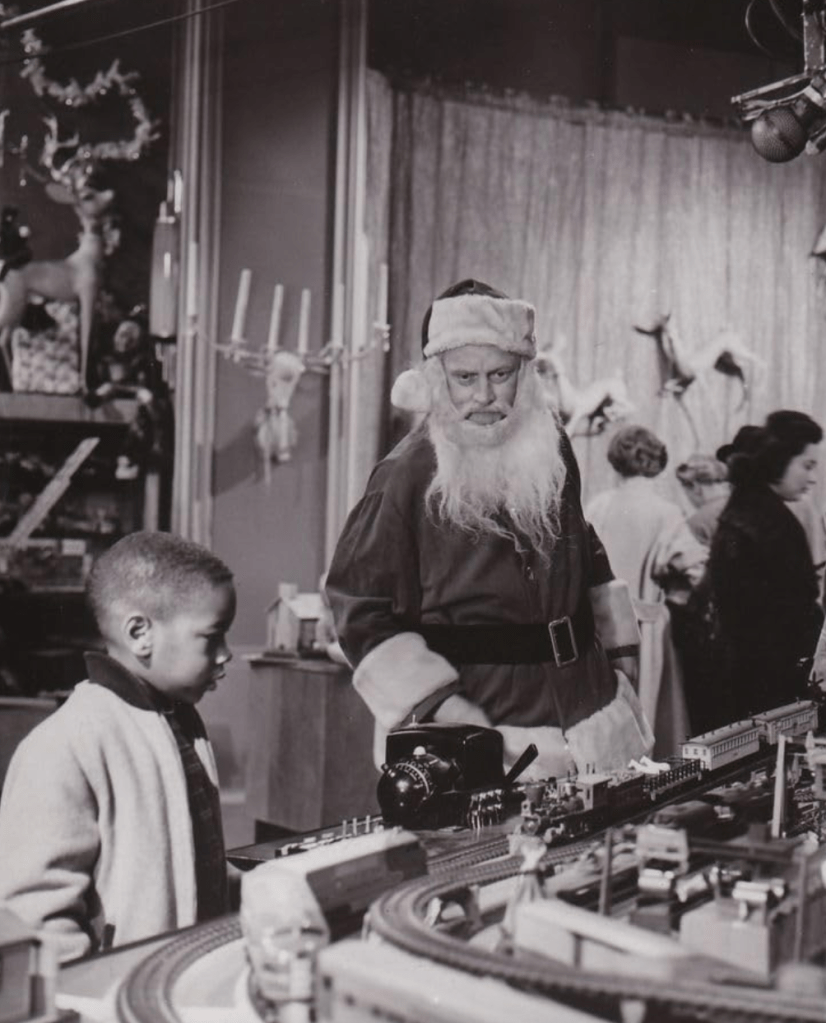
    Corwin watching a young child enjoying a train track set up

    It can, if we let it, represent good will to each other, hope for the future and the unity such celebrations can bring.  If we let go of the hardened cynicism and the weariness, if we let such notions in, even if it’s only for one night we can believe that we’re more good than bad, that’s there something worth saving in us, that we can believe in magic. For many, that’s a hard thing to do in a world, in a world that tells us there’s no magic left, only bleakness and decline. In the time The Twilight Zone was first airing it was only 15 years or so since the end of WW2. It was before Vietnam, race riots, Watergate and innumerable other events conspired to convince even the most indefatigable optimist that we’re on a downward spiral as a species. 

    That’s not to say things were better then as many things were emphatically not. But it’s for this reason that we should arguably let a little magic into our lives. Believing in Santa Claus might have ended a long time ago for most of us but believing in each other, or that there is some goodness out there, is something we all need these days. And if anyone can convince you to believe in your bones that humans are redeemable, it would be Serling.

    Rod Serling in coat covered in totally real snow, speaking to camera

    As Rod himself puts it in the closing narration “There’s a wondrous magic to Christmas”, so here’s to Henry Corwin and here’s to The Twilight Zone and a momentary respite, a sliver of the brightest light in the darkness of winter.

    Cash on Demand

    Cash on Demand title card

    How does Cash on Demand (1961, dir. Quentin Lawrence) evoke a similar joy? Well, it’s not just the ideal Christmas movie but a reminder that, for those of us who might despair at humanity’s worst instincts more days than not, change is possible. Based on the play, it’s the tale of bank manager Harry Fordyce (Peter Cushing), a fussily fastidious man who rules over his branch not so much with a clenched fist but a puckered sphincter. The opening scenes set up the tight-knit team of staff in the bank as they await Fordyce’s arrival. When he does appear their anxious joviality is curtailed and it’s down to the business of money.

    Fordyce looking for flaws in the polished plaque outside the bank

    Not long after this, André Morell pulls up at the bank, his character Colonel Gore-Hepburn supposedly an insurance inspector but in fact a bank robber. Using threats and coercion, Gore-Hepburn forces the unravelling Fordyce to partake in robbing his own bank. Without giving anything away, the plot twists, new wrinkles are added and tension is ratcheted up. Throughout all this Cushing is wonderfully good, ensuring Fordyce is no cliche and imbuing him with humanity throughout. Morell matches him throughout as the smooth, assured, and ruthless bank robber. 

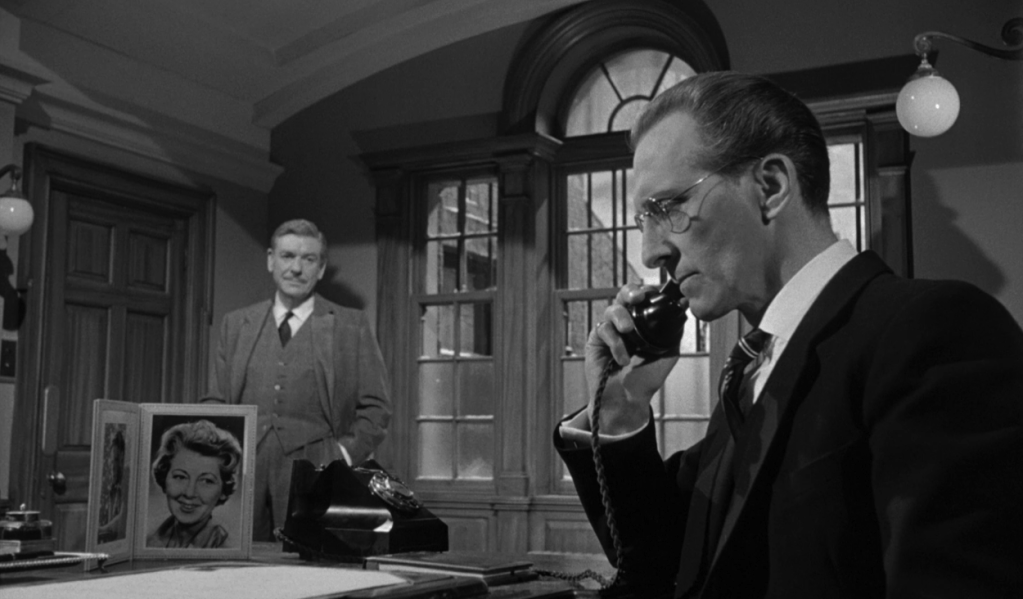
    Fordyce on the phone in his office as Gore-Hepburn looks on, his plan coming together

    Cash on Demand is a twist on A Christmas Carol. Fordyce might not be the wicked man Scrooge was, but he has forgotten what makes a person. He’s not mean to his staff so much as dismissive of their personhood and feelings, only focussing on the bank and profit. We know early on he has a child and wife he feels affection for, but that’s as far as human warmth goes for him. As Gore-Hepburn’s scheme to steal thousands of pounds unwinds, and Fordyce is forced to become part of the heist, he must confront what he has become, what is really important to him, and reconnect with the world he lives in. It’s an uplifting, very human film about hope and change and our ability for both that is just as needed in these modern times.

    Fordyce looking directly to camera, a concerned and unsettled look on his face

    The Christmas trappings aren’t window dressing either. The time of year the story is set is intrinsic to the mood and atmosphere of the piece and to Fordyce’s journey. Of course, it’s a fine film that could be shown at any time of year. But what it says about us as people is a classic Christmas message. If you want a beautifully judged thriller, full of quotable dialogue, with one great scene after another, excellent performances, and something to say about what it means to be alive, this is it.