Tag: reviews

  • Hot film (and book, and TV show) summer

    The films, books and television I’ve been enjoying in recent months

    I haven’t done one of these in a while, mostly because life finds a way (to get in the way) and, like everyone else in the UK, I have been melting, I’m melting etc, etc. So, like a YouTuber who says things like ‘Without further ado, let’s get started’ after ado-ing the ever-loving fuck out of things, let’s…uh…get started.

    Films

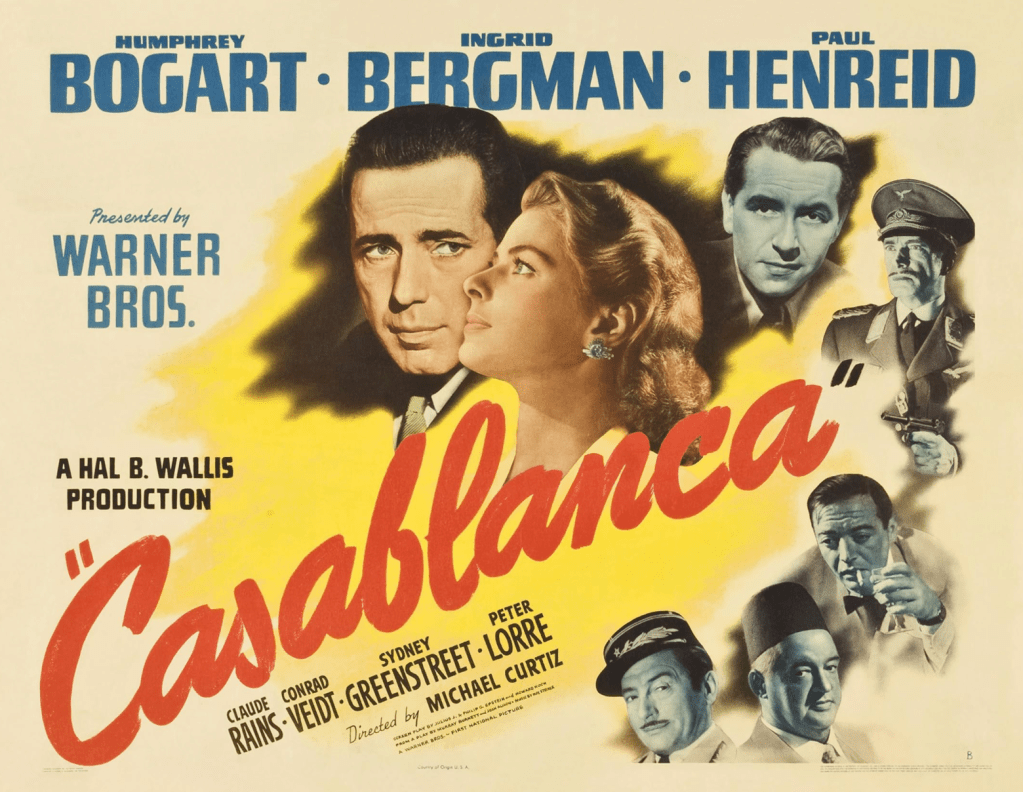
    Casablanca (1942, dir. Michael Curtiz)

    Poster for Casablanca

    I had never seen Casablanca until earlier this year. That’s mostly because I have VERY SPECIFIC INTERESTS due to reasons, and the film studies course I did at university was, possibly, shit. Casablanca is one of those oft-parodied, baked into popular culture classics it’s easy to feel like you have seen before you get to it.

    That’s never really true, and our familiarity with iconic scenes or pastiches can’t obscure the merits of something truly brilliant. That something is a thrilling, romantic, funny, beautifully shot ensemble tale of cynic-with-a-lover’s-heart Rick finding his passion for life again.

    The truth of filmmaking is no matter the talent involved, it is hard work, a good outcome often more by serendipity than by design. So it is to a degree here, but you also get a script, performances and creative team fully able to capture that accidental alchemy.

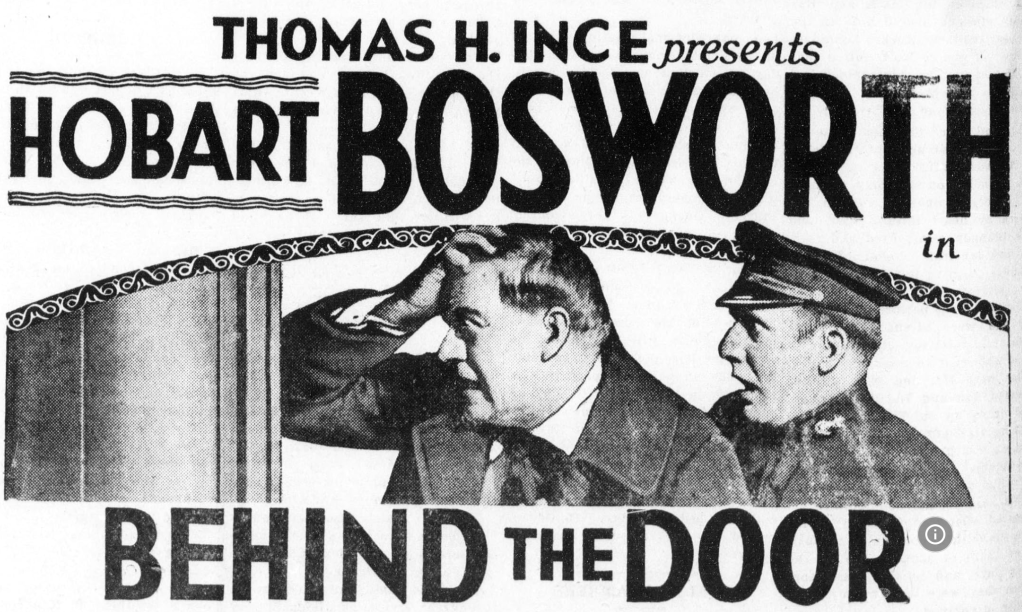
    Behind the Door (1919, dir. Irvin Willat)

    Poster for Behind the Door

    Behind the Door is an adaptation of a Gouverneur Morris short story. A mostly fine WW1-time drama of a couple struggling to stay together despite prejudice and duty, it does that silent-era thing of taking a wild pivot into a stunningly unpleasant last 20 minutes that is still shocking.

    It’s reliably, occasionally excitingly directed, and works as laying groundwork for later fucked-up Morris adaptations featuring Lon Chaney, notably the following year’s The Penalty. One-time screen Dr Jekyll, Hobart Bosworth, does good work as its tortured ‘hero’. Glad this one was restored as much as could be. That last quarter though, hoo boy. It’s a film worth watching for the ending alone, warped reels of cinema.

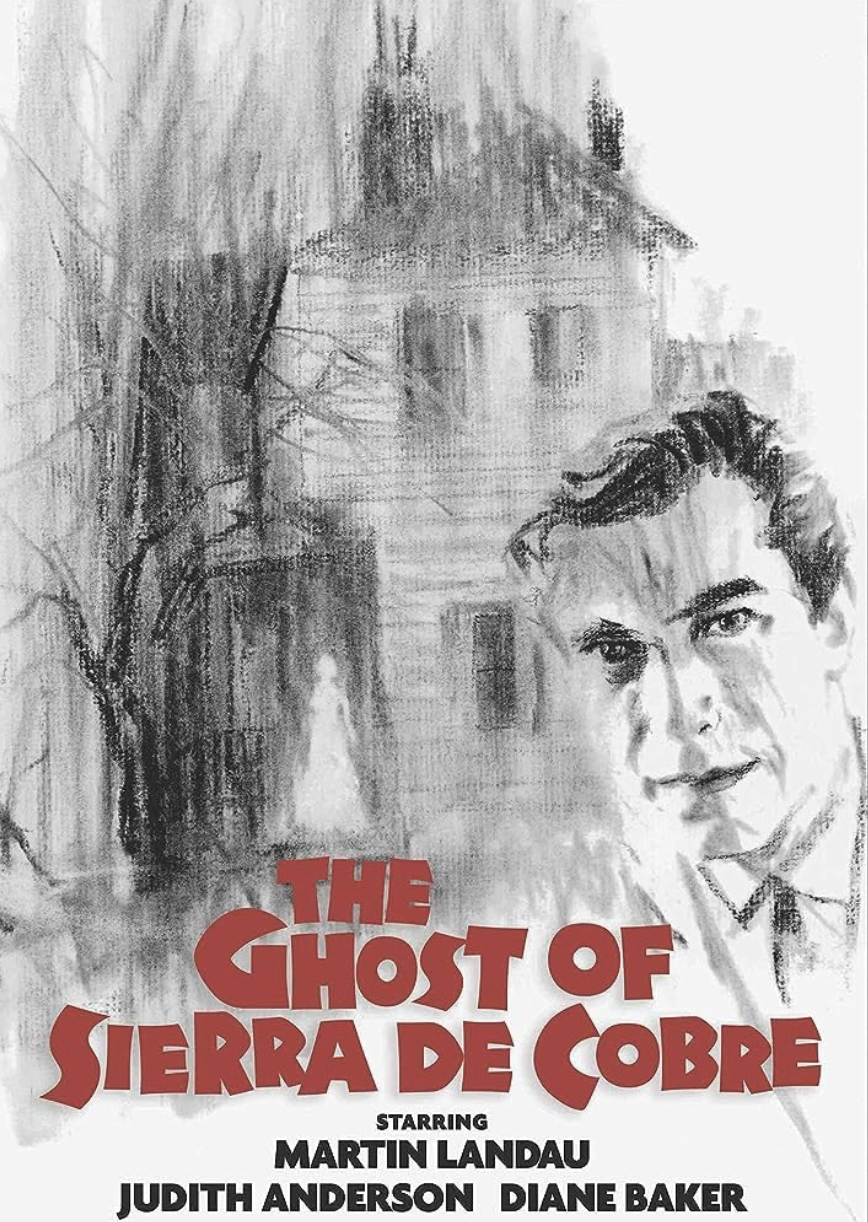
    The Ghost of Sierra de Cobre (1964, dir. Joseph Stefano)

    Poster for The Ghost of Sierra De Cobre

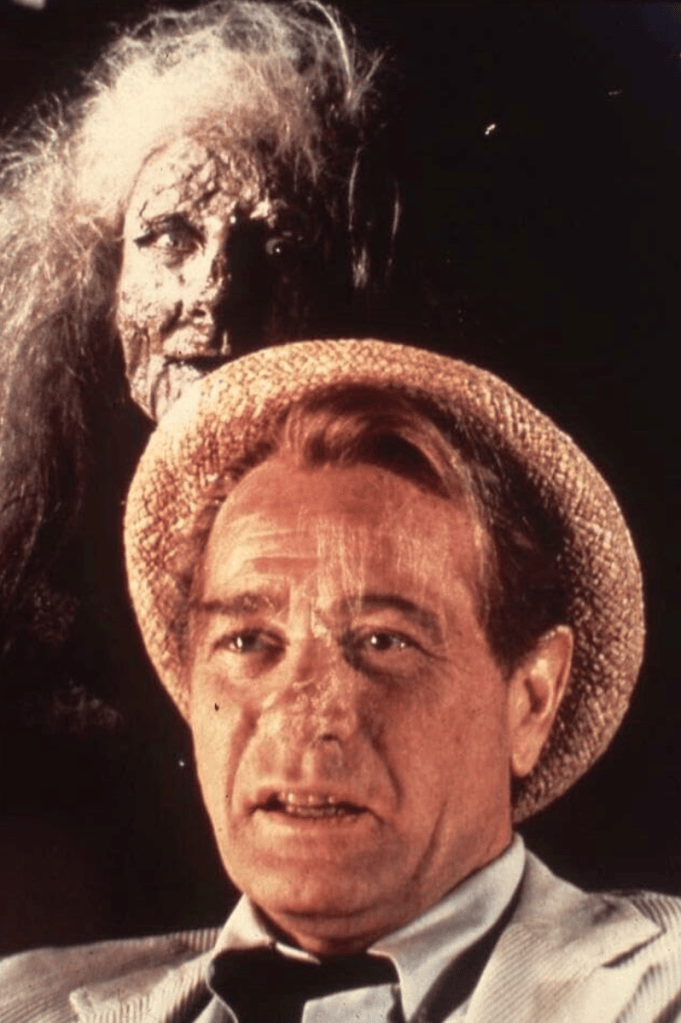
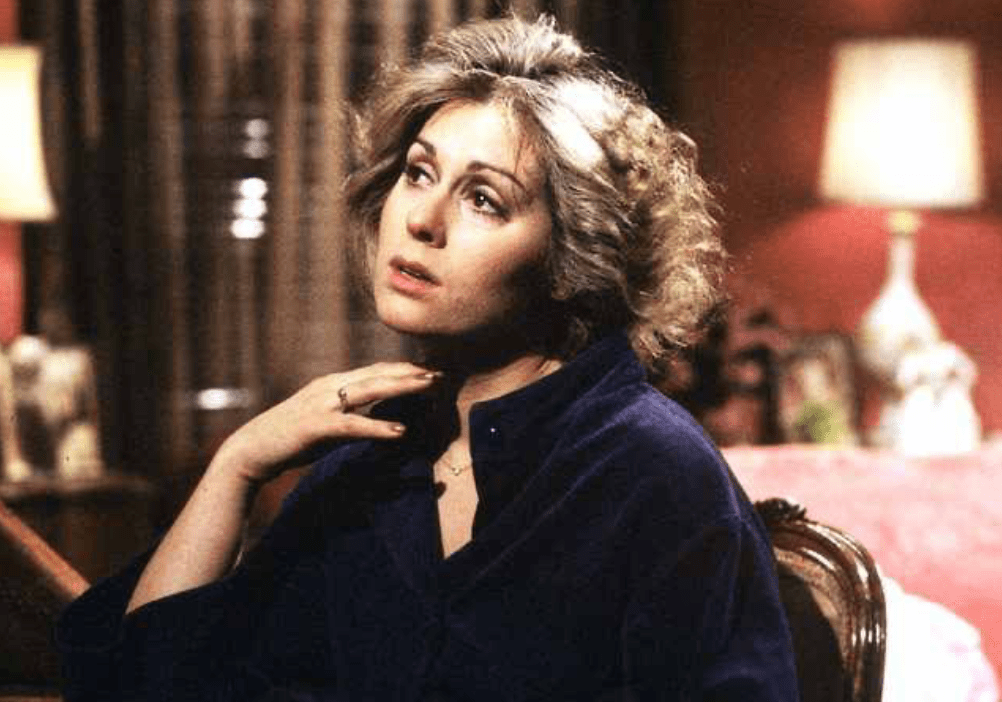
    Psycho and The Outer Limits writer Joseph Stefano also produced and directed this 1964 film for a sadly never-to-be series about hauntings (with this film expanded from its initial 50-min runtime). At least we have this slice of weirdness, as Martin Landau’s investigator tries to unravel if a wealthy man is really getting phone calls from his dead mother.

    Allegedly shelved as ‘too scary for TV, it’s ponderous and shows its television scale, but is also frequently excellent, with some proper scares and control of its mood. Shot almost like an art film, one easy to imagine without any dialogue, it’s often beautiful. Equally dreamlike and nightmarish, this one is recommended for fans of offbeat horror. As an unusually serious, strange film, it deserves to take its place as a minor haunted house classic.

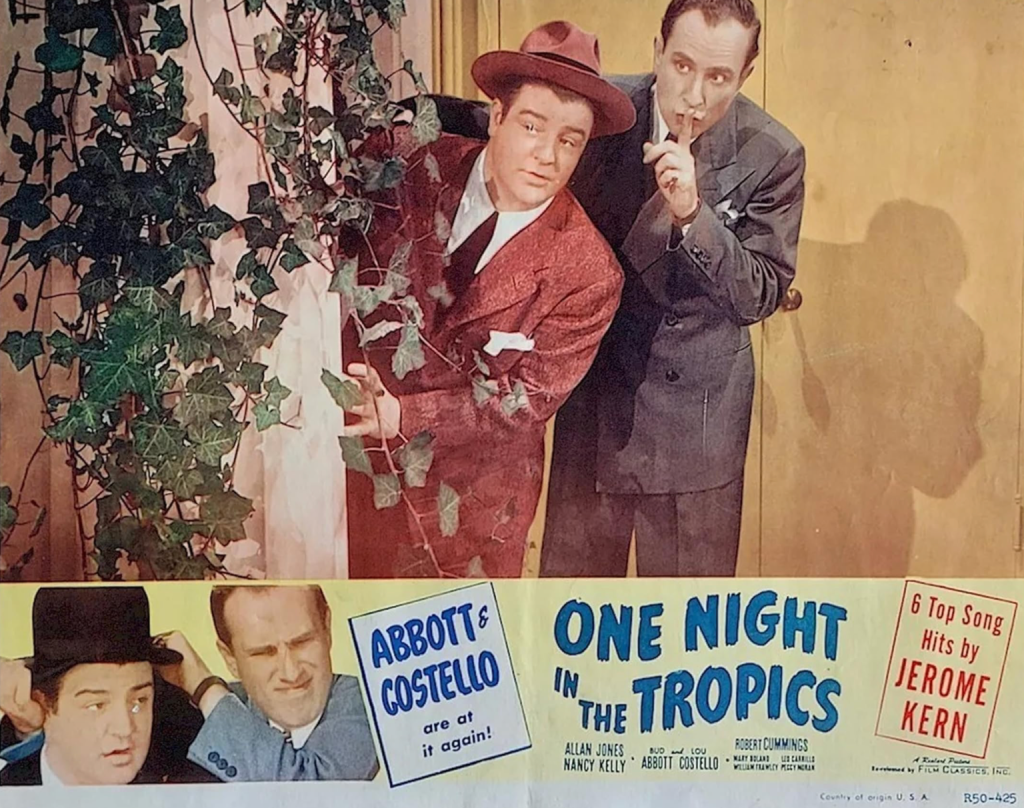
    One Night in the Tropics (1940, dir. A. Edward Sutherland)

    Poster for One Night in the Tropics

    Abbott & Costello make their film debut as side characters in a romantic comedy musical(ish). The film itself is fine, good natured and as entertaining as it sets out to be (mildly). The key reason to watch it for me was the first opportunity for Bud and Lou to brush everyone else aside when onscreen.

    They bring energy, timing, and a sense of the absurd to what is otherwise a pretty inoffensively beige romantic comedy of errors. As with Casablanca, you could easily think familiarity with them and their routines would dull the impact, but they are magnificently weird, anxiously anarchic, and worth it every time they appear.

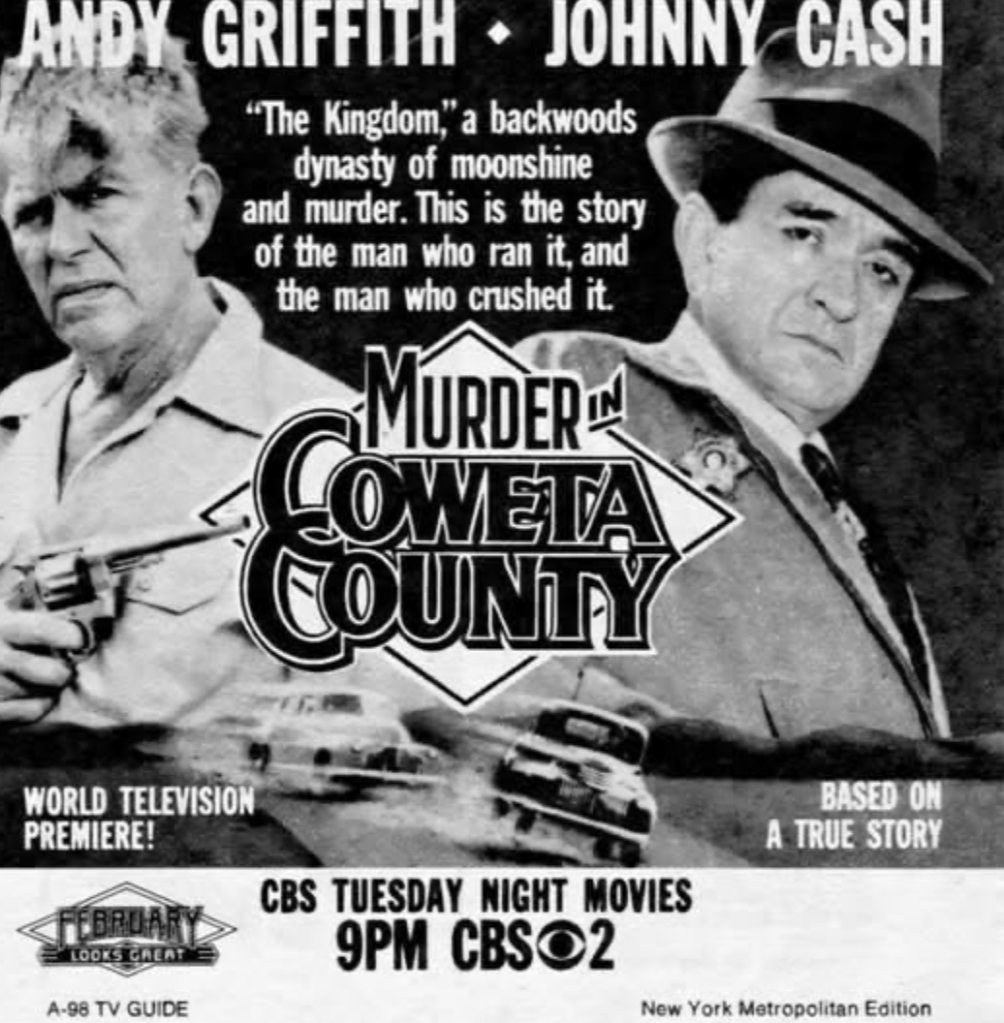
    Murder in Coweta County (1983, dir. Gary Nelson)

    Newspaper advert for Murder in Coweta County

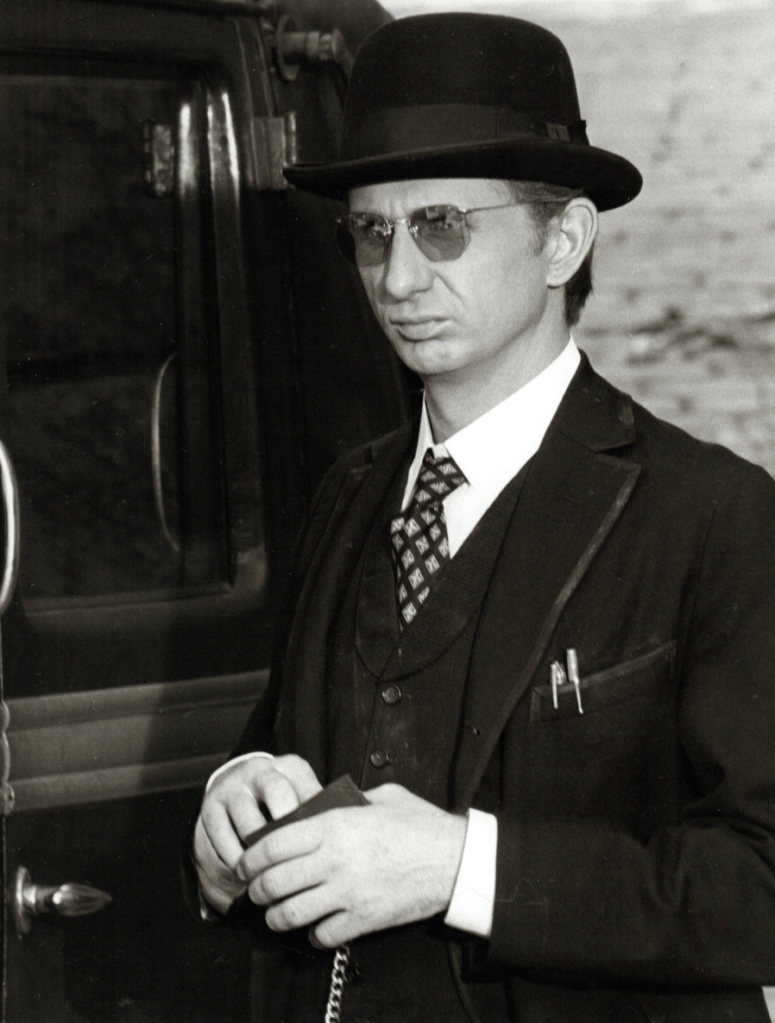
    This is the television movie as genuinely extraordinary experience. At first look, we have a dour based-on-a-true-story procedural in which Andy Griffith inverts his sitcom persona to play the dark-hearted opposite. 

    Here, his fantastically arrogant, racist landowner and king of everything in his domain crosses paths with a neighbouring county’s indefatigably moral sheriff, Johnny Cash, over a matter of murder. Griffith can’t even conceive of his charmed life coming undone, Cash won’t let death – murder – go unpunished.

    A blunt, basic script makes room for excellent performances, including an extended cameo from June Carter Cash as a fortune teller, a surprising vein of pitch black comedy, and an almost magical, unreal approach to events that feels like a child’s fairytale version of a crime story.

    There are moments in it that play like a rural horror, or other times a rural fantasy. And those final few minutes are unsettling and strangely upsetting. It’s not all great, being an unambitious television production, but unexpected, occasional moments of visual beauty offset a mostly functional directional style. Mostly very good, and always interesting.

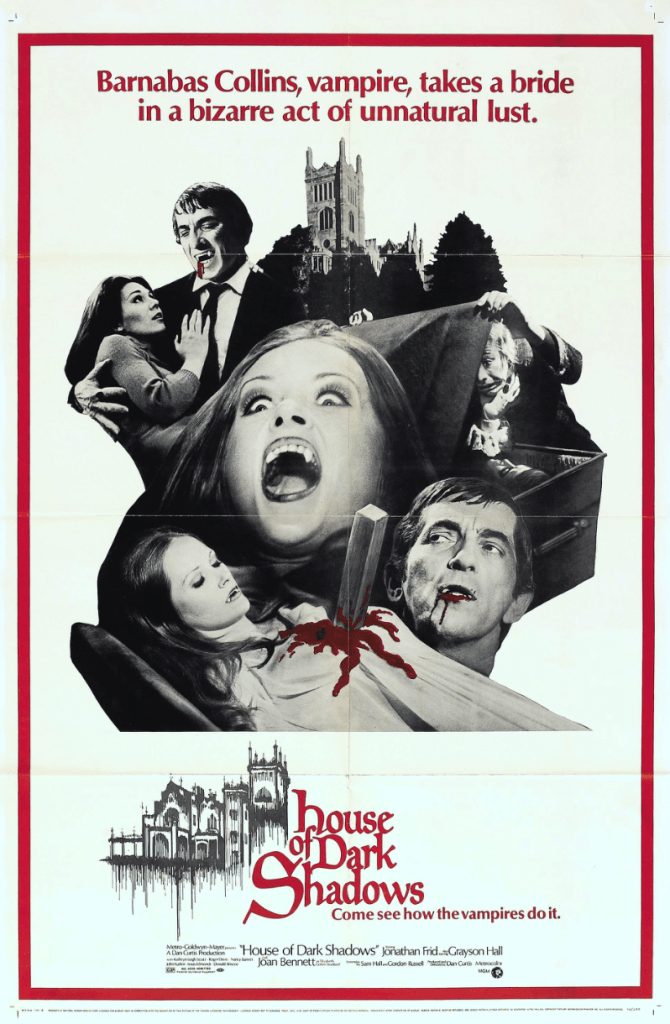
    House of Dark Shadows (1970, dir. Dan Curtis)

    Poster for House of Dark Shadows

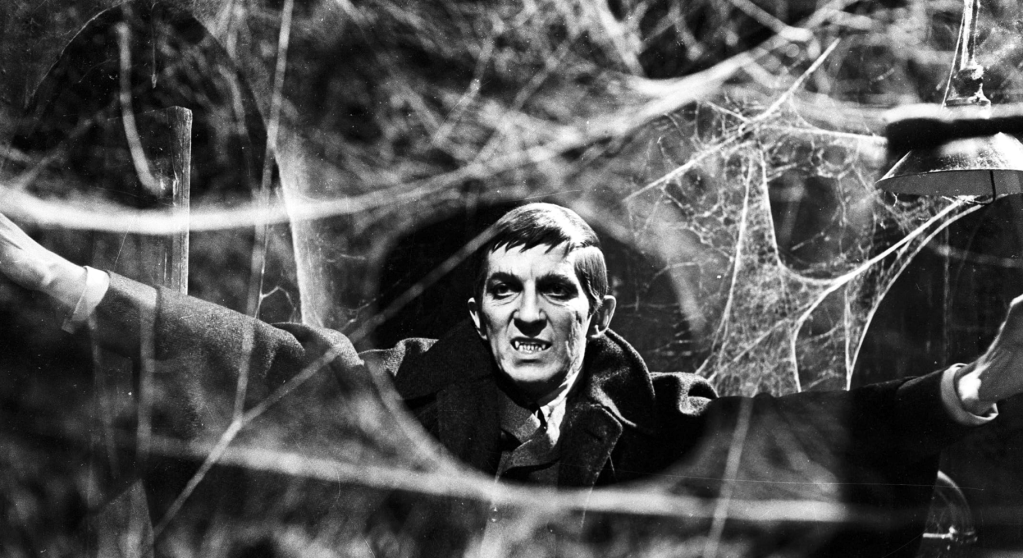
    When I first watched House of Dark Shadows, I was not particularly taken with it. Having enjoyed the slow burn of Barnabas’ arrival in the series, the film seemed like an inelegant rush job. It is borderline incoherent for anyone new to the story. The other side of this is that it’s a bloody treat for those familiar with the show. From its opening sequences, the film is gloriously unhinged. The beautiful production design makes it look expensive enough, but the way it is made frequently comes across as if it was shot on the manic fly in 48hrs.

    It is in fact the defined and chosen differences to the series, and going all in on copious amounts of blood, that make it a delight. We are given messy fun in which almost everyone dies. You don’t need to know the series, of course, you just need to go along with it. Each time I revisit the film, to me, it feels like an American attempt to make a version of a gonzo European horror of the time. A horny (despite almost no flesh on display), violent, and mean good time.
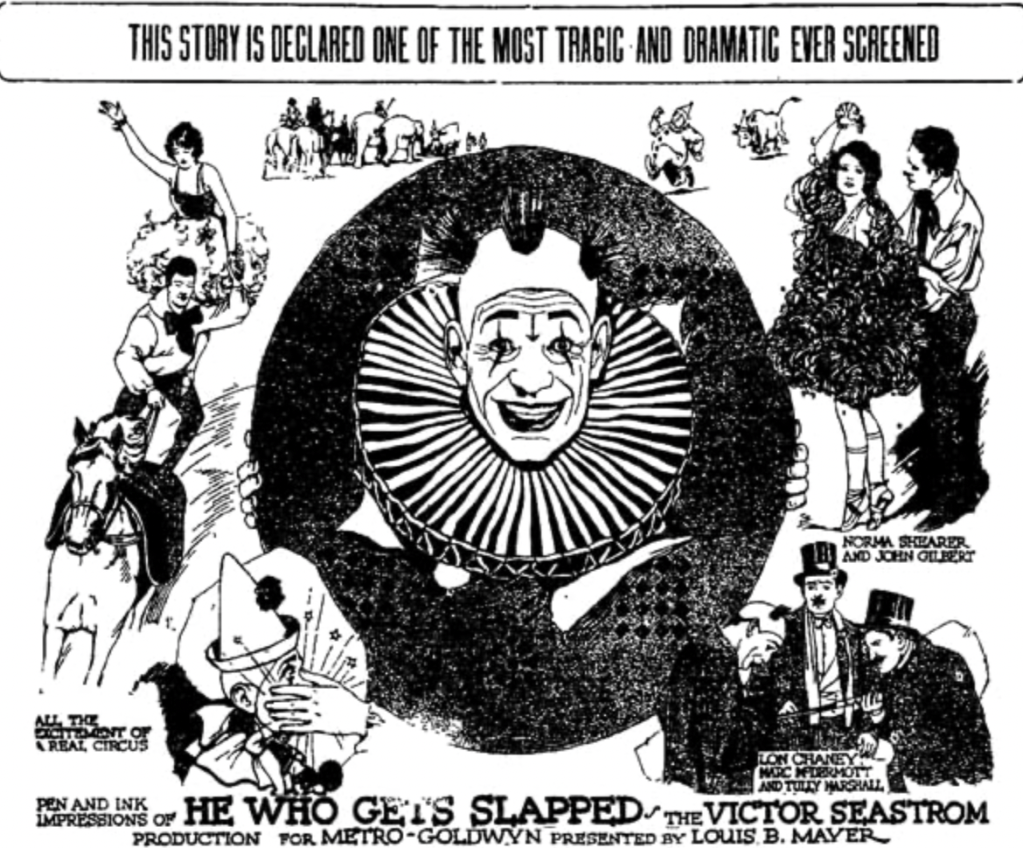
    He Who Gets Slapped (1924, dir. Victor Sjöström)

    Advert for He Who Gets Slapped

    Taking the opportunity to fill in more of my Lon Chaney filmography, I was glad to go with He Who Gets Slapped. It’s the wilfully weird tale of a scientist betrayed by his benefactor and his wife finding a new home in a circus as a clown who gets slapped, until the unlikely opportunity for revenge presents itself.

    An outstandingly good, expressive Chaney is at times heartbreaking and others unnerving as a man pushed beyond what he can take when the past won’t leave him be. Thematically very grim, it’s a curious mix of melancholy, fury and thwarted ambition and love, juxtaposing moments of hope and darkness until a disturbing, grotesque, ultimately sad final reel.

    Books

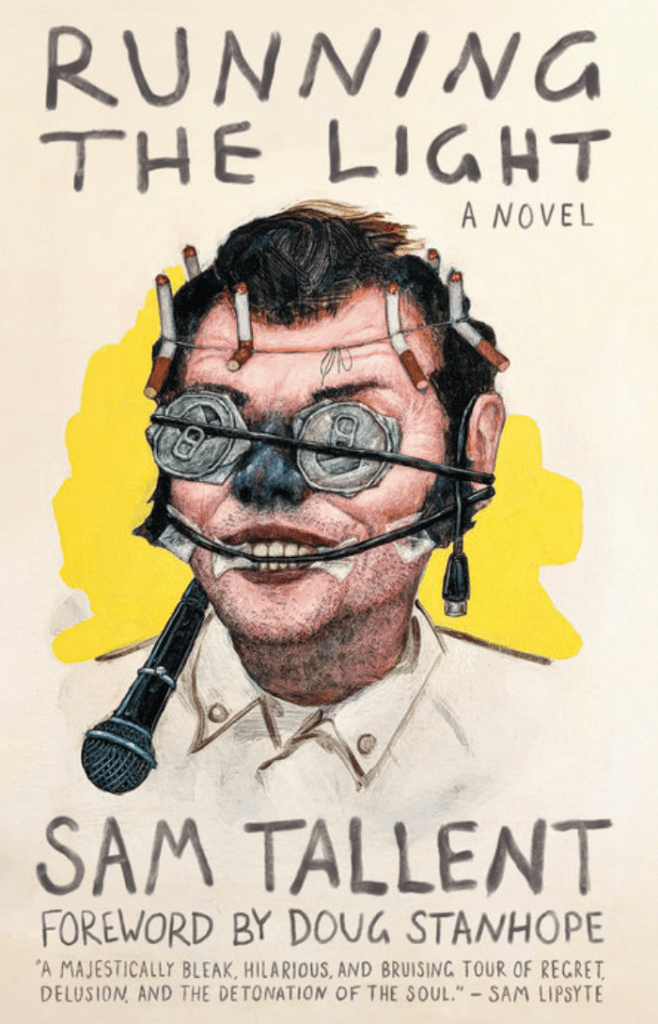
    Running the Light

    Cover of Running the Light

    Comedian Sam Tallent’s debut novel tracks a week in the life of stand-up comic and barely living void of drugs, booze, fighting and fucking, Billy Ray Schafer. Schafer used to be somebody in the latter part of the 20th century, until his lying, cheating, ways burned up his marriage, his relationship with his children, and exhausted goodwill in his career. The book finds him criss-crossing America, playing shows after vomiting ducks or to cultish cowboys, his self-medication with alcohol and cocaine rapidly growing into a major problem.

    At the same time, something is gnawing at Billy, pushing him to try and make things right with his now-grownup sons and the wife he betrayed. Tallent is great at a random line of poetry jumping out at you, the characterisations of the inhabitants of an unseen America only road features really get to experience vivid, and in painting an uncompromisingly uncomfortable portrait of a man doing his dammdest to bring about his own demise. Schafer is a bottomless pit of depravity that Tallent manages to make you care about.

    It’s not perfect, and I wasn’t a big fan of its final page, but the journey to get there is full of so much happening, beautifully wrought by Tallent, that the journey is more than worth it.

    Brief diversion: Speaking of comedy, I tried recent internet villain Ken Jenning’s Planet Funny: How Comedy Ruined Everything, but it became ferociously, unforgivingly boring, which rated a rare cannot be fucked (did not finish) from me.

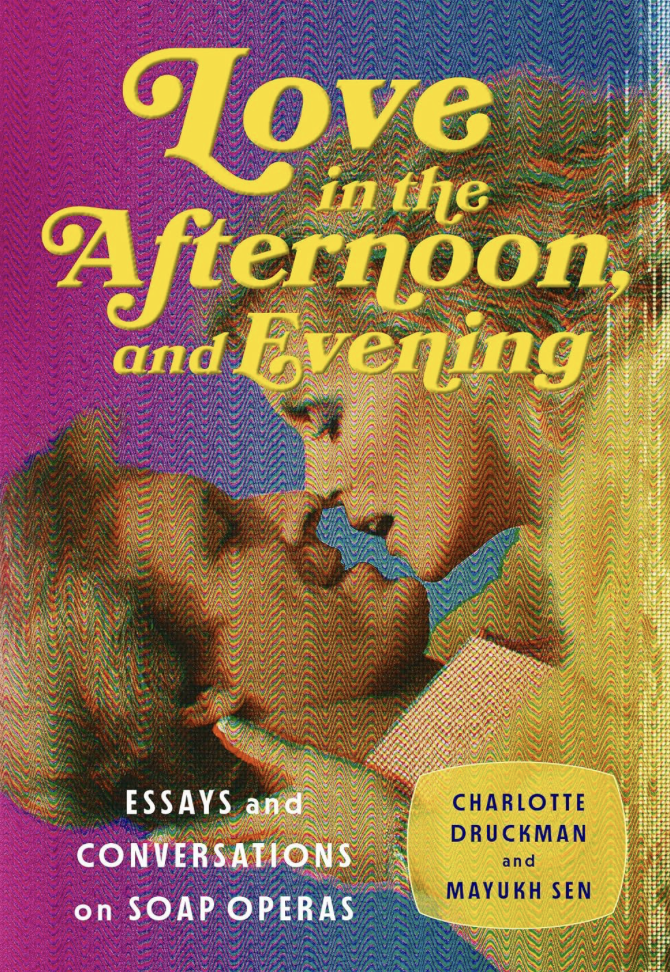
    Love in the Afternoon, and Evening

    Cover of Love in the Afternoon, and Evening

    Charlotte Druckman and Mayukh Sen join forces for a personal, selective journey through what has made American soap opera so appealing to so many over the decades. Comprised of interviews, chapters on fashion in soaps and their designers, a little on the history of essential creators and writers like Irna Phillips and Agnes Nixon, there are also explorations of how soaps handle race, sexual violence, and other strong topics.

    As the genre itself clings on through a few remaining titles, it’s also a good reminder of the depth and variety these shows have presented across radio and television. These shows were and still are part of everyday life for people, and the book gives the genre a little of the respect it’s due.

    Television

    Television (usually old shows) are a consistent habit for me so going through everything would take far too long. Just a few titles to round us out.

    The Twilight Zone

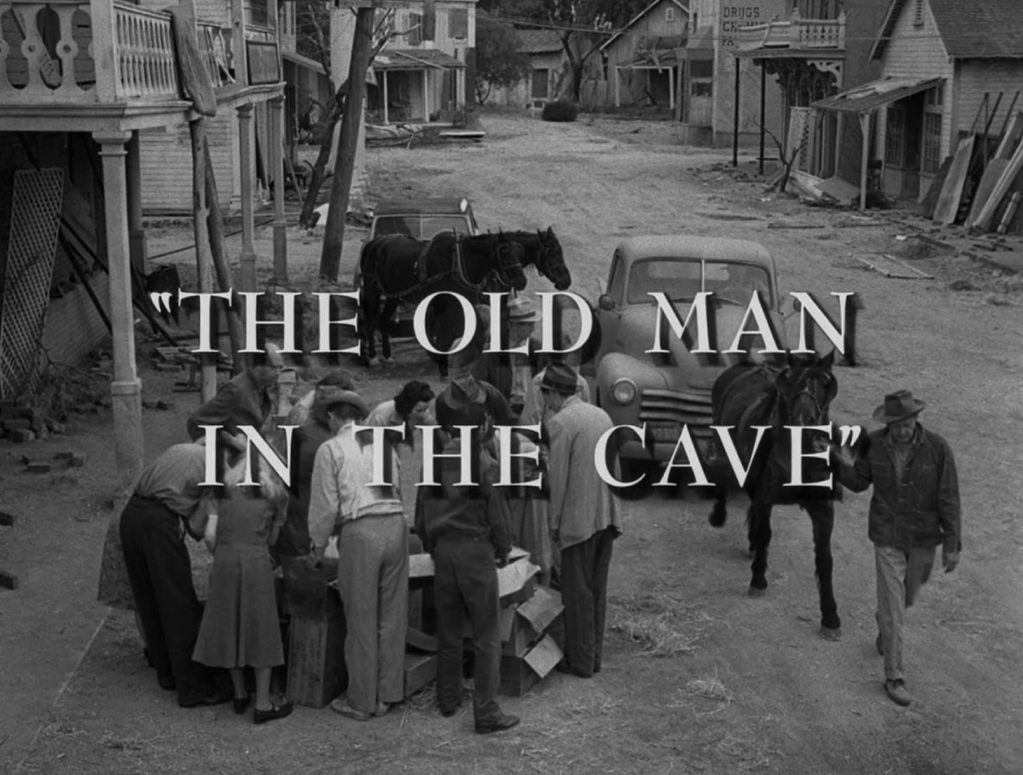
    Title card for The Old Man in the Cave

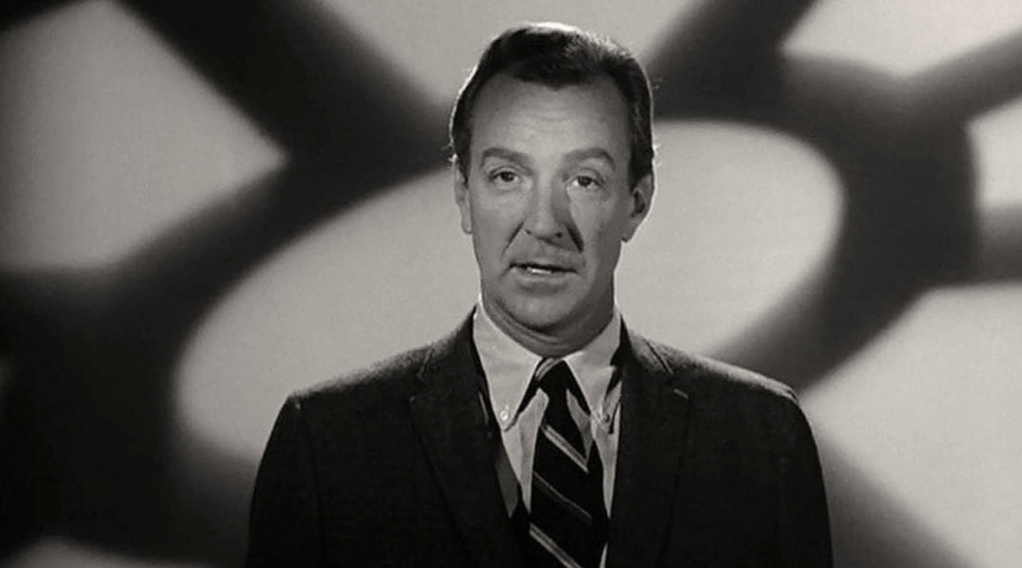
    Up to season five of an epically slow run through of the series has brought me to The Old Man in the Cave and Uncle Simon. The first, an adaptation of a short story by Henry Slesar, brings Serling back to a recurring set of themes linked with nuclear war and our capacity for destroying ourselves. In it, an ‘old man’ in a cave keeps a small group of townspeople alive in the aftermath of nuclear bombs. Smartass, over-confident soldier James Coburn and his men show up and start to query just who this old man is and everything goes wrong. There’s something here about the safety of myths and not knowing the truth, and a great little show from Coburn as a real asshole.

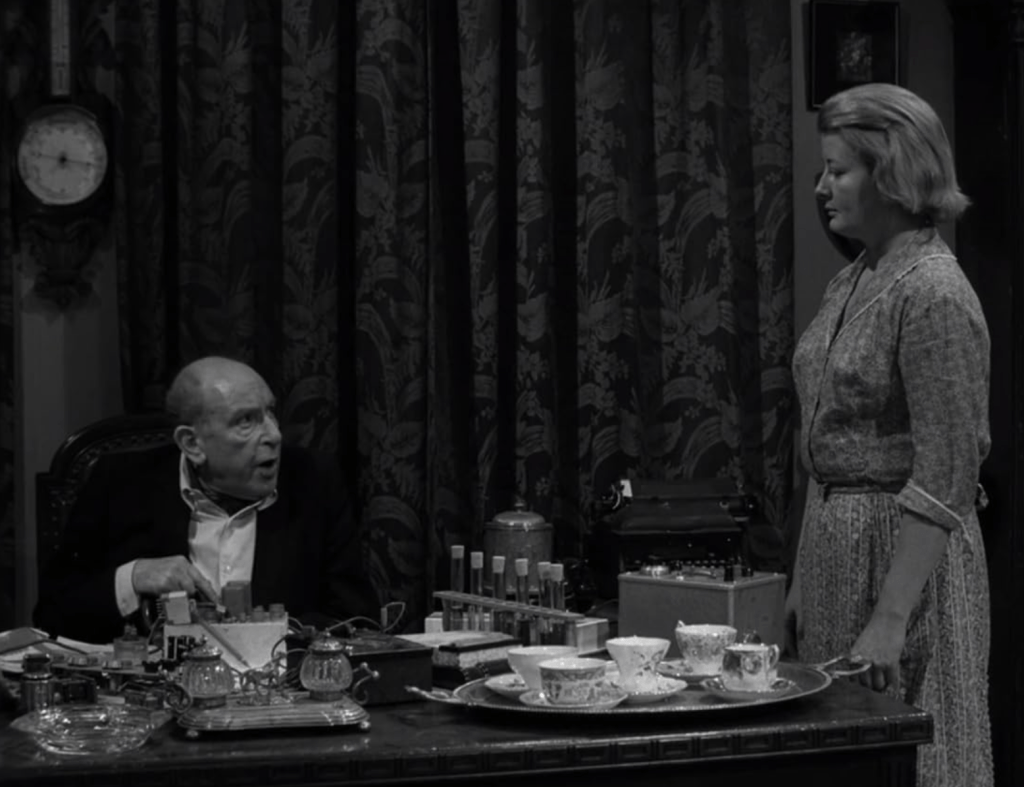
    Cedric Hardwicke and Constance Ford in Uncle Simon

    Uncle Simon meanwhile finds Constance Ford’s miserable Barbara suffering the abuse of her misogynistic, arrogant, hateful, and importantly wealthy uncle. She has been doing so for years, in the withering hope that when he is finally dead, she will be able to live. The episode takes some agreeably strange twists and turns, but the things to come for are Serling’s fantastically bitter dialogue for two thoroughly embittered characters and an exploration of just how much misery someone can inflict and someone else can take. Misery has become the real companion to both Barbara and her uncle, and neither wants to let go.

    One Life to Live

    Judith Light as Karen Wolek in One Life to Live

    A particularly fine chapter from Sen in Love in the Afternoon, and Evening led me to seek out a somewhat notorious episode of One Life to Live from March 6th, 1979. In it, Karen Wolek (played by Judith Light) knew what she had to do to save her friend, Viki Lord. Viki was on trial for the murder of a pimp (well, actually one of Viki’s alternate personalities, Niki, was the presumed killer), and to exonerate her, Karen would have to get on the stand and tell the truth about herself. Karen would share her whereabouts on the day of the murder, with the prosecutor pushing her towards revealing everything. When she does, Karen tells a packed courtroom she has been working as a ‘common hooker’, torn between being compelled by her pimp, and enjoying the money and adventure her secret life provided.

    This episode made it onto a ‘100 Most Memorable Moments on Television’ list for TV Guide and it’s clear to see why. British audiences are likely to be more familiar with Light for her starring role in sitcom Who’s the Boss? or for Ugly Betty than One Life to Live. It comes as quite a shock then, that the final ten minutes of this episode contain one of the most incredible pieces of dramatic acting. Light is extraordinary on that stand, her defiant collapse haunting and moving. You might think you need to be a One Life to Live fan, or soap fan, or know what is happening in other plots to get this. You really don’t. The only thing required is watching an actor at the pinnacle of what can be done. A remarkable, beautiful performance that is some of the finest ten minutes out there.

    And that’s it. If you made it here, thanks for reading.

  • The Sixth Sense

    The horror show that dug its way out of the grave

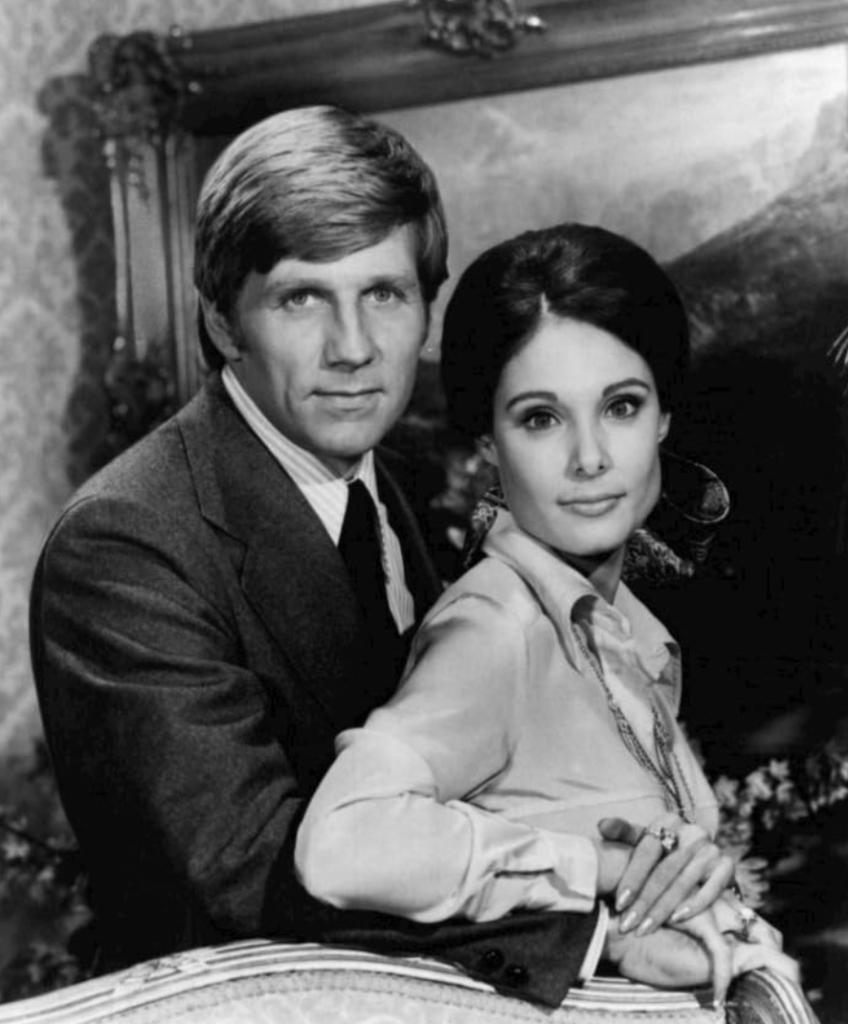
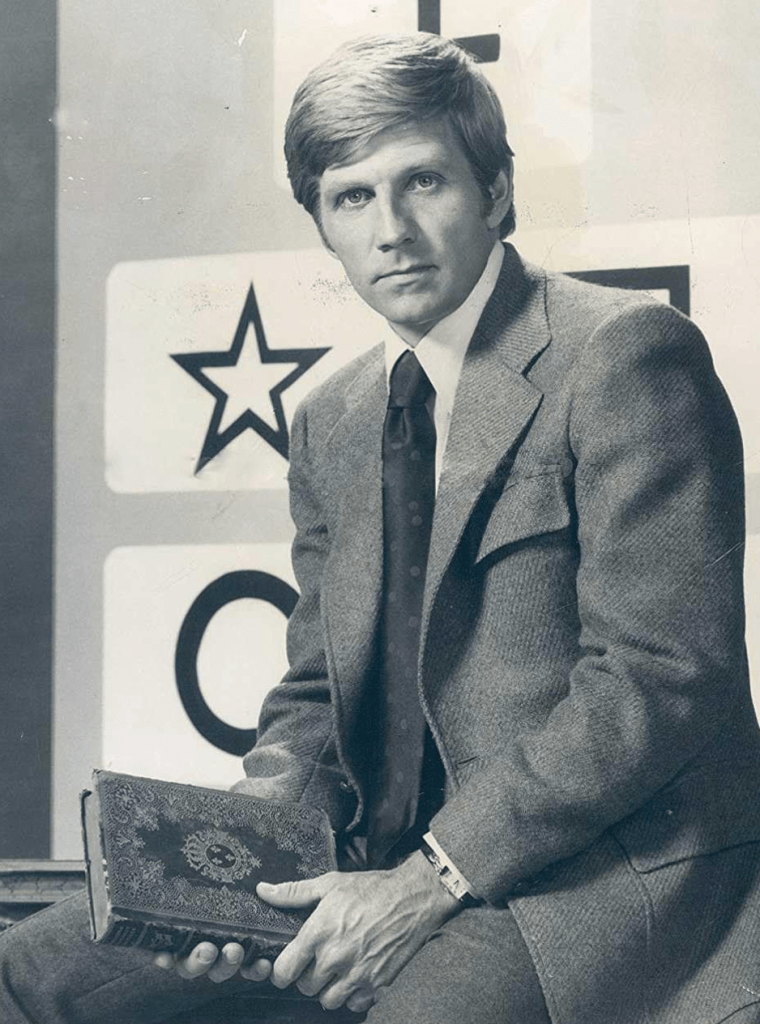
    Gary Collins and Catherine Ferrar in a S1 promo photo

    The ignominious fate of The Sixth Sense (1972) television series – butchered, derided and ultimately forgotten – is undeserved. I’m going to spend some time exploring the show and what makes it a candidate for rediscovery and love for fans of paranormal and supernaturally-themed titles. The series has its basis in the 1971 made-for-TV movie Sweet, Sweet Rachel (dir. Sutton Roley). A number of other television films of the time, like The House That Wouldn’t Die (1970) and A Taste of Evil (1971) – both directed by John Llewellyn Moxey and Something Evil (1972, dir. Steven Spielberg) – had popularised themes of hauntings and psychological horror. 

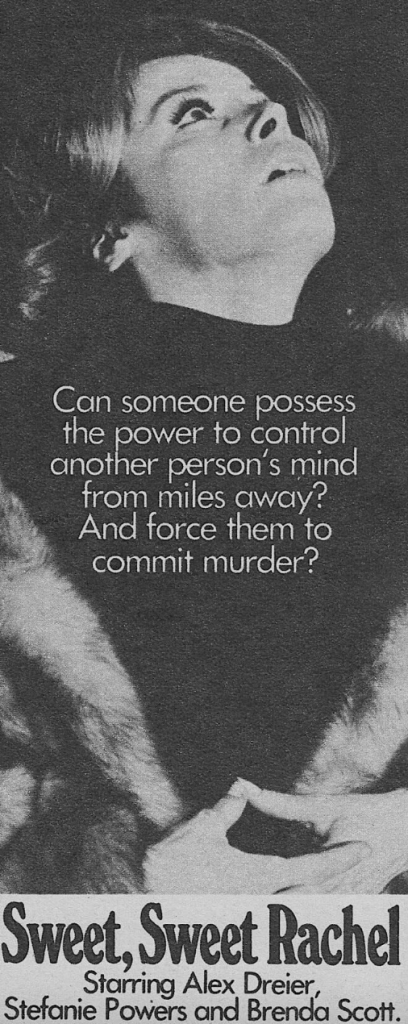
    Roley’s film features Stephanie Powers as the titular Rachel, grieving for the husband who killed himself and worrying that her uncontrolled psychic abilities drove him to it. But she’s not the only one in the family with such ESP powers as Dr. Darrow (Alex Dreier) will find out in this psychic-murder-mystery. As he investigates what actually happened he must also use his own abilities to stay alive long enough to discover the truth. The film was written by Anthony Lawrence, a well-established writer who had previously worked on shows like Naked City (1959-1963), The Outer Limits (1963-1965), Medical Center (1969-1976) and many others. It’s weird and creepy and even amongst the films mentioned above, stands out as something special.

    Newspaper advert for Sweet, Sweet Rachel

    Lawrence would go on to use the central concept of a doctor of parapsychology investigating cases of apparent hauntings, psychic attacks and murder to create a weekly series. The main doctor for the show would be Dr. Michael Rhodes, played by Gary Collins, and Rhodes would similarly have his own ESP powers and frequently use this ability to solve the case. Collins was a well-established television actor who would go on to his greatest success as a talk-show host in the ‘80s, and it’s this unusual otherness he has (convincing as both) that brings Rhodes to life.

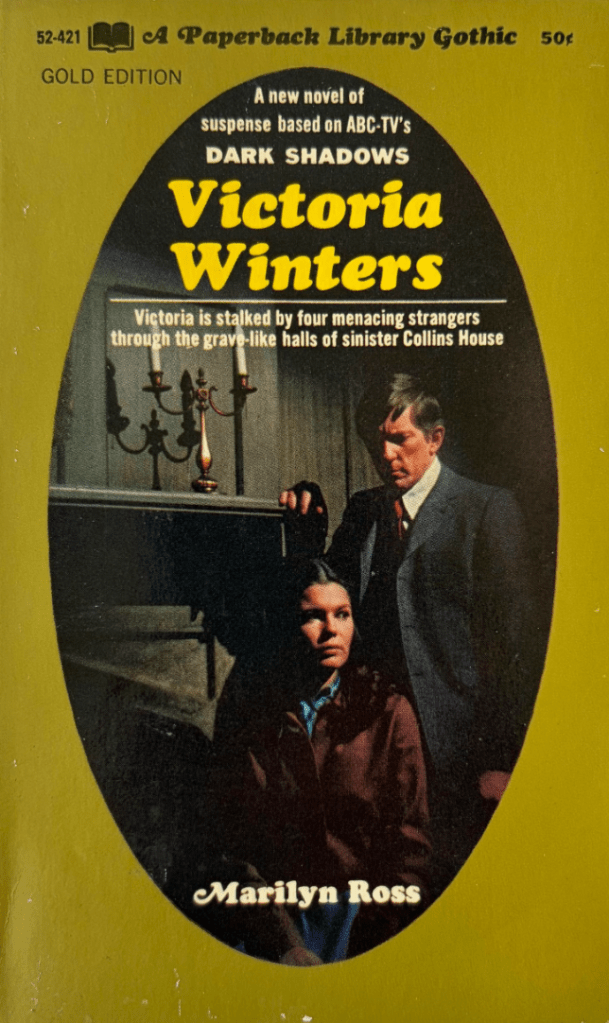
    The Sixth Sense also has its roots in a popular subset of paperbacks of the time, that of the women-in-paranormal-danger and house-of-evil kind. Only a year before, that great gothic-romance-horror-science fiction soap Dark Shadows (1966-1971) had finished its run (as well as producing two feature films).  Marilyn Ross (a pseudonym for author Dan Ross) had written a series of novels that separated from the show’s ongoing arcs, usually involving Barnabas and Quentin solving a supernatural mystery that frequently involved a damsel-in-distress.  

    Cover image for Victoria Winters by Marilyn Ross

    Many of the ‘women running from houses’ subgenre titles featured a woman arriving at a large house for some reason or other and finding love and supernatural danger within. Or it would feature a house with a dark and violent history and sinister intent for its new, often temporary inhabitants, as can be found in titles like Richard Matheson’s Hell House (1971). Around this time we also got novels like Robert Marasco’s Burnt Offerings (1973) which were, like Matheson’s tale, quickly adapted into films. It’s a trend that would continue on for some years, with authors like Bernard Taylor, Michael McDowell and V.C Andrews twisting these basics into ever more threatening directions in their novels, entwining sex and death and horror.

    (If you want to know more, there’s more on this era of writing in Paperbacks from Hell: The Twisted History of ‘70s and ‘80s Horror Fiction (2017, Quirk Books) by Grady Hendrix and Will Errickson).

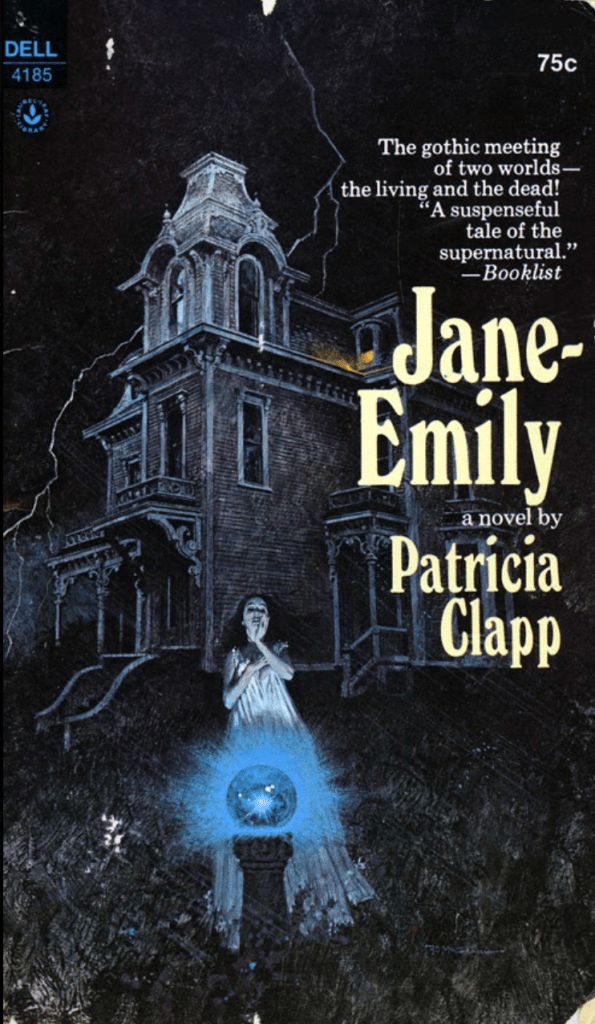
    Example of a women-in-paranormal-danger novel cover

    So it’s easy to understand how The Sixth Sense could have been considered a dead cert for success.  Its core elements – paranormal mystery and women-in-danger – were those staples of many television movies and popular novels hitting big at the time. As much as the series was inarguably a paranormal show (with that element of the plots never being in question) it was also designed around the standard procedural template of many other hit shows. Imagine that Rhodes is essentially another uniquely brilliant television detective solving a crime and it’s not substantially different in format. 
    A few things made it stand out at the time, however. Firstly, although recent series Night Gallery (1970-1973) had found some moderate success with television horror, it was part of a number of anthology shows that had used the tools of the paranormal and horror for its stories, and was not a continuing series. Though it is strictly horror as compared to The Twilight Zone (1959-1964), Thriller (1960-1962), The Outer Limits et al which used the genre occasionally, Night Gallery was different for each week’s instalments. 

    The Sixth Sense’s closest anthology relative is one of the first that specialised in such themes, Alcoa Presents: One Step Beyond (1959-1961). The John Newland-hosted series told stories of possessions, hauntings and other such unlikely events and presented them to viewers as documents of truth about the unexplainable. Again, as an anthology every story was different and featured no reoccurring characters or situations. 

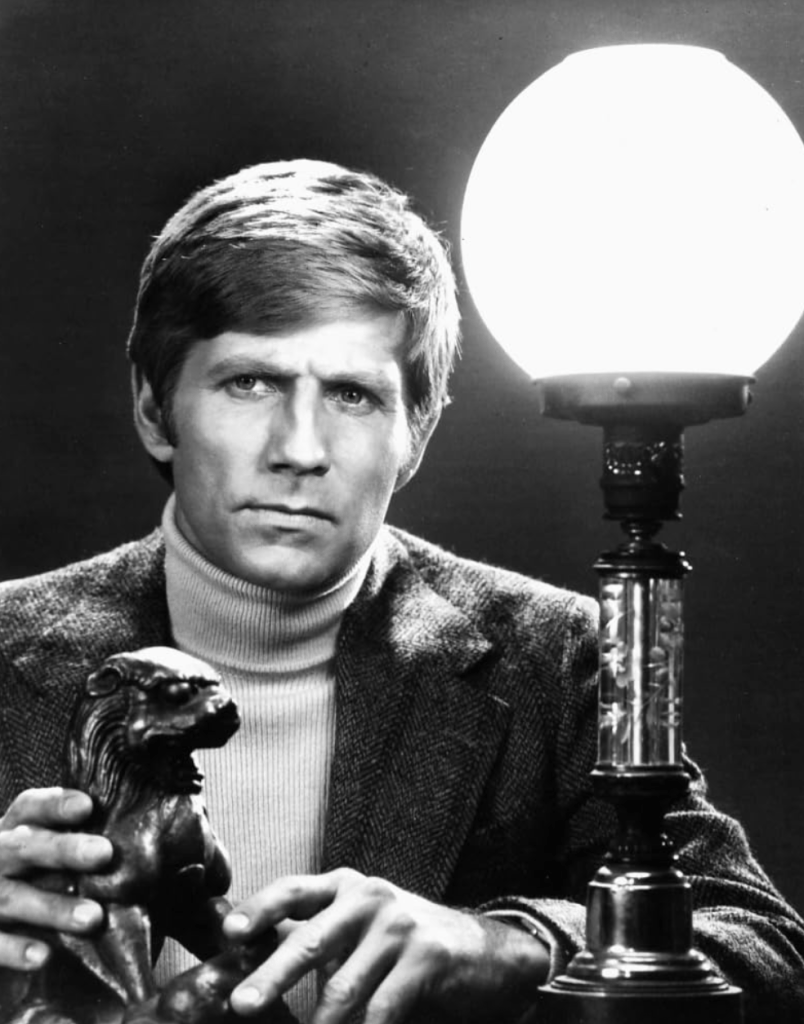
    Promo shot of Rhodes looking stylish and serious as fuck

    So in this respect, The Sixth Sense is one of the earliest paranormal-themed American series that featured the same characters involved in different plots each episode. The show also takes its premise completely seriously. There’s no late-60s style camp or arched eyebrow in delivery and unlike contemporary entertainment like the Carl Kolchak movies and the later Kolchak: The Night Stalker (1974-1975) series it rarely uses humour to cut the tension. It is sincere, and expects its audience to completely buy in as well. There’s no cynicism involved and although the series regularly involves characters who refuse to believe or doubt Rhodes, they usually end up converted through the evidence of that week’s events they see with their own eyes. 

    The third element that separates out The Sixth Sense from simply being a procedural in different clothing is how the paranormal is presented. For an early 1970s show, it often goes out of its way with stylised jump-cutting, use of surprise, shadow, slow-motion and atmosphere-building to make the frequent paranormal events, deaths and attempted murders genuinely unsettling. And in this, the show does not make allowances for people – it’s actually out to unnerve. By today’s standards this is now tame of course, but the show was at the time using what often made one-off weekly movies scary for home audiences and attempting to utilise it on something that was also inviting you back each week for more.  

    Gary Collins as Rhodes in a promo shot

    There’s much to appreciate and enjoy in this show, especially if you’re a fan of the aforementioned anthologies and series or of subsequent shows like The X-Files (1993-2018) that deal in tales of the paranormal and the unexplainable. Not least in that The Sixth Sense had some outstanding episode titles: ‘I Do Not Belong to the Human World’, ‘Dear Joan, We Are Going to Scare You to Death’ and ‘I Did Not Mean to Slay Thee’ amongst many others through a 25-episode run. 

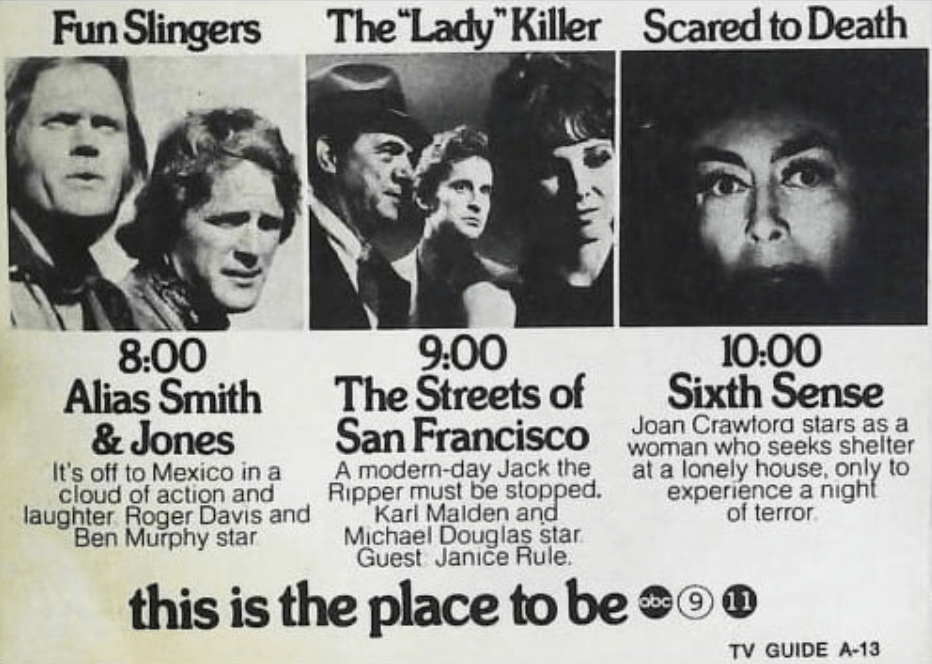
    As it’s a ‘70s series there is also a great list of guest stars who appeared in the run, including John Saxon, William Shatner, Joan Crawford (what an odd, format-twisting episode that one is), Henry Silva and many others. It took plots and inspirations from classic and contemporary films and novels and tried to do something at the time different with them. Though many of the plots are now familiar versions of common tropes from the paranormal the series was genuinely interesting in how it approached them. 

    Newspaper listing ad including Joan Crawford’s episode

    Sadly, the series is either not considered at all or remembered as part of the syndication butchery that affected Night Gallery. Both shows didn’t run for long enough for the syndication sweet spot (usually considered four full seasons or ideally a hundred or more episodes). The Sixth Sense had initially completed a short run of 13 episodes in the early part of 1972 and despite ratings that did not exactly scream hit it would come back for a final run of 12 more later in the year. 

    It didn’t fare well enough in the ratings against the likes of Mission: Impossible (1966-1973), itself nearing the end of its run and dipping in viewers, and so would not return for a third season. To make use of both Serling’s show and the total run of the Collins series, a thoroughly ridiculous idea was agreed: edit episodes of Night Gallery and The Sixth Sense together into half hour-long episodes and make Serling suffer shooting new introductions for the segments from a show he had nothing to do with. You could imagine that by cutting down two near-50 minute shows (at least in Gallery’s first two seasons) to 25 minutes and editing it into something totally unrelated it would cause problems, and so it did. Both the Night Gallery segments – often also edited down – and The Sixth Sense episodes became an unintelligible mess that benefited neither.  

    And this is how most people came to rememberThe Sixth Sense – a mess of a series that for decades after blighted Serling’s show. Its reputation became one of ruiner and failed in its own right and perhaps that is why the series has rarely been shown in its full form since the initial broadcast. That assessment of it, as a poor show that made worse a better show, is unfair. A French release in 2014 of the complete show on DVD, in its unedited and original sequence, was the first time that allowed us to rediscover a series that has much to offer (it had another DVD release in 2025 through Via Vision).

    It’s spooky, unsettling (those second season credits, damn), scary, often gripping and imaginative and absolutely entertaining fun. Seek it out, it is time very well spent.  I fucking love it.

  • Gratuitously violent, fearfully sick

    Revisiting Peter’s Cushing’s agreeably grubby exploitation flick, Corruption

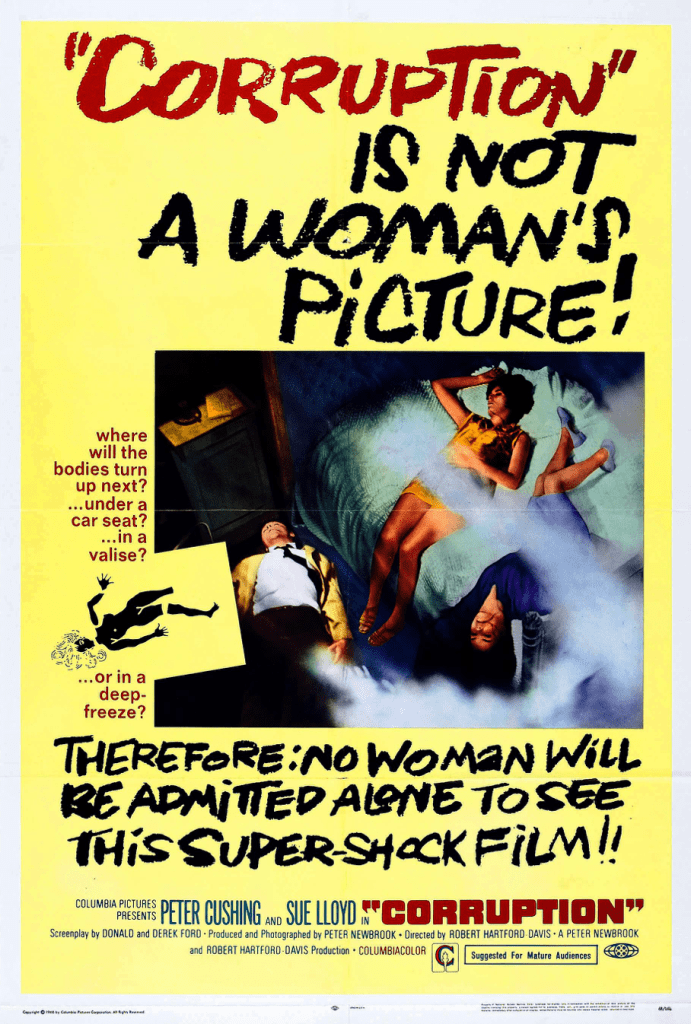
    Poster for Corruption (1968) which is NOT FOR WOMEN in case you thought it might be

    Peter Cushing brought a certain dignity to all of his roles, and a commitment to performance that marks him out as one of Britain’s greatest ever actors. In his career prime throughout the fifties, sixties and seventies, Cushing became inextricably linked with the horror boom that followed Hammer’s first colour forays into the genre. A practical sort with a fearsome work ethic, he knew here was a way to bring in the money he felt necessary to support his beloved wife Helen as her health deteriorated. Cushing also seemed incapable of giving a poor performance and even in the depths of his grief after Helen’s passing (notably 1972’s Horror Express), he always gave everything on screen.

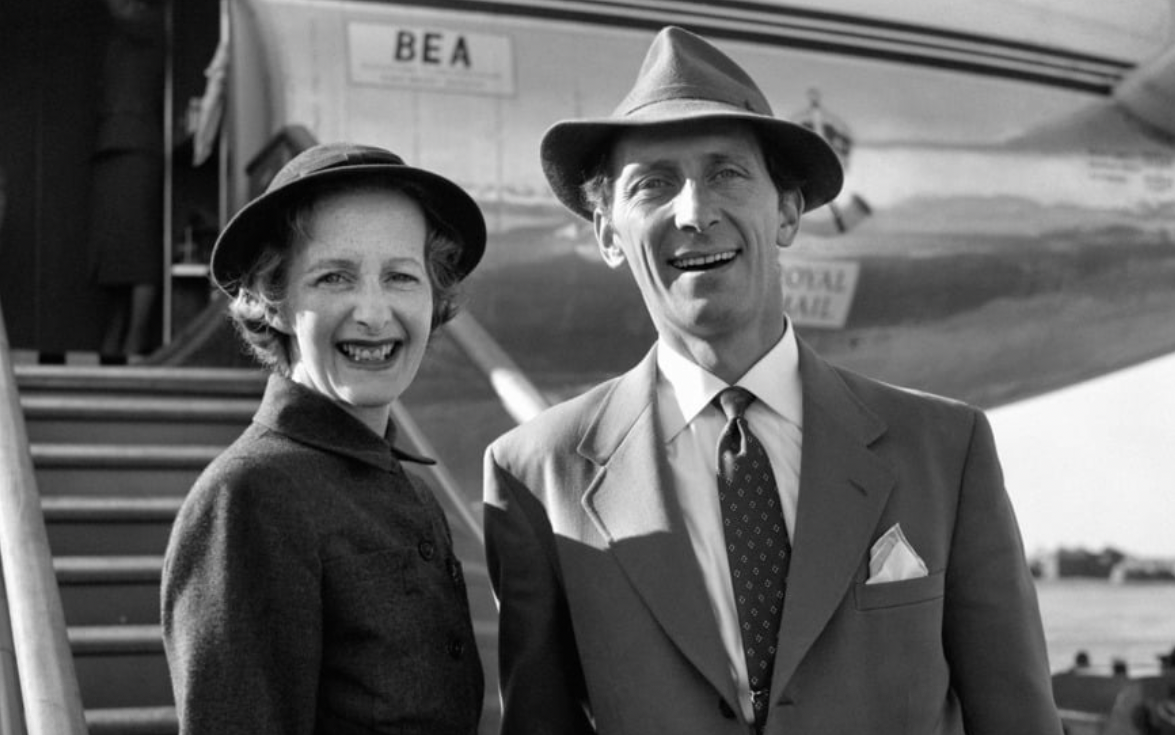
    Helen and Peter Cushing looking smartly put together and happy

    As a result, we have a remarkable catalogue of great work to explore, from his leading roles as the Baron in Hammer’s Frankenstein series, to his cameo spots and his beautifully done running gag on The Morecambe & Wise Show. There’s also the more offbeat path to consider, where Cushing was the best thing about the film or series, or where the film doesn’t have the cultural impact of his appearances as Van Helsing. 

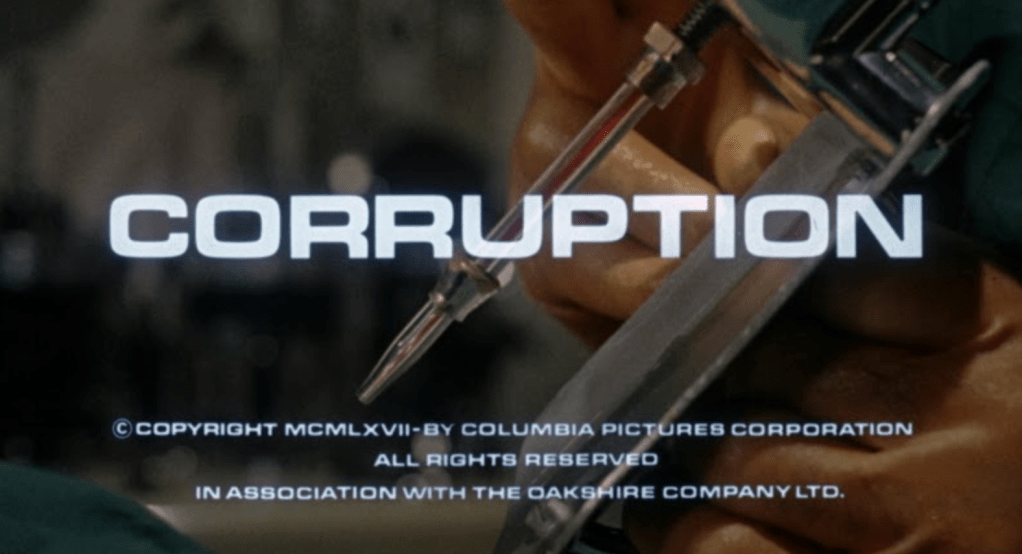
    Title card for Corruption

    Which brings us to his role in Corruption from 1968 (dir. Robert Hartford-Davis), an agreeably grubby exploitation riff on the comparatively refined Eyes Without a Face (1960) that qualifies in both the above categories. Is it a great film? Not really. Is in interesting and often entertaining? Definitely. Some spoilers now, even though most of the following takes place in roughly the first half hour of a 90-minute film that ultimately takes a left turn in a different direction altogether.

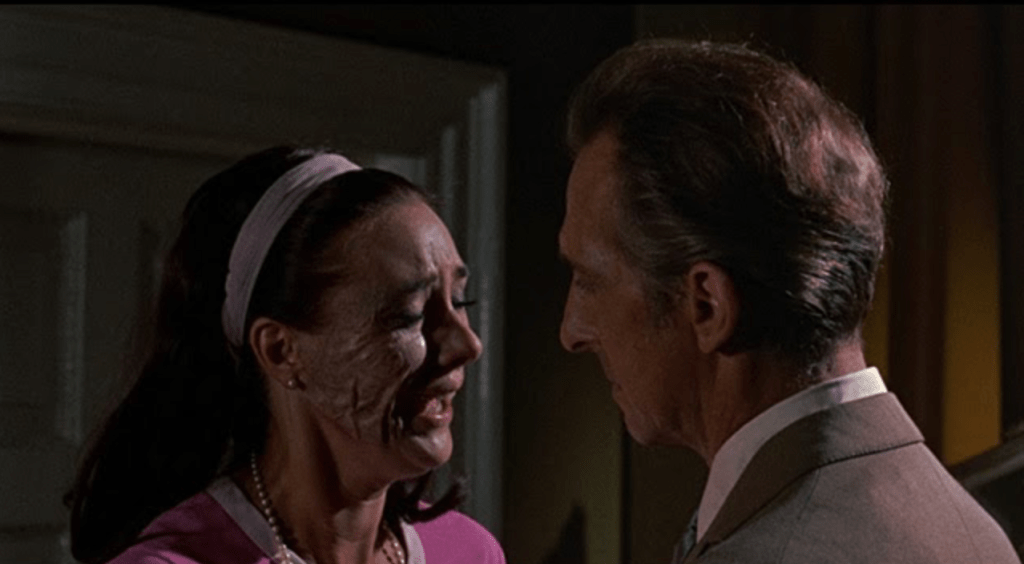
    Corruption pushes the dignified Cushing into a frequently hysterically-pitched cartoon of carnage as the wealthy doctor Sir John Rowan. Rowan is a pioneering plastic surgeon which proves immediately helpful when he accompanies his young, beautiful fiancée, the fashion model Lynn (Sue Lloyd), to a swinging party. John is uncomfortable around the hip kids of London as they ‘freak out’. When he tries to convince Lynn to leave early, a confrontation with the slimy photographer trying to convince her to undress for pictures in front of everyone else gets violent and she takes a hot lamp to the face.

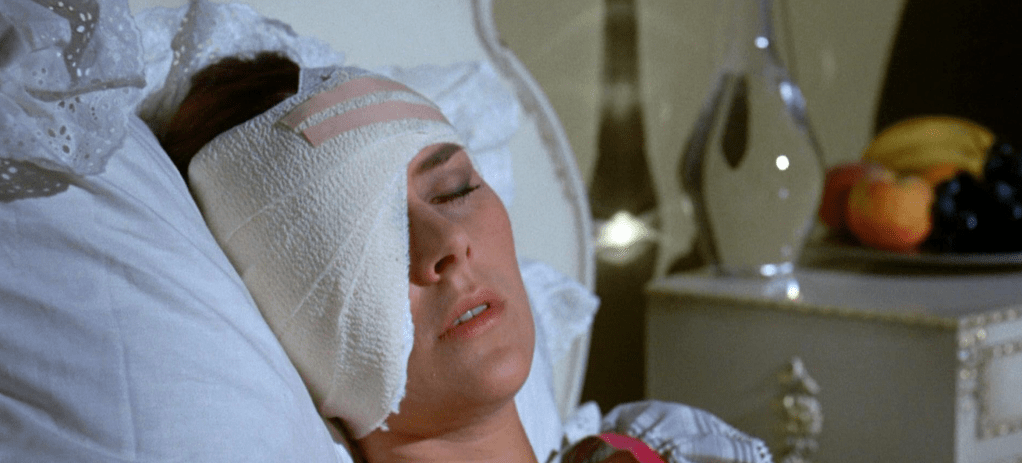
    Sue Lloyd’s Lynn, in bed with half her face covered in bandages

    Rowan can’t fix her disfigurement with his conventional methods so decides to experiments of the dangerous kind with the pituitary gland of a corpse and a mix of ancient theories and modern science. It’s a success and the previously despondent Lynn is back on her feet hosting dinners and planning holidays. But wait! It doesn’t last and soon Lynn’s face has deteriorated and Rowan is desperately trying to refine the process.

    A frantic Lynn with Sir John as his handiwork unravels

    With the spotlight on Rowan from colleagues and his experiments in no way ethical, corpses being chopped up are out of the question so John takes what we can clearly all agree is the only other logical choice and takes up a parallel career as a modern-day Jack the Ripper, stealing the necessary gland from a sex worker he brutally murders (in significantly more unpleasant style in the alternative international cut).

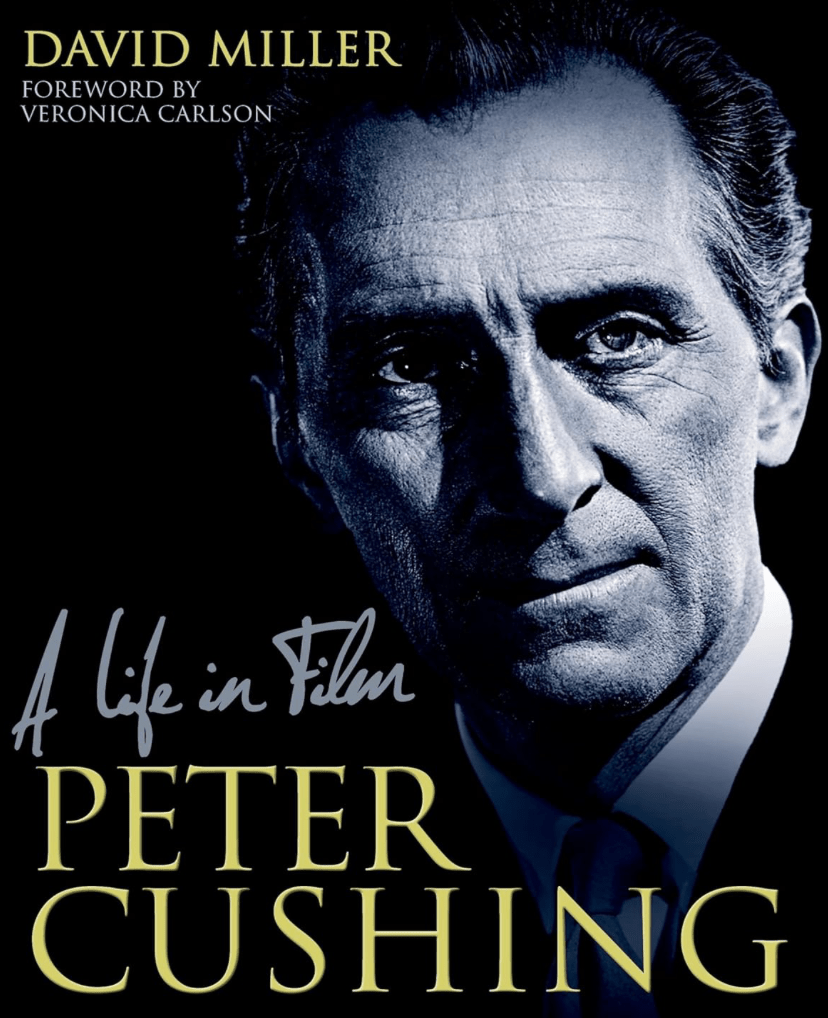
    In David Miller’s book Peter Cushing: A Life in Film, Cushing gave his take on the finished film: “It was gratuitously violent, fearfully sick. But it was a good script, which just goes to show how important the presentation is. With any film you participate in, the company, if they so wish, can destroy your original interpretation of the role.” This comment says a lot about what makes Cushing special.

    Cover for the book Peter Cushing: A Life in Film by David Miller

    There’s an oft-told anecdote about how Cushing would carry around props that he thought his character would have in his pockets, even though they wouldn’t be seen onscreen. Cushing thought deeply about his characters, trying to understand their motivations. He never looked down on the work as beneath him, even while critics of the time largely sniffed haughtily at how silly the horror game was.

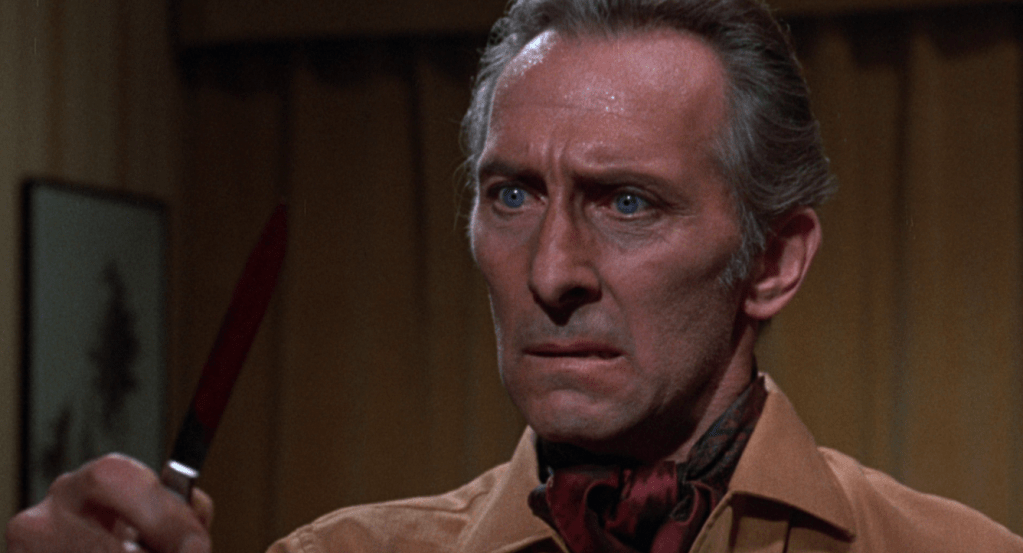
    Sir John staring in fear, panic and disgust at a knife he is holding

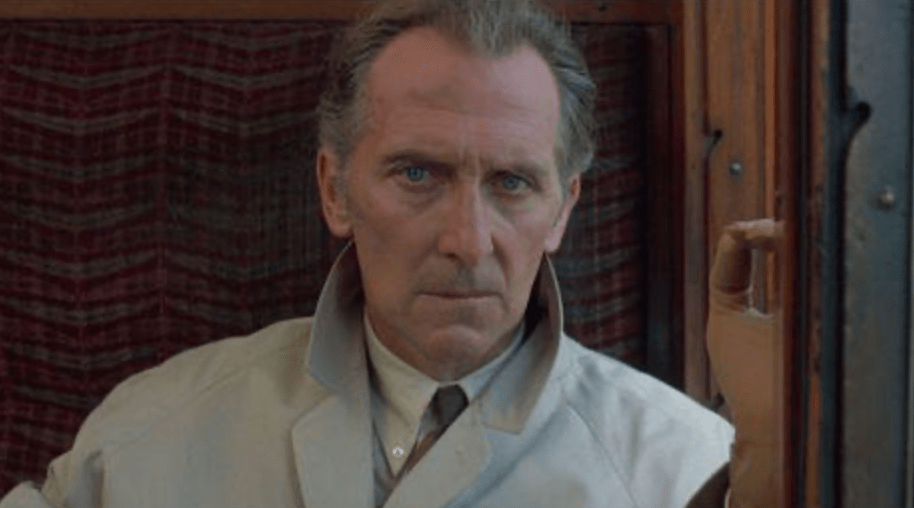
    If we compare Sir John to another of Cushing’s ‘good men doing bad things’ roles from just three years later, we get a picture of just how varied and nuanced he was in presenting this kind of complicated character. Rowan is inarguably a villain, just as Gustav Weil is in Twins of Evil (1971, dir. John Hough) but both do what they do because they believe it is their only choice. Where the steely, cold Weil uses moral superiority to underwrite as necessary the wickedness of his choices, Rowan kills out of love and guilt. It’s in his face during the murder of the sex worker, it’s in his cold stare on the train as drains his humanity to prepare himself to the task at hand, it’s in the small pause at the bedroom door of his cottage, knife in hand, as it hits him again what he has become. 
    Sir John on a train, preparing himself to kill

    As we’ve seen, Cushing was not kind to the finished film. It does everything to undermine the subtly of his performance, or the escalating panic that layers Lloyd’s unravelling Lynn. Largely  for this writer, it’s due to an appropriate-for-the-swinging-times but nevertheless wildly misjudged jazz score from Bill McGuffie.
    This is at its most egregious during a late-in-film argument between Rowan and Lynn, Sir John drowning in guilt and no longer able to justify his crimes and Lynn desperate for another chance to get the treatment right. Stripped of the score, this would be a beautiful, quiet moment between these two characters as they come to understand they have lost each other despite everything.
    That this still comes across, and that these two damaged people still compel us, is down to those two actors. Sir John Rowan is a villain. Peter Cushing made him human. It’s a fine example of what one of Britain’s most capable, most compelling, most powerful actors could achieve, whatever the quality of the film.

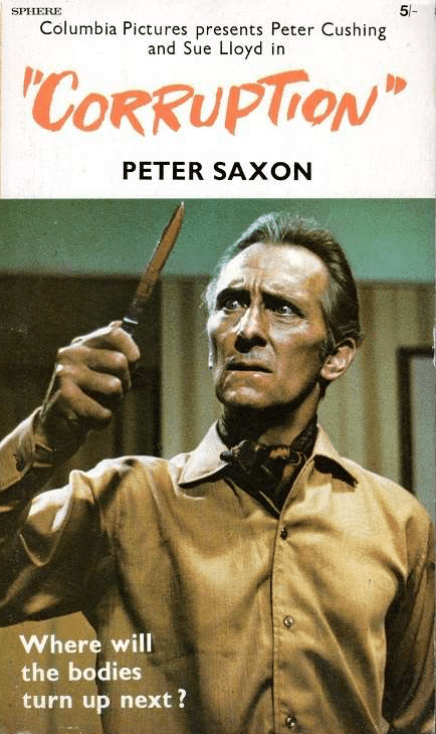
    The cover of the novelisation of Corruption by the pseudonymous Peter Saxon
  • Carl Kolchak: An Appreciation

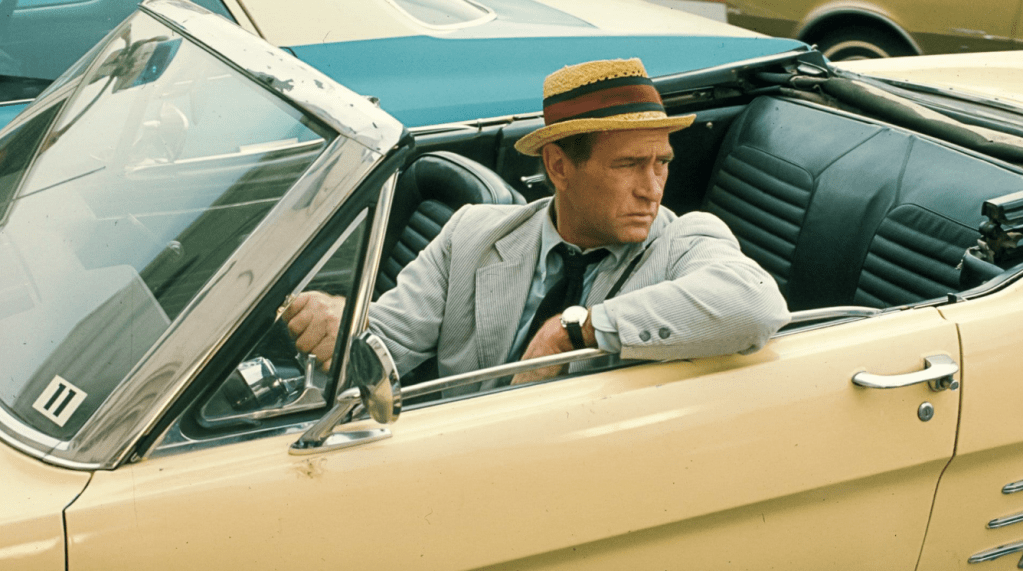
    Darren McGavin as Carl Kolchak

    It’s my esteemed and correct opinion that Carl Kolchak is one of popular culture’s greatest characters. As brought to life by Darren McGavin in a shabby seersucker suit and straw hat, he’s a lovably shambolic, rough-edged crusader for the truth. The reporter started out life as the main focus of Jeff Rice’s novel The Kolchak Papers. It tells of a foul-mouthed drunk who had a remarkable story to tell about a vampire loose in Las Vegas, who used Rice to get his story out. As he was working unsuccessfully to get the book published Rice was also inking deals with those who could put his story on the screen. This was the early 70s and television movies were a huge deal, bringing in massive audiences. So when ABC optioned the book you can imagine Rice’s excitement at the prospect of bringing Kolchak to homes all across America. Ultimately it would be the hugely talented Richard Matheson who would write the script, slightly softening Carl’s gruff edges but keeping the humour and commentary that pops off the pages of Rice’s book (I don’t think Stephen King was a fan, however).

    Dan Curtis was onboard as producer and it might be hard to get just how big now, but Curtis’ previous project Dark Shadows which had finished in 1971 was huge. It turned the reluctant Jonathan Frid into an unlikely middle-aged sex symbol and had a generation of monsters kids running home from school to follow plots of vampires, werewolves and all sorts of supernatural chicanery taking place.

    Title card for The Night Stalker (1972)

    John Llewellyn Moxey was brought in to direct and in early January 1972 Carl made his screen debut. It was a smash hit and brought in the biggest ever audience for a TV movie at the time.  There’s a reason it was a hit: it’s near perfect, a mix of serious scares and humour centred around McGavin’s effortlessly charming performance, ably supported by Simon Oakland as his suffering editor Tony Vincenzo. At first here Kolchak is a beat reporter, using his police scanner to show up as quickly as possible at crime scenes and generally making himself a nuisance to the powers that be.

    When young women start turning up murdered, Kolchak thinks he’s got a killer on the rampage, but soon he finds out this killer might not even be human. Carl’s the type of guy who goes where the leads take him and so when the pieces start to fit that it’s a vampire that is killing these women, Carl thinks something must be done. Those powers that be aren’t buying it and they set about making Kolchak’s life even harder work. But that’s not going to stop him getting to the truth and doing what it takes to stop the bloodsucker from getting away with it. The thing about Carl is that he believes the people have a right to know and he’ll protect that right no matter the cost to himself. It’s not that he’s particularly noble, it’s more a compulsion that truths hidden should be revealed. If you haven’t ever enjoyed this classic go and find it now.

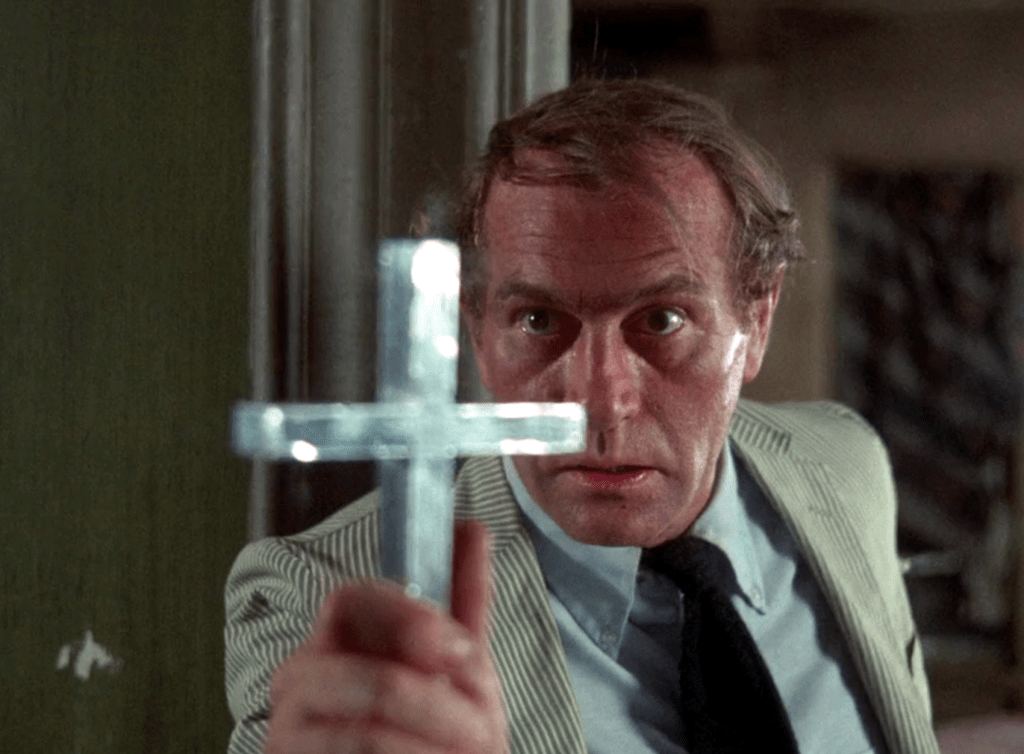
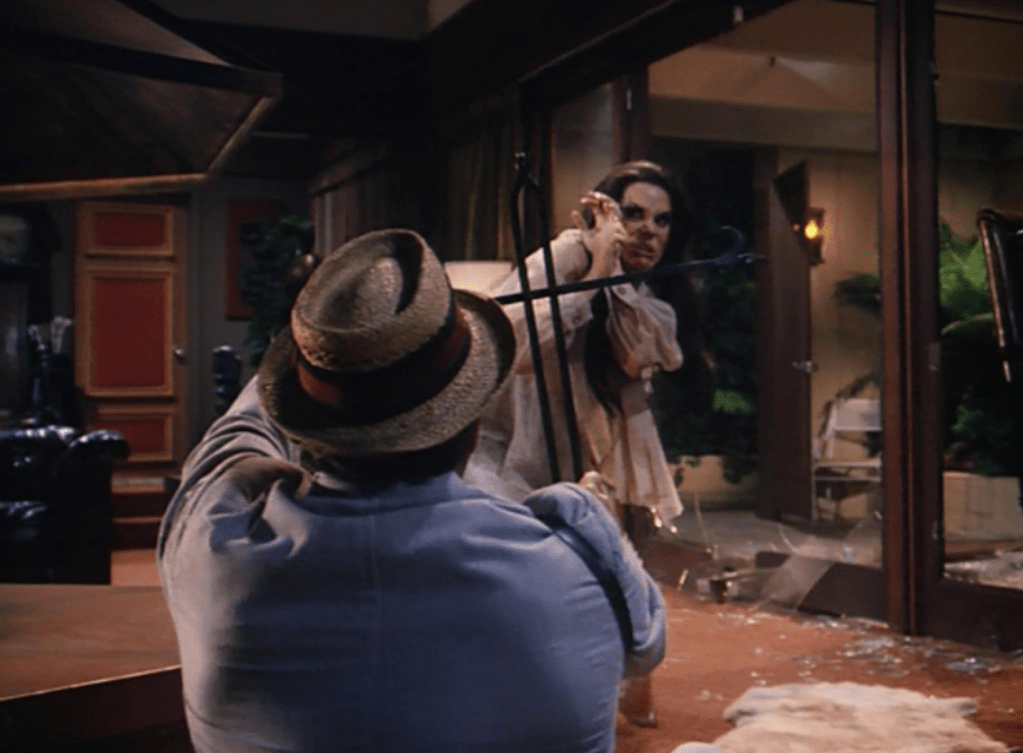
    Carl holding a cross up to repel something nasty

    When The Night Stalker was a huge hit, inevitably talk of a sequel followed. That talk turned to action in double time and in 1973 The Night Strangler followed this time directed by Curtis. In this one Kolchak has relocated (not through choice) to Seattle and comes into contact once again with a despondent Vincenzo. At the same time another killer is murdering people by strangling them (but of course) and using their blood to stay alive, something they have been doing for over a 100 years. Kolchak discovers the truth but again narrowly avoids getting killed for his troubles and is railroaded out of town for good.

    The same year Rice finally got his novel published as a tie-in to the first film. A reverse of the first film’s process next year found Rice adapting Matheson’s Strangler script for a tie-in book that would be published in 1974, the same year the series started. Before that Kolchak had nearly made it into a third film, in a script by Matheson and William F. Nolan called The Night Killers which would have had Carl in conflict with android replicas. McGavin was tiring of the formula and didn’t want to do it. Curtis wasn’t apparently impressed either and things cooled for a while, during which Curtis and Nolan went off to do spooky TV movie The Norliss Tapes, which could easily have been a Kolchak case. 

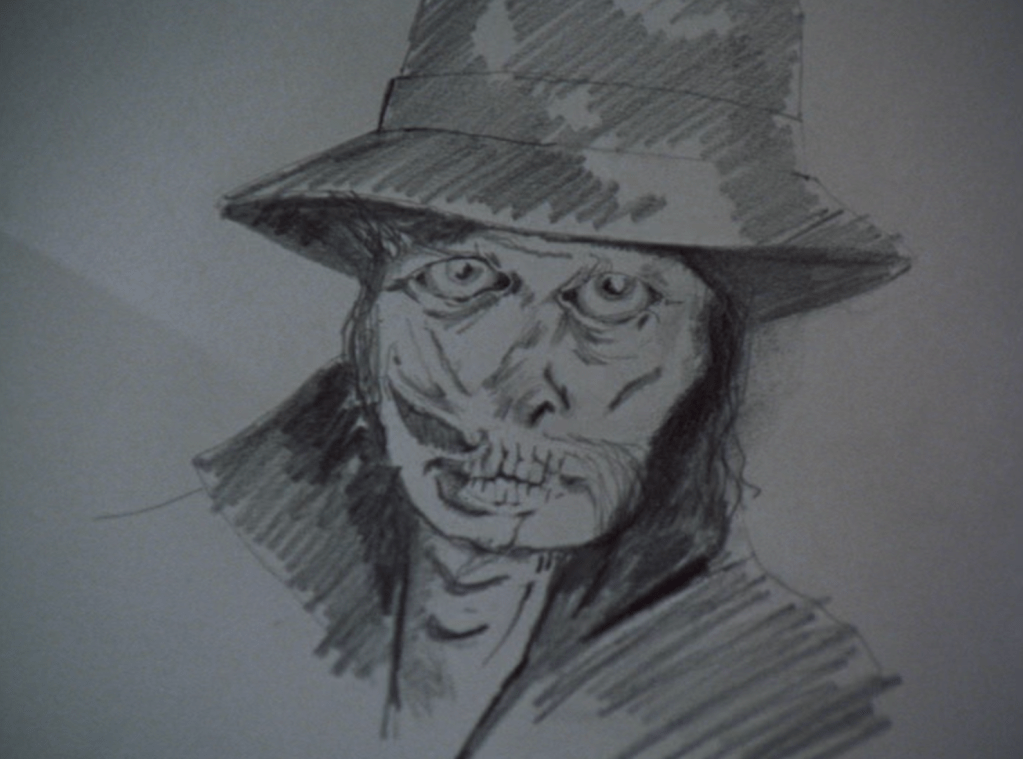
    A police sketch of the undead killer in The Night Strangler (1973)

    Eventually after negotiation, McGavin was tempted back for a weekly series which he could produce, although Curtis was finished with it and opted out. In September 1974, after multiple protracted negotiations and fallouts, and in a season ABC desperately needed success in, Kolchak: The Night Stalker hit small screens as a weekly show. The first episode was ‘The Ripper’, and it finds Carl now set up in Chicago, still working for Vincenzo. It’s almost a remake of sorts of the two films with its story of a madman killing people off who turns out to be THE Ripper, a maniac of unusual longevity.

    Like many an episode of Kolchak it has its good and bad elements. Plotting in the episodes is frequently perfunctory, low budget monster-of-the-week stuff that holds few surprises. But the series still had it’s star in McGavin and he’s reliably excellent no matter if he’s being chased around a cruise ship by a ‘werewolf’ who resembles more a guy who fell face first into some hair-restorer as opposed to a beastly lycanthrope, or sowing a zombie’s mouth shut and hoping it’s not going to wake up while he’s doing it. There’s many reasons to love McGavin but there’s a great little moment in ‘The Ripper’ where you just know he’s doing it the way you would too. Trapped in the Ripper’s room all Kolchak has to do is stay quiet and he’ll make it out unseen. But when the Ripper gets too close Kolchak lets out a yelp and makes a run for it, blowing his cover. By grounding Carl in recognisable flaws and humour, he became more real to us. Not an impervious hero but instead a dude who’s scared shitless but can’t turn away from the truth or doing what needs to be done.  

    Carl with microphone and puzzled expression

    When you go back to the series now one of its strengths is just how infrequently it chose to stick with the usual screen horror villains. Sure, there’s the Ripper and a werewolf and another zombie. There’s even another vampire but it links in with The Night Stalker in an interesting way and is one of the best episodes. But others included witches, prehistoric monsters, a haunted knight’s armour, robots, aliens and demonic spirits. This level of creativity always fought against the network drive to make every week’s entertainment broadly the same as the week before and is representative of what eventually brought the series down before it’s first season had finished, with a few scripts un-produced. Ratings were never massive and as the series went on McGavin got restless and the network could see it was not the hit they hoped for, with the various attempts at meddling causing friction between star and studio. In 1975 the episode order was cut by two and Kolchak limped to a sad end. But it was not the end really.  

    Reruns of the series would find more receptive viewers in the late 70s and this would continue through the 1980s until the series found a new home on the cable Sci-Fi Channel at roughly the same time a new series called The X-Files on Fox was moving from cult hit to mainstream sensation. Chris Carter has spoken before of his memories of Kolchak in part inspiring Fox Mulder and Dana Scully’s adventures and this helped continue to build an interest for newer viewers as to who this Carl Kolchak was. Home video releases of the first film and series started to surface too, along with the reruns allowing people to get to know McGavin’s intrepid reporter again. Mark Dawidziak, a critic for an American newspaper, wrote a guide book on Kolchak that arrived in 1991 called Night Stalking: A 20th Anniversary Kolchak Companion. This led in turn to a new deal between Rice and the same book’s publisher for new Kolchak novels. To kick it off Dawidziak was tasked with writing the third book (to follow on from the films and series) and Grave Secrets duly arrived in 1994. The deal for more faltered when the publisher was unable to actually get anything else in print and nothing more would arrive for some years. But thanks to Dark Shadows actor Kathryn Leigh-Scott’s publishing company Pomegranate Press an updated and now illustrated 25th anniversary edition of Dawidziak’s definitive book would arrive in 1997. 

    Cover for Jeff Rice’s The Night Stalker novel

    After this, the new century found Carl in surprisingly good health. Universal released a (sadly totally extras-free) box set of the entire series. The two TV movies came out on a dual disc release.  A book with Matheson’s three scripts (including The Night Killers) was released with introductions by Dawidziak. Moonstone Books began publishing comics based on the character in 2003 and these became almost an industry in their own right, covering Kolchak through comics (with adaptations of the first film and unfilled scripts), novels and short story compilations. More comic adventures have followed.

    In 2005, a short-lived revival series aired starring Stuart Townsend as Carl in an updated version taking in modern TV’s story-arc concerns. Low ratings and inevitable but unfair comparisons to The X-Files did for Night Stalker after only 6 episodes were aired, but it’s a remarkably good and interesting series in its own right. Frank Spotnitz was show runner and took influences from the original but filtered it through a style more influenced by Michael Mann that left us with an unfinished show that is significantly more interesting than its reputation suggests. It’s not all been good news. Back in 2012 Disney announced a film adaptation was in the early stages with Johnny Depp as Kolchak and Edgar Wright directing.  This (with or without Depp and Wright) turned out to be just an idea and so far Kolchak has yet to return to the screen. Perhaps this is for the best, given the debacle of Depp’s Dark Shadows film and…you know…everything else.

    Carl with a makeshift cross and an angry looking vampire

    But if his history has taught us anything it’s that Carl is a tenacious sonofabitch and it’s likely we’ll have him back on the screen someway, somehow. For now though, if you haven’t yet had the pleasure, go find The Night Stalker and get introduced.

    (Recent years also found the original films and series getting American Blu-ray releases, another resurrection for Carl)

    Further suggested reading:

    The Night Stalker and The Night Strangler by Jeff Rice (published variously as separate books and a one-volume compilation)

    The Night Stalker Companion by Mark Dawidziak (Pomegranate Press, 1997)

    The Kolchak Papers: Grave Secrets by Mark Dawidziak (Cinemaker Press, 1994)

    The Moonstone Books various comics, graphic novels, short story compilations and full-length novels.  

    Progeny of the Adder by Les Whitten (Doubleday, 1965).  This is a book at some points rumoured to have ‘inspired’ Rice as it tells the story of a modern vampire terrorising a city (in this case Washington DC) and the desperate attempts to stop the killings.  

  • Ghoulishly Good Times – The Shorts Edition

    We all love a long movie, right? Two hours, three hours, lost in the magic of cinema. Well…maybe not all the time. Fortunately, the art of the short film has been there since the earliest days of the medium. There’s a wealth of funny, moving, weird, creepy, thrilling and adventurous entertainment that won’t numb your arse or sap your will to live. And so, I welcome you to this spooky short (mostly) silent film specific edition of Ghoulishly Good Times.

    Bluebeard attempting to woo his entirely – and correctly – unenthusiastic bride to be

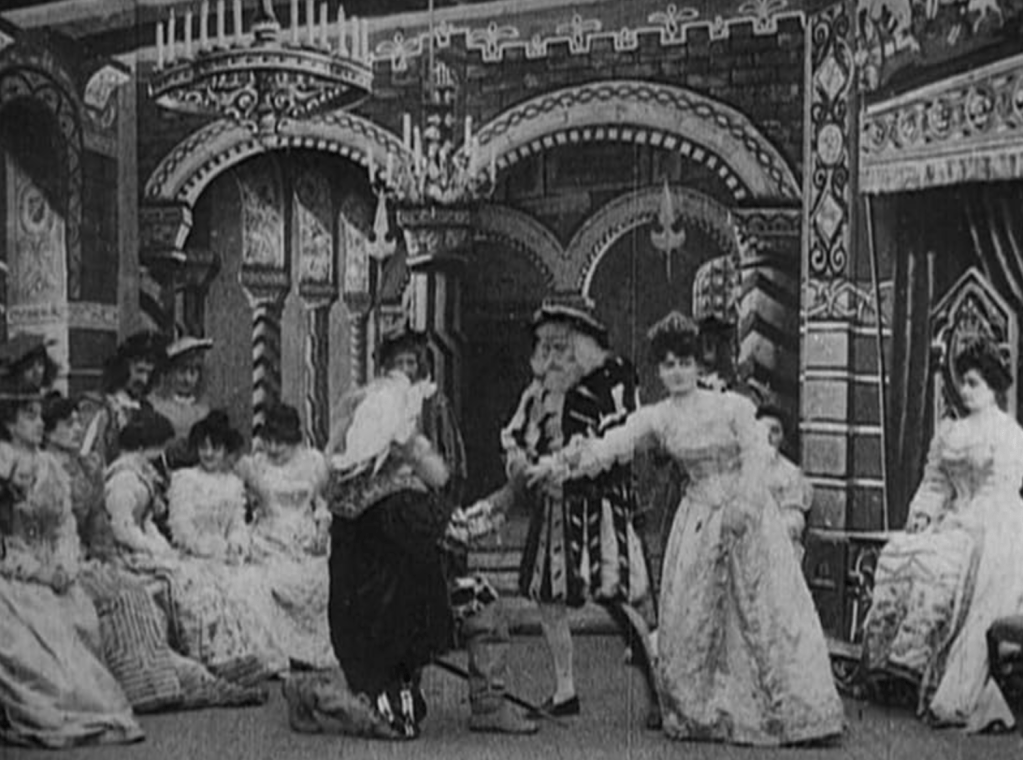
    Barbe-bleue (aka Bluebeard, 1901, dir. George Méliès) retells the French legend of a dubious – but very rich – old dodger courting his eighth wife, the seven before her having died ‘in mysterious circumstances’. His new wife is not impressed with being dumped with the danger, nor is she too happy being left bored in his castle while he buggers off. He does leave her, however, with the key to the place and instructions not to get curious, after which she stumbles on the truth of what befell his other wives. What starts as a broad comedy of over gesticulating takes a hard swerve into serious darkness about halfway through. Surreal nightmares, ghosts, a demonic sprite and some deeply unsettling imagery drive it to the reveal of whether wife number eight is destined for the same fate. What we have here, for me, is some of the first flourishing of narrative horror with a bravura shift in tone from ‘oh this is fun’ to ‘holy shit that’s dark’ that became familiar to movie-going horror audiences across the following decades, done here early and in style.

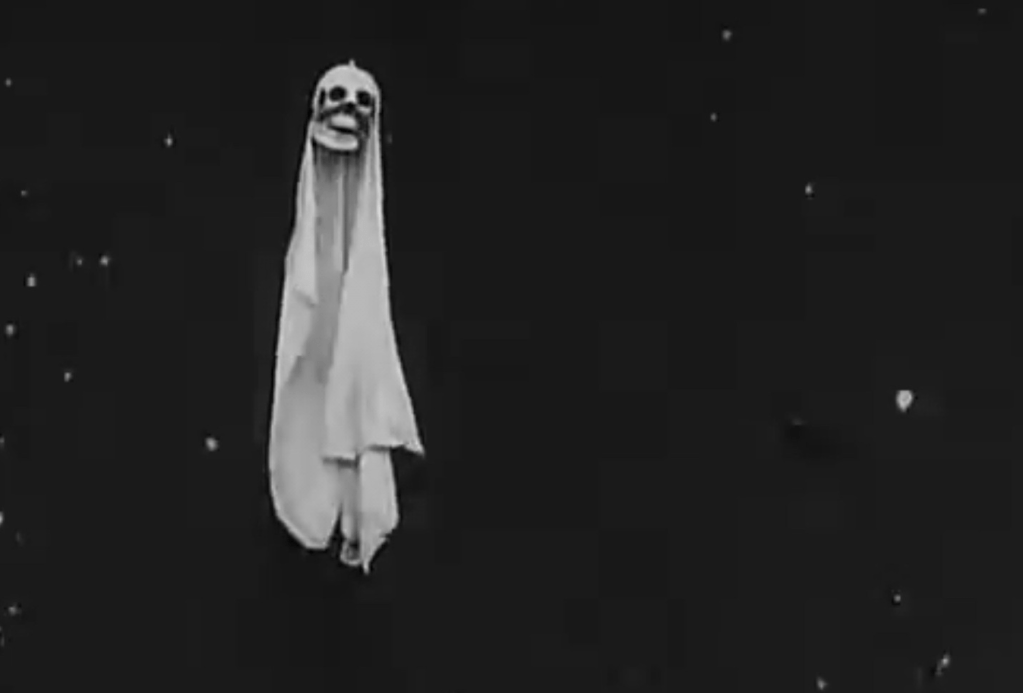
    A totally, absolutely convincing skull with a shroud hanging from it during a séance

    Alongside the development of photography and film and the tantalising prospect of recorded proof (or the lack of it), the end of the 19th century and the start of the 20th continued a pronounced split between people who wanted to believe in an afterlife and that people we had lost could be reached there, and those that saw it as a grift designed to exploit vulnerability and grief. This can be seen in the differing beliefs of Sir Arthur Conan Doyle and Harry Houdini (two men who were nevertheless friends) as fraud and debunking entered into a new phase, and the urgency to believe was shaped by the scale of previously unimaginable loss of life world conflicts inflicted. The UK short Is Spiritualism a Fraud? – The Medium Exposed (1906, dir. J.H. Martin) isn’t really asking a question, but instead presents a couple of con artists getting caught in the act of faking communication with the dead, after which those duped take their revenge in an escalating sequence of slapstick violence. It’s not subtle stuff, but it is a fascinating and entertaining example of the innovation happening in Britain at the time, giving us some startling horror-informed imagery along the way. Enjoyably vicious too, reflecting the way some people felt about the cruelty of offering a bogus way of contact with people lost to them.

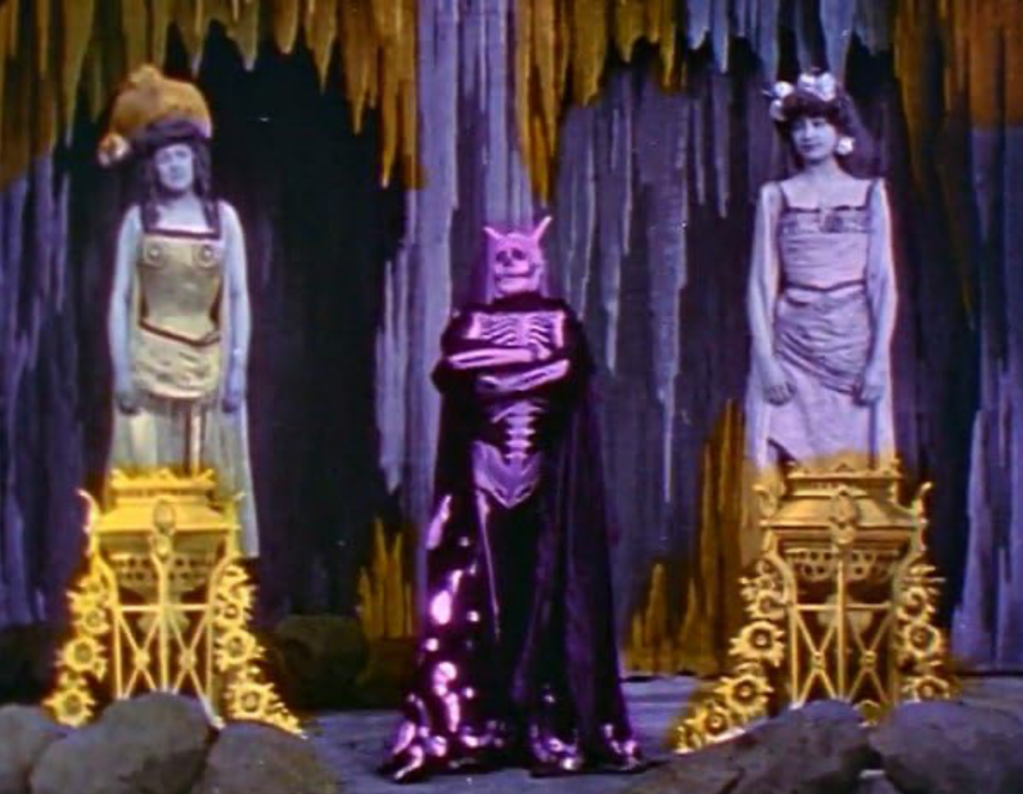
    The spectre of the title in his grotto, using magic to torment people and looking pretty pleased with himself.

    Le Spectre Rouge (aka The Red Spectre, 1907, dirs. Segundo de Chomón, Ferdinand Zecca) is a trick film, ostensibly comparable to the Méliès style. Though it’s easy to say everything followed his work, like D.W. Griffith inventing and perfecting every cinema technique you’ve ever heard of, it’s neither true nor fair. This one is its own thing, and has a demonic magician hanging out in his underground lair, dicking about with tricks that seem largely designed to torment women. His attempts are interrupted by a good sprite who intervenes, stopping or reversing the mischief he has wrought. That’s pretty much it, the premise being an excuse to have fun with tricks and special effects, something the film does well. It’s a frequently beautiful film that plays as an inventively crafted window into another world, full of splashes of vibrant imagination.

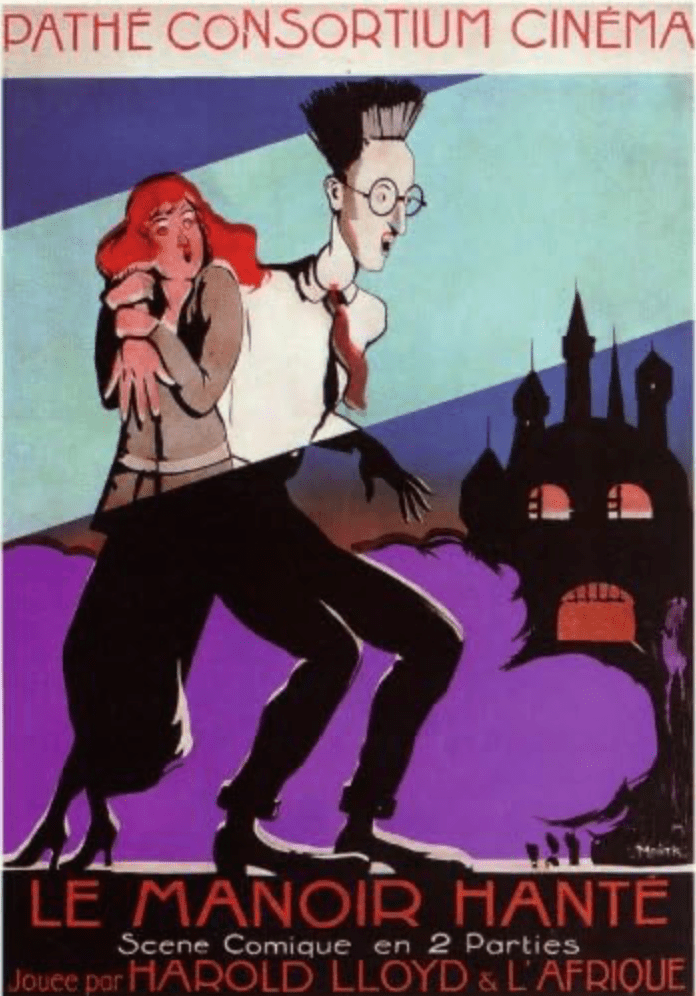
    Delightful French poster for Haunted Spooks

    Haunted house movie (and theatre) tropes were already well known by 1920 and ripe for comedic parody. Haunted Spooks (1920, dirs. Hal Roach, Alfred J. Goulding) does just that. But before we get to the titular spooky abode, the film starts with a remarkable sequence where Harold Lloyd’s would-be suitor fails to secure the affections of the woman he loves. This drives him to decide to <ahem> resolve the problem of life permanently through several failed attempts that escalate in a darkly amusing fashion. He’s distracted from any further tries when he runs into a lawyer working on behalf of a young woman who urgently needs a husband to claim her inheritance from her grandfather. Part of that inheritance is a beautiful house that the woman’s uncle covets, and so he does what any reasonable person would: fakes a haunting in the hope it will scare her off. When the couple arrive, we get another sequence of escalating events as the uncle’s ill-considered scheme unravels. There’s a lot to enjoy in this one, not least an intertitle A-game, which doesn’t only complement the action but enhances it (as the best examples did). Lloyd and co-star Mildred Davis make a winning central couple as things get truly hair-raising (makes sense when you see the film). It’s also fair to note that there are some disappointing, tiresome racial ‘gags’ in the second half, so be advised.

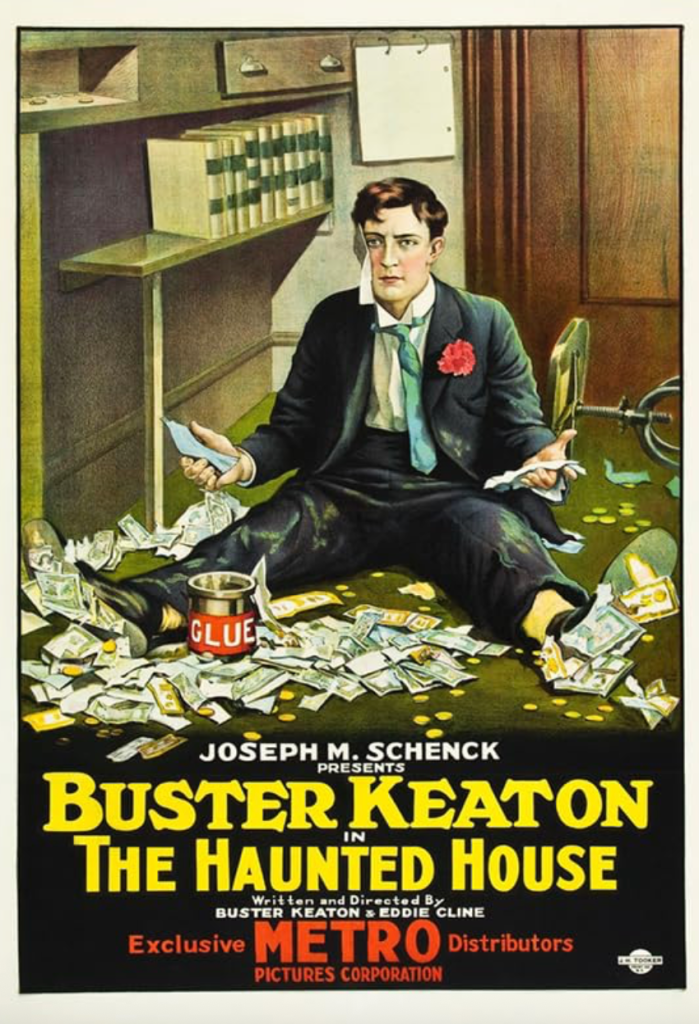
    Poster for The Haunted House, 1921

    Buster Keaton also got in on the haunted house parody gig in the following year’s…uh…The Haunted House (1921, dirs. Buster Keaton and Edward F. Cline). In this one, bank teller Keaton has a day start badly (gluing cash to his hands) and get worse (on the run from the police, hiding out at a ‘haunted’ mansion). It’s not actually haunted, however, but instead the hideout of a gang of thieves using fake ghosts and ghouls to keep people away from their lair. The entire film is a great example of Keaton’s often bizarre, off-kilter humour. When we get to the hideout, it gets increasingly wrapped up in a building run of visual gags and repeated refrains that land in a final sequence that pays off beautifully. There’s one gorgeous frame after another along the way in this gem. I could write more, but I just recommend seeking it out and enjoying it.

    Herbert Stern as Roderick Usher

    The Fall of the House of Usher (dirs. James Sibley Watson & Melville Webber) was one of two adaptations of Poe’s tale in 1928, both of which traded in surreal visuals (the other a feature-length French version). This one was an American production and gives us an avant-garde take on the story, existing for the purposes of experimenting with imagery, mood and technique. It’s a remarkably close approximation of the recognisable feel of a nightmare. The narrative is still straightforward enough to follow but it’s not the point of the film: that is to use images to make you feel unsettled and unbalanced and it does this very well. I wouldn’t say it’s an enjoyable experience, but it certainly qualifies as horrific and, alongside the range of techniques used here, it’s definitely worth seeking out.

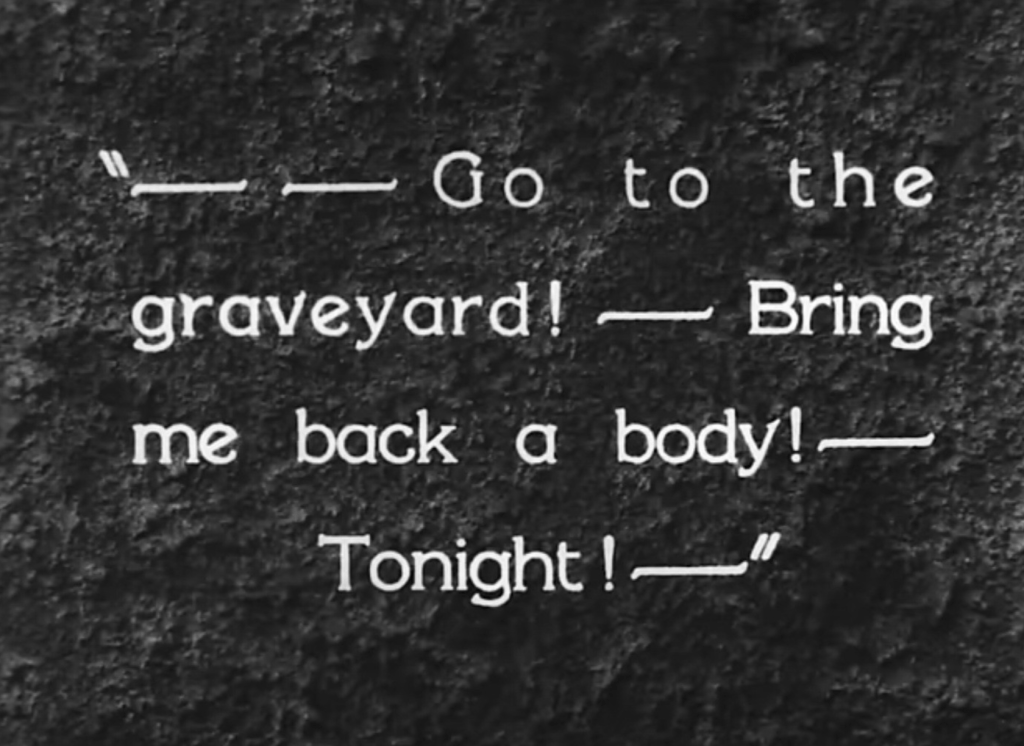
    Screenshot of an excellent intertitle from Habeas Corpus

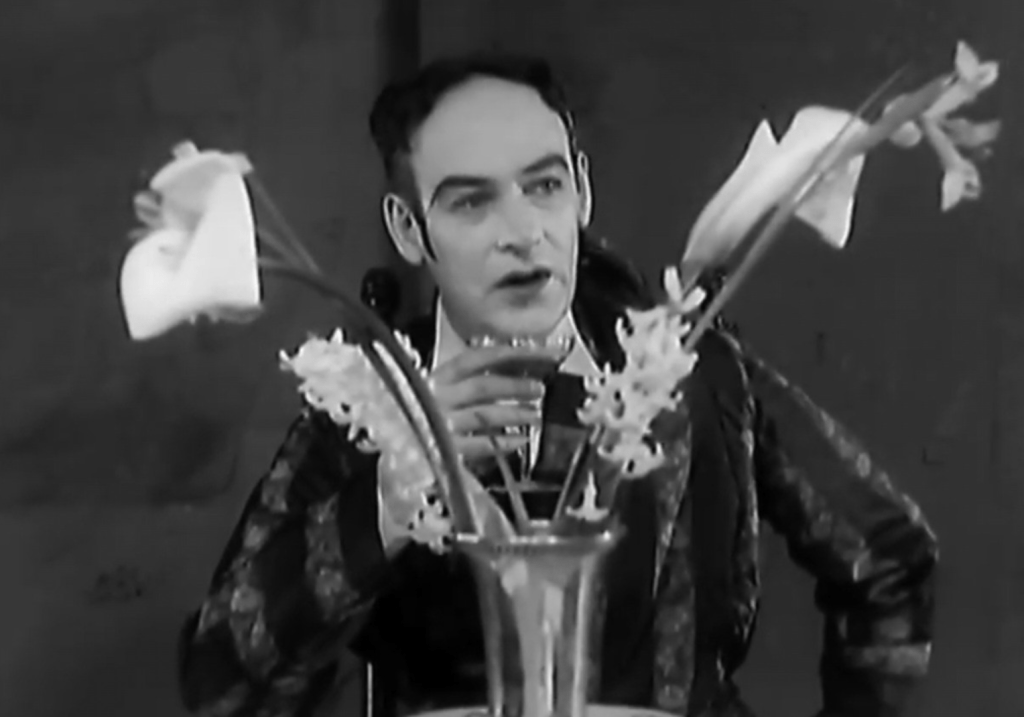
    The first Laurel and Hardy film to be released with synchronised sound (here a musical score with sound effects), Habeas Corpus (1928, dirs. Leo McCaret and James Parrott) has the duo knocking on the door of an insane professor (in the hope of work or money, or in Stan’s case, a slice of buttered toast). He offers them $500 to bring him a body back from the cemetery, and despite their misgivings, they accept. They go down to the graveyard, but unbeknown to them, the police are also aware of the potential crime being committed, and head down there too, aiming to pretend to be a ghost and put the duo off. What follows is a film packed with arguably predictable gags and slapstick somehow, as so often the case with these two great performers, made fresh and appealing by the talent and chemistry of Ollie and Stan. There’s also a wilful drawing out of sequences like them trying to scale the wall into the cemetery that makes that something familiar become something fresh – like a different, more cuddly, less confrontationally weird version of the off-kilter Keaton approach. Again, a Laurel and Hardy hallmark. Great fun.

    Screenshot from The Haunted House (1929)

    At the end of the decade that started with Lloyd and Keaton encountering fake ghosts, Mickey Mouse ran into the real thing in The Haunted House (1929, dir. Walt Disney). During a storm, Mickey seeks refuge in an abandoned house, only to find himself forced to soundtrack (by playing the organ) a delirious dance-off between the skeletal inhabitants. When he tries to escape, things get weirder still. A horror-comedy building on the same year’s The Skeleton Dance* (1929, dir. Walt Disney), this comes from Disney’s emerging days, when it wasn’t tethered to its later image, and it’s pretty wild, nightmarish stuff. For me, much of this has the feel of a Fulci-esque circular nightmare of the seventies or eighties, where if you found out the mouse was dead and trapped in his own private hell, it would need no further explanation. A ‘happy’ conclusion is inevitable (it is a cartoon after all, you know – for the kids) but if it cut off a few seconds earlier, or ended with Mickey lost in the storm again, discovering the house, that could only make it (slightly) better.

    *That one, as the NYT reported in 1931, banned in Denmark for being ‘too macabre’

    A POV shot of the intruder from Suspense. looking up at the woman inside the house

    Though not a horror, a bonus mention for Suspense. (1913, dir. Lois Weber), an excellent home-invasion thriller which finds a woman and her young child in their remote house, abandoned by their maid, and menaced by a passing stranger who finds his way inside. With her husband alerted and racing back from work to try and get there in time, the stranger makes his way through the house, up to her room where she has barricaded herself and her child in. Like several of the above films, the elements are familiar but Weber makes stylish use of technique, frames the story imaginatively, and adds in little shorthand character notes that bring them to life despite the brief running time. An outstandingly good, and perfectly named, film.