Tag: Television

  • Hot film (and book, and TV show) summer

    The films, books and television I’ve been enjoying in recent months

    I haven’t done one of these in a while, mostly because life finds a way (to get in the way) and, like everyone else in the UK, I have been melting, I’m melting etc, etc. So, like a YouTuber who says things like ‘Without further ado, let’s get started’ after ado-ing the ever-loving fuck out of things, let’s…uh…get started.

    Films

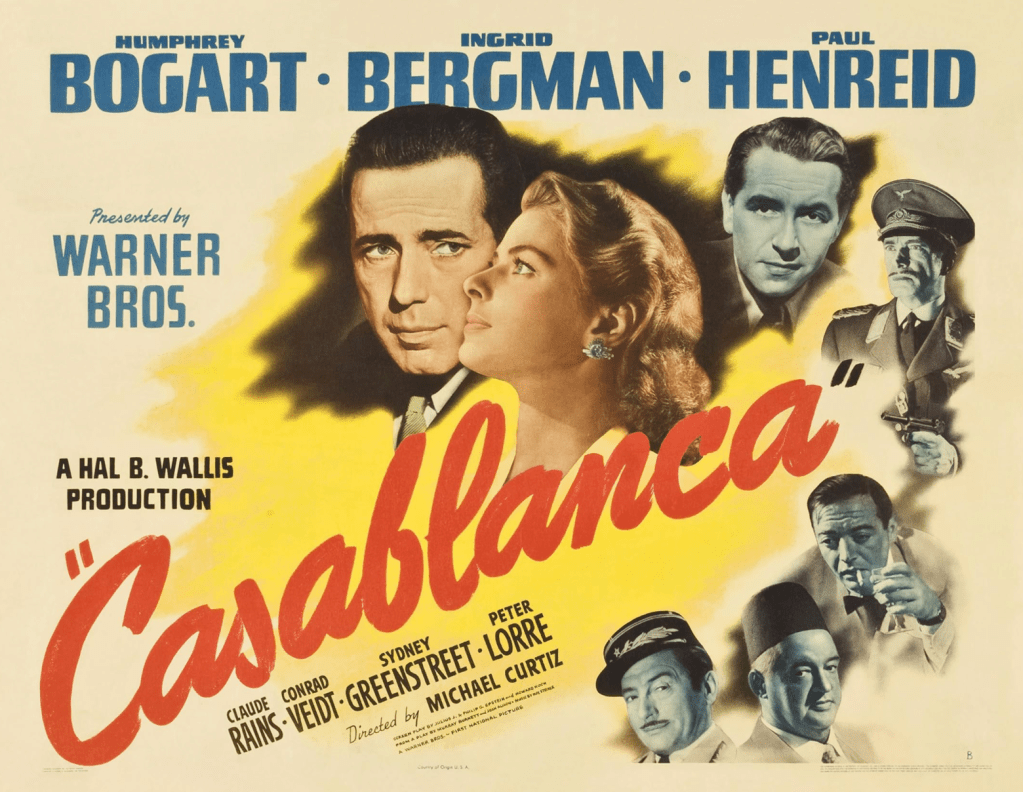
    Casablanca (1942, dir. Michael Curtiz)

    Poster for Casablanca

    I had never seen Casablanca until earlier this year. That’s mostly because I have VERY SPECIFIC INTERESTS due to reasons, and the film studies course I did at university was, possibly, shit. Casablanca is one of those oft-parodied, baked into popular culture classics it’s easy to feel like you have seen before you get to it.

    That’s never really true, and our familiarity with iconic scenes or pastiches can’t obscure the merits of something truly brilliant. That something is a thrilling, romantic, funny, beautifully shot ensemble tale of cynic-with-a-lover’s-heart Rick finding his passion for life again.

    The truth of filmmaking is no matter the talent involved, it is hard work, a good outcome often more by serendipity than by design. So it is to a degree here, but you also get a script, performances and creative team fully able to capture that accidental alchemy.

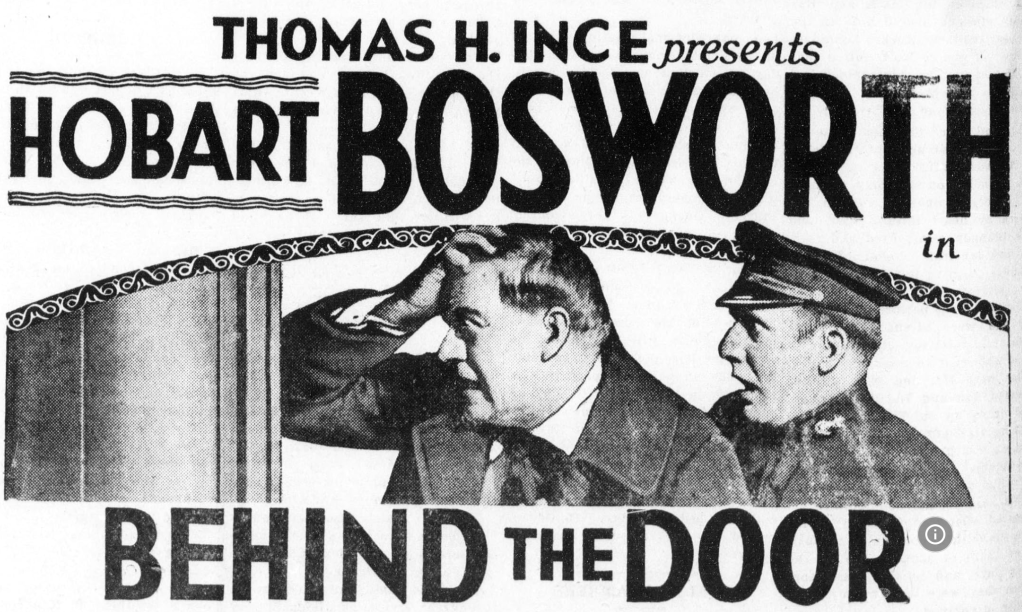
    Behind the Door (1919, dir. Irvin Willat)

    Poster for Behind the Door

    Behind the Door is an adaptation of a Gouverneur Morris short story. A mostly fine WW1-time drama of a couple struggling to stay together despite prejudice and duty, it does that silent-era thing of taking a wild pivot into a stunningly unpleasant last 20 minutes that is still shocking.

    It’s reliably, occasionally excitingly directed, and works as laying groundwork for later fucked-up Morris adaptations featuring Lon Chaney, notably the following year’s The Penalty. One-time screen Dr Jekyll, Hobart Bosworth, does good work as its tortured ‘hero’. Glad this one was restored as much as could be. That last quarter though, hoo boy. It’s a film worth watching for the ending alone, warped reels of cinema.

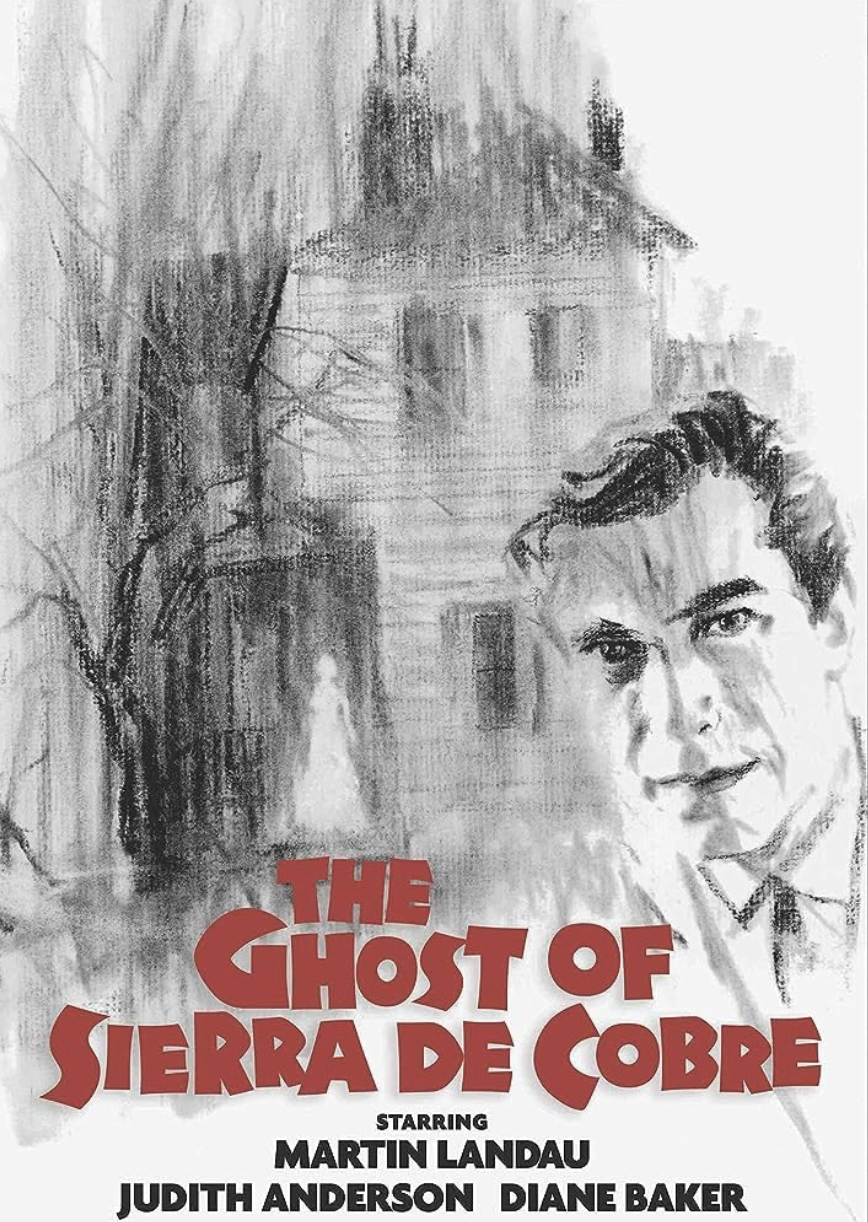
    The Ghost of Sierra de Cobre (1964, dir. Joseph Stefano)

    Poster for The Ghost of Sierra De Cobre

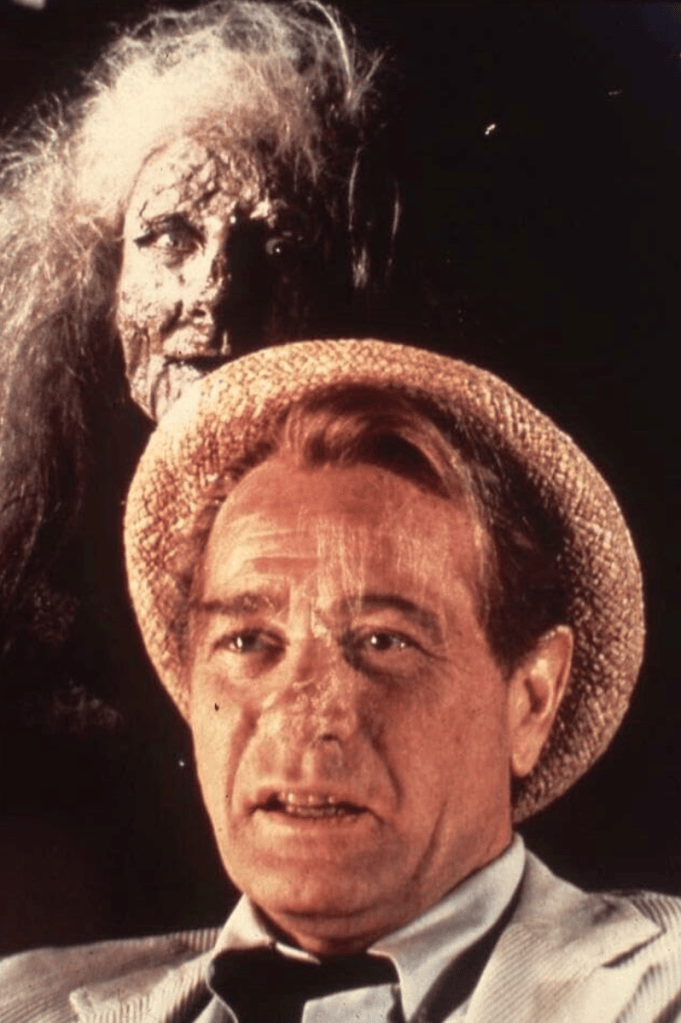
    Psycho and The Outer Limits writer Joseph Stefano also produced and directed this 1964 film for a sadly never-to-be series about hauntings (with this film expanded from its initial 50-min runtime). At least we have this slice of weirdness, as Martin Landau’s investigator tries to unravel if a wealthy man is really getting phone calls from his dead mother.

    Allegedly shelved as ‘too scary for TV, it’s ponderous and shows its television scale, but is also frequently excellent, with some proper scares and control of its mood. Shot almost like an art film, one easy to imagine without any dialogue, it’s often beautiful. Equally dreamlike and nightmarish, this one is recommended for fans of offbeat horror. As an unusually serious, strange film, it deserves to take its place as a minor haunted house classic.

    One Night in the Tropics (1940, dir. A. Edward Sutherland)

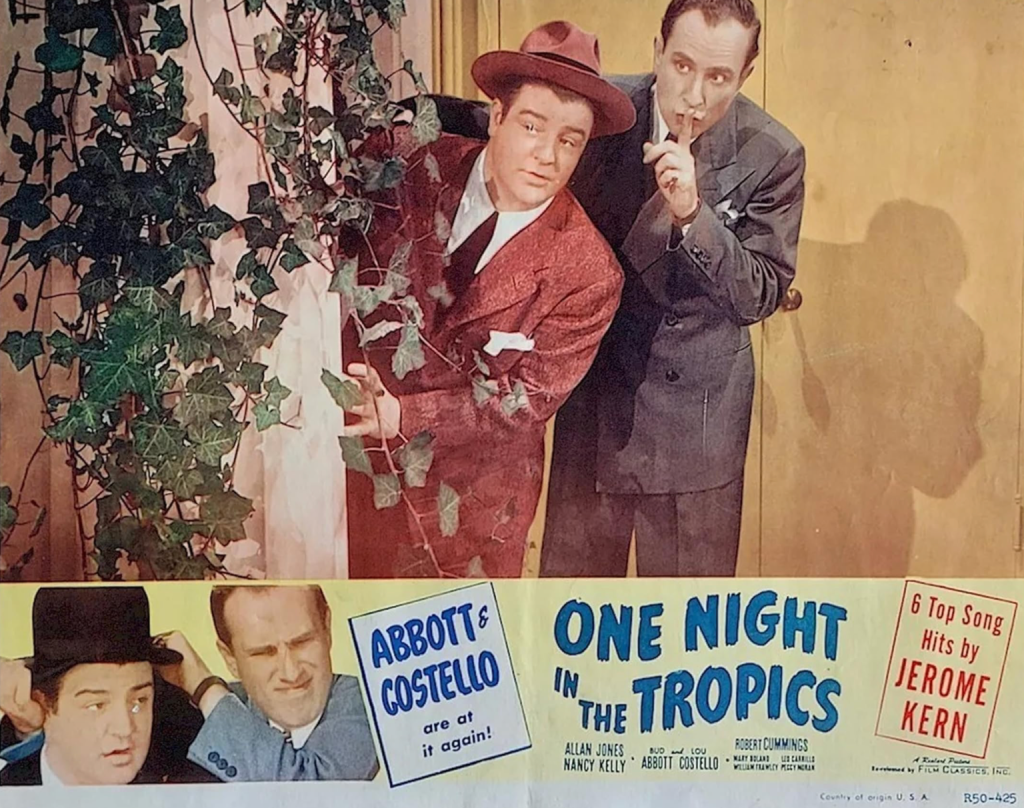
    Poster for One Night in the Tropics

    Abbott & Costello make their film debut as side characters in a romantic comedy musical(ish). The film itself is fine, good natured and as entertaining as it sets out to be (mildly). The key reason to watch it for me was the first opportunity for Bud and Lou to brush everyone else aside when onscreen.

    They bring energy, timing, and a sense of the absurd to what is otherwise a pretty inoffensively beige romantic comedy of errors. As with Casablanca, you could easily think familiarity with them and their routines would dull the impact, but they are magnificently weird, anxiously anarchic, and worth it every time they appear.

    Murder in Coweta County (1983, dir. Gary Nelson)

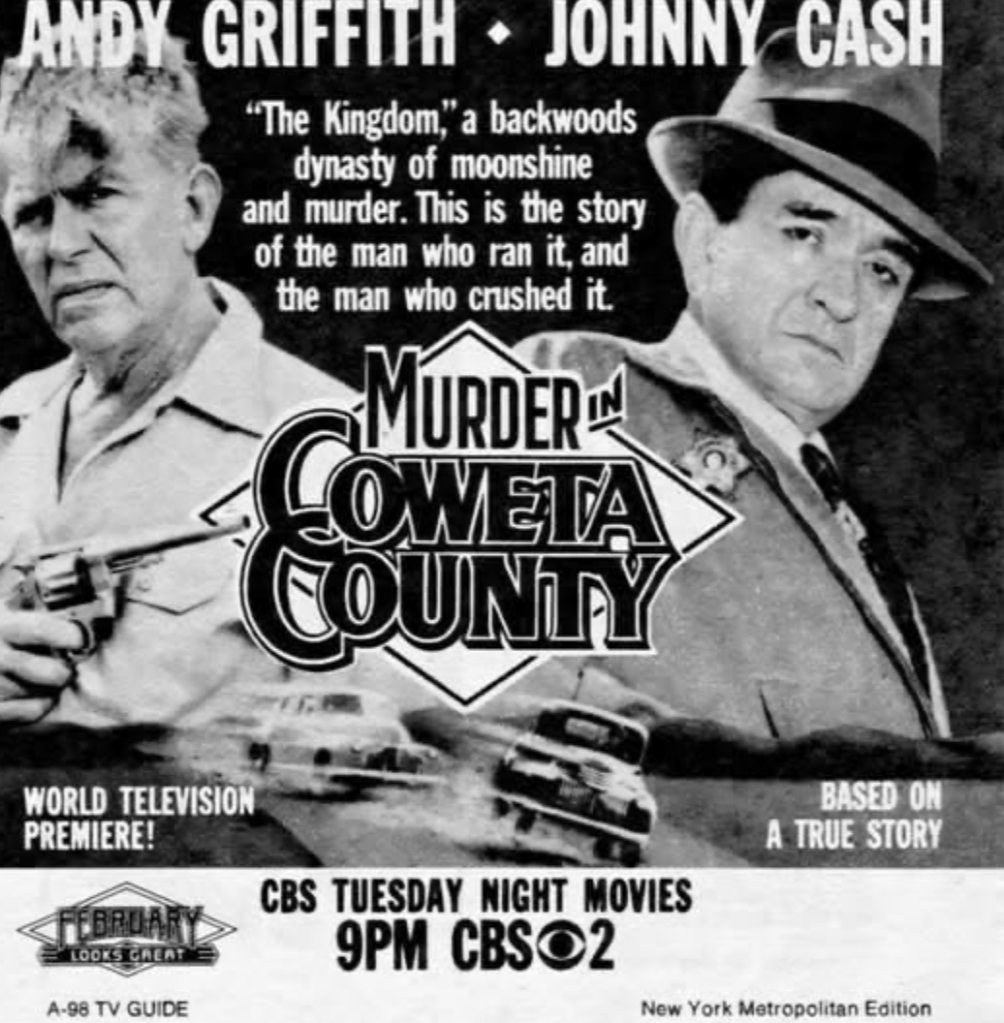
    Newspaper advert for Murder in Coweta County

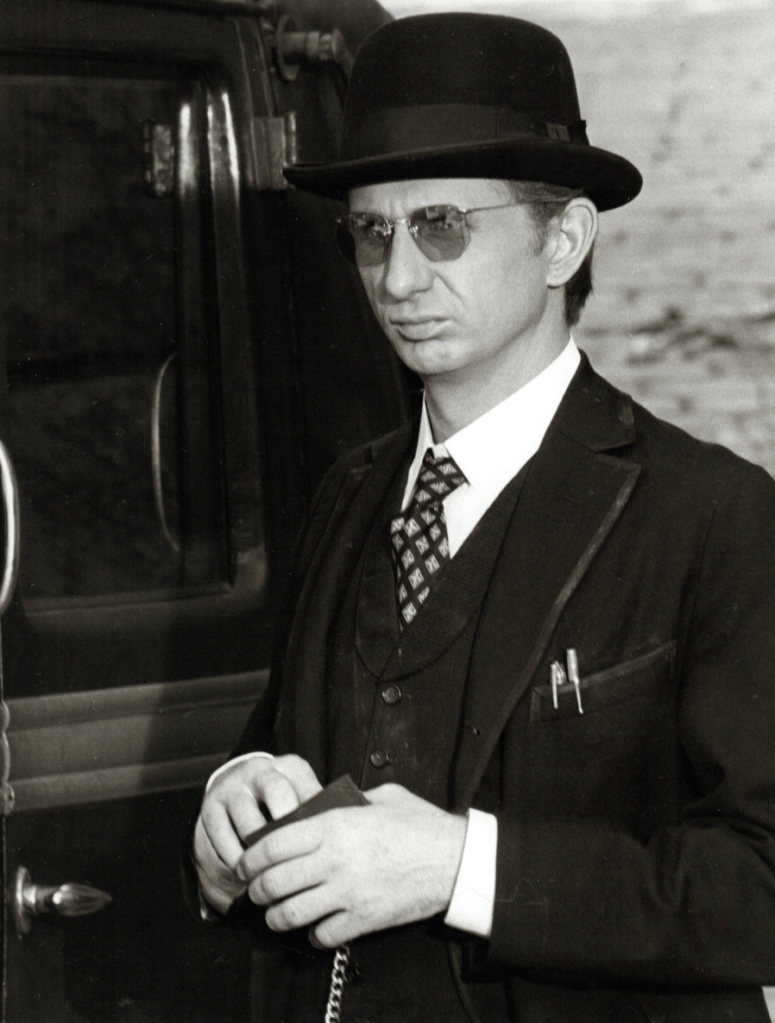
    This is the television movie as genuinely extraordinary experience. At first look, we have a dour based-on-a-true-story procedural in which Andy Griffith inverts his sitcom persona to play the dark-hearted opposite. 

    Here, his fantastically arrogant, racist landowner and king of everything in his domain crosses paths with a neighbouring county’s indefatigably moral sheriff, Johnny Cash, over a matter of murder. Griffith can’t even conceive of his charmed life coming undone, Cash won’t let death – murder – go unpunished.

    A blunt, basic script makes room for excellent performances, including an extended cameo from June Carter Cash as a fortune teller, a surprising vein of pitch black comedy, and an almost magical, unreal approach to events that feels like a child’s fairytale version of a crime story.

    There are moments in it that play like a rural horror, or other times a rural fantasy. And those final few minutes are unsettling and strangely upsetting. It’s not all great, being an unambitious television production, but unexpected, occasional moments of visual beauty offset a mostly functional directional style. Mostly very good, and always interesting.

    House of Dark Shadows (1970, dir. Dan Curtis)

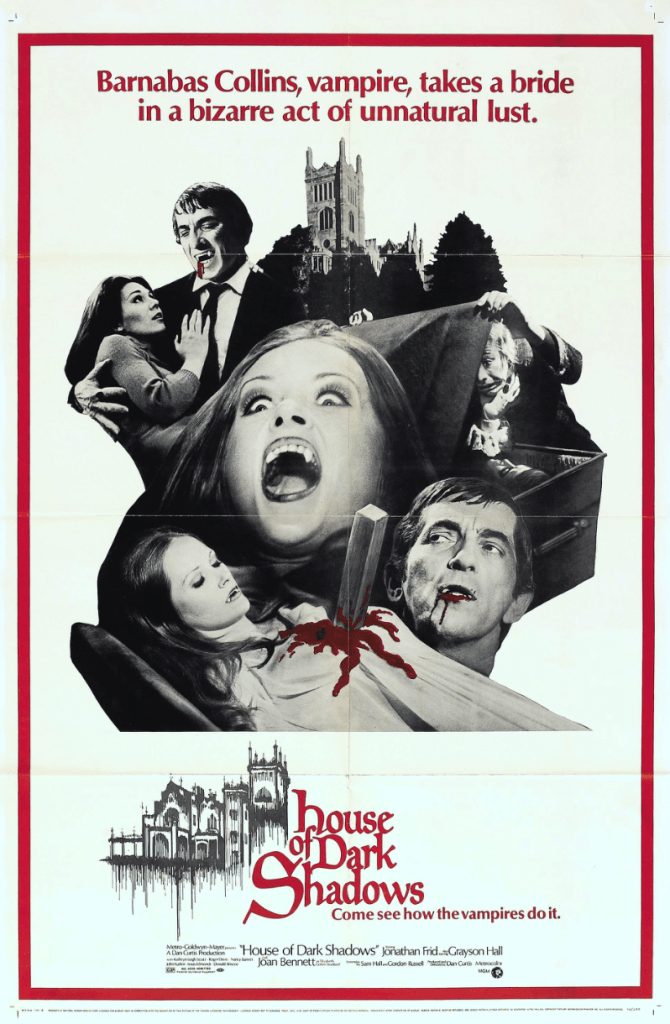
    Poster for House of Dark Shadows

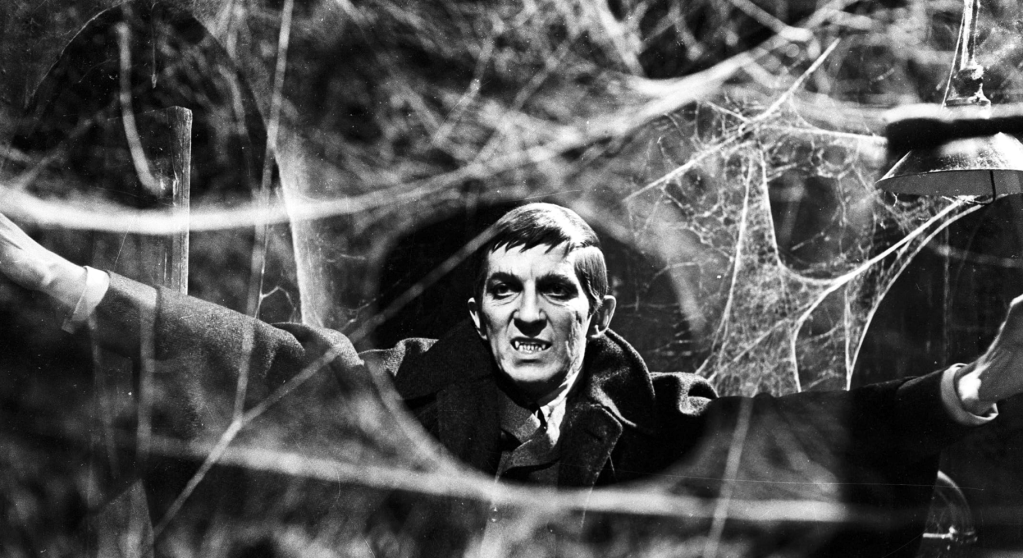
    When I first watched House of Dark Shadows, I was not particularly taken with it. Having enjoyed the slow burn of Barnabas’ arrival in the series, the film seemed like an inelegant rush job. It is borderline incoherent for anyone new to the story. The other side of this is that it’s a bloody treat for those familiar with the show. From its opening sequences, the film is gloriously unhinged. The beautiful production design makes it look expensive enough, but the way it is made frequently comes across as if it was shot on the manic fly in 48hrs.

    It is in fact the defined and chosen differences to the series, and going all in on copious amounts of blood, that make it a delight. We are given messy fun in which almost everyone dies. You don’t need to know the series, of course, you just need to go along with it. Each time I revisit the film, to me, it feels like an American attempt to make a version of a gonzo European horror of the time. A horny (despite almost no flesh on display), violent, and mean good time.
    He Who Gets Slapped (1924, dir. Victor Sjöström)

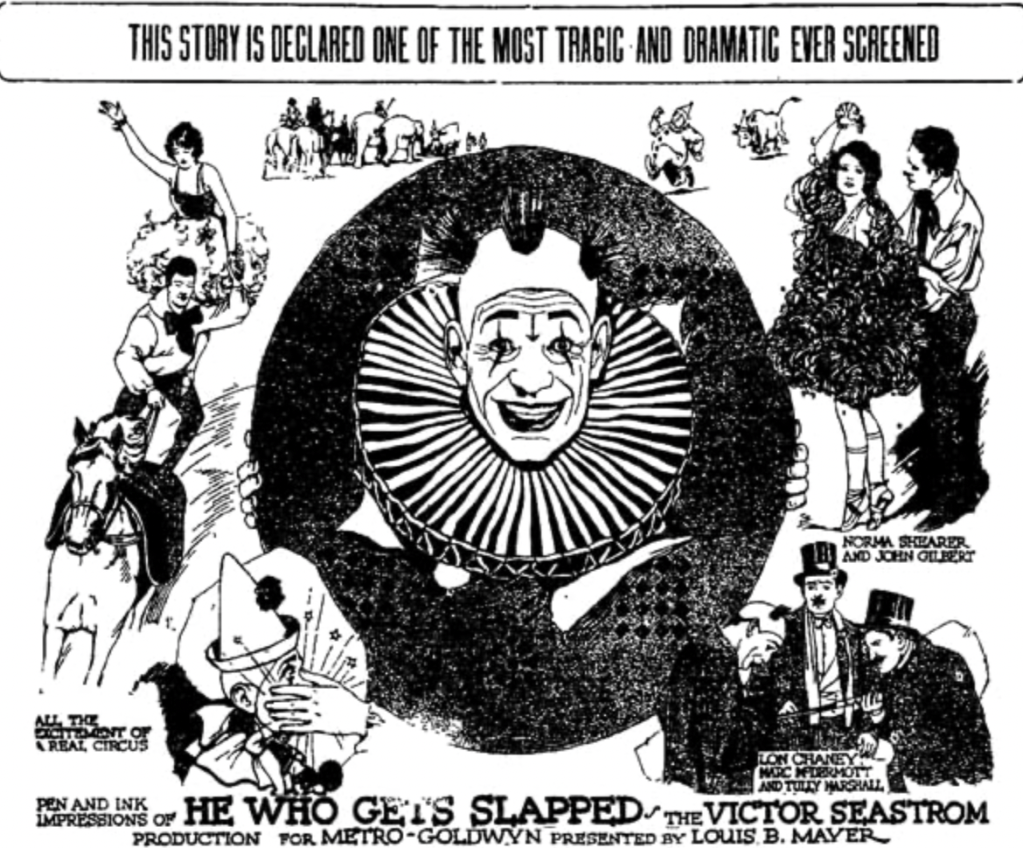
    Advert for He Who Gets Slapped

    Taking the opportunity to fill in more of my Lon Chaney filmography, I was glad to go with He Who Gets Slapped. It’s the wilfully weird tale of a scientist betrayed by his benefactor and his wife finding a new home in a circus as a clown who gets slapped, until the unlikely opportunity for revenge presents itself.

    An outstandingly good, expressive Chaney is at times heartbreaking and others unnerving as a man pushed beyond what he can take when the past won’t leave him be. Thematically very grim, it’s a curious mix of melancholy, fury and thwarted ambition and love, juxtaposing moments of hope and darkness until a disturbing, grotesque, ultimately sad final reel.

    Books

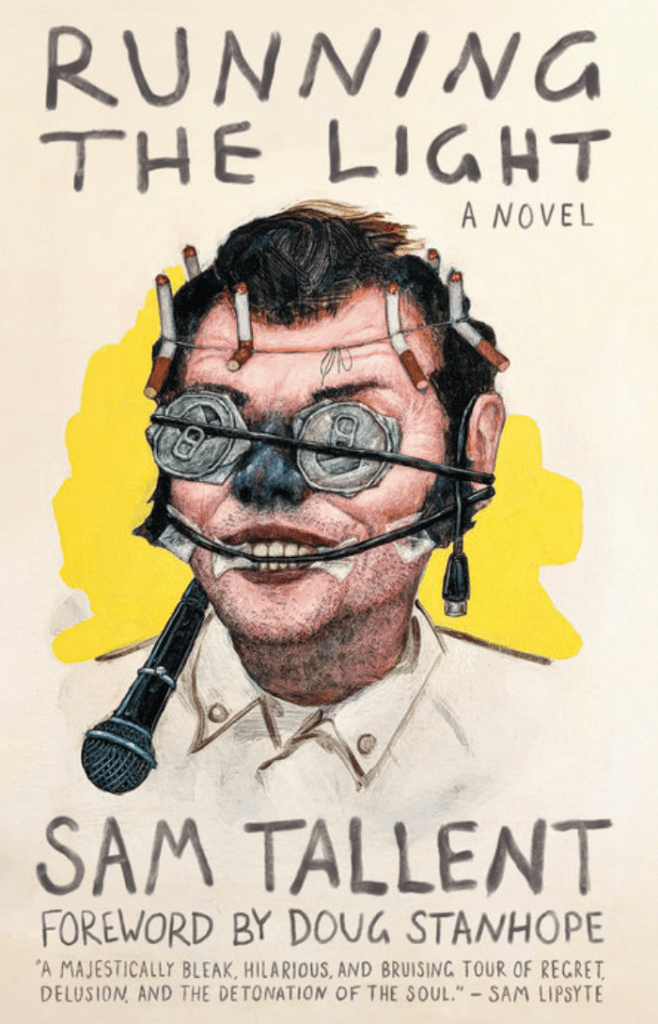
    Running the Light

    Cover of Running the Light

    Comedian Sam Tallent’s debut novel tracks a week in the life of stand-up comic and barely living void of drugs, booze, fighting and fucking, Billy Ray Schafer. Schafer used to be somebody in the latter part of the 20th century, until his lying, cheating, ways burned up his marriage, his relationship with his children, and exhausted goodwill in his career. The book finds him criss-crossing America, playing shows after vomiting ducks or to cultish cowboys, his self-medication with alcohol and cocaine rapidly growing into a major problem.

    At the same time, something is gnawing at Billy, pushing him to try and make things right with his now-grownup sons and the wife he betrayed. Tallent is great at a random line of poetry jumping out at you, the characterisations of the inhabitants of an unseen America only road features really get to experience vivid, and in painting an uncompromisingly uncomfortable portrait of a man doing his dammdest to bring about his own demise. Schafer is a bottomless pit of depravity that Tallent manages to make you care about.

    It’s not perfect, and I wasn’t a big fan of its final page, but the journey to get there is full of so much happening, beautifully wrought by Tallent, that the journey is more than worth it.

    Brief diversion: Speaking of comedy, I tried recent internet villain Ken Jenning’s Planet Funny: How Comedy Ruined Everything, but it became ferociously, unforgivingly boring, which rated a rare cannot be fucked (did not finish) from me.
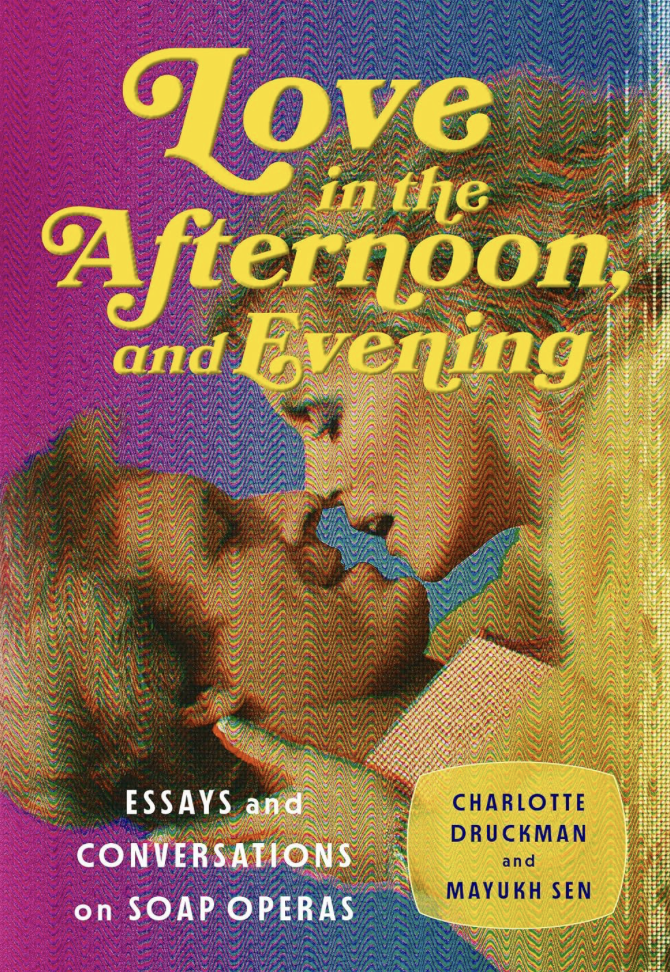
    Love in the Afternoon, and Evening

    Cover of Love in the Afternoon, and Evening

    Charlotte Druckman and Mayukh Sen join forces for a personal, selective journey through what has made American soap opera so appealing to so many over the decades. Comprised of interviews, chapters on fashion in soaps and their designers, a little on the history of essential creators and writers like Irna Phillips and Agnes Nixon, there are also explorations of how soaps handle race, sexual violence, and other strong topics.

    As the genre itself clings on through a few remaining titles, it’s also a good reminder of the depth and variety these shows have presented across radio and television. These shows were and still are part of everyday life for people, and the book gives the genre a little of the respect it’s due.

    Television

    Television (usually old shows) are a consistent habit for me so going through everything would take far too long. Just a few titles to round us out.
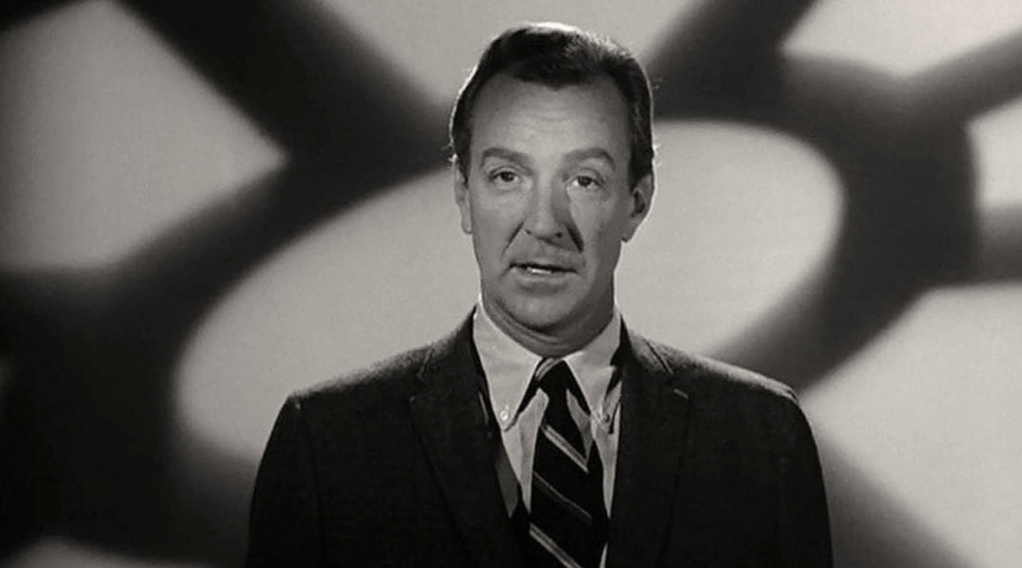
    The Twilight Zone

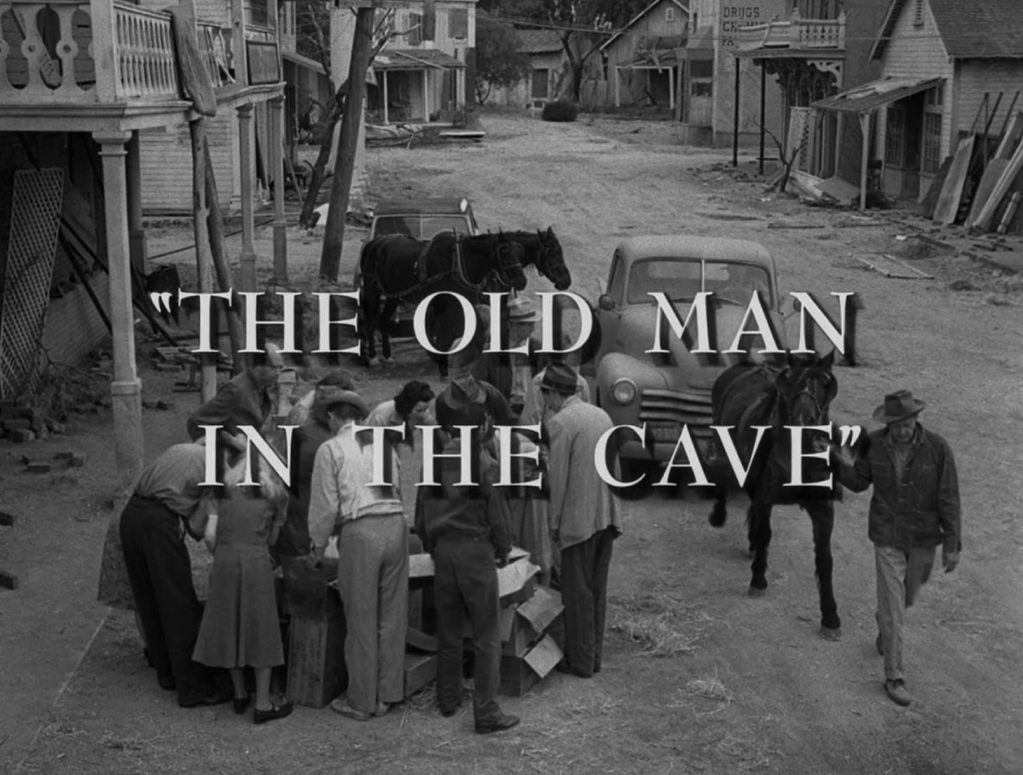
    Title card for The Old Man in the Cave

    Up to season five of an epically slow run through of the series has brought me to The Old Man in the Cave and Uncle Simon. The first, an adaptation of a short story by Henry Slesar, brings Serling back to a recurring set of themes linked with nuclear war and our capacity for destroying ourselves. In it, an ‘old man’ in a cave keeps a small group of townspeople alive in the aftermath of nuclear bombs. Smartass, over-confident soldier James Coburn and his men show up and start to query just who this old man is and everything goes wrong. There’s something here about the safety of myths and not knowing the truth, and a great little show from Coburn as a real asshole.

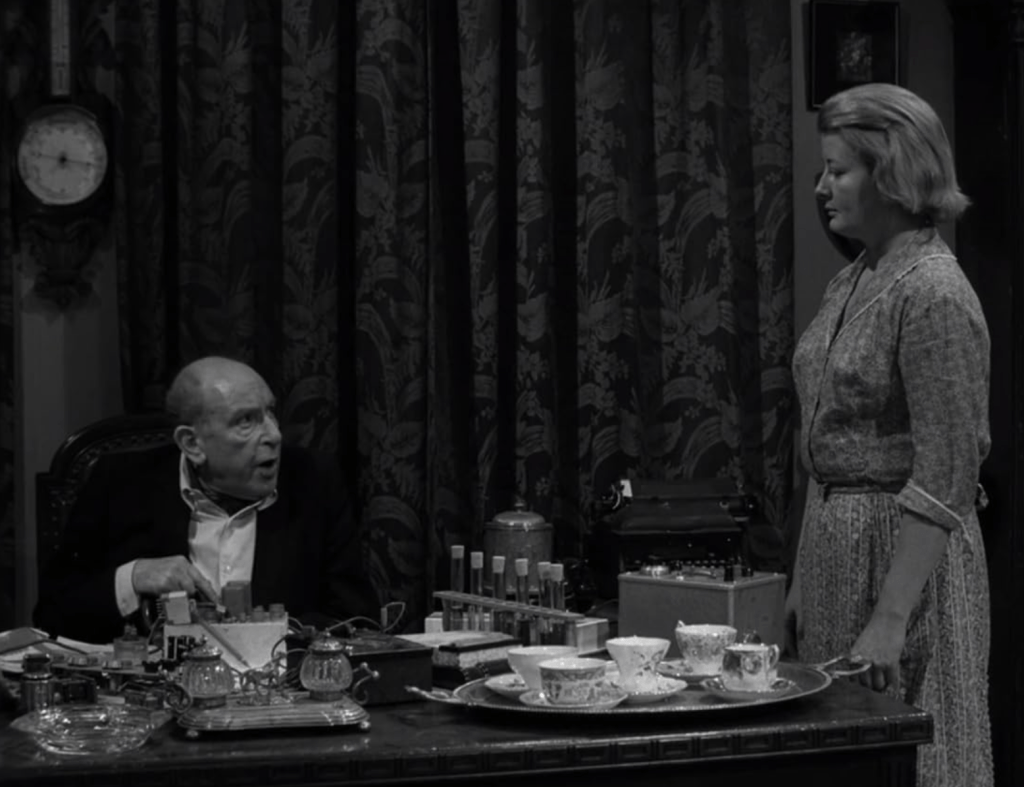
    Cedric Hardwicke and Constance Ford in Uncle Simon

    Uncle Simon meanwhile finds Constance Ford’s miserable Barbara suffering the abuse of her misogynistic, arrogant, hateful, and importantly wealthy uncle. She has been doing so for years, in the withering hope that when he is finally dead, she will be able to live. The episode takes some agreeably strange twists and turns, but the things to come for are Serling’s fantastically bitter dialogue for two thoroughly embittered characters and an exploration of just how much misery someone can inflict and someone else can take. Misery has become the real companion to both Barbara and her uncle, and neither wants to let go.

    One Life to Live

    Judith Light as Karen Wolek in One Life to Live

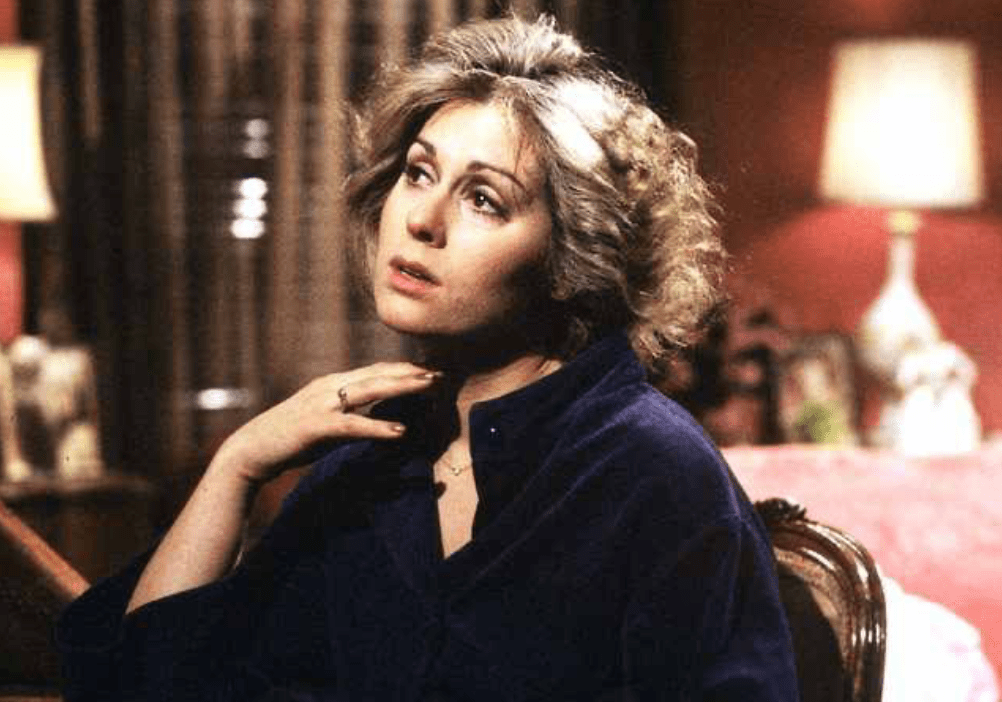
    A particularly fine chapter from Sen in Love in the Afternoon, and Evening led me to seek out a somewhat notorious episode of One Life to Live from March 6th, 1979. In it, Karen Wolek (played by Judith Light) knew what she had to do to save her friend, Viki Lord. Viki was on trial for the murder of a pimp (well, actually one of Viki’s alternate personalities, Niki, was the presumed killer), and to exonerate her, Karen would have to get on the stand and tell the truth about herself. Karen would share her whereabouts on the day of the murder, with the prosecutor pushing her towards revealing everything. When she does, Karen tells a packed courtroom she has been working as a ‘common hooker’, torn between being compelled by her pimp, and enjoying the money and adventure her secret life provided.

    This episode made it onto a ‘100 Most Memorable Moments on Television’ list for TV Guide and it’s clear to see why. British audiences are likely to be more familiar with Light for her starring role in sitcom Who’s the Boss? or for Ugly Betty than One Life to Live. It comes as quite a shock then, that the final ten minutes of this episode contain one of the most incredible pieces of dramatic acting. Light is extraordinary on that stand, her defiant collapse haunting and moving. You might think you need to be a One Life to Live fan, or soap fan, or know what is happening in other plots to get this. You really don’t. The only thing required is watching an actor at the pinnacle of what can be done. A remarkable, beautiful performance that is some of the finest ten minutes out there.

    And that’s it. If you made it here, thanks for reading.

  • Stuff I Have Enjoyed This Year

    It’s that time you’ve all been waiting for, a round-up of Stuff I Have Enjoyed this year, across film, television, books and, very occasionally, music. Some of it might have even been made this century! Although, almost certainly not. This isn’t everything for the year, instead a selection of (mostly) new-to-me highlights.

    2025 has been a year where I’ve broadly dropped self-imposed reading targets or anything like that (turns out they’re stressful and feel like a chore when other things preclude you from keeping to them, who knew?). I have replaced this with floating arbitrary goals (do Chaplin’s entire filmography, from the earliest Keystone days! Make lists of all of the films included in books like You Won’t Believe Your Eyes!: A Front Row Look at the Science Fiction and Horror Films of the 1950s!) because they seemed like a good idea at the time, dammit.

    That has led me to things like a return to and increased use of Letterboxd, the type of social media I can get behind (limited human interaction? Cool, good stuff) and moving away from pretty much all other platforms (is Bluesky next? Possibly). On Letterboxd I’ve been enjoying logging, reviewing and rating films, despite that being a largely pointless, arbitrary (again!) endeavour.

    On that topic, off we go with the round-up.

    Silent films

    I’ve been really enjoying widening my silent film experience, and this year has included some of my favourites yet.

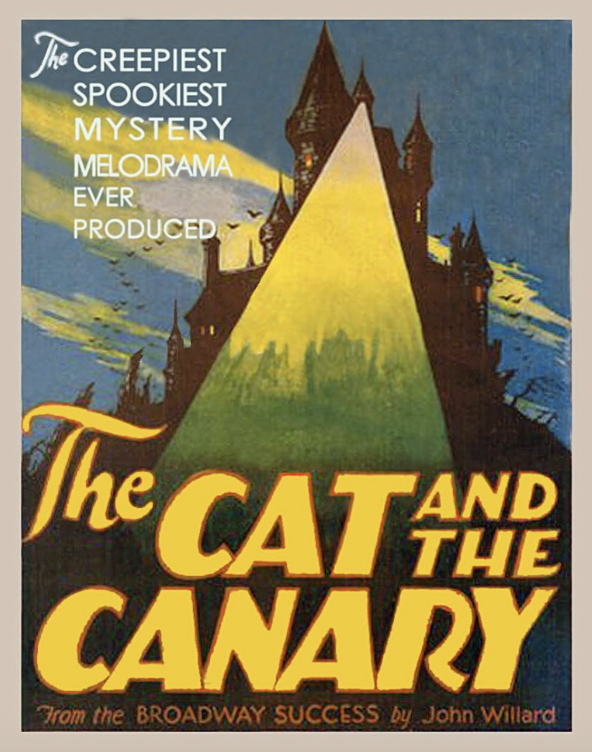
    Poster for The Cat and the Canary (1927)

    The Cat and the Canary (1927, directed by Paul Leni) takes the familiar-in-1927, overripe tropes of old dark house mysteries and puts a more comedic spin on them, but Leni can’t resist some genuine chills and gorgeously dark imagery, so the film turns out to be one of the best examples of the very thing it is pastiching.

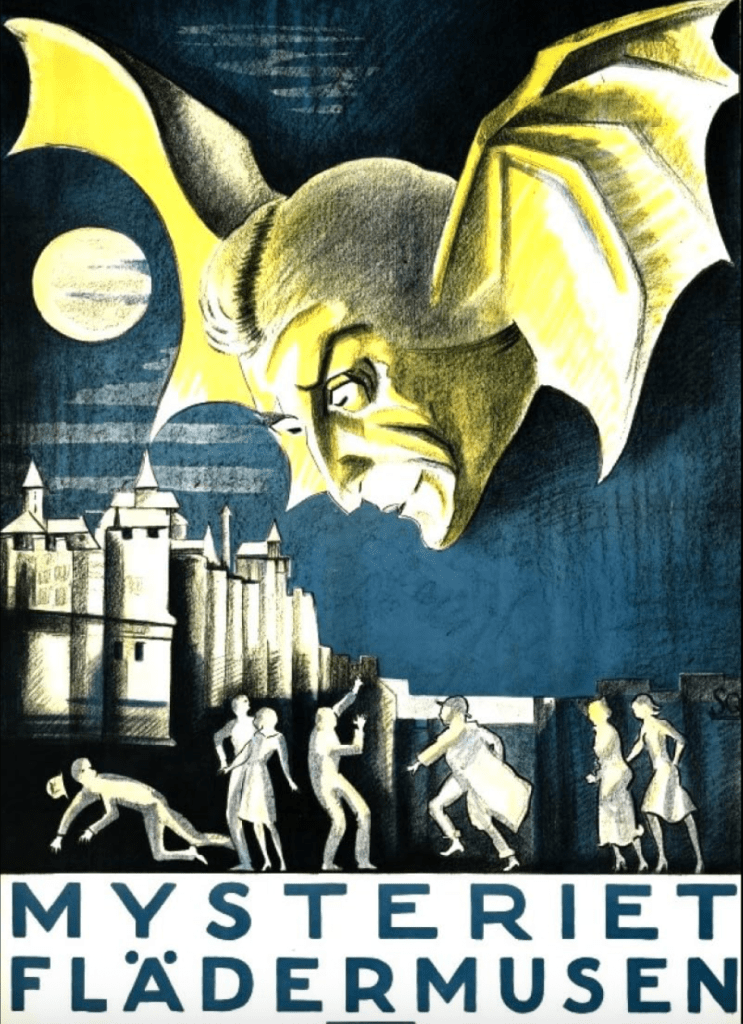
    Swedish poster for The Bat (1926)

    Roland West’s first go at adapting the stage play The Bat into a feature in 1926 is a similar mix of comedy and serious thrills, evocative imagery, and a good central mystery. Some of the frames in this film should hang in art galleries. Ben Model’s Undercrank Productions label gave this a Blu-ray and DVD release last year that shows it the love it deserves.

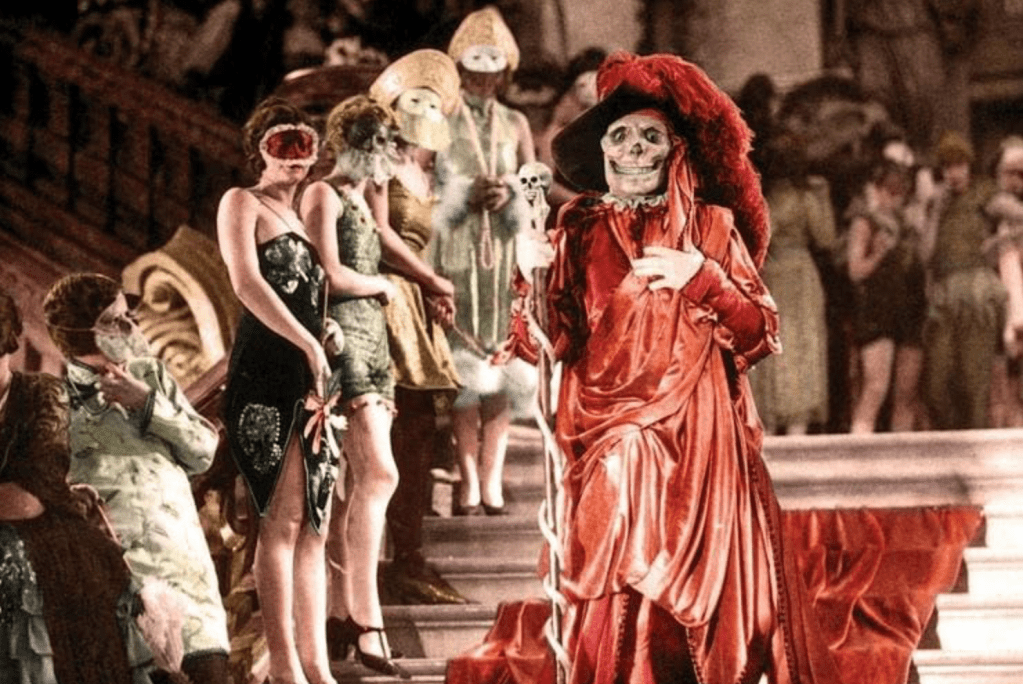
    Lon Chaney as Erik (the Phantom) at the masquerade ball

    For its 100th birthday, Lon Chaney’s The Phantom of the Opera (‘directed’ by Rupert Julian in 1925) was back in cinemas in October and I gained a new appreciation for the film and for one of Lon’s more unsubtle performances. Once his glorious make-up for Erik is revealed, the delirious journey to its brutal conclusion was grand big-screen fun.

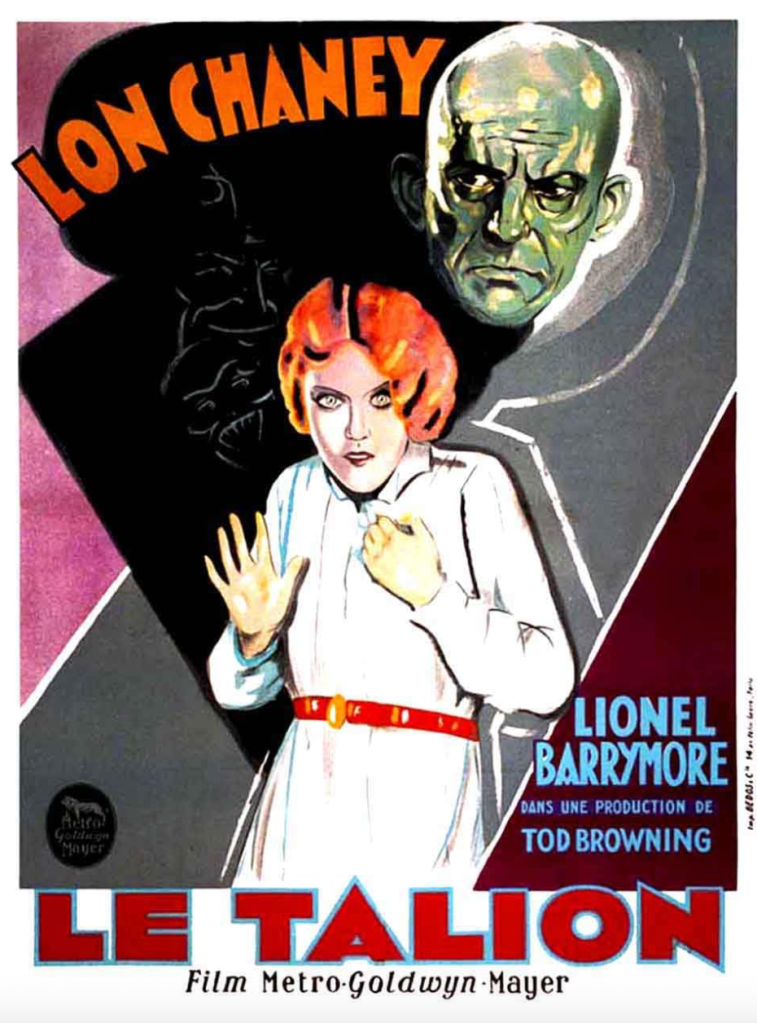
    French poster for West of Zanzibar (1928)

    On the subject of Chaney, I also hugely enjoyed the utterly reprehensible West of Zanzibar, directed by Tod Browning in 1928, which was wildly inappropriate, grotesque and deeply suspect. It’s also great fun, with a phenomenal Lon holding the entire wild ride together.

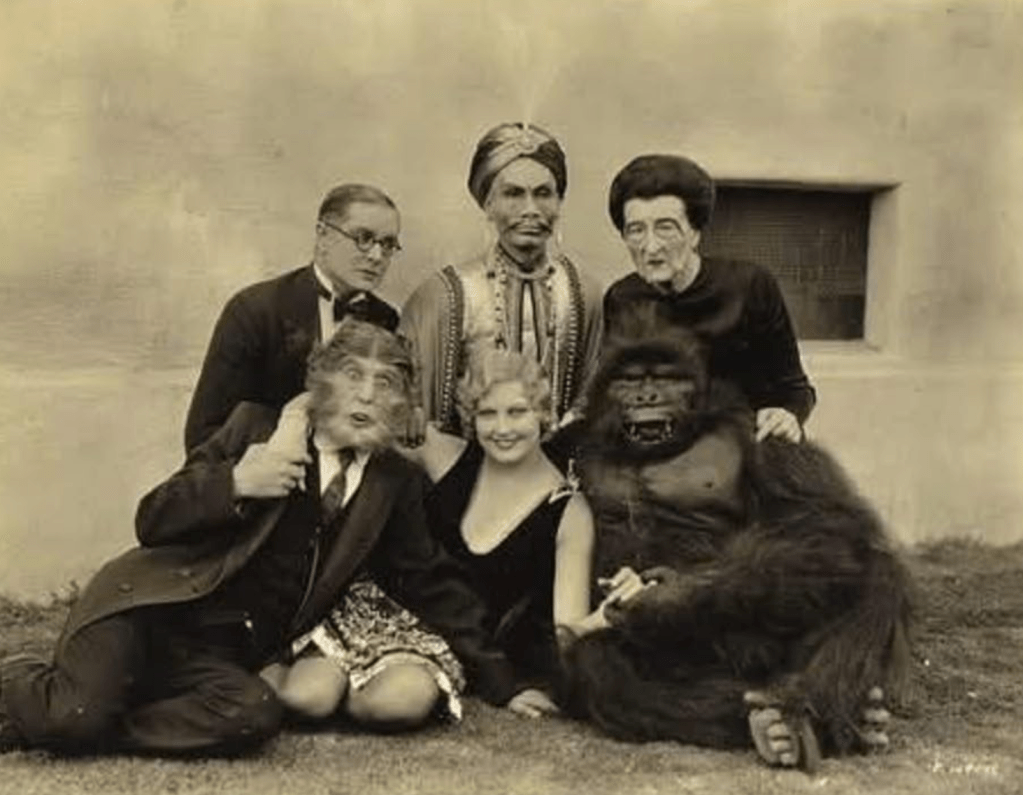
    Cast members of Seven Footprints to Satan (1929) in costume

    Wilfully frustrating, nightmarish and oddly moving, Seven Footprints to Satan (directed in 1929 by Benjamin Christensen) is best come to knowing as little as possible about it. If the photo above of key cast members doesn’t make you want to watch it now, then I can’t help you.

    Short films and cartoons

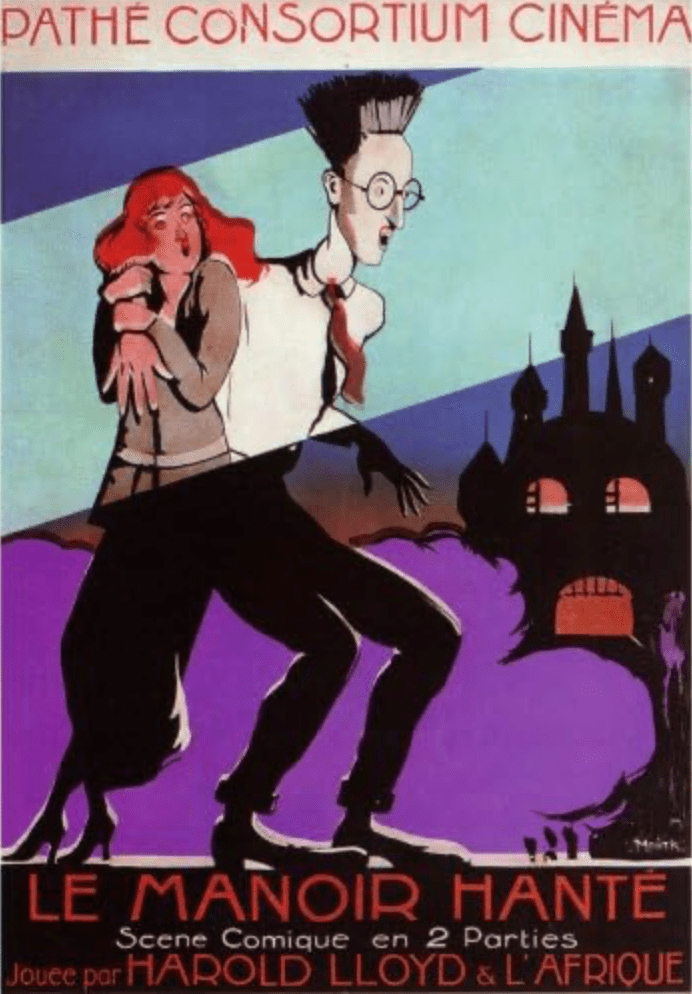
    French poster for Haunted Spooks (1920)

    The actual haunted house part of Haunted Spooks (directed in 1920 by Hal Roach and Alfred J. Goulding) is decent, silly fun marred by a disappointing raft of racist gags. The first half, which finds Harold Lloyd trying to woo his current love, get rejected, and then decide to end things, only fail every time, is much better. Dark hearted but still delightfully silly, with some excellent gags and delivery.

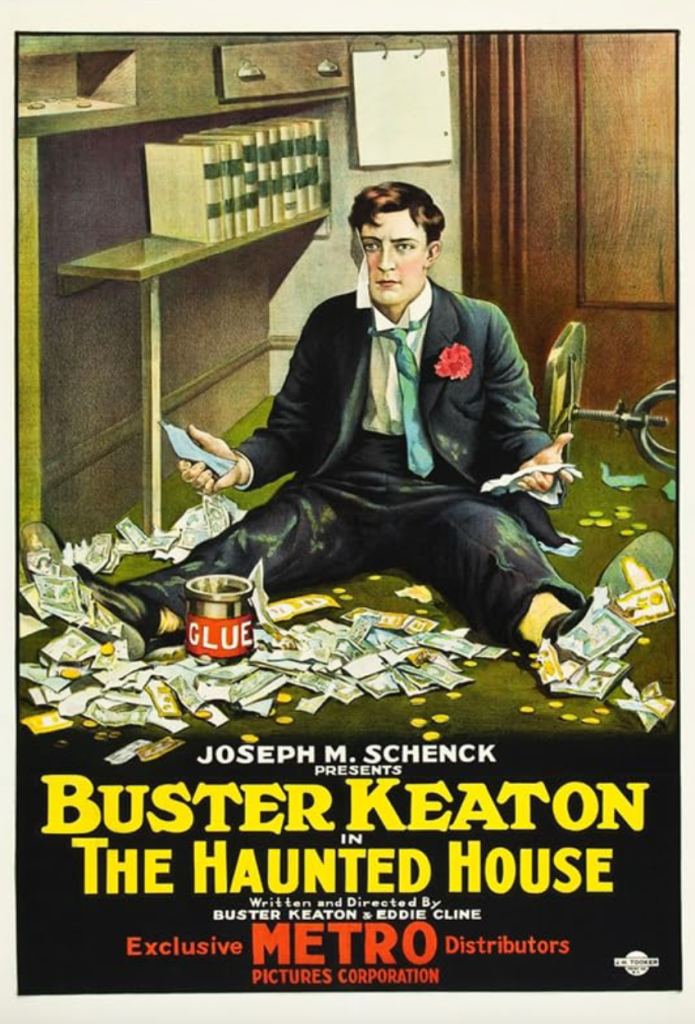
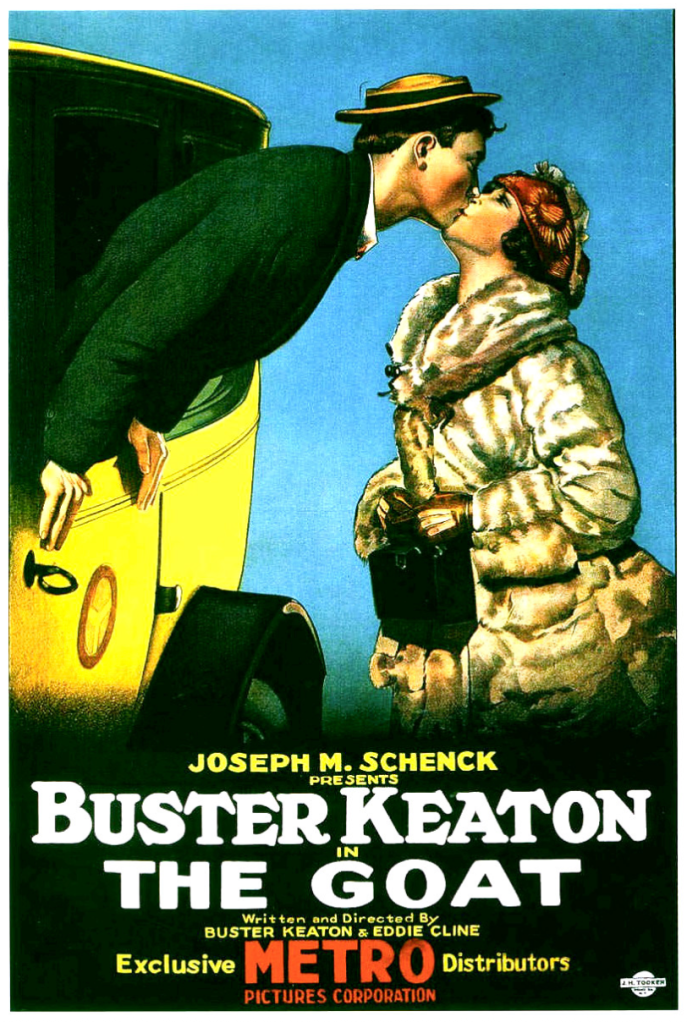
    Posters for The Haunted House (1921) and The Goat (1921)

    Two favourite Buster Keatons from this year (where every Keaton was good to great) were The Haunted House and The Goat (both directed by Keaton and Eddie Cline, both 1921), the former an inventive run at…uh…haunted house cliches and the latter an at-times jaw-dropping spectacle that has some of the best stunt work and gags he ever did, which means some of the best anyone ever did.

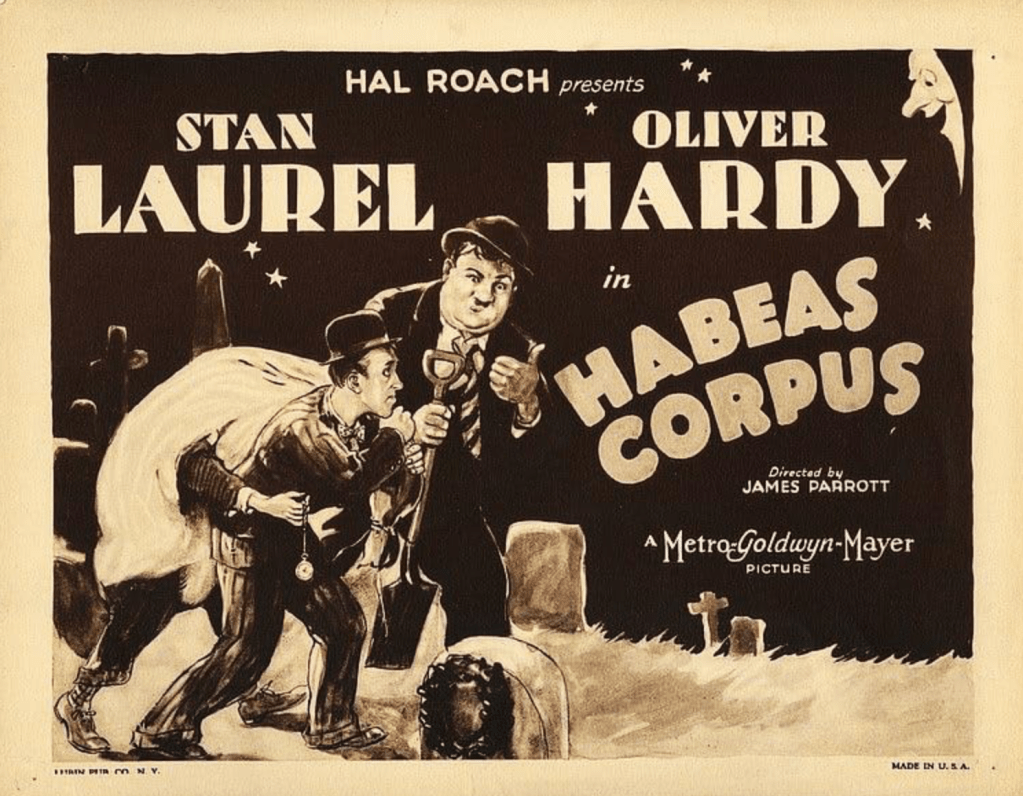
    A poster/lobby card for Habeas Corpus (1928)

    It might be impossible for me to not enjoy a Laurel and Hardy film from the twenties or thirties, and it hasn’t happened yet, with Habeas Corpus (directed by Leo McCaret and James Parrott in 1928) quickly becoming a new favourite. Their first synchronised sound picture (here meaning a score with sound effects), it’s a classic of The Boys’ broad slapstick, drawn-out gags, silliness, and graveyard shenanigans that I loved.

    Mack Swain, Phyllis Allen, and Charlie Chaplin in A Busy Day (1914)

    Chaplin’s opening run of Keystone films range from the brilliantly inspired to the dismal, but special mention in this post for A Busy Day (directed by Mack Sennett in 1914), which is almost completely morally irredeemable (extreme violence, barrel-bottom misogyny, utterly formless), but on the day I put it on, Chaplin in drag hoofing the shit out of anyone within kicking distance for 6 minutes before meeting an unfortunate end made me chuckle when I really needed it. Don’t ask me to stand by this assessment in future.

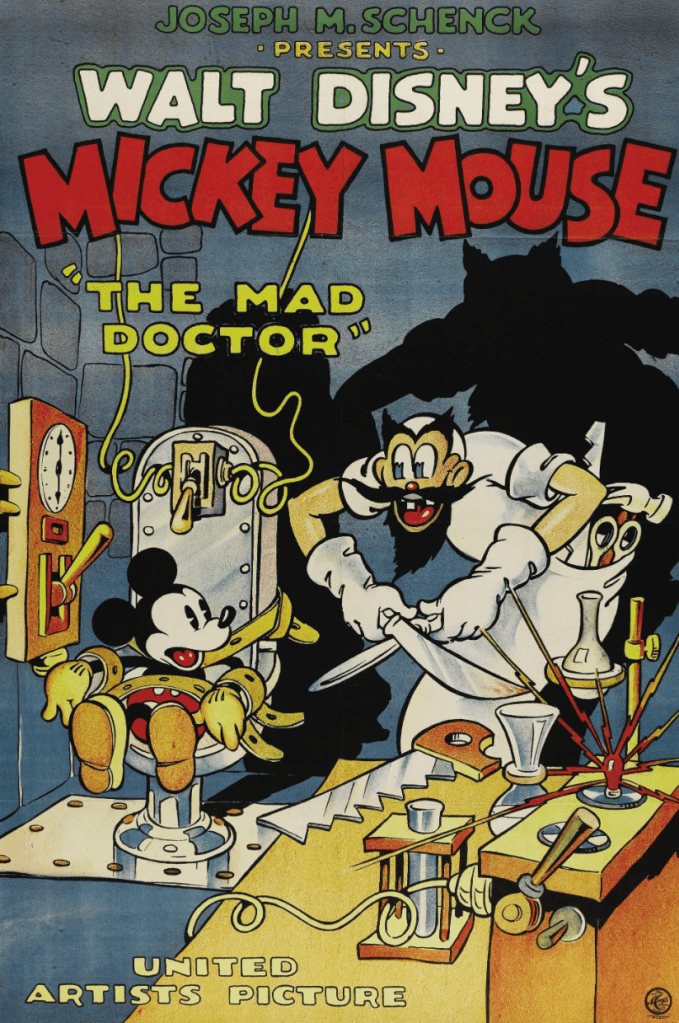
    A bad poster for The Haunted House (1929), a good poster for The Mad Doctor (1933)

    I enjoyed several early cartoon classics this year, but two Mickey Mouse ones stood out, perhaps because of how far they are apart from modern Disney, but definitely because they function as some pretty wild, gnarly horror in their own right. The Haunted House (directed by Walt Disney and Jack King in 1929) and The Mad Doctor (directed by David Hand and Wilfred Jackson in 1933) are stuffed with extraordinary animated imagery and, for the first title in particular, stack up against any serious circular nightmare horror. But you know, for kids.

    Sound films

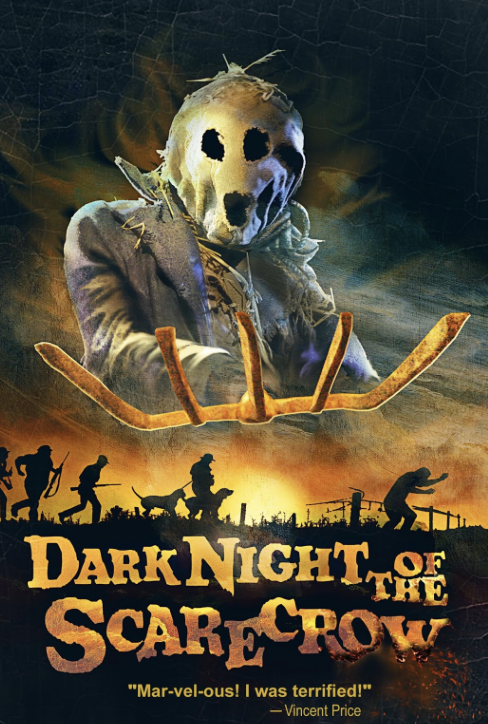
    Posters for The Man From Planet X (1951) and Dark Night of the Scarecrow (1981)

    A low key science-fiction minor classic and an outstanding television movie horror are first up. Veteran director Edward G. Ulmer’s The Man From Planet X (1951) functions as a kind of proto-Quatermass-y, horror-adjacent yarn in which a spacecraft lands on a foggy Scottish moor, intentions unknown. A journalist and scientist try to find, not that by the film’s conclusion we really know that much more for absolute certain. Game attempts at Scottish accents, solid direction and a properly alien alien are all good fun.

    Dark Night of the Scarecrow, directed for television by Frank De Felitta in 1981, is a leisurely paced, beautifully shot, frequently excellent tale of revenge that goes to some very dark places. A great cast is still dominated by a powerhouse, grotesquely villainous turn by Charles Durning as Otis P. Hazelrigg, a deeply unsettling, vile piece of work.

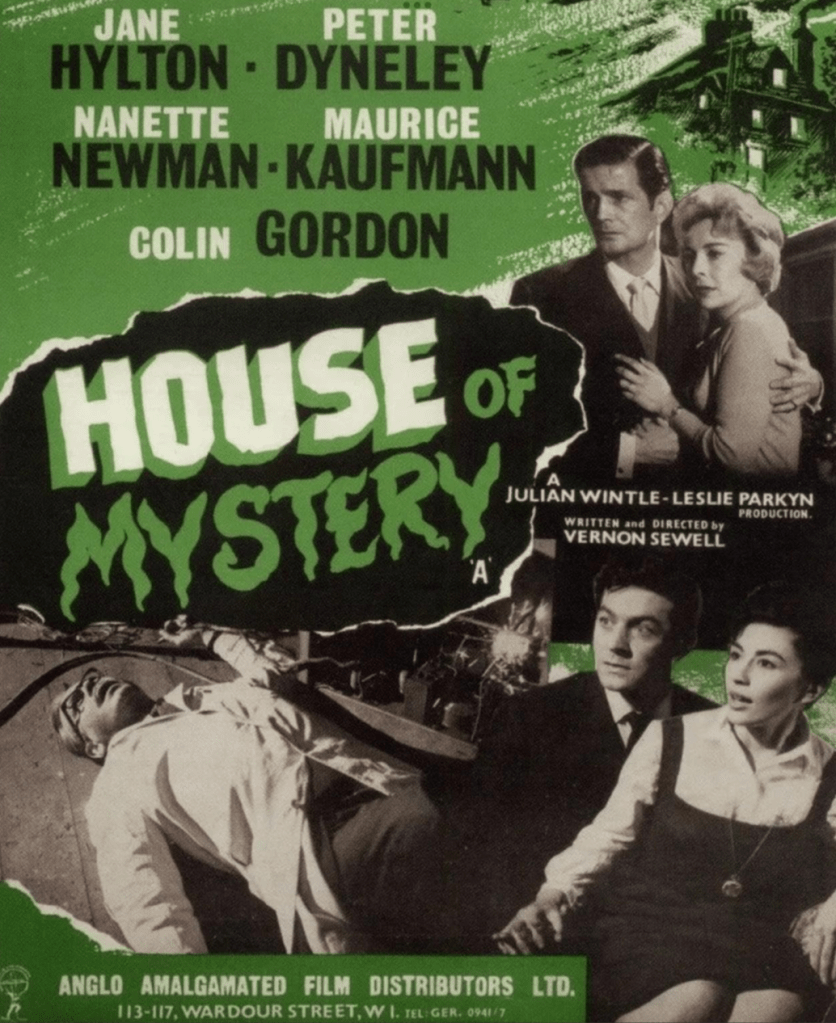
    Poster for House of Mystery (1961)

    Vernon Sewell had already made three versions of stage play The Medium by the time he had another go with House of Mystery in 1961, but let’s be glad he did. A pre-The Stone Tape riff on the concept of residual haunting, it’s mostly made up of flashbacks, and while the central mystery and final reveal are not exactly subtle, they are still effective, as is this rather wonderful little film, and it does it all in under an hour.

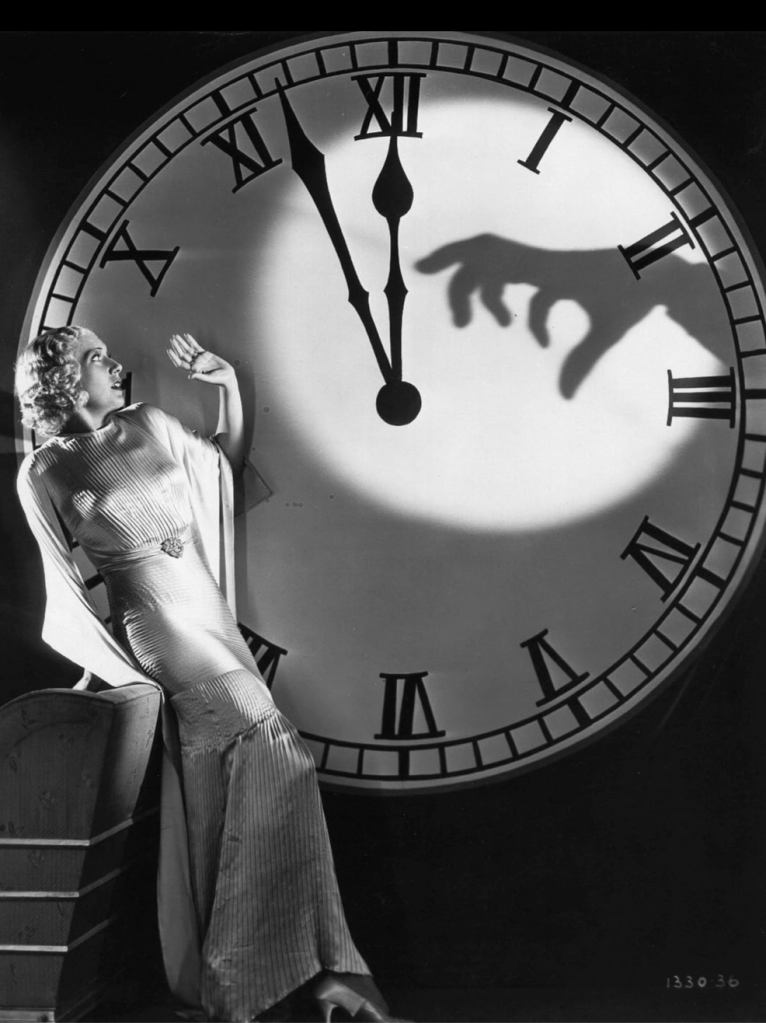
    Promo image for Murder by the Clock (1931) and poster for The Unholy Three (1930)

    Murder by the Clock, directed by Edward Sloman in 1931, is a macabre early talkie mystery thriller that has some of its stage-trained cast playing to the cheap seats with the advent of sound, but benefits from Lilyan Tashman having a blast as a scheming seductress after an inheritance. It also has an old, dark house (and graveyard!) setting, crypts, secret passages, murders and a flinty, blackly funny heart.

    The Unholy Three, directed by Jack Conway in 1930, remakes a Tod Browning film from only five years before, starring the same leading man, and sticking to the same story. Why bother? Well, this was the talkie debut of Lon Chaney, so a real event, and what better way than a story he knew and the audience already loved. Sadly, it would turn out to be his only talkie, and his last film, with Lon dying a month after The Unholy Three‘s release. We have just this one to go on, but it’s pretty clear from it Chaney’s career would have survived the transition to sound. He’s incredibly good in this, his performance charismatic, captivating and showing that he understood the new opportunities for film ahead. Lon Chaney is one of the greatest actors from the entirety of cinema history, and as a swan song for possibly the best to ever do it, The Unholy Three, and its final scenes, is pretty much perfect.

    Television

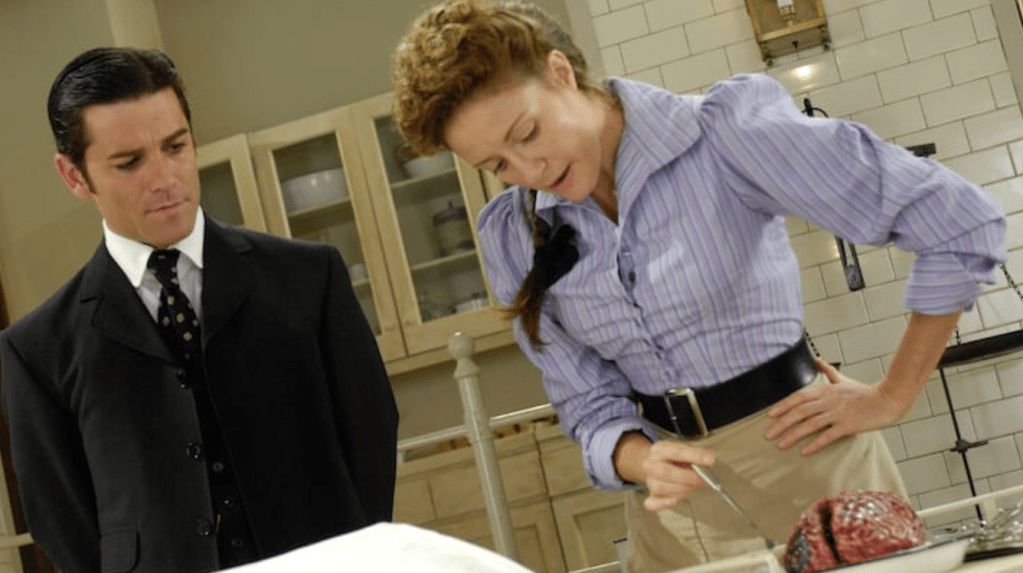
    Detective Murdoch and Doctor Ogden. And a brain.

    Highlights this year have been the always revolving schedule of shows like You Bet Your Life, The Jack Benny Program, Law and Order: Criminal Intent, The Twilight Zone, One Step Beyond, Dark Shadows, Upstairs, Downstairs and more, but the most surprisingly enjoyable experience has been a late-in-the-year start of Canadian detective series Murdoch Mysteries, based on the novels by Maureen Jennings, and currently at 19 seasons. Season one has had Murdoch meet Arthur Conan Doyle amongst others, alongside showing his fascination with the future of crime solving (‘finger marks’, lie detectors, forensic science). It’s all agreeably easy-going, but not undemanding, entertainment.

    Books

    Covers for The Story of Victorian Film and The Silent Film Universe

    Two excellent early film histories were published this year, and both combined scholarly insight with accessibility and a passion for the beginnings of cinema, establishing themselves almost immediately as key texts. Bryony Dixon’s The Story of Victorian Film and Ben Model’s The Silent Film Universe are essential reading for anyone who wants to know how we got from there to here, and why these eras of film are full of life and innovation and ever vital to explore.

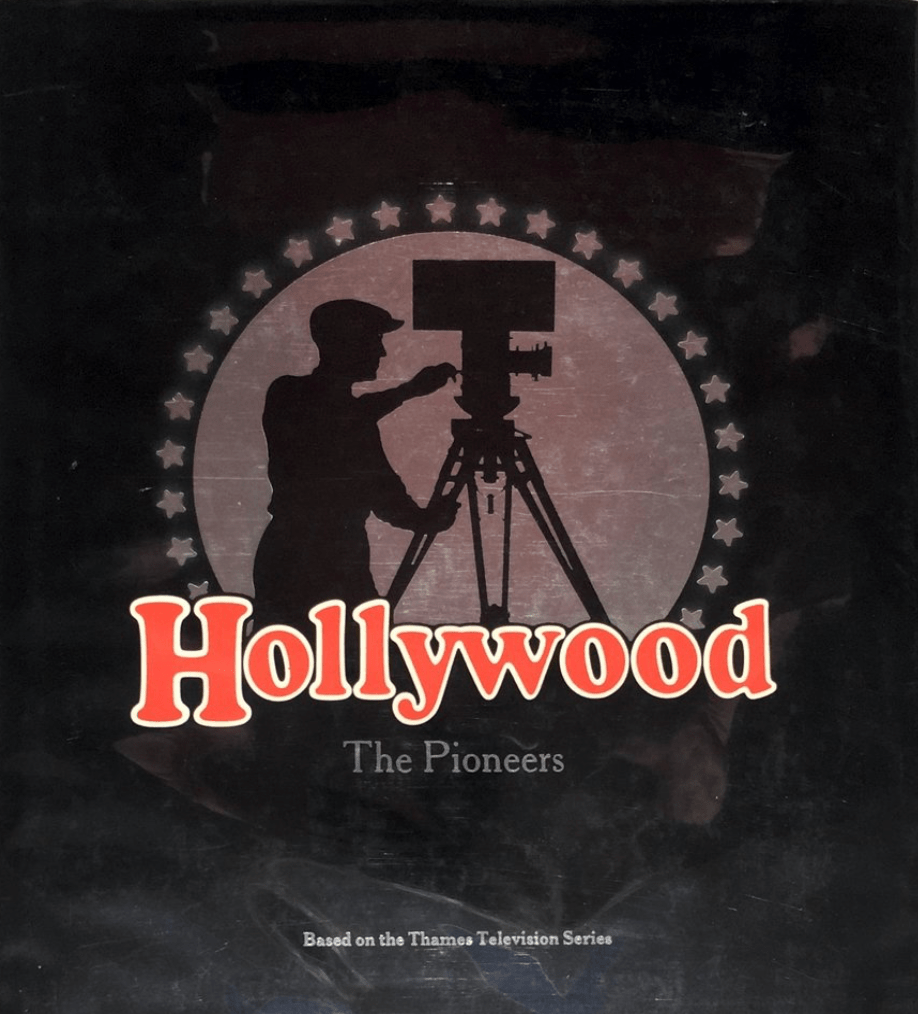
    Cover of Hollywood: The Pioneers

    Kevin Brownlow had already written one of the definitive histories of silent film with his 1968 book The Parade’s Gone By… but just over a decade later, he did it again, this time putting together the definitive documentary on silent film, the 1980 Thames Television series Hollywood. The accompanying, highly recommended book wisely doesn’t try and retread his previous work. Instead, Brownlow collaborates with another film historian, John Kobal, to create a book that is equal parts informative text and beautifully done visual history, full of hundreds of often rare photos. You can find this for about £5 (or equivalent in other areas), so very much worth it.

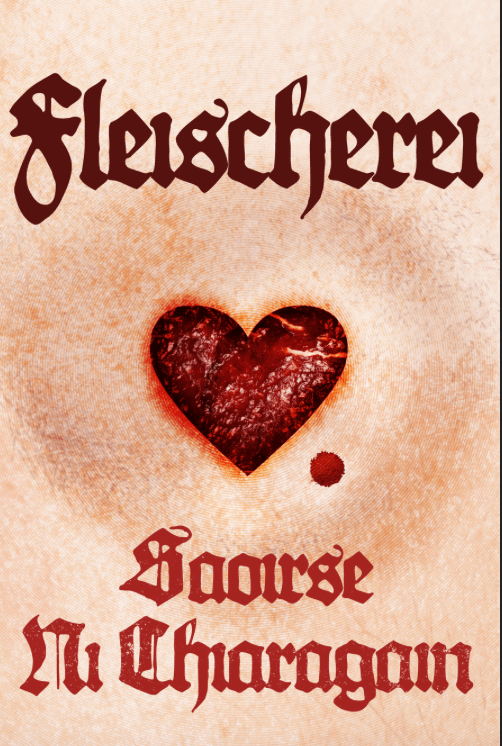
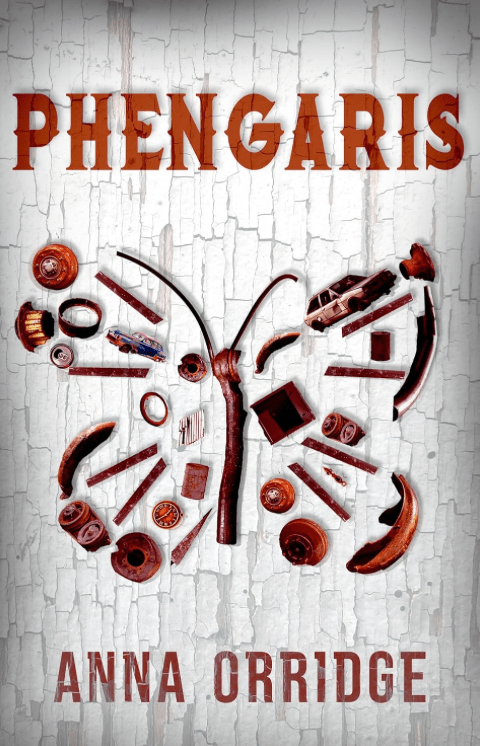
    Covers of Fleischerei and Phengaris

    I’ve written about both of these books already (Modern horror writing at its best) and they remain two of the best pieces of fiction of the year. If you haven’t already read them, you really should.

    Music

    I’ve gone from being obsessed with music a couple of decades ago, to barely registering what is happening with it these days, so probably good for me that two favourite bands released their new albums this year, Deafheaven (Lonely People with Power) and Greet Death (Die in Love). Better still that both show each band at their peak. It’s been largely either very loud explorations of losing humanity in the lust for power (Deafheaven) or deceptively pretty explorations of the darkness and beauty of life (Greet Death) and I’m grateful for both of them.

    Covers of Lonely People with Power and Die in Love

  • Whitechapel: A bloody good time

    A Great British horror television series remembered

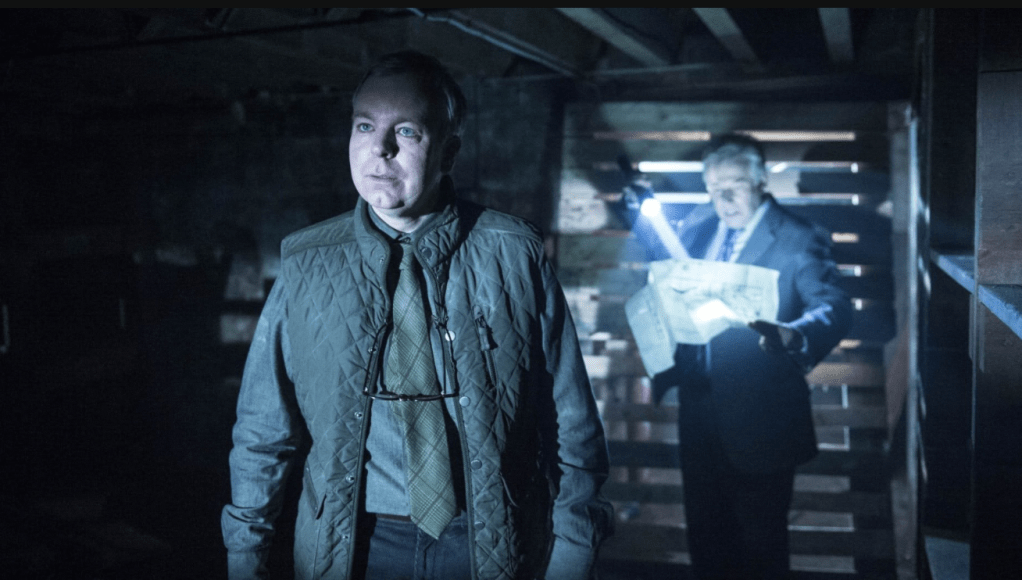
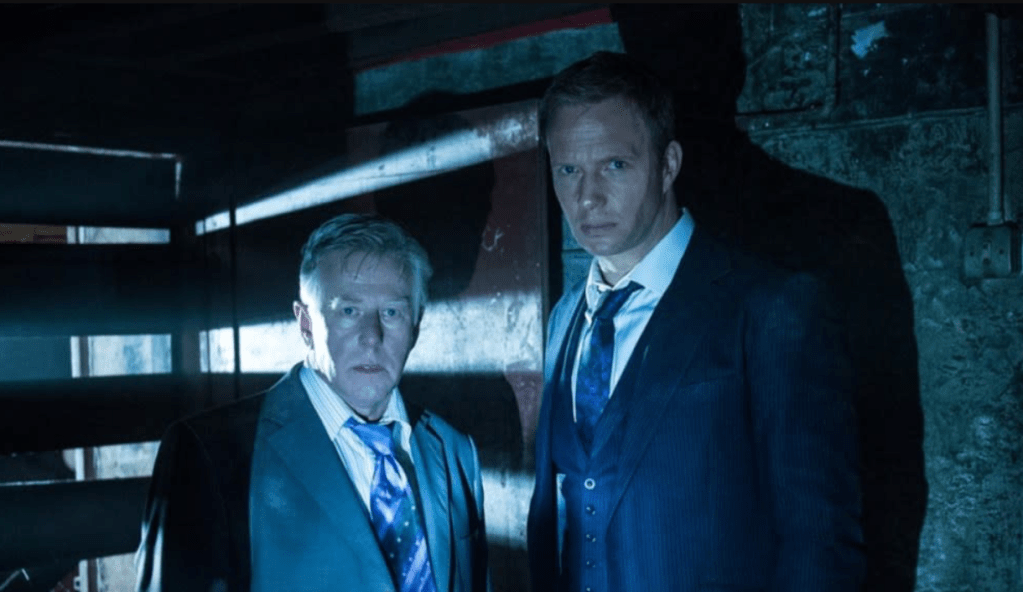
    Phil Davis, Steve Pemberton and Rupert Penry-Jones as the central trio of Whitechapel

    When we talk about the best British horror television, it seems there is rarely a mention of Whitechapel, which ran on ITV for four series between 2009 and 2013. Perhaps that is because Whitechapel was presented at first glance as An Other cop show, if ever so slightly more acquainted with the grimmer side of that genre. It was so much more than that in its finished form. And so, dear reader, it’s time to set things right and celebrate this glorious, pulpy, luridly compelling and emotionally involving show. Be warned, said celebration is slightly spoilery. 

    Created and almost exclusively written by the couple Ben Court and Caroline Ip, Whitechapel starts by taking us into the heart of darkness that is a copycat killer seeking to reenact the murders of Jack the Ripper, bringing a new reign of terror to the capital. Subsequent series explore the secret sons of the Kray twins following their fathers’ worst examples, and tales inspired by H.H. Holmes, the Marquis de Sade, London After Midnight, witch hunts, a killer who flays the faces from their victims and a deranged cult seeking to bring about the apocalypse. Then there’s the ongoing arc that bubbles away in the background about Whitechapel very possibly being a gate to hell. Add to that the mysterious Louise Iver, played to perfection by Angela Pleasence. Iver may be a sweet if somewhat rude old lady, but she also may be something even older and significantly more evil and dangerous. The clue might be in the name.

    One of the things that makes Whitechapel so enjoyable is the cast and characters. As the first series begins, Rupert Penry-Jones plays DI Joseph Chandler. Joseph is the son of a well-respected and long-dead police officer. The largely untested Chandler has been put on the fast track to promotion by his father’s friend Commander Anderson and is given his first big assignment when a woman is found murdered in Whitechapel. He arrives to lead the team charged with investigating it, a team in practice being lead by the old school copper DS Ray Miles, played by Phil Davis. Soon, and much to Miles’ displeasure, Chandler has enlisted the involvement of noted Ripperologist Edward Buchan, played by Steve Pemberton. Buchan suggests to Chandler that the murders that are afflicting Whitechapel are the work of someone trying to recreate Jack’s crimes in precise detail. So begins this unlikely and at times often uncomfortable trio’s journey into a hidden and deadly part of London.

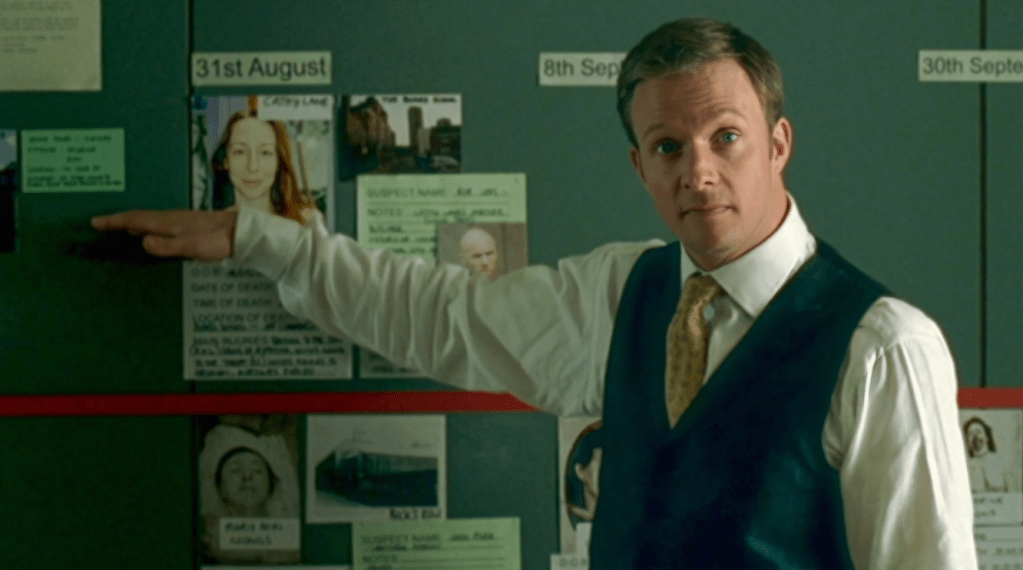
    Joseph Chander in front of a crime board

    Whitechapel is a darkly violent series and doesn’t shy away from presenting the killings and the impact they have on those investigating and the community itself. So far, so lurid. And yet, through its minor characters and particularly Buchan’s character arc it balances this out by paying attention to the victims. From a writing perspective, Court and Ip are skilled at including the briefest of character moments that allow peeks into their lives beyond what is presented onscreen. Whitechapel takes place in a version of London that has violence seeping through its cracks at every turn, in later episodes almost apocalyptically so. The characters provide a counterbalance to this that allows the show to walk a tightrope between pulp, horror-soaked crime and retaining its humanity.

    Chandler ready to box, Miles ready to soak up the blood

    Our three nominal leads do some of their best work in this series. Penry-Jones’ Chandler at first threatens to be the cliched ‘untested’ but arrogant cop-in-charge but Court and Ip subtly subvert that early on and expand on it throughout. Chandler is the very image of well-presented modern policing: meticulous, smart and indefatigably moral. But he’s also riven by self-doubt and neurosis. There’s some short hand here in the way that is done, particularly with Chandler’s fixation on physical order, but it is thought out, sympathetic and never played for cheap laughs or at the expense of actual depth. Penry-Jones is excellent throughout, ensuring Joseph is a fully rounded character. Davis matches him as Miles, and although the two must initially play out the combative new vs old school methodology cliche, again Court and Ip subvert this. The relationship that develops between Chandler and Miles is the core of the series but it is never allowed to get stale or comfortable. These two men find something in each other, but it’s not as brothers or a father/son surrogate but instead something deeper and more satisfying.

    Buchan and Miles in a shadow filled room

    Pemberton has the flashier role, as the show begins. Buchan is a Ripperologist who runs walking tours of the area where Jack did his ‘work’. He has a deep knowledge of the criminal history of Whitechapel and considers himself an investigator. But Buchan is out of his depth and as the first series progresses is forced to confront his own relationship with the crimes and how exploitation and the distance of time has allowed him to disconnect from the real-life weight of grief. His desire to be clever and invaluable to the investigation has personal consequences that follow him for the rest of the series. Pemberton does some excellent work exploring Buchan’s moral and professional collapse and subsequent rebuilding.

    The rest of the cast, which shifts slightly before settling into a unit for the final two series, provide Chandler, Miles and Buchan with a solid, likeable team. Another admirable aspect of Whitechapel is Court and Ip avoiding the modern malaise of the workplace ‘family’, that cliche ignoring as it often does that families bicker, sometimes viscously so, and that peace is sometimes uneasy, just as it is here. It’s a mark of a good cast that every time a regular appears (like Claire Rushbrook’s Dr. Llewellyn) it’s not just to further the plot, we also want to learn a little bit more about their characters. The various guest performers that fill the series are excellent too, from Craig Parkinson’s Kray twins via Peter Serafinowicz’s unnervingly bad apple cop to Lydia Leonard’s doomed Morgan Lamb.

    Miles and Chandler in – surprise, surprise – a shadow filled room

    There are other crime dramas that have an affection for horror and pulp influences that are clear in their approach, notably Luther. But although such shows and films with flirt with these influences they are first and foremost thrillers. Whitechapel is a procedural, there’s no doubt of that. But it is equally pure horror and once it reaches the third series, goes full tilt into first slasher influences and then a run of witches, urban legend (killer pigs in the sewers anyone) and apocalyptic terror. The series loves its milieu and there’s a lot to enjoy in picking out these influences and the tributes and homages that fill the episodes and load it with atmosphere. There are some bravura, tension-packed set pieces throughout and the show is agreeably unafraid of the absurd and the overblown when it is needed, delighting in red herrings and left-turn plot twists.

    Amidst all of this, Whitechapel never forgets its characters or its humanity. It is a series that sets out to thrill, disturb, entertain and deliver heart too, something it succeeds in . Take this as full-blooded recommendation thatWhitechapel is one of British television’s finest, most enjoyable horror series, ripe for (re)discovery.