A Great British horror television series remembered

When we talk about the best British horror television, it seems there is rarely a mention of Whitechapel, which ran on ITV for four series between 2009 and 2013. Perhaps that is because Whitechapel was presented at first glance as An Other cop show, if ever so slightly more acquainted with the grimmer side of that genre. It was so much more than that in its finished form. And so, dear reader, it’s time to set things right and celebrate this glorious, pulpy, luridly compelling and emotionally involving show. Be warned, said celebration is slightly spoilery.
Created and almost exclusively written by the couple Ben Court and Caroline Ip, Whitechapel starts by taking us into the heart of darkness that is a copycat killer seeking to reenact the murders of Jack the Ripper, bringing a new reign of terror to the capital. Subsequent series explore the secret sons of the Kray twins following their fathers’ worst examples, and tales inspired by H.H. Holmes, the Marquis de Sade, London After Midnight, witch hunts, a killer who flays the faces from their victims and a deranged cult seeking to bring about the apocalypse. Then there’s the ongoing arc that bubbles away in the background about Whitechapel very possibly being a gate to hell. Add to that the mysterious Louise Iver, played to perfection by Angela Pleasence. Iver may be a sweet if somewhat rude old lady, but she also may be something even older and significantly more evil and dangerous. The clue might be in the name.
One of the things that makes Whitechapel so enjoyable is the cast and characters. As the first series begins, Rupert Penry-Jones plays DI Joseph Chandler. Joseph is the son of a well-respected and long-dead police officer. The largely untested Chandler has been put on the fast track to promotion by his father’s friend Commander Anderson and is given his first big assignment when a woman is found murdered in Whitechapel. He arrives to lead the team charged with investigating it, a team in practice being lead by the old school copper DS Ray Miles, played by Phil Davis. Soon, and much to Miles’ displeasure, Chandler has enlisted the involvement of noted Ripperologist Edward Buchan, played by Steve Pemberton. Buchan suggests to Chandler that the murders that are afflicting Whitechapel are the work of someone trying to recreate Jack’s crimes in precise detail. So begins this unlikely and at times often uncomfortable trio’s journey into a hidden and deadly part of London.
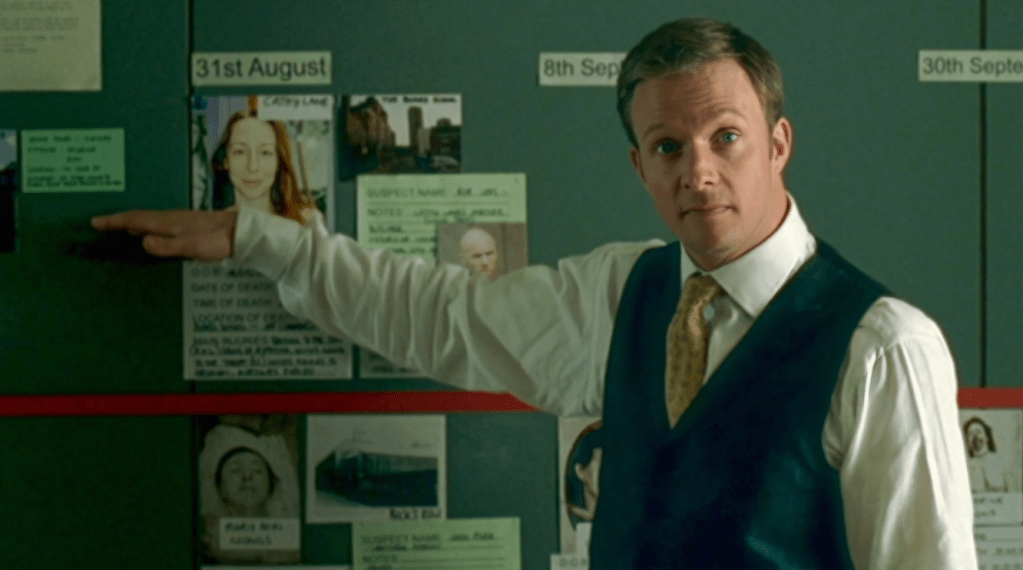
Whitechapel is a darkly violent series and doesn’t shy away from presenting the killings and the impact they have on those investigating and the community itself. So far, so lurid. And yet, through its minor characters and particularly Buchan’s character arc it balances this out by paying attention to the victims. From a writing perspective, Court and Ip are skilled at including the briefest of character moments that allow peeks into their lives beyond what is presented onscreen. Whitechapel takes place in a version of London that has violence seeping through its cracks at every turn, in later episodes almost apocalyptically so. The characters provide a counterbalance to this that allows the show to walk a tightrope between pulp, horror-soaked crime and retaining its humanity.

Our three nominal leads do some of their best work in this series. Penry-Jones’ Chandler at first threatens to be the cliched ‘untested’ but arrogant cop-in-charge but Court and Ip subtly subvert that early on and expand on it throughout. Chandler is the very image of well-presented modern policing: meticulous, smart and indefatigably moral. But he’s also riven by self-doubt and neurosis. There’s some short hand here in the way that is done, particularly with Chandler’s fixation on physical order, but it is thought out, sympathetic and never played for cheap laughs or at the expense of actual depth. Penry-Jones is excellent throughout, ensuring Joseph is a fully rounded character. Davis matches him as Miles, and although the two must initially play out the combative new vs old school methodology cliche, again Court and Ip subvert this. The relationship that develops between Chandler and Miles is the core of the series but it is never allowed to get stale or comfortable. These two men find something in each other, but it’s not as brothers or a father/son surrogate but instead something deeper and more satisfying.
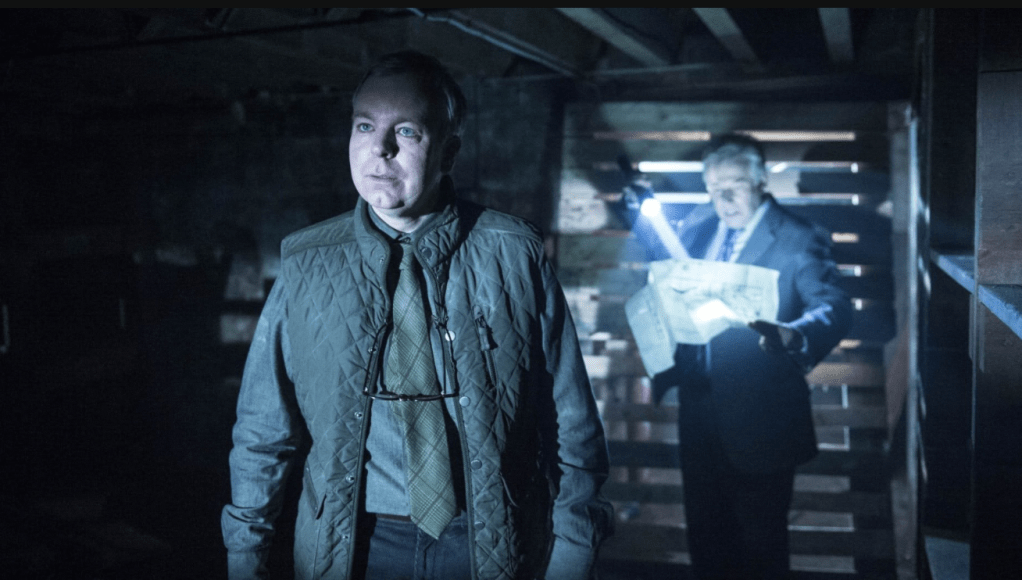
Pemberton has the flashier role, as the show begins. Buchan is a Ripperologist who runs walking tours of the area where Jack did his ‘work’. He has a deep knowledge of the criminal history of Whitechapel and considers himself an investigator. But Buchan is out of his depth and as the first series progresses is forced to confront his own relationship with the crimes and how exploitation and the distance of time has allowed him to disconnect from the real-life weight of grief. His desire to be clever and invaluable to the investigation has personal consequences that follow him for the rest of the series. Pemberton does some excellent work exploring Buchan’s moral and professional collapse and subsequent rebuilding.
The rest of the cast, which shifts slightly before settling into a unit for the final two series, provide Chandler, Miles and Buchan with a solid, likeable team. Another admirable aspect of Whitechapel is Court and Ip avoiding the modern malaise of the workplace ‘family’, that cliche ignoring as it often does that families bicker, sometimes viscously so, and that peace is sometimes uneasy, just as it is here. It’s a mark of a good cast that every time a regular appears (like Claire Rushbrook’s Dr. Llewellyn) it’s not just to further the plot, we also want to learn a little bit more about their characters. The various guest performers that fill the series are excellent too, from Craig Parkinson’s Kray twins via Peter Serafinowicz’s unnervingly bad apple cop to Lydia Leonard’s doomed Morgan Lamb.
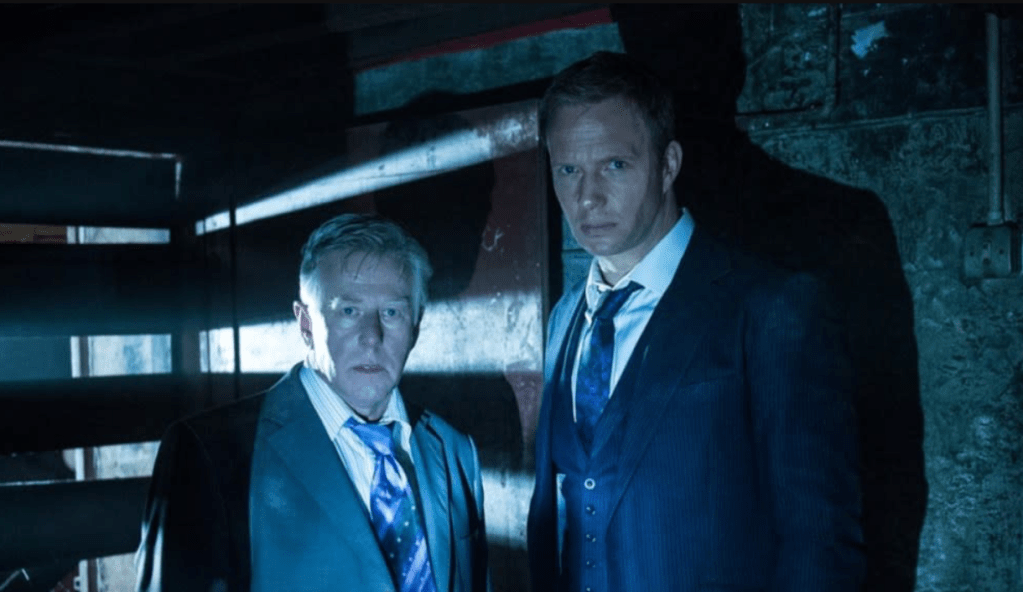
There are other crime dramas that have an affection for horror and pulp influences that are clear in their approach, notably Luther. But although such shows and films with flirt with these influences they are first and foremost thrillers. Whitechapel is a procedural, there’s no doubt of that. But it is equally pure horror and once it reaches the third series, goes full tilt into first slasher influences and then a run of witches, urban legend (killer pigs in the sewers anyone) and apocalyptic terror. The series loves its milieu and there’s a lot to enjoy in picking out these influences and the tributes and homages that fill the episodes and load it with atmosphere. There are some bravura, tension-packed set pieces throughout and the show is agreeably unafraid of the absurd and the overblown when it is needed, delighting in red herrings and left-turn plot twists.
Amidst all of this, Whitechapel never forgets its characters or its humanity. It is a series that sets out to thrill, disturb, entertain and deliver heart too, something it succeeds in . Take this as full-blooded recommendation thatWhitechapel is one of British television’s finest, most enjoyable horror series, ripe for (re)discovery.
 Writing by Jamie Evans