There’s a theory around comedy and why we seek out funny things and find things funny being about the evolutionary need for play. Broadly, to enter into a state of being that puts you in a position to experience laughter, to play, to feel. The boundary between comedy and horror is a thin one, both taking our need for visceral experience, physicality, mental stimulation and the requirement for a release and responding to it. Horror and comedy are frequent dance partners. Horror is also about making us feel. And so, dear reader, here is a little rundown of some highlights of what has been making me emotional across both comedy and horror film in the first few months of this year.
The Penalty (1920, dir. Wallace Worsley)
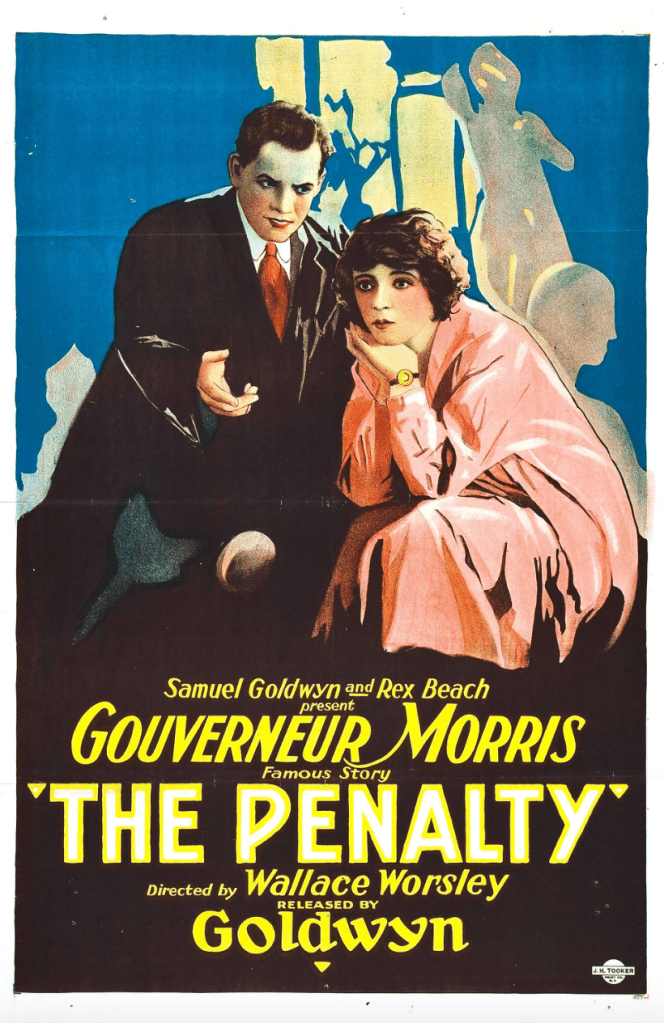
Based on a Gouverneur Morris novel, The Penalty joins 1919’s Behind the Door and 1921’s The Ace of Hearts as a trilogy of ‘hoo-boy’ films that are deeply, enjoyably, unhinged. The Ace of Hearts is perhaps most conventional, but still has as its premise a vigilante group who meet up to vote on who’ll get to murder the next rich piece of shit they’ve decided is too big a piece of shit to live.
The Penalty meanwhile stars everyone’s favourite early cinematic purveyor of the criminally mad and the damaged, Lon Chaney, as mob boss Blizzard, who as a young boy had his legs hastily amputated following an accident. The adult Blizzard is a proper danger, harbouring two main obsessions: loot the city of San Francisco and get revenge on the doctor he believes mutilated him. The second involves him posing for said doctor’s daughter, an artist, as she uses him to create a bust of Satan. Things get even more wild from here in.
Notorious for the lengths Chaney went to in order to convince as Blizzard (which included folding his legs into painful leather braces to create the look), it’s also intense, and shamelessly over the top, with some shocking bursts of violence and striking imagery. Lon anchors it all, taking things very seriously and giving it his all as one would expect. The rest of the cast are game too, it is frequently gorgeous, as well as transgressive and unsettling. A startling mix of crime film and horror influences.
Sunset Boulevard (1950, dir. Billy Wilder)
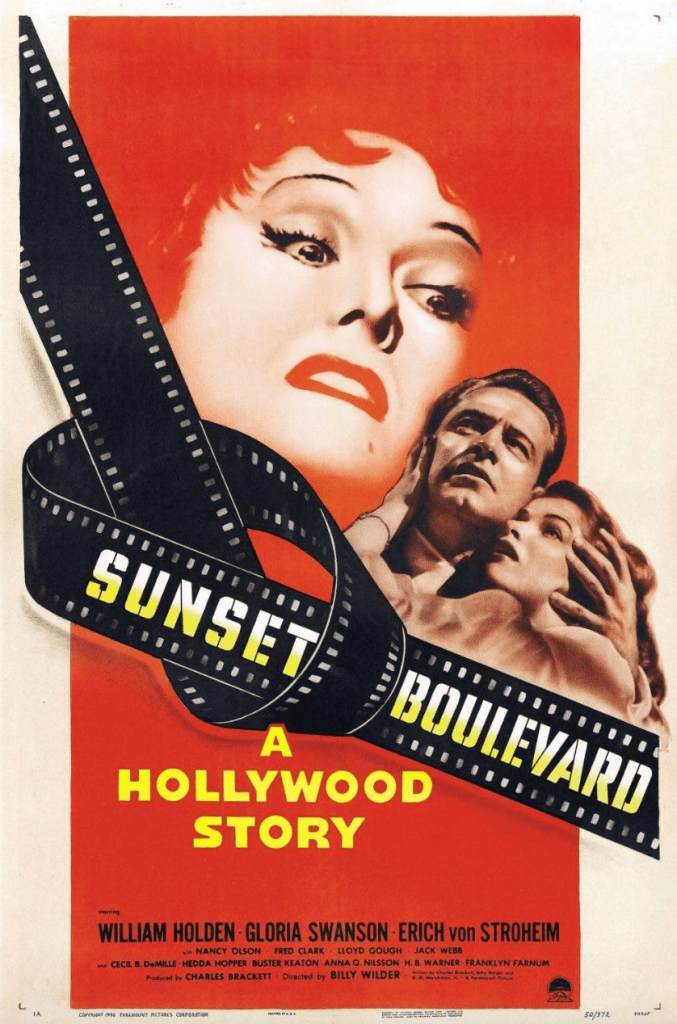
Opening with a great hook (narrated by a corpse!) that draws you in, Sunset Boulevard is one of the great vampire films. But wait, you say, Gloria Swanson’s Norma Desmond isn’t a vampire. Perhaps not technically, but in some core ways (slowly taking the life from William Holden’s Gillis, haunting a decrepit mansion like a creature of the night that doesn’t understand she’s already dead) she absolutely is.
Gillis, a screenwriter on the skids, crosses paths with the forgotten silent film star Desmond trying to hide from his debtors. Slowly absorbed into her pitiful dreams of resurrecting her career and stardom, when he tries to escape her grasping hands of cobwebbed living death, it’s all too late. As the film starts we know what becomes of him, but the how and the why are the gifts it reveals to us in getting there. It’s no simple journey either, eschewing easy villains and delighting in sophisticated character twists.
Lovingly crafted and written, shot and directed about as well as you possibly hope for, this is one of the finest films about films and the weird people who make them and love them.
One Week (1920, dirs. Buster Keaton and Edward F. Cline)
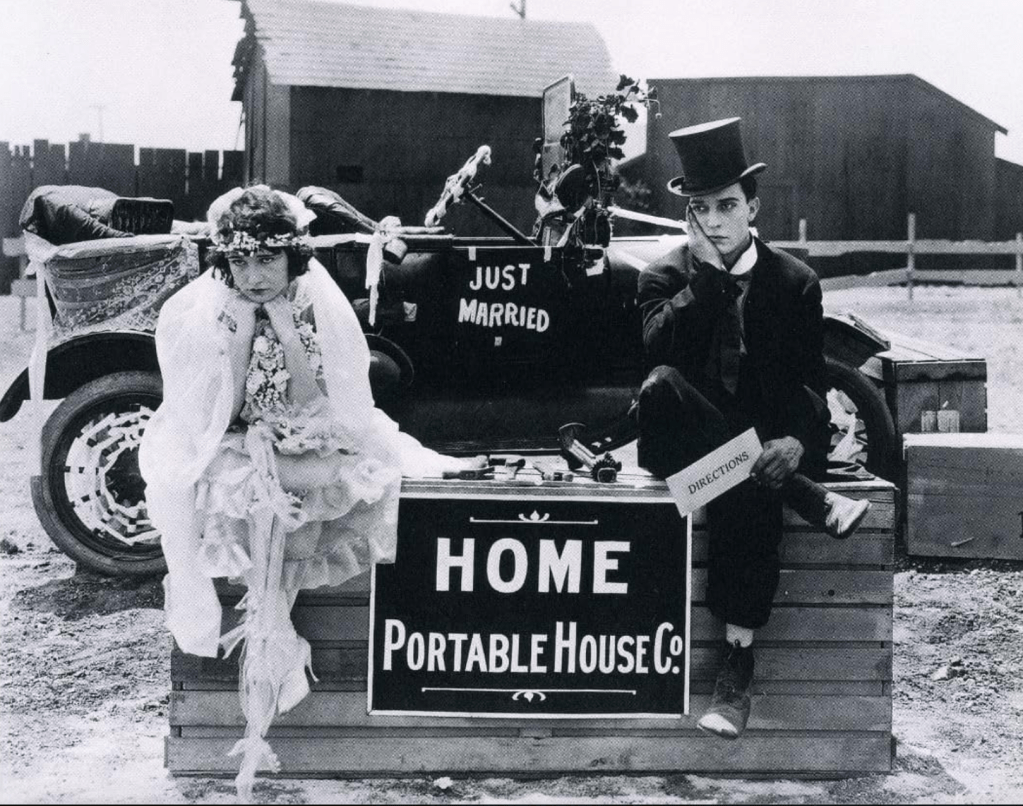
Buster Keaton’s first-released independent film (though not first made), One Week tells of a newlywed couple gifted a kit house as a present. Calamity ensues when a jilted suitor messes with the construction order and Buster and his wife have to contend with a house that doesn’t make sense. As the titular week progresses, they try and live in and finish their new home, before nature – and life – makes that impossible and as much a circular nightmare as something like The Beyond (1981).
A contemporary review of the film described it perfectly as “…two reels in length and every foot of the two reels is packed with comedy situations and ‘gags’ that would start cackles at an undertaker’s convention”. An extraordinary flowering of a unique and brilliant talent, it’s a film that is funny, thrilling and stuffed with events, stunts and gags that remain as potently entertaining now as they did over a hundred years ago.
Cat People (1942, dir. Jacques Tourneur)
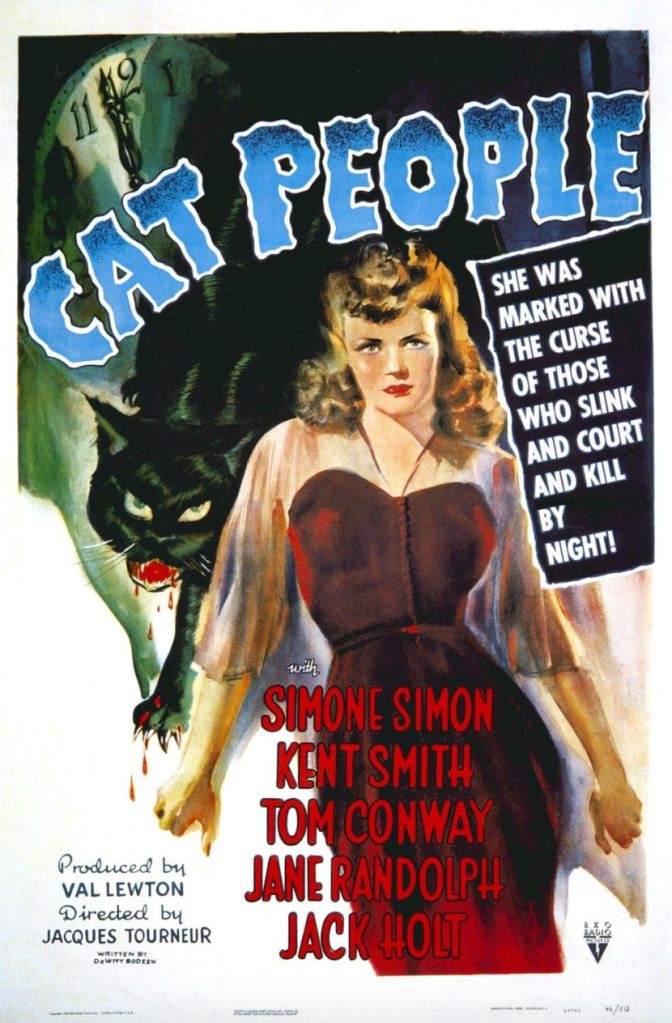
John Carpenter famously thinks Cat People sucks because it should show the monster (it never explicitly does). But the monster in this isn’t the big panther Irena Dubrovna thinks she turns into when aroused. It’s repression and longing and self-flagellation and trying to live in a world that tells you there is something deeply wrong – immoral, dirty, ungodly – with who you are. We could read too much into the script being written by a gay man, DeWitt Bodeen, but it’s all – whatever Carpenter says – up there on the screen.
Tourneur and cinematographer Nicholas Musuraca make a virtue of the film’s B-movie budget, using shadow and sound to create a feeling on unease, which extends to the character of Irena and how much of this is her torturing herself and how much might be, could be real. Editor Mark Robson builds on this with the jump scare later known as The Lewton Bus. Inventive, involving and compelling, Cat People doesn’t offer easy answers or reassurance (sure, just be yourself, but it’ll probably turn out badly!) but does deliver intellectually gripping horror that moves and bewitches.
Way Out West (1937, dir. James W. Horne)
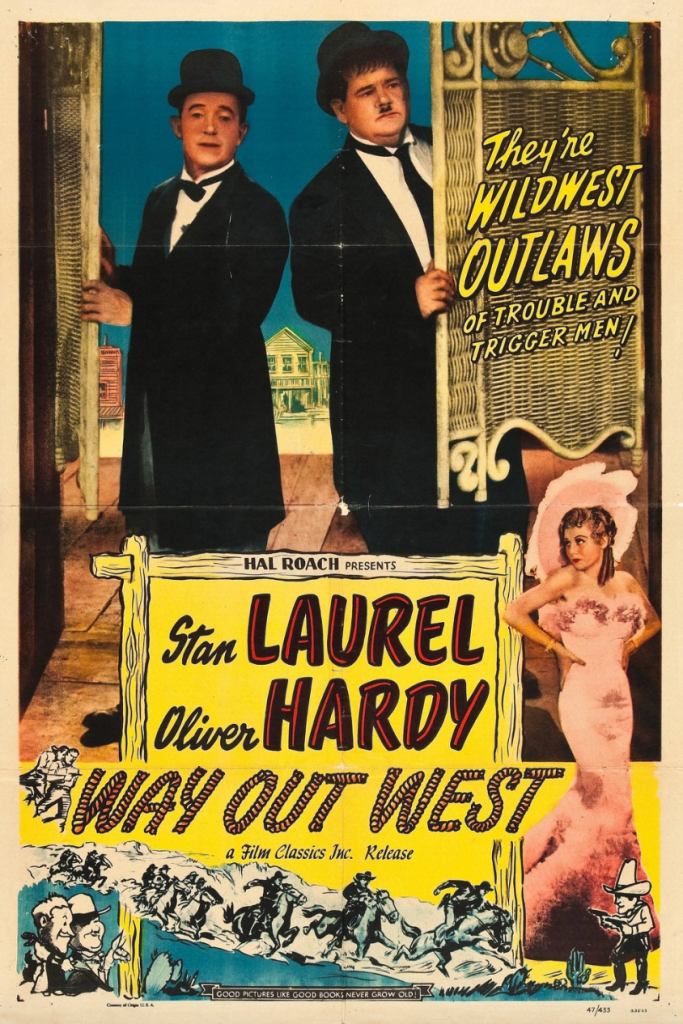
In Way Out West, Laurel and Hardy are on an errand to deliver to Mary Roberts news she has inherited a gold mine. It brings them to Brushwood Gulch, a town out west, via journey that delivers mishaps and laughs. When they get to the town, the deed ends up in the hands of the wicked Finns, and the duo decide they must make things right for Mary.
This is the skeleton to hang the comedy on, much of it made of gags and routines the boys had done before. It doesn’t matter here, of course, because not only are they effortlessly charming, they’re ably supported by their much-loved foil James Finlayson amongst others, and everything comes together for one of their most enjoyable full-length films. The best bit, and one of the sweetest, loveliest sequences in any of their films, is their joyful, entirely earnest soft-shoe shuffle outside of the saloon. Like the film itself, it’s leisurely and lovingly done.
Captain Kronos: Vampire Hunter (1973, dir. Brian Clemens)
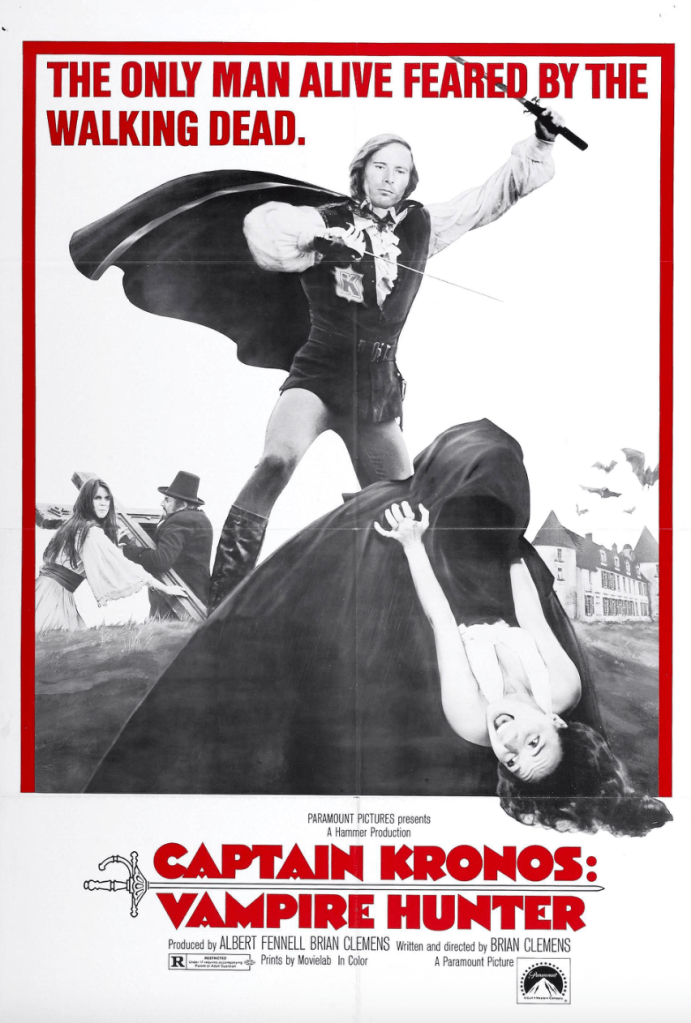
Prolific television writer Brian Clemens (who wrote for, or created, or guided The Avengers, Thriller, The Professionals and many more) only directed a single film, but what a fucking outstanding movie it is, and one I enjoy more every time I revisit it. A late-period Hammer vampire film, this drops the tits and gore of the Karnstein trilogy and the lurid excesses of (the shamelessly enjoyable) Scars of Dracula (1970) for something more altogether more interesting.
Impossibly hot, charismatic central couple Horst Janson and Caroline Munro lead a great cast including a heartbreaking John Carson. It’s brilliantly, thrillingly weird, stuffed full of beautiful frames, black humour, action and invention.
A wilfully bizarre mix of swashbuckler, horror and adventure that’s beautifully designed, playfully restrained and kinky, unexpectedly moving, and with a thoroughly dark hearted centre, it’s a late flourish and unexpected tease that showed there was still blood in the studio’s creative veins.
Dracula (1931, dir. Tod Browning)
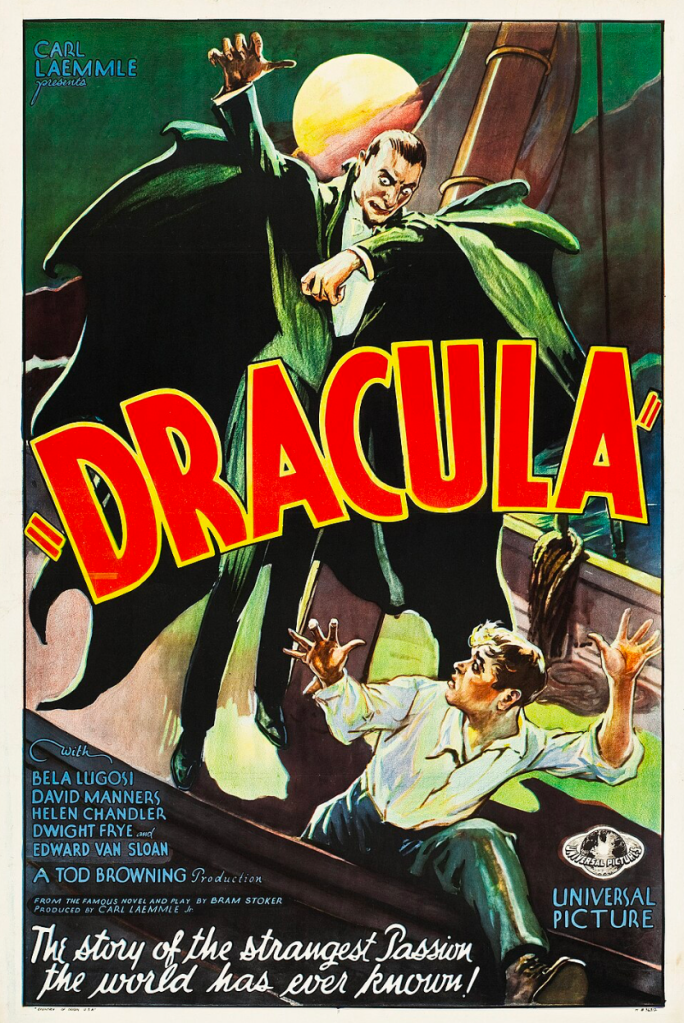
Much of the writing around Dracula (and holy shit there’s a lot) repeats the same old stuff. Yes, yes, it’s more of a drawing room thriller than a full adaptation of Stoker’s novel. Yes, yes, yes there was a Spanish version shot on the same sets at night.
And yes, some people find this understandably creaky and halting, but I regularly revisit it because it is so much more than the cliches written about it. Bela Lugosi gives a phenomenally odd and compelling performance here, and not due to language barriers, but because he was – with the right material and space to work – an outstandingly good actor. His Count is sex and death and mourning and genuinely unknowable in a way no other vampire king has been allowed to be since.
There’s also fascinating, beautiful performances from a manic Dwight Frye and a nicely pitched Edward Van Sloan. On my revisit this time, however, I was enthralled by the tragic Helen Chandler’s fragile, knife-edge Mina.
For such a convoluted journey to the screen, we’re gifted with an incredible, splendid corpse of a film. It’s inarguably Browning not firing at his best BUT, it’s also thoroughly weird – yes, even the drawing room drama – a crepuscular journey through a dream of dying that holds beautiful imagery.
Dracula is repressed sexuality, lust and the omnipresent spectre of death writ large as a fantasy horror film that rewards these return visits.
Hey There! (1918, dir. Alfred J. Goulding)
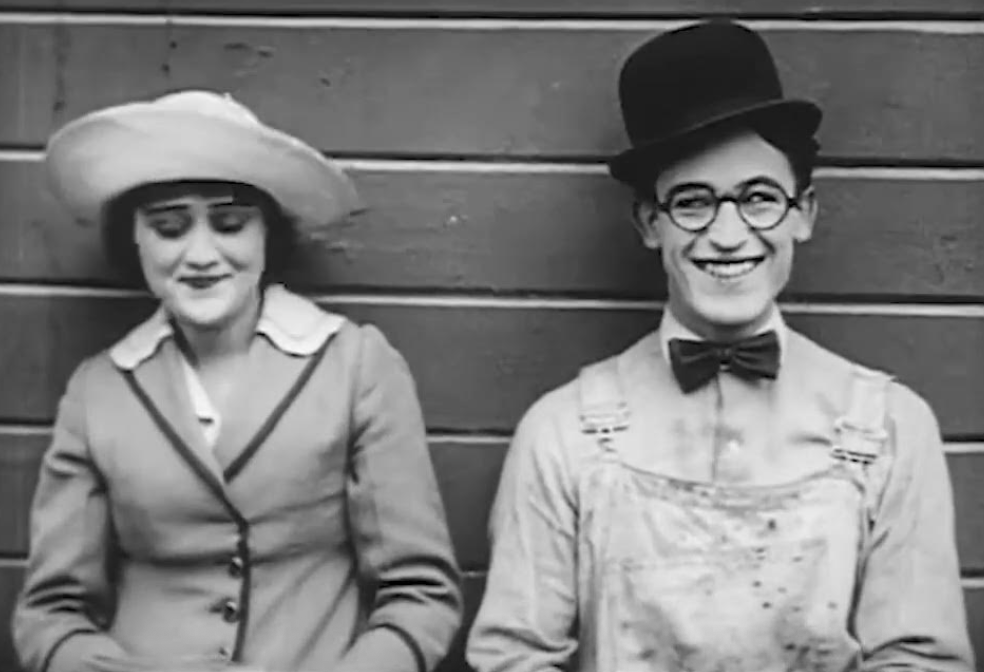
Hey There! is a lot of fun. An early Harold-Lloyd-in-glasses short has the randy would-be shagger blagging his way into a film studio to return a dropped letter to Bebe Daniels, but not just the letter. A short film with so many good gags, great timing, and a solid company of actors, including Snub Pollard dressed in an enjoyable piss-take of the familiar director’s outfit. It’s a joy to see Lloyd start to step outside of Chaplin imitation into something more in line with where he would take his career in the next decade.
That’s it for now, and so a closing reminder – finding joy in troubling times is an act of rebellion. Go enjoy some films.
And should you want to, you can find more film guff from me here on Letterboxd.
 Writing by Jamie Evans
Leave a comment