Nostalgia ain’t what it used to be
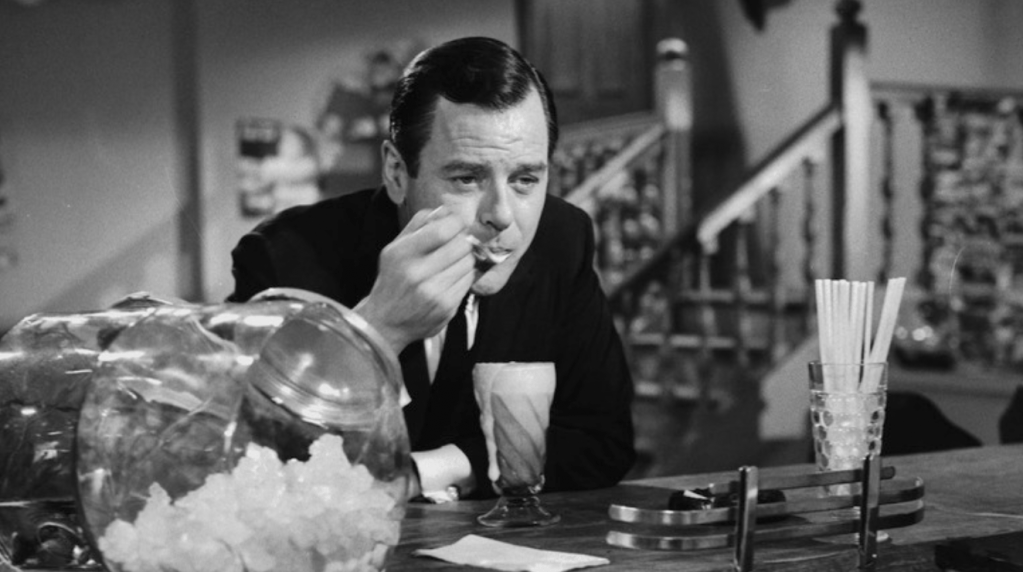
You’ve probably seen one by now, even if you very much didn’t want to do. A street scene somewhere, packed with people. Maybe it’s wintertime. There’s a Woolworths. Posted along with it, a deeply held wish we could ‘go back’ to when things used to be this way. Only they never did. The faces of the people aren’t right; empty, dead-eyed simulacrum of a million different faces pulled from a million different photographs. Unintelligible names on the front of buses for places that don’t exist. Something claiming reality that hasn’t earned it.
And in this, AI accidentally gets it right about nostalgia. As Rod Serling explored in ‘Walking Distance’, the fifth episode of The Twilight Zone, the persistence and failure of nostalgia is yearning for a time that is not even gone, but one that only really existed in our minds, as we try and find safety in a time that we remember as easier, less emotionally battering or relentless than the present. Outside of ongoing attempts by bad actors to divide us, the forced nostalgia in those posts from people can also frequently be a cover for something else, an imagined time where they didn’t need to make space for other ideas or other people, particularly people who don’t look or think or acquiesce like them.
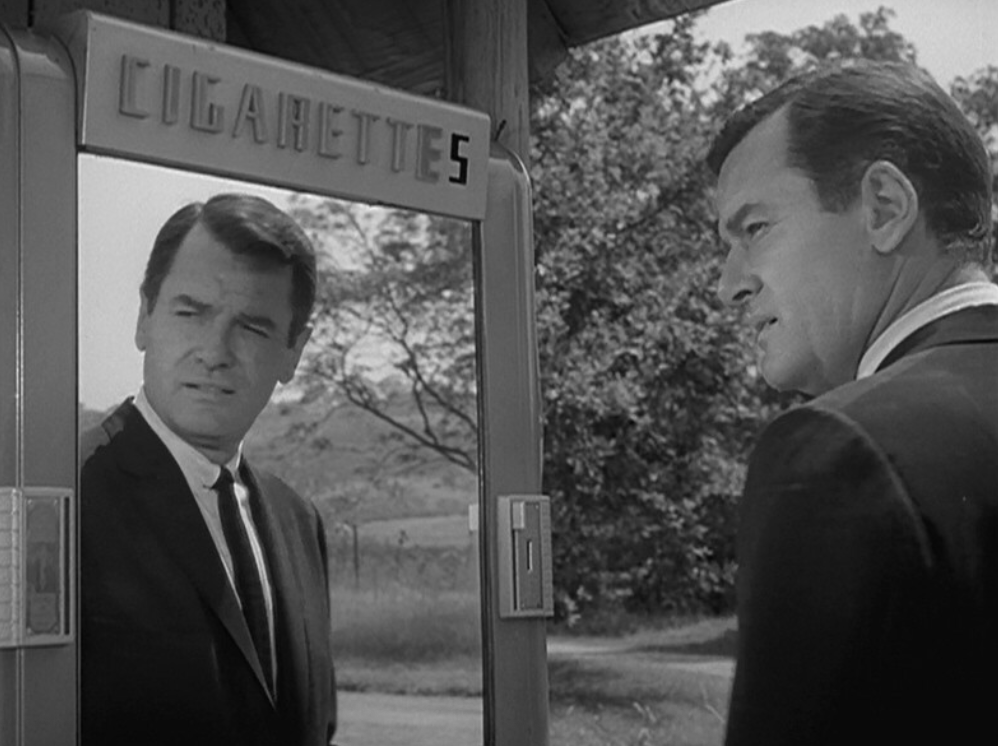
Unlike ‘Walking Distance’, which makes Martin Sloan confront his desire to run away and hide in his childhood, there’s innumerable films and shows, and latterly social media influencers, that present idealised versions of decades past, that posit the implied suggestion that if we can only get back to those more sensible times, those more honest times, things will be okay. They knowingly smooth away the prejudices and realities of those years, presented in good faith by makers of those films and shows as window dressing for entertainment, or in bad faith by those who would reassert control and power of people they want to oppress like the good old days.
I have to engage with a debate about nostalgia with myself because I am, whether I like it or not (I do, it’s fine), relentlessly drawn to explore my particular interests, mainly the silent film period and American popular culture from (mostly) the 1950s to the 1980s, taking in television, comedy, talk shows and game shows. I might occasionally shrug them off for something else, briefly, but for whatever reason, they always draw me back to explore more, to read more, learn more. I am compelled. It should be obvious however, that one can’t really, possibly yearn for, or be wistful for a time one never lived through. I know enough about the period of silent film (approximately the mid 1890s to the late 1920s) to know that – while they had good times – it wasn’t a good time for most people.
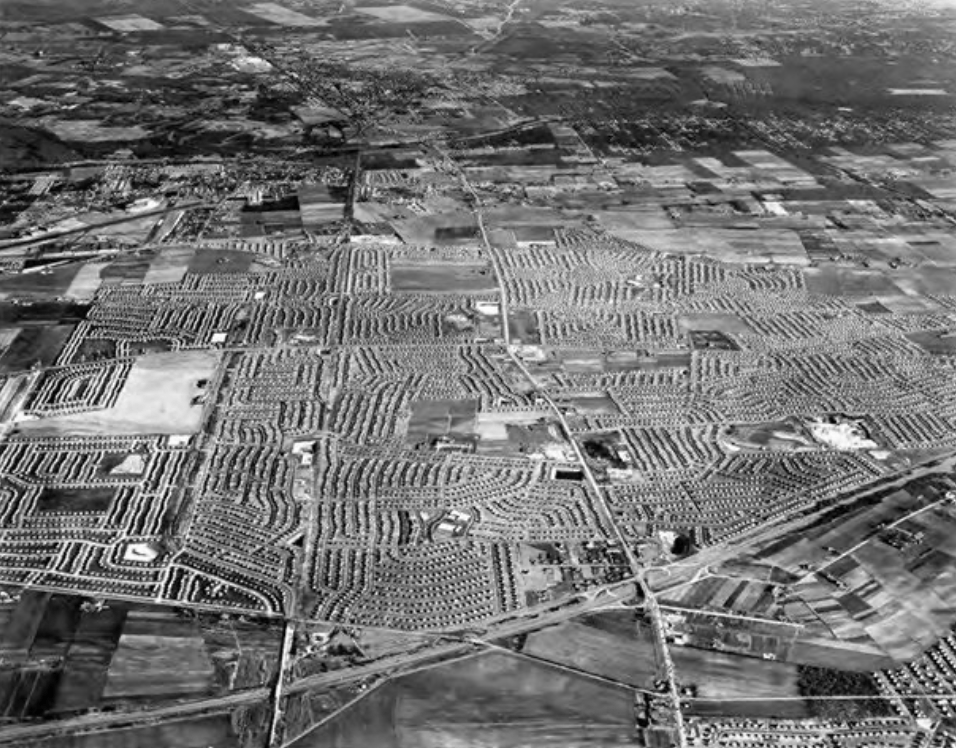
Likewise in the 1950s a writer could make a pretty good living from stories and articles in newspapers and magazines, but that doesn’t make the difficult times any less so. Sure, the 1950s was a decade of post-war abundance in lots of ways, the establishing of suburbia giving young families who had been living in a single room in a city the opportunity to own their own home with a garden in a Levittown, but William J. Levitt was a segregationist racist who refused to sell his dream houses to anyone who wasn’t white.
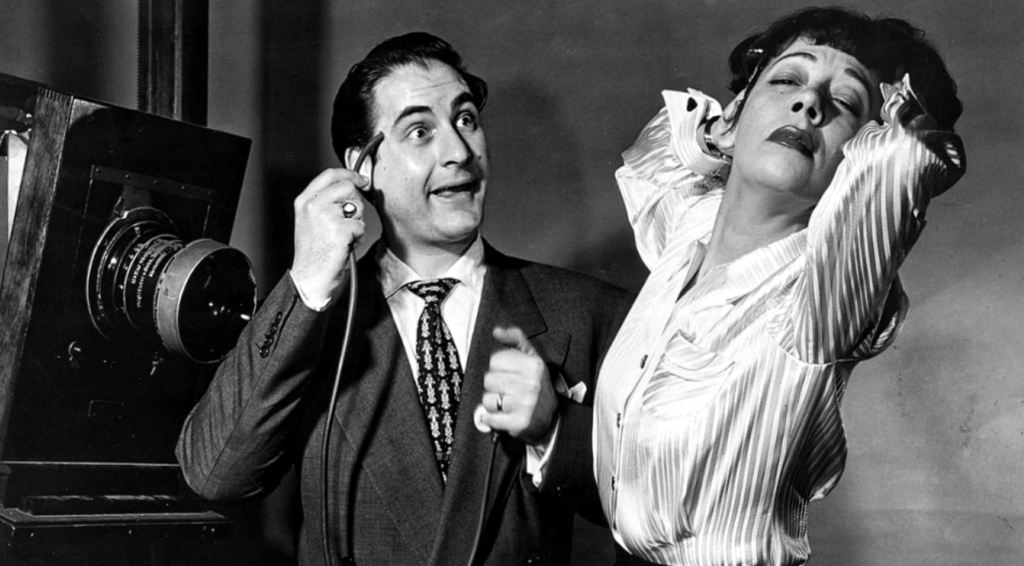
Alongside this, the decade was wracked by anxiety and a shift from wars in other lands to the looming (mushroom)cloud of imminent annihilation. You can see this in the wild threads of barely concealed terror that work their way through several Sid Caesar sketches, or the unsettling appearances of monsters of malintent in shows like The Outer Limits, both examples a step removed from real life but often close enough to feed that anxiety. Both were intended to be entertainment, and they are, but it’s impossible – whatever Andy Weir might say – to separate that instinct from the time, climate and politics in which they were made.
I recently finished Kliph Nesteroff’s very good book Outrageous (Abrams Press, 2024), pitched as a history of the culture wars in entertainment. It is absolutely not, however, a history of cancellations or accountability, but more so entertainment (in this everything from comedy to film, television and music) and the arts’ constant struggle against and remodelling of what is and isn’t ‘acceptable’, and the stumbles taken along the way.
The story Nesteroff tells shows we’re having the same arguments now that we were having then. ‘We won’t stand for this filth!’ ‘You can’t say anything anymore!’ ‘The children must be protected!’ I’d like to say the racism and prejudice of many of the arguments of why something should under no circumstances be allowed are different today, but really the language has been smoothed out or hidden behind layers of obfuscation, however the meaning remains clear. The dehumanisation and cruelty is dressed in more respectable clothing, but it’s still here.
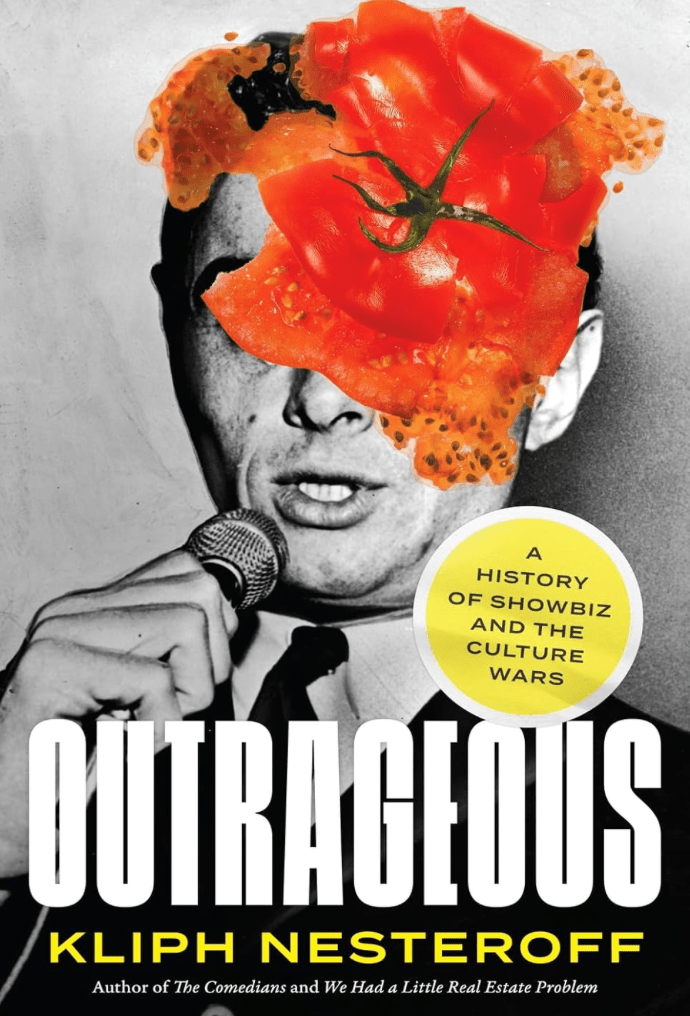
Nesteroff shows too that our worst bad actors, namely shallow, prickly, thin-skinned men of immorally large means, have spent decades ring-mastering governments, politicians, entertainment, news and latterly social media to serve their agendas, sow dissent and enrich themselves further. This leaves people with no sense of control, washing up on jagged rocks, wishing to retreat into a world that never existed and leave behind everything we have learned about ourselves, each other, and the planet as a result. I can understand the urge, that it’s too overwhelming in the here and now, that it would be easier not to care. But the here and now is all we have. The past is gone.
So, when I debate myself about whether it’s nostalgia or not, I decide I enjoy silent films or old television comedy because they are entertaining, or because the voices from then say something to me about now. I do so because art is a miracle, it outlives everything. The emotions it summons from us, generation after generation – happiness, sadness, joy, a voice for our pain – live longer than any argument or disagreement, any words spoken in anger. It connects me to people who lived in other times but experienced the same cresting and crashing on the waves as we do.
This wishing for a world that never existed to take the place of the one we have now is a waste of imagination and energy. To paraphrase Robert Sloan, we’ve been looking in the wrong place. Let’s try looking ahead. Let’s believe in a better future that doesn’t have us retreating into a mythical never-was.
The past is wonderful to visit for a while, but it’s no place to live.


Leave a comment